REVIEW · MUYNAK
Aral Sea Tour from Nukus 1 night / 2 days
Book on GetYourGuide →Operated by Asli Travel · Bookable on GetYourGuide
The Aral Sea is what regret looks like. In this 1-night / 2-day style tour, I love how close you get to the real disaster—walking the dried seabed and then adding the eerie Muynak ship cemetery—not just looking at it from afar. The one real drawback is the long, bumpy drive in a desert region, so it’s not a great pick if your back or spine gets upset on rough roads.
You’ll start in Nukus and spend your time moving through Karakalpakstan’s stark contrasts: mausoleums at Mizdakhan, ship bones at Muynak, big white rock views on the Ustyurt Plateau, and a night in a yurt camp where the sky actually goes dark. The plan is built for people who like hands-on travel, not for people who need quiet comfort every hour.
In This Review
- Key moments you’ll actually remember
- A harsh lesson in 1.5 days from Nukus
- Getting there comfortably on a bumpy 4×4
- Mizdakhan: mausoleums and pre-Islamic traces
- Muynak ship cemetery and the ecological museum
- On the dried seabed: what it feels like
- Yurt camp at night: sunrise, shower, and stars
- Ustyurt Plateau, Davlatgirey caravanserai, and bird waters
- Price and value when meals and yurt are extra
- Should you book this Aral Sea tour?
- FAQ
- How long is the Aral Sea tour from Nukus?
- How much is the tour, and is it shared?
- What’s included in the price?
- What extra costs should I expect?
- Is breakfast included?
- Can I swim or hike on the dry seabed?
- What should I pack for the tour?
- Will I have mobile service or internet?
- Is this tour suitable for people with mobility impairments?
Key moments you’ll actually remember
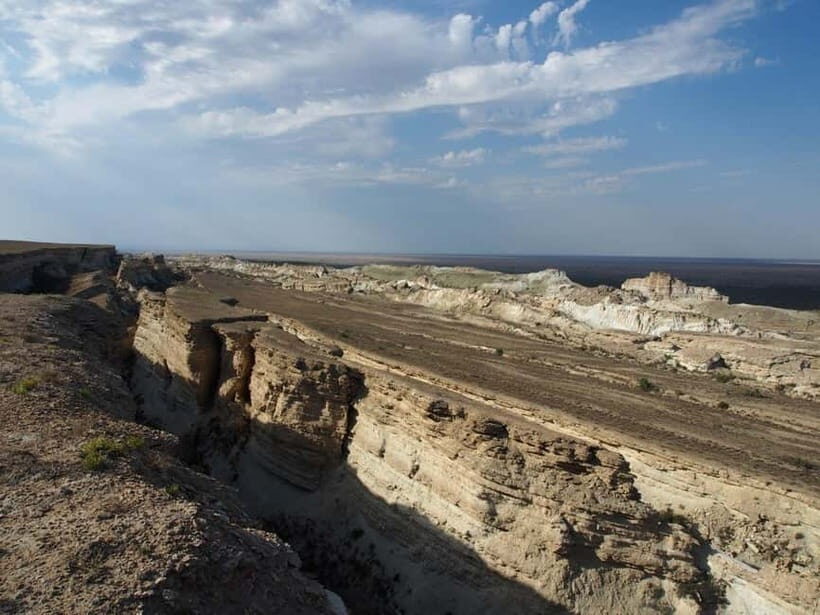
- Dry seabed walking: you can see, touch, walk, and feel what used to be sea.
- Muynak ship cemetery: ship remains plus an Aral-focused museum stop.
- Yurt camp at night: a simple camp experience, plus starry sky time and a shower to wash off salt/mud.
- Ustyurt Plateau white canyon views: harsh, unforgettable rock formations and stopovers with nomad cemeteries.
- Bird-water stop at Sudochie Lake: a key stop on migration, with flamingos and swans if timing lines up.
A harsh lesson in 1.5 days from Nukus
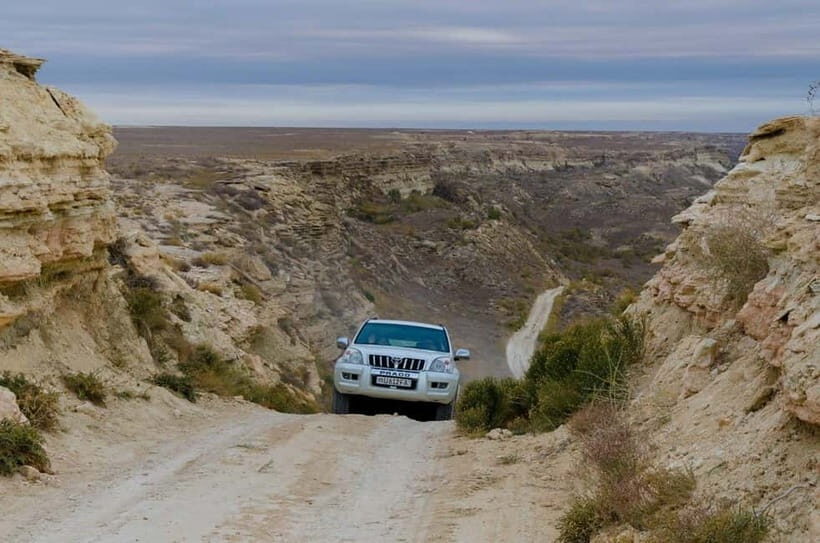
This tour gives you the Aral Sea story in motion. One minute you’re in desert travel mode, the next you’re standing on what used to be seabed—flat, dusty, and strangely quiet. It’s a powerful reminder that nature doesn’t wait for politics or paperwork.
I especially like the pacing. You don’t just speed past the highlights; you move through them in a logical arc: cultural stops first (Mizdakhan), then the environmental core (Muynak + the dried seabed), then big geology (Ustyurt Plateau) on both days. It feels like you’re traveling through cause, effect, and consequence—not just checking boxes.
Still, go into it with open eyes. Some parts of the experience are stark on purpose. If you’re expecting a relaxing beach trip, this will surprise you fast.
You can also read our reviews of more tours and experiences in Muynak.
Getting there comfortably on a bumpy 4×4
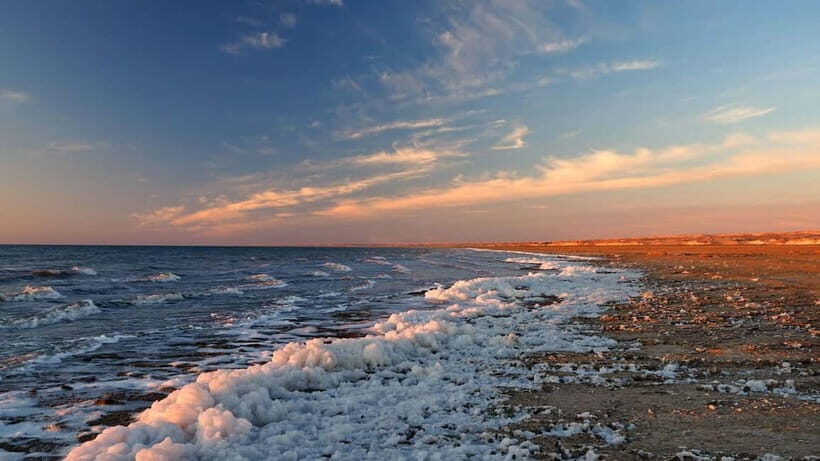
You cover about 400 km each way, and the schedule is mostly driven travel: roughly 7 hours out on Day 1 and about 8 hours back on Day 2. That means your comfort setup matters more than you might think.
The good news: you’re in an air-conditioned 4×4 and picked up from your hotel/airport/railway station area. There’s also an English/Russian driver, and private-group style means you’re not stuck with strangers’ preferences. That said, desert roads can be rough, and the vehicle can only do so much.
Here’s my practical advice: if you have back pain or spine issues, take this seriously. This route is described as bumpy, and you’ll spend hours on imperfect surfaces. Bring a cushion if you use one at home, wear supportive shoes, and pack warm layers because temperatures in this region can shift.
Also note the rules of the ride: drinks and food aren’t allowed in the vehicle. Plan to buy or arrange meals outside, and don’t count on snacking during driving hours.
Mizdakhan: mausoleums and pre-Islamic traces
Mizdakhan is your first emotional jolt. The area is described as a complex tied to the City of deaths and full of mausoleums. Even if you’re not a hardcore architecture person, it’s the kind of place where you slow down because the setting does the talking.
What makes this stop interesting is the way tradition is mentioned as still visible from the pre-Islamic period. That detail matters, because it suggests you’re not just looking at one era’s work—you’re seeing layers of belief and memory in the same ground.
Practical tip: expect walking and standing time. Wear long trousers and solid shoes, not just fashion sneakers. Sun can hit hard, and the wind out here doesn’t care if you’re tired.
Muynak ship cemetery and the ecological museum
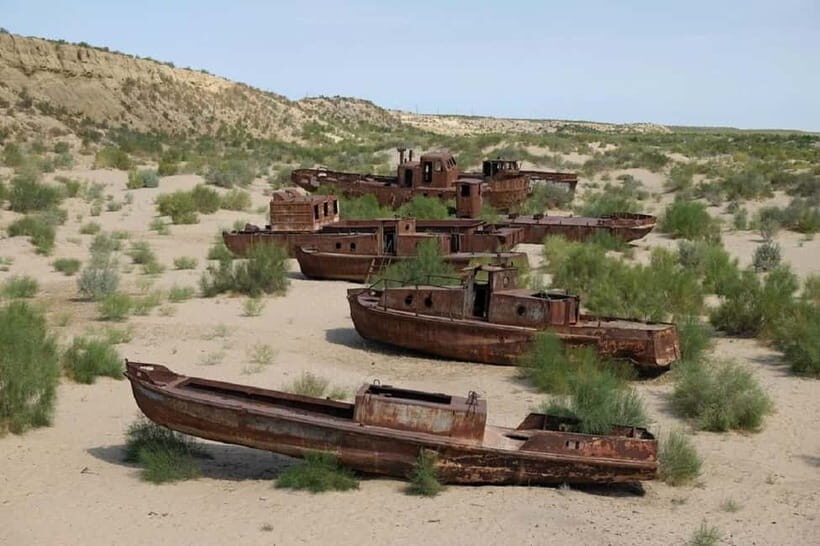
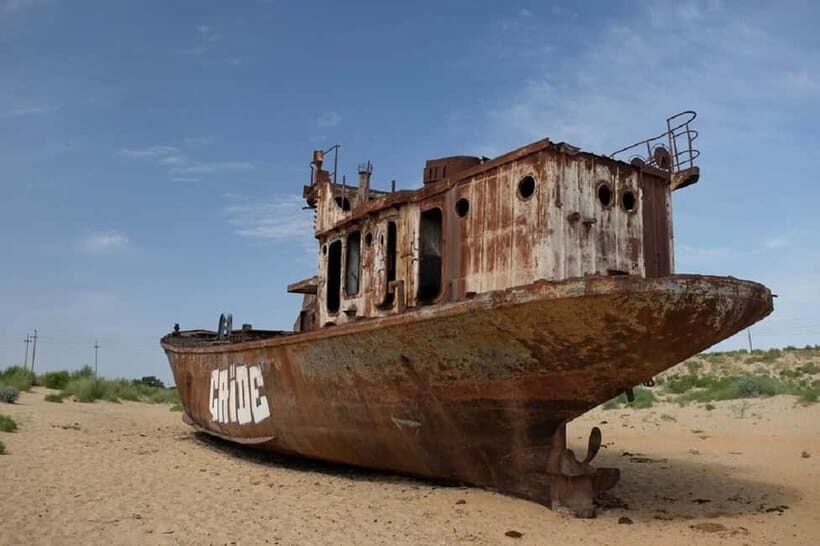
Muynak is where the Aral disaster becomes physical. The ship cemetery is exactly what it sounds like: remnants of vessels left as water disappeared. Standing near them feels different from seeing photos. You can’t unsee how massive these objects are, and how water loss turns them into artifacts.
Right after that, there’s an Aral Sea ecological museum stop. Even if you only skim, it helps connect the dots between the visual shock of ship remains and the broader ecological story. The museum ticket is not included, so budget a small extra amount per person if you want it.
What I’d do: make sure you have enough energy for the museum after walking around the ship cemetery. It’s easy to feel museum fatigue, but this is one of the places where the museum can sharpen your understanding.
On the dried seabed: what it feels like
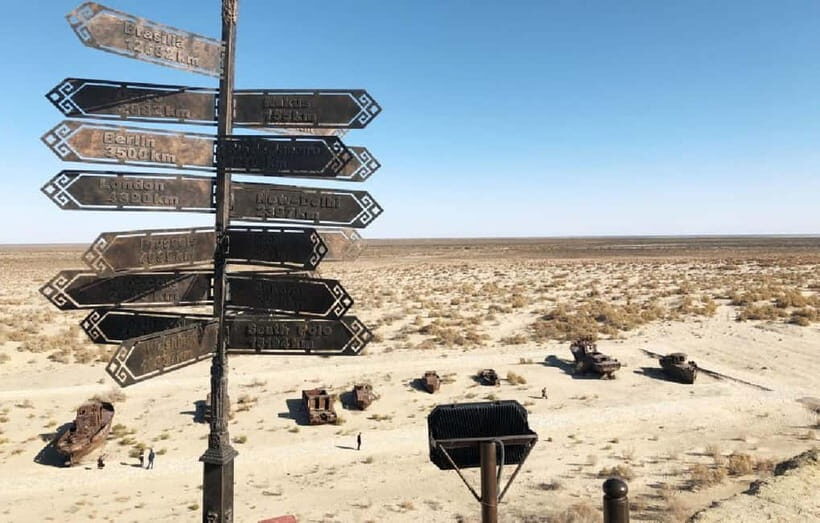
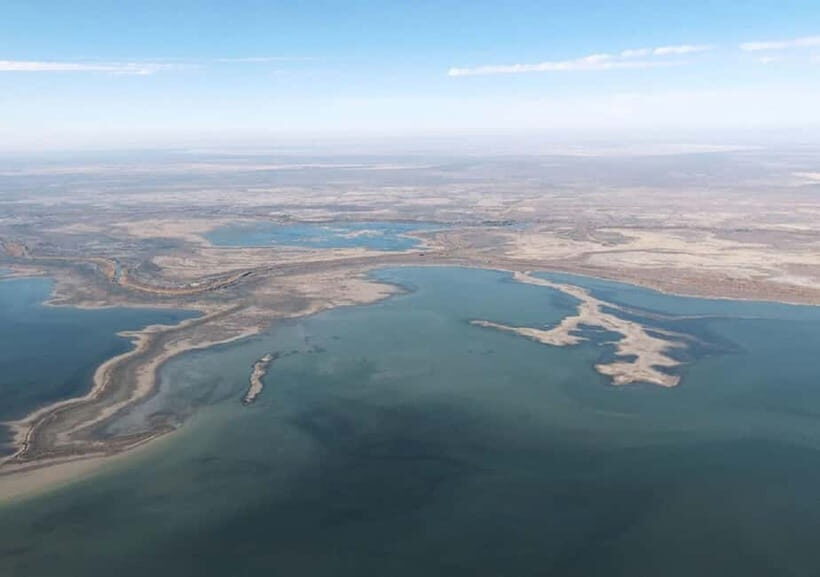
This is the “wait, this is real?” moment. After Muynak, you’ll pass along the up-seabed of the Aral Sea itself. Then the experience turns hands-on: you can see, touch, walk, and feel the disaster because there’s no water here.
Walking on dried seabed isn’t like strolling a dry lake in a park. It’s dusty, exposed, and often made of fine material that gets into everything if you’re careless. Bring sunscreen and sunglasses, and plan on your shoes getting dusty. The good part is that you’ll understand the scale instantly.
And yes—swimming is part of the optional experience in the region. The tour notes that the sea is safe for swimming, and you can bring swimwear if you want to try it where conditions allow. I’d treat it as a bonus, not the main reason you go.
This is also where warm clothing becomes less optional than it sounds. Even if it’s sunny, early spring or late autumn can mean chilly wind. A light warm jacket is smart.
Yurt camp at night: sunrise, shower, and stars
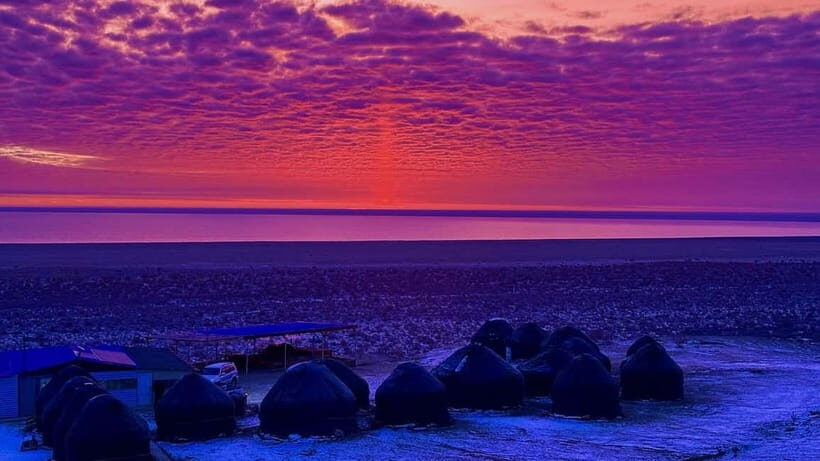
After the main day’s driving and sights, you sleep in a yurt camp near the Aral Sea dried area. A lot of people book these kinds of camps for the vibe—but here the timing is the payoff. You’re far enough out that the sky can get seriously dark.
One of the highlights you can count on is night sky time—exploring the Milky Way in a clear sky is specifically part of the plan. And there’s a strong chance you’ll remember sunrise too. The tour experience notes that the camp’s morning light is a standout moment.
Important: the yurt night is extra (listed at $25 per person). Meals are also extra, and that changes the final price. In other words, don’t only price the base tour.
Good news on comfort basics: there’s a fresh shower available in camp to wash off sea salt and mud. If you plan to walk on the seabed or swim, this is the difference between feeling human after dinner versus feeling like you’ve joined the seabed. The camp also has electric power to charge devices, but there’s no mobile/internet connection in the area—so download maps and keep your expectations realistic.
Ustyurt Plateau, Davlatgirey caravanserai, and bird waters
Day 2 is more about big “space” than tight sightseeing. After breakfast (also extra), you head back toward Nukus with multiple stops that broaden the story.
First up is Davlatgirey caravanserai (Kurgancha kala), described as an abandoned trading caravanserai. It’s a reminder that these routes were once about movement and trade across hard country. It doesn’t need to be flashy to work. You just have to imagine the lives that passed through here.
Then you hit the Ustyurt Plateau. The tour describes it as mysterious and notes you can see “grand canyons” of Uzbekistan-style views with white shades, plus several cemeteries of local nomads along the way. This is another hands-on reality check: the terrain here is dramatic, and it shapes how people lived.
There’s also a stop at Sudochie Lake, a key migration stop for birds like pink flamingos, white swans, and ducks. The key detail is why this matters: it’s a stop on a long journey. If your timing lines up, you’ll see wildlife. If not, you’ll at least understand why people watch this water.
Back in Kungrad, there’s a recommendation for a picnic lunch, then the final drive into Nukus arrives around 17:00.
Price and value when meals and yurt are extra
The base price is $590 per group up to 4. That sounds pricey until you look at what’s included: a private group, A/C 4×4, all fees and taxes, pickup included, and a driver who speaks English or Russian.
Where the money shifts is the add-ons:
- Yurt camp night: $25 per person
- Meals: listed as $50, four times (1 breakfast, 2 lunches, 1 dinner)
- Aral Sea museum ticket: $5 per person
If you’re traveling as a full group of 4, the base cost per person is much lower, and the extras become the main part of your budget. If you’re traveling as 2 or 3, the base portion per person rises quickly.
My practical take: it’s good value if you split the group price and you’re willing to pay for the camp + meals rather than trying to improvise food in a place with no obvious options. It’s less of a deal if you’re traveling solo or you don’t plan to do the museum.
Also consider this: this tour is built around long driving days in rough country. If you’re paying for comfort expectations, you might feel the cost more than the value.
Should you book this Aral Sea tour?
Book it if you want a real, physical connection to the Aral Sea story. You like road trips, you don’t mind dust and heat management, and you can handle a long day of driving. This is the kind of experience where the main reward is understanding—standing somewhere you previously only saw on a screen.
Skip it if you need smooth roads and easy walking for long distances. It isn’t suitable for people with mobility impairments, and if your back is easily aggravated, take the bumpy-road issue seriously.
One last move that helps: confirm driver language ahead of time. The tour lists English and Russian options, and I’d rather know before you’re out on the road.
If you fit the profile, this is one of the most memorable ways to see Karakalpakstan beyond Nukus—because you’re not only looking at the Aral Sea decline. You’re standing on it.
FAQ
How long is the Aral Sea tour from Nukus?
It runs about 1.5 days, with a full Day 1 and a Day 2 drive back to Nukus.
How much is the tour, and is it shared?
The price is $590 per group (up to 4 people). It’s a private group.
What’s included in the price?
Pickup from your hotel/airport/railway station, an A/C 4×4 vehicle, the driver (English or Russian), and all fees and taxes.
What extra costs should I expect?
A yurt camp night is $25 per person. Meals are listed as $50, four times during the tour. The Aral Sea museum entry ticket is $5 per person.
Is breakfast included?
Breakfast is not included, but it’s listed as part of the meal add-on options.
Can I swim or hike on the dry seabed?
You can enjoy hiking and there’s an option to swim since the sea is described as safe for swimming. The dried seabed area is also walkable and touchable.
What should I pack for the tour?
Bring comfortable shoes, warm clothing (needed in early spring and late autumn), sunglasses, a sun hat, sunscreen, swimwear if you want to swim, and comfortable clothes.
Will I have mobile service or internet?
No mobile or internet connection is available in this area. The tour notes there is a telephone for local communication in the car and at the camp, and electric power is available at the camp to charge devices.
Is this tour suitable for people with mobility impairments?
No. It’s not suitable for people with mobility impairments.