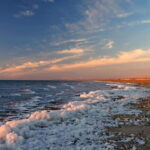
The Aral Sea is still talking. This Muynak ship cemetery day from Nukus is a hard-hitting mix of Ship Cemetery silence and Aral Sea Museum facts, tied together with big desert road time. I like how the itinerary moves from the feeling of loss to clear context, and I also like that it’s a private group ride in an A/C vehicle. One drawback to plan for: lunch is typically a local Karakalpak-style stop you may need to arrange in advance, and the Aral Sea Museum entrance isn’t included.
You’ll leave Nukus and head toward the Mizdakhan complex, then continue to Muynak for local lunch and the main sites tied to the vanished water. Expect a long day, roughly 200 km one way with about 2.5 hours of driving time (plus stops), and wear shoes you trust on uneven ground.
In This Review
- Key Things You’ll Notice on This Trip
- From Nukus to Muynak: what this 6-hour day really feels like
- Mizdakhan Complex: mausoleums, pre-Islamic traces, and a very strong mood
- The Kungrad stretch: why the road time is part of the experience
- Muynak lunch: Karakalpak family-style food, with fewer options
- Ship Cemetery: the afterlife of boats and the blunt lesson of change
- Aral Sea Museum: turning what you see into clear context
- Price and value: $130 per group can be a smart deal
- Timing and logistics: why the day feels long (and how to manage it)
- Practical tips so you enjoy every stop
- Who this tour is best for
- Should you book the Muynak Ship Cemetery tour from Nukus?
- FAQ
- FAQ
- How long is the Muynak Ship Cemetery tour from Nukus?
- What’s included in the price?
- How much is the tour, and how many people is it for?
- Where does pickup happen?
- Is lunch included?
- Is the Aral Sea Museum entrance included?
- Do I get a guide with the tour?
- What languages does the driver speak?
- Is the tour accessible for wheelchair users?
- What should I bring or wear?
- Is there a cancellation policy?
Key Things You’ll Notice on This Trip
- A/C private car from Nukus makes the 200 km stretches more comfortable.
- Mizdakhan complex lets you see a “City of deaths” feel, with lots of mausoleums and pre-Islamic traditions still visible.
- Muynak social life around former fishermen gives the day more than just ruins.
- Ship Cemetery shows the consequences of human impact on nature in a way photos can’t fully explain.
- Aral Sea Museum helps you connect what you see outside to fauna and flora of the former sea.
From Nukus to Muynak: what this 6-hour day really feels like
This isn’t a quick look-and-go sightseeing mission. It’s a road trip into Karakalpakstan where the distances and the changing terrain shape your mood. You’ll start in Nukus, ride out toward Mizdakhan and then keep going to Muynak, with time built in for stops and the main walking moments.
The emotional arc is the point. You begin with the Mizdakhan complex and its mausoleum-heavy atmosphere, then shift into Muynak, where the theme turns from mortality to environmental collapse. The final effect is that you don’t just see places—you get a clearer sense of how big changes show up on the ground.
A small but important heads-up: this program is set up with a driver, and a guide is only arranged if you request one. That means you can still have an easy, smooth day, but you may need to lean on your own questions (or request a guide) if you want deeper interpretation.
You can also read our reviews of more tours and experiences in Muynak.
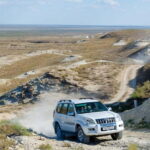
Mizdakhan Complex: mausoleums, pre-Islamic traces, and a very strong mood
Mizdakhan complex is one of those stops where your brain goes quiet because there’s so much stone history. It’s described as a City of deaths, filled with mausoleums, and you can also notice traditions from the pre-Islamic period still present in the area.
Why it matters for your trip: this stop anchors you in local culture and time depth before you hit Muynak’s environmental story. If you jump straight to the ship cemetery, you’ll still get the message—but Mizdakhan adds another layer: how humans cope with loss, memory, and place.
What to expect on-site depends on your walking pace, but plan on comfortable movement over uneven ground. Bring good shoes and take your time. The complex is meant to be read slowly—there’s no speed-run version that will do it justice.
The Kungrad stretch: why the road time is part of the experience
The route includes a stop area around Kungrad before you continue toward Muynak. You’re on a long out-and-back day, roughly 2.30 hours driving from Nukus with stops to reach Muynak (about 200 km).
This is where the A/C vehicle earns its keep. Even if it’s cool outside, desert drives can still feel dusty and tiring. A comfortable car matters when your main sites involve walking and standing.
Also, be mentally ready for driving conditions. The itinerary doesn’t promise a smooth highway-only experience, and the timing suggests a day shaped by travel reality, not just clock time. If you’re someone who gets restless in the car, bring something to pass the time (music, offline maps, a book).
Muynak lunch: Karakalpak family-style food, with fewer options
Muynak is where the day shifts into “people still live here” mode. The plan includes lunch in a Karakalpak family/restaurant along the way in Muynak, with a key note: lunch is not included in the base price.
There’s also a practical detail that changes your planning. The information says there may not be restaurants in Muynak or along the way in the usual sense, and lunch can be booked by request. That means you’ll want to think about meals early, not at the last second.
Why I think lunch here is worth caring about: you’re seeing fishermen connections and local social life for a few moments in a place shaped by the sea’s retreat. Eating something local in a setting that matches the region makes the whole day feel more real, not just instructional.
If you want the smoothest day, ask in advance about lunch timing and confirm how it’s handled. This avoids the awkward scramble that can happen when you arrive hungry and options are limited.
Ship Cemetery: the afterlife of boats and the blunt lesson of change
The highlight is the Ship Cemetery, also known as the Cemetery of Ships. It’s framed as a once-important and popular city in Uzbekistan that now carries a sad name because of how humans affected nature.
What makes this stop hit differently is the combination of scale and stillness. You’re looking at evidence of a whole way of life disrupted—and it’s hard to treat it like a normal photo stop. The ships are physical objects, but the feeling is bigger than them.
How long should you look? Enough to get beyond the first shock. Walk around, notice distances, and take a breath of the environment. If you’re the kind of traveler who only glances and moves on, slow down here. The power of the site is in noticing how everything is positioned in relation to where water used to be.
One more practical note: this is a site you’ll likely stand and walk in open air. Comfortable clothes and shoes matter. If you’re sensitive to sun or wind, plan accordingly with basic weather protection, even though the tour itself doesn’t list specific gear beyond shoes and clothes.
Aral Sea Museum: turning what you see into clear context
After the ship cemetery, you’ll connect it to the story inside the Aral Sea Museum. The museum is included as a key highlight, but the information also states that entrance to the Aral Sea Museum is not included.
So you’ll want to budget for that separately. The payoff is that the museum gives you the full picture about fauna and flora of the former sea, which helps translate the outdoor “warning sign” into something you can understand.
I like pairing sites like this. Outdoor places show the consequence; museums help you anchor the cause and the ecosystem impact. If you only do one or the other, you’ll still get something. But together, it makes the day coherent.
There’s also a line-skip element listed for the activity. That usually means you lose less time at entry points, which matters on a schedule like this where you’re packing a lot into one day.
Price and value: $130 per group can be a smart deal
The price is $130 per group up to 3, and it includes a round-trip A/C vehicle plus all fees and taxes. That structure is important: for small groups, private transport can be better value than thinking per-person from the start.
Here’s how I’d think about it:
- If you go as two or three people, the cost per person drops fast.
- What’s not included is also clear: lunch, Aral Sea Museum entrance, and a guide unless you request one.
- If you’re the type who wants deeper interpretation, you may want to request a guide so the day doesn’t feel like you’re just getting driven between stops.
In other words, the “value” depends on your priorities. If you want logistics handled and you’re comfortable reading on your own, the base price can feel very fair. If you want someone to actively explain the sites as you go, plan for that as an extra.
Timing and logistics: why the day feels long (and how to manage it)
The duration is 6 hours, but remember that the driving time is about 2.30 hours one way with stops, and you’re packing multiple stops into that window. That’s why the experience can feel intense: you’re moving, walking a bit, then moving again.
Pickup is flexible based on where you start, with pickup from your hotel / airport / railway station, and you should wait about 5 minutes in the hotel lobby before the scheduled pickup time.
Driver notes: the driver can speak English and Russian. That helps a lot for getting basic answers, confirming timing, and keeping the day smooth. But again, a guide is only arranged by request. So if you want a narrative, ask for it before you go.
There are also clear vehicle rules: no smoking, no drinks in the vehicle, and no food in the vehicle. It’s not just “housekeeping”—it affects how you handle snacks and timing. If you’re someone who likes a small water or snack plan, keep it in mind. The tour format isn’t built for eating in transit.
Practical tips so you enjoy every stop
You only get one chance to make a long day comfortable. Here’s what helps with this specific itinerary.
- Wear comfortable shoes. The ground around older complexes and outdoor sites isn’t described as flat and smooth.
- Bring comfortable clothes for wind and sun exposure.
- Plan your lunch decision early since lunch isn’t included and restaurant options may be limited.
- If you care about interpretation, request a guide ahead of time. The program includes transport and a driver, not a guaranteed guide.
- Bring your patience for road conditions. This route is mostly built around real driving time, not just sightseeing time.
Photo note: you’ll likely want to photograph the ship cemetery from multiple angles. Take a moment to step back and compare distances in view—this is one of those sites where perspective changes how the message lands.
Who this tour is best for
This tour is a strong match if you:
- Want a private day trip with comfortable transport from Nukus.
- Like trips where the sites connect into one story: mausoleums and cultural memory first, then Muynak and environmental consequence.
- Prefer structured logistics but still want time to look around at your own pace.
It’s less ideal if you:
- Need heavy guided explanation included by default. The guide is by request.
- Expect lunch to be a standard restaurant meal included in the price.
- Want a fully relaxed day with lots of free time. This is a packed route.
Also, it’s listed as wheelchair accessible, which is useful information for travelers who need that option. If mobility is a concern, ask how site walking will be handled when you book.
Should you book the Muynak Ship Cemetery tour from Nukus?
I’d book it if you’re traveling through Nukus and you want your Aral Sea story to feel grounded. The ship cemetery is the headline, but the value comes from pairing it with the Mizdakhan complex mood and the Aral Sea Museum context about fauna and flora.
Don’t book it blindly if you’re expecting lunch to be included or if you want a guide speaking the whole time without requesting one. If those are priorities for you, sort those pieces out before pickup and the day will feel like money well spent.
FAQ
FAQ
How long is the Muynak Ship Cemetery tour from Nukus?
The tour duration is 6 hours.
What’s included in the price?
Round trip A/C vehicle and all fees and taxes are included.
How much is the tour, and how many people is it for?
It costs $130 per group up to 3 people.
Where does pickup happen?
Pickup is included from your hotel, airport, or railway station in Nukus.
Is lunch included?
No. Lunch is not included, and you can request lunch booking in Muynak.
Is the Aral Sea Museum entrance included?
No. Entrance to the Aral Sea Museum is not included.
Do I get a guide with the tour?
A guide is not included by default. A guide can be arranged by request.
What languages does the driver speak?
The driver speaks English and Russian.
Is the tour accessible for wheelchair users?
The activity is listed as wheelchair accessible.
What should I bring or wear?
Bring comfortable shoes and comfortable clothes.
Is there a cancellation policy?
Free cancellation is available up to 24 hours in advance for a full refund.