REVIEW · KHIVA
Aral Sea – Extended trip (3 days)
Book on Viator →Operated by Oxus Travel · Bookable on Viator
The Aral Sea still has teeth. This private 3-day drive from Khiva strings together Muynak’s ship cemetery and yurt-camp desert nights with fortresses that feel like they belong to another planet. I also like how the trip mixes big-name culture in Nukus with real Karakalpakstan terrain, not just museum stops.
One thing to plan around: you’ll spend a lot of time on the road. With around 1,200 km over three days (and a 6:00 am start), expect long desert driving and plenty of dust-and-sun conditions.
In This Review
- Key highlights to look forward to
- A Private 3-Day Aral Sea Circuit From Khiva
- Road Time, Desert Conditions, and the Two-Car Setup
- Day 1: Chilpiq Kala, Savitsky Museum, Aral Sea Shore, Ships Cemetery
- Chilpiq (Shilpiq/Chilpak Kala) fortress-like monument
- Savitsky Museum in Nukus
- Aral Sea shore
- Ships Cemetery in Muynak
- Regional History and Aral Sea Museum (Muynak)
- Muynak to Ayazkala: Sudoche Lake and a Night in the Desert
- Sudoche Lake (Sudochye ko‘li)
- Mizdakhan Necropolis
- Ayaz-Kala yurt camp overnight
- Ustyurt Plateau Forts and Barsakelmes Salt Marsh
- Qubla-ustyurt (Kıbla Ustyurt) region
- Barsakelmes salt marsh
- Day 3: Ayazkala, Toprak Kala, and the Fortified Town Trail
- Ayaz-Kala archaeological site
- Fortress Toprak Kala (royal Khorezm residence)
- Guldursun Qala and Kyzyl Kala
- Koi Krylgan Kala: late antique then rebuilt
- Angka Kala: the square-plan fortress
- Itchan Kala / Duman Kala remains
- Price and Logistics: What You’re Actually Paying For
- Who This Trip Suits Best (and who should think twice)
- Should You Book This Aral Sea + Fortresses Trip?
- FAQ
- How much does the Aral Sea extended trip cost?
- Where does the tour start and what time?
- What is included in the price?
- What tickets or entrances are not included?
- Do you stay overnight at a yurt camp?
- Can the trip start or finish in places other than Khiva?
Key highlights to look forward to
- Private 4×4 desert driving plus a sedan to handle different stretches smoothly
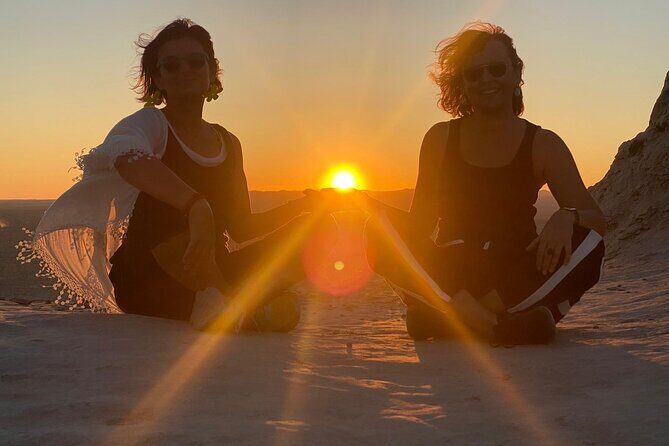
- Yurt camp night in Ayazkala with desert life and night-sky time
- Muynak’s Ship Cemetery plus the Muynak Aral Sea/Regional History Museum
- Nukus Savitsky Museum stop with a major international collection
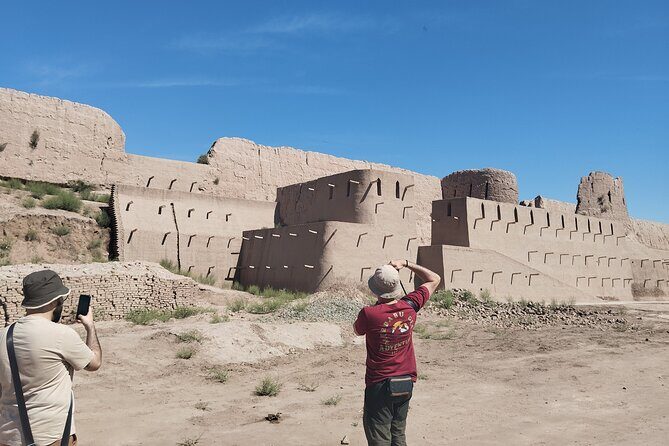
- Ustyurt Plateau fortresses across the Aral Sea region (Ayazkala, Toprak Kala, and more)
- Storytelling backed by an educated local historian (Olimjon is mentioned in guide-style feedback)
A Private 3-Day Aral Sea Circuit From Khiva
This is one of those tours where the shape of your days matters more than the check-list. You’re not just ticking off sights. You’re traveling across the former Aral Sea region by car, hopping between desert monuments, museums, and fortress ruins, with enough time at each stop to look carefully.
What I like most is the pairing: Aral Sea reality (the shoreline, the ships cemetery, and Muynak’s museum) plus fortress-scale archaeology on the Ustyurt and Kyzylkum edges. Together they explain the region’s story in a way you don’t get from photos.
The trip runs as a private group (up to 3 people), so you’re not stuck timing your questions to a big bus schedule. You also get audio guide materials and mobile ticketing, which makes it easier to move with confidence even if you’re not fluent in the local language.
You can also read our reviews of more tours and experiences in Khiva.
Road Time, Desert Conditions, and the Two-Car Setup
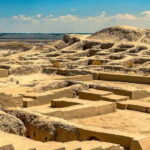
The itinerary is long-distance by design: over 1,200 km in three days. That means you’ll feel the drive. The good news is the logistics are built around desert practicality. You’ll travel in two vehicles—a sedan plus a 4×4—supported by experienced drivers who know how to handle desert conditions smoothly.
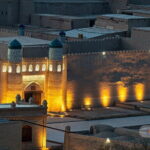
You start early. The meeting point is the Itchan Kala west gate in Khiva (99H4+CRQ), and the start time is 6:00 am. The tour also includes hotel pickup and drop-off, so you’re not wasting time at the start.
Also keep in mind: the tour can start or finish in Khiva, Urgench, or Nukus depending on your preference. That flexibility can help if you’re building a larger Uzbekistan route.
Day 1: Chilpiq Kala, Savitsky Museum, Aral Sea Shore, Ships Cemetery
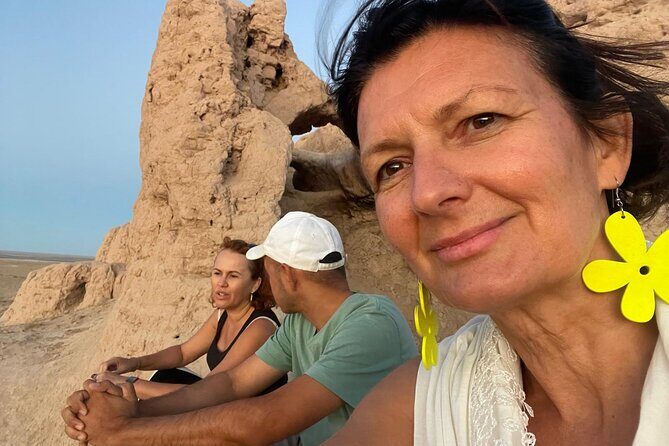
Day 1 sets the tone with a strong contrast: ancient Zoroastrian-era architecture, a major museum in Nukus, then the Aral Sea’s stark visual proof.
Chilpiq (Shilpiq/Chilpak Kala) fortress-like monument
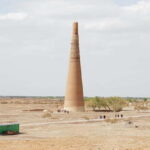
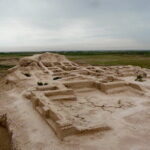
You begin at Chilpiq qala, a very old structure tied to Zoroastrian tradition. The dakhma Chilpyk is described as more than 2,200 years old, built as a round, roofless tower about 15 meters high and 65 meters in diameter. This is the kind of site where you’ll want a slow look from different angles, because the scale reads differently in person than in a quick photo stop.
Admission for this stop is not included, and the time on-site is around 30 minutes. That’s enough for orientation and a careful walk, but not enough for deep study if you’re the type who reads every sign.
Savitsky Museum in Nukus
Next comes one of the most famous cultural stops in the broader region: the State Museum of Art named after I.V. Savitsky in Nukus. The tour allocates about 1 hour, and entry is not included (listed at $7 per person).
Why it’s worth it here is the contrast. After desert architecture and travel time, the museum gives you a “civilization anchor” for your brain. The museum is noted for having the world’s second largest collection (the tour description doesn’t specify the artwork type in full), but the takeaway is simple: this is not a small local collection you’ll finish in five minutes.
Aral Sea shore
Then you reach the Aral Sea shoreline stop, described as a place where you can swim and observe the environment from nearby hills and rocks that were once part of the sea. This is free entry, with about 1 hour allocated.
Even if you don’t swim, this is a key moment because the shoreline tells the story with your own eyes. The scale of the “in-between” terrain is hard to translate into text.
Ships Cemetery in Muynak
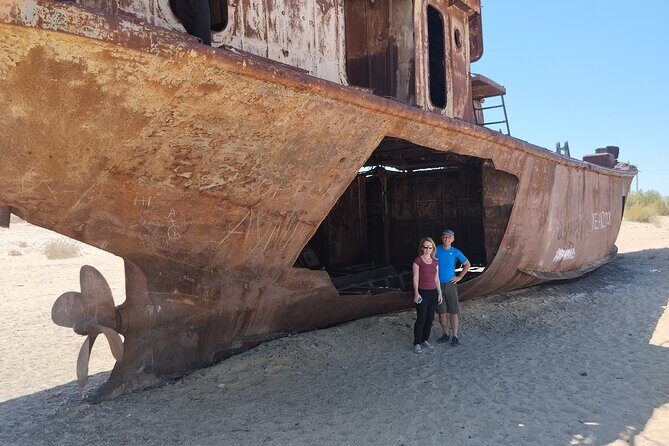
After that, you visit the Ships Cemetery, which is framed as one of the former Soviet Union’s darker secrets: ships left behind as the Aral Sea disappeared. Expect about 1 hour here, with free admission.
This isn’t a tidy, scenic viewpoint. It’s atmospheric in a heavy way. Plan to bring patience for the silence and the visual details, like how the ground meets metal and how far the ships sit from where you’d expect water.
Regional History and Aral Sea Museum (Muynak)
To close the day, you visit the Regional History and Aral Sea Museum, also known as the Muynak Ecological Museum. Entry is listed as free for this stop, with about 30 minutes.
This museum is described as modest compared to major-city standards, but that’s part of the value. Small museums in remote places often focus better on the local story you came for. It’s a good way to re-check what you just saw at the shore and ships cemetery before you change gear to desert forts.
Muynak to Ayazkala: Sudoche Lake and a Night in the Desert
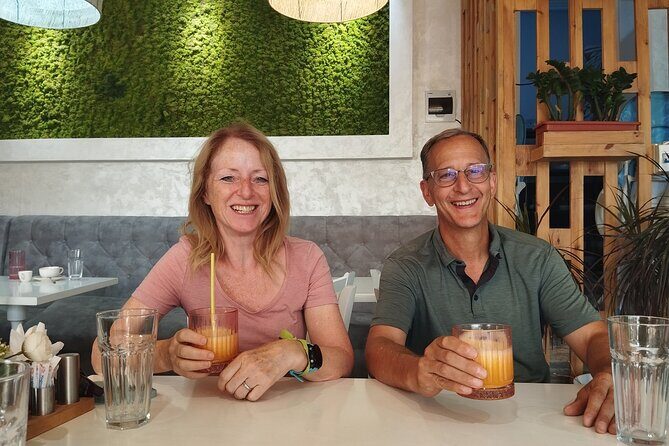
Day 2 shifts toward ecology and ancient pilgrimage sites before you end with a full desert night.
Sudoche Lake (Sudochye ko‘li)
You start with Sudoche Lake, a natural lake close to the Aral Sea area, described as having flora and fauna. It’s allocated about 1 hour and free.
This stop helps you balance the Day 1 mood. Instead of only focusing on loss, you’re also seeing how life still persists in the region’s pockets. The tour description also points out nearby remote areas like Urga village and Kibla Ustyurt village, so you’re already thinking about remoteness even before the next forts.
Mizdakhan Necropolis
Next is Mizdakhan Necropolis, an ancient cemetery near remains of the Gyaur-Kala fortress. It’s noted as one of the oldest and most visited pilgrimage sites in Karakalpakstan.
You get about 30 minutes with free entry. This is not a “run-and-go” stop. A cemetery needs a slower rhythm, and the time here should let you stand back and take in how the site sits in the region.
Ayaz-Kala yurt camp overnight
Then you reach Ayaz-Kala, and the tour includes an overnight stay in an Ayazkala yurt camp. The listed visit time is about 30 minutes, but the big part of the day is the change in where you sleep.
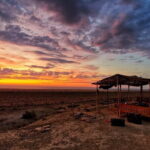
The practical win here: desert life is built into the schedule. Feedback attached to this trip highlights star observing at night and the “unforgettable” feeling of being out in Kyzylkum desert conditions. Even if you’re not a serious astronomer, the night sky is one of the rare travel gifts that costs nothing extra and hits hard.
Ustyurt Plateau Forts and Barsakelmes Salt Marsh
Day 2 also covers the Ustyurt Plateau areas and a salt marsh that sounds like science-fiction until you see it.
Qubla-ustyurt (Kıbla Ustyurt) region
The itinerary lists Qubla-ustyurt as a stop where traditional jeep tour routes often hit multiple Ustyurt attractions. It specifically mentions sites like Kurgancha-Kala (also known as Karganshikala / Davlet-… in the description), described as a 13th-century fortress.
This stop is about 1 hour and free. The value here is the sense of region-scale exploration: you’re not driving one “point of interest,” you’re sweeping across a plateau where forts sit like markers across distance.
Barsakelmes salt marsh
The final Day 2 stop is Barsakelmes, described as a salt marsh covering about 1,000 square kilometers. Salt is industrially harvested here, and the stop is about 200 km from Nukus.
It’s allocated 20 minutes and free. One reason this stop lands is in the description of it as a “non-returnable place” due to remoteness. Even if you don’t take that phrase literally, it captures what your eyes will feel: nothing around you says you’re near a city.
Day 3: Ayazkala, Toprak Kala, and the Fortified Town Trail
Day 3 is for archaeological sites and fortified towns, with a steady rhythm of “how did people live out here?” questions.
Ayaz-Kala archaeological site
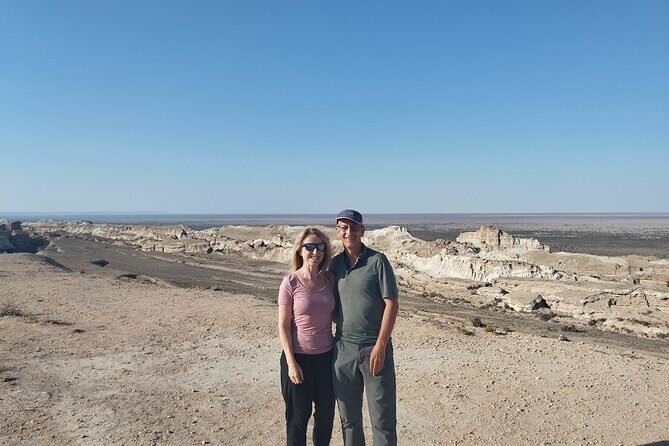
You start with Ayaz-Kala, described as an archaeological site in Ellikqala District. The site is dated between the 4th century BCE and the 7th century CE and sits on a hilltop overlooking the Kyzylkum Desert.
This stop lasts about 1 hour and is free. A hilltop view matters more than you might think. Fortifications weren’t built for decoration; they were built for control and visibility.
Fortress Toprak Kala (royal Khorezm residence)
Next is Toprak Kala, dated to the Kushan period (around the 2nd–3rd centuries CE). It’s described as a royal residence of kings of the Khorezm, and it also served as a royal sanctuary before being briefly abandoned.
Entry for this stop is not included. The tour lists the ticket as not included, with the fortresses generally having fees around $2 each. The visit time is about 30 minutes.
This is a “reads best in context” stop. If you’ve already seen Ayaz-Kala’s hilltop positioning, Toprak Kala can make more sense fast.
Guldursun Qala and Kyzyl Kala
Then you move to Guldursun Qala, described as a fortified town with exterior walls and towers dating to the 12th century CE. The tour notes that excavations found ancient and medieval pottery and bronze items and coins.
The time here is about 20 minutes, and admission is free for the listed stop.
After that comes Kyzyl Kala (also listed with admission not included in the itinerary). The description repeats much of the fortified-town detail—walls, towers, and finds—so treat it as another strong stop in the “forts and medieval trade” category.
These are short visits, so your best strategy is to pick one thing to focus on each time: wall thickness, tower placement, or artifact descriptions if signage is present.
Koi Krylgan Kala: late antique then rebuilt
Next is Koi Krylgan Kala. It’s described as originally constructed in the late antique period (1st–4th centuries CE), then abandoned and rebuilt in 12th–13th centuries on the eve of the Mongol invasions. The description notes there’s some debate about aspects of the site.
Time is about 20 minutes and admission is free. This is where a guide matters. If interpretation is added, you’ll get more from the stones and less from guessing.
Angka Kala: the square-plan fortress
Then comes Angka Kala, a settlement dated I–III centuries and X–XII centuries AD. The fortress is described as well preserved, with an architectural plan that is almost square.
This stop is about 20 minutes and free. Square-plan fortresses often give you an easier “mental map,” even when information is minimal.
Itchan Kala / Duman Kala remains
The last stop is labeled Itchan Kala, but the description that follows covers Duman Kala ruins with three adjacent sections: a square-shaped western enclosure with corner towers, a smaller square citadel, and an irregular four-sided northern enclosure.
Time is about 20 minutes, and admission is free. This stop is about pattern recognition—how the layout changes from section to section.
Price and Logistics: What You’re Actually Paying For
The base price is $899 per group (up to 3 people). That sounds simple, but the real value is in what you get for that number: a private vehicle setup, local driving across extreme distances, and the structure to reach remote desert sites on a schedule that works.
What’s included:
- Private transportation (including air-conditioned vehicle)
- Hotel pickup and drop-off
- Audio guide materials
- Mobile ticket
What’s not included (and you should budget for):
- Savitsky museum entrance in Nukus: $7 per person
- Aral Sea museum entrance in Muynak: $3 per person
- Accommodation at yurt camps: $40 for Aral Sea yurt camp and $50 for Ayazkala yurt camp
- Dinner is listed as $90 per person (the listing doesn’t spell out whether this is per night or per trip, so treat it as a listed meal cost to confirm while booking)
- Lunch is not included
- Fortress entrance fees (each around $2)
Practical take: if you’re comparing to bus tours, you’re paying for distance and access. If you’re comparing to private tours that only do city sights, you’re paying for the hard part: desert roads and remote ruins without losing time.
Also, this is weather dependent. The listing notes good weather is required, and if it’s canceled due to poor weather you’ll be offered a different date or a full refund.
Who This Trip Suits Best (and who should think twice)
This is a strong fit if you want:
- Remote sites rather than only famous cities
- A private pace and time to look at ruins and desert terrain
- A mix of museum culture and desert archaeology
- A night that feels like a real change of world, with yurt camp sleeping
It’s a tougher fit if:
- You get cranky with early starts and long road days. The 1,200 km stretch is real.
- You’re sensitive to desert conditions. The tour is designed for desert travel, but you’ll still feel the heat, wind, and dust typical of this region.
Minimum age is 15, and the tour asks for moderate physical fitness. If you can handle walking around outdoor sites for short periods, you’ll likely be fine.
And if you’re the type who likes good interpretation: feedback tied to the trip specifically praises Olimjon for being an educated historian and warm with people. That kind of guide attention can turn these stops from a slideshow into actual meaning fast.
Should You Book This Aral Sea + Fortresses Trip?
I’d book it if you want the Aral Sea region as a journey, not just a photo run. The best reason is the balance: shoreline reality in Muynak plus a day-after-day sequence of fortresses and plateau ruins that show how people used to live, travel, and defend across harsh terrain.
Before you commit, do two quick checks:
- Confirm the yurt camp and dinner pricing details so there are no surprises about what’s covered for your exact dates.
- Plan for the fact that this is heavy on driving and desert time, with a 6:00 am start and a lot of outdoor walking in bright conditions.
If that sounds like your kind of adventure, this private 3-day loop is a very efficient way to see Karakalpakstan beyond the usual route.
FAQ
How much does the Aral Sea extended trip cost?
The price is $899 per group, up to 3 people.
Where does the tour start and what time?
It starts at the Itchan Kala west gate in Khiva (99H4+CRQ). The start time is 6:00 am, and the tour ends back at the meeting point.
What is included in the price?
Included are audio guide materials, hotel pickup and drop-off, an air-conditioned vehicle, and private transportation.
What tickets or entrances are not included?
Not included are the Aral Sea Museum entrance in Muynak (listed at $3 per person), the Savitsky Museum entrance in Nukus (listed at $7 per person), accommodation at the yurt camps, lunch, and fortress entrance fees (each around $2). Some listed stops also show admission tickets not included.
Do you stay overnight at a yurt camp?
Yes. The itinerary includes an overnight at an Ayazkala yurt camp.
Can the trip start or finish in places other than Khiva?
Yes. The tour can start or finish in Khiva, Urgench, or Nukus based on your preference.