REVIEW · KHIVA
Old Khiva Stories with Your Local Guide
Book on Viator →Operated by Uzbekistan Travelers - Guided By Sarvar · Bookable on Viator
Khiva’s walls have a way of making history feel close. On this 3-hour walk in Itchan Kala, you get guided context at the big sights plus a few practical stops that explain how Khiva worked, from Islamic schools to khan-era palaces. The guide, Sarvar, is English-speaking and from Khiva, so the stories come with real local framing.
I like the pace: it is short enough to fit into a tight schedule, but it still covers the key icons like Ata Darwaza, the Kalta Minor, and the Juma Mosque. I also like the mix of architecture and lived ideas, including what Khiva’s scholars contributed to math and science and what artisans still build today.
One consideration: the tour price is only for the guide. You also pay entrance tickets on site (a bundle fee is listed), so the total cost can be higher than the $22 headline if you are budgeting tightly.
In This Review
- Key highlights to know before you go
- Why this 3-hour Itchan Kala walk makes Khiva click
- Meeting at Ata Darwaza and getting oriented fast
- From Mohammed Amin Khan Madrasah to the Kalta Minor
- Kuhna Ark: what a khan’s fortress tells you about everyday rule
- Khiva wood carving and the craft you can actually watch
- Scholars Museum: math and ideas linked to Khiva
- Tosh Khauli (Allakulikhan Palace): second palace, same power logic
- Allakuli Khan Tim Market and caravanserai shopping
- Juma Mosque: the forest of 215 wooden columns
- Islam Khodja Complex and the tallest minaret moment
- Price and tickets: what $22 really buys you
- Logistics that affect comfort: walking, timing, and group size
- Who should book this Khiva walk, and who might skip it
- Should you book Old Khiva Stories with Sarvar?
- FAQ
- Where is the meeting point for this tour?
- How long is the walking tour?
- How much does it cost?
- Is the entrance fee included in the tour price?
- What language is the guide?
- What kind of ticket do I get?
- What is the cancellation policy?
Key highlights to know before you go
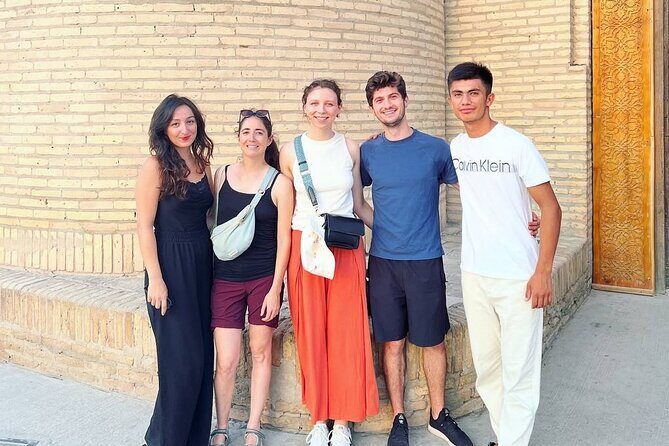
- Local guide Sarvar shares stories from growing up in Khiva, not just textbook facts
- Itchan Kala UNESCO walking route focuses on the core sights in about 3 hours
- Juma Mosque wooden-column interior with carved columns is a standout stop
- Wood carving workshop and craft time shows how Khiva’s woodworking tradition carries on
- Kuhna Ark and Tosh Khauli (Allakulikhan Palace) connect power, design, and daily life in the khanate
- You get practical city tips on where to eat and shop while you’re already moving around the old city
Why this 3-hour Itchan Kala walk makes Khiva click
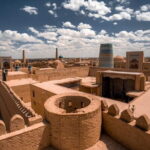
Khiva can feel like a blur of minarets, tiles, and gates—until someone gives you the right thread to follow. This tour is built around that thread: you start at the main entry point into Itchan Kala, then you work through the Islamic-school era, khan-era fortress life, and the religious landmark that people remember for its wooden-column ceiling.
The format also helps. With a small group limit (max 15), you are not stuck waiting behind people at every doorway. And since the tour is about 3 hours, you get a focused orientation without turning the day into a full-day grind of ticket lines and long museum wandering.
You can also read our reviews of more guided tours in Khiva
Meeting at Ata Darwaza and getting oriented fast
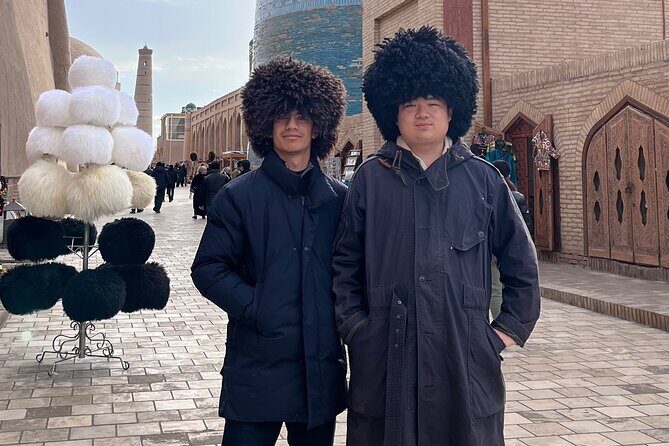
You start at the west gate area of Itchan Kala (the meeting point is listed at Ichan Kala west gate, plus the nearby map pin). From there, you begin right where the story makes sense: at the gateway, Ata Darwaza, which historically welcomed caravans moving along the Silk Road routes.
This is more useful than it sounds. When you know what a gate was for—trade, entry, control—you start noticing the city as a system, not just a collection of buildings. The guide also ties the gate to what came after, so the walk feels like one continuous sequence.
From Mohammed Amin Khan Madrasah to the Kalta Minor
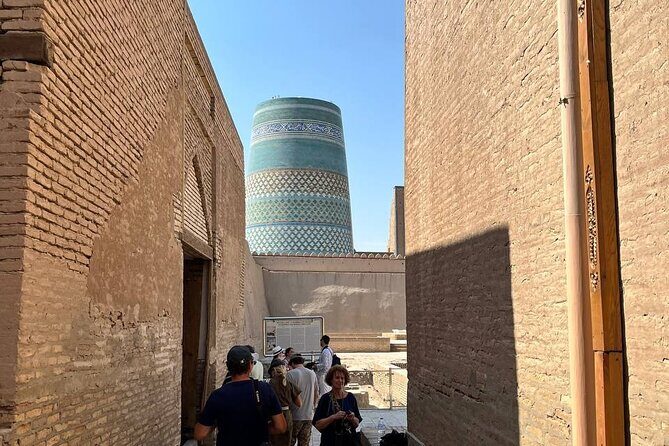
Next you move to the Mohammed Amin Khan Madrasah, built in 1851. The big idea here is scale and purpose. This was the largest Islamic school in the region at the time, with space for over 250 students, so it was not a small religious corner—it was education as major city infrastructure.
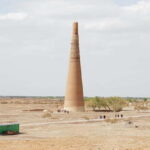
Standing near it, you learn how madrasas functioned socially: they drew students, created networks, and put rulers in the frame of religion and learning. Then you are guided to the Kalta Minor Minaret, the most recognizable landmark in Khiva.
You get the quick visual takeaway—bold turquoise tilework and that short, wide form—plus the reason it was commissioned. It was built by Mohammed Amin Khan, meant to project power and identity right beside the school.
Kuhna Ark: what a khan’s fortress tells you about everyday rule
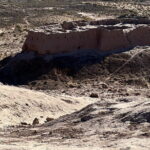
A lot of visitors rush through fortresses and miss what they are for. Here, you step inside Kuhna Ark, the historic fortress that served as the residence of Khiva’s khans.
The complex includes multiple parts—throne room, harem, mint, mosque, and decorated reception areas—so it helps you understand rule as more than politics. You are seeing the layout of authority: where audiences happened, where religious life sat inside the fortress, where valuables were made, and how private space differed from public rooms.
The practical payoff: once you understand this fortress as a functioning complex, other palace-like spaces start making more sense as you see them later.
Khiva wood carving and the craft you can actually watch
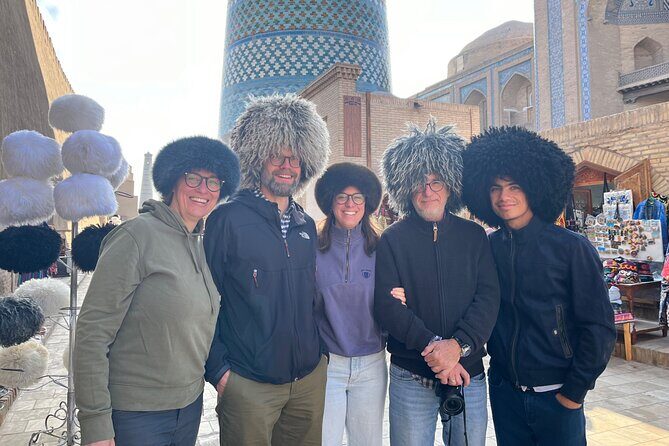
Khiva is famous for wood carving, and this stop is designed to make that fame tangible. You visit a local workshop tied to the city’s woodworking tradition, where you can see artisans working on detailed pieces like columns, doors, and related carved elements.
This stop is valuable because it shifts you from looking at finished decoration to seeing how it is produced. Even if you are not an art person, it helps you understand why Khiva buildings feel so “hand-made” rather than mass-produced.
If you want a souvenir that feels like part of the craft—not just a flat tourist magnet—this is the kind of timing you want in your walk. You are still fresh, still seeing the workmanship close up, so choices feel smarter.
Scholars Museum: math and ideas linked to Khiva
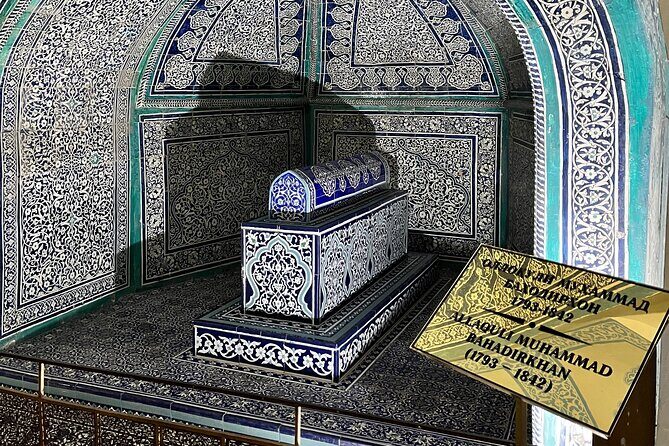
Another stop that pays off is the Scholars Museum, where the guide connects important historical figures connected to Uzbekistan’s intellectual tradition. You talk about professors associated with world civilization such as Al-Khorazmiy, Al-Beruniy, Zamaxshariy, and Abu Ali Ibn Sino.
You don’t need to be a history major to enjoy this. The main point is perspective: Khiva is not only tilework and minarets; it is also linked to the wider scientific and scholarly heritage of the region. When the guide frames these names in context, the city’s religious education stops feel less isolated and more connected to knowledge systems.
Tosh Khauli (Allakulikhan Palace): second palace, same power logic
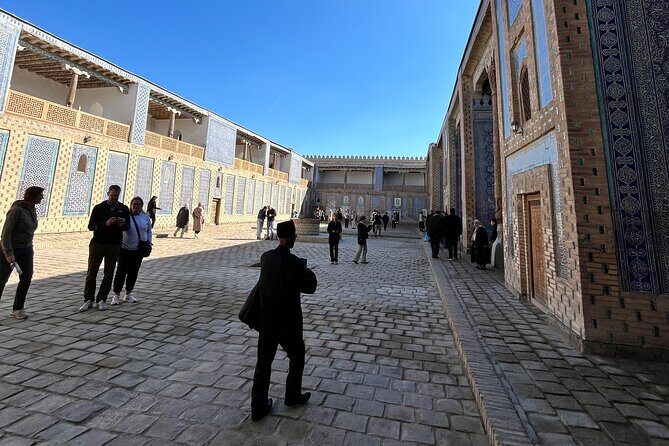
Then you visit Tosh Khauli, also known as Allakulikhan Palace. This is another palace space connected to the khans and their court, built in the 19th century.
You might see this and think, okay, more palace rooms. The difference is that you are taught to compare them. The guide’s storytelling helps you notice how palace architecture communicates status: scale, placement, decoration choices, and how these spaces supported court life.
One note for your planning: this palace stop lists an admission ticket as not included in the base tour price, which ties directly into the overall ticket bundle you pay separately on site.
Allakuli Khan Tim Market and caravanserai shopping
Next comes a practical and fun part: Allakuli Khan Tim Market. This is where the walk connects to real daily functions—buying supplies, meeting traders, and picking up items from market life rather than only museum displays.
You also visit the Allakulikhan Caravanserai, described as a preserved stop along the ancient Silk Road. Even if you do not shop heavily, this area gives you a feel for how travelers and merchants would have moved through the city and where they would have staged their business.
If shopping is part of your Khiva experience, this is a good moment. You are already walking with the guide, so you can ask what is worth your time and what is mainly for show.
Juma Mosque: the forest of 215 wooden columns
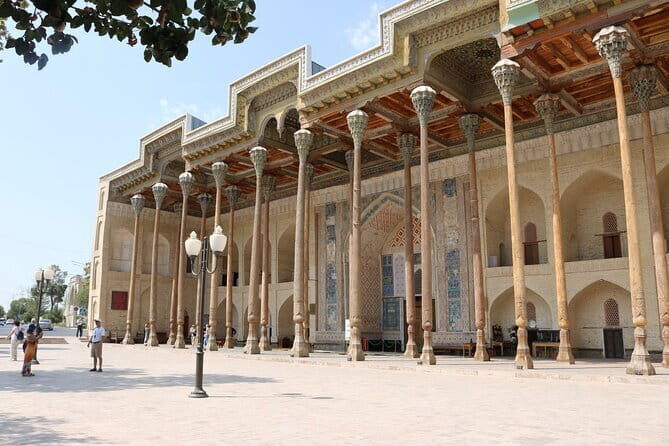
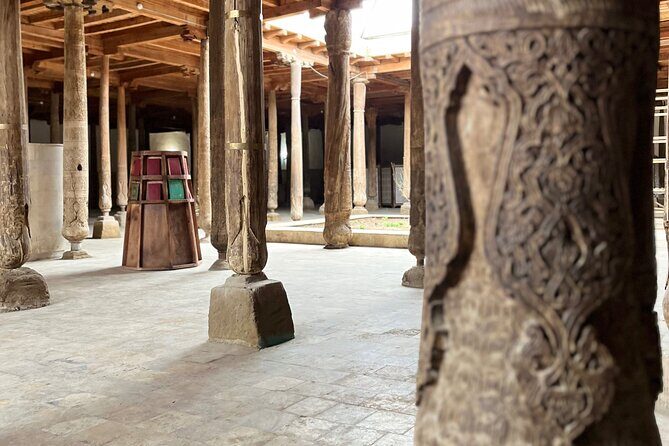
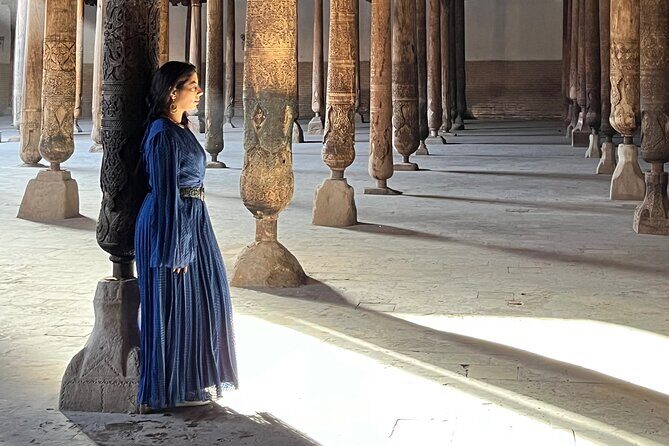
If you remember only one interior from Khiva, make it the Juma Mosque. It is famous for its forest of 215 wooden columns, each intricately carved.
The cool part is the effect: you do not just look at architecture—you experience it as a grid of carved wood that changes how the space feels. The guide also connects the look to a blend of Islamic and local artistic influences, which helps you read the details instead of just admiring them.
This is also a great stop to slow down a bit. You’ll get more out of it if you take a moment to look up and then look at the carvings around you, letting the columns do their work.
Islam Khodja Complex and the tallest minaret moment
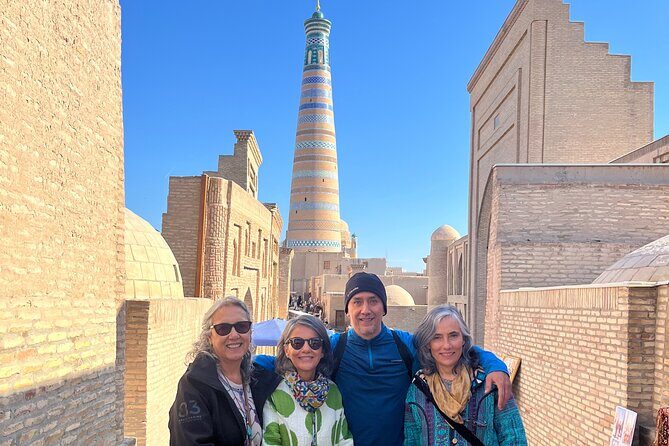
Finally, you visit the Islom Khodja Complex, which includes the Islom Khodja Madrasah and its striking minaret. This is noted as housing the city’s tallest minaret, and the site is named after Islom Khodja, a prominent local figure referenced in the tour description.
This stop is less about collecting one more pretty building and more about completing the city’s vertical story. After earlier minarets and education buildings, this one gives you a strong sense of how Khiva used height, visibility, and religious architecture to signal importance.
Like the earlier palace stop, admission for this complex is listed as not included in the base tour price.
Price and tickets: what $22 really buys you
The price is $22.00 per person, booked often around 108 days in advance on average. That $22 covers the guide service—an English-speaking local guide—and the guided walking experience.
What it does not include is the museum and site entry fees. You pay a separate entrance ticket fee listed as 250,000 sum per person, and it is described as covering 10–13 museums. Payment can be done cash or by card, depending on what works for you on the day.
So is it good value? For me, yes—if you plan to actually go inside multiple buildings during your time in Itchan Kala. The route already focuses on the major architectural icons and several interior stops, so you are not paying guide fees just to stand outside. But if you only want to take photos from the street, then the separate ticket cost can feel less efficient.
Practical tip: bring a bit of patience for payment at entry points and keep a close eye on when you need the ticket. If you are the type who likes to move fast, plan a little buffer into your schedule so you do not feel rushed at the first interior stop.
Logistics that affect comfort: walking, timing, and group size
This is a walking tour, and it runs about 3 hours. That means you get a complete hit of the main sights without turning your day into an all-afternoon slog, but you should still expect to cover distance inside the old city.
The start is at the west gate area of Itchan Kala and the tour ends back at the meeting point area. It also uses a mobile ticket, and you should receive confirmation at booking time.
With a max group size of 15, it stays manageable. You can ask questions without shouting across a crowd, and you can keep up at the turns through narrow passages.
Who should book this Khiva walk, and who might skip it
I’d point you to this tour if you want your Khiva visit to feel guided and connected: gate to madrasah to fortress to mosque, with explanations that make the buildings easier to read.
It also fits well if you like a mix of architecture and “why it mattered.” The route covers the craft side (wood carving), the learning side (scholars linked to famous figures), and the everyday commerce side (the market and caravanserai).
You might consider a different approach if you already feel confident reading Khiva on your own and you would rather spend longer inside just one or two sites. This walk is designed to be efficient, not to replace a full museum day.
Should you book Old Khiva Stories with Sarvar?
I think this is a strong pick if you want a guided, high-impact orientation to Itchan Kala. The combination of iconic landmarks and story-driven context makes the city feel less like a photo album and more like a place with systems—trade at the gates, learning at the madrasas, power at the fortress, and belief at the mosque.
Book it especially if you appreciate local perspective. Sarvar is described as kind and helpful, and the tour’s design—tips on where to eat and shop while you walk—feels like it is built for making your whole day work, not just checking boxes.
If you are sensitive to extra costs, do the math first. The base tour price is clear, but the separate entrance ticket is a real add-on. When you plan for that, the value feels fair because the route is built around interiors.
FAQ
Where is the meeting point for this tour?
The meeting point is at the Ichan Kala west gate area (listed with the nearby reference 99H4+CRQ), Khiva, Xorazm Region, Uzbekistan.
How long is the walking tour?
The tour is about 3 hours.
How much does it cost?
The tour price is $22.00 per person.
Is the entrance fee included in the tour price?
No. Entrance fees are not included in the $22 tour price. The listed entrance ticket fee is 250,000 sum per person for 10–13 museums, and you can pay cash or by card.
What language is the guide?
The guide is English speaking.
What kind of ticket do I get?
You get a mobile ticket.
What is the cancellation policy?
Free cancellation is available. You can cancel up to 24 hours in advance for a full refund.