REVIEW · KHIVA
Khiva: Historical City Highlights Guided Walking Tour
Book on GetYourGuide →Operated by Tourmania Uz · Bookable on GetYourGuide
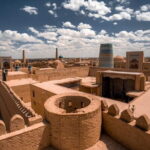
Khiva’s old city feels like a time machine. This 4-hour walking tour takes you through Itchan Kala, Khiva’s UNESCO-listed historic core, with a guide who helps you get into the key sights so you spend less time figuring out tickets and more time seeing the city.
Two things I like a lot: you start at the Allakuli Khan Madrasah and work your way through the most iconic monuments in a tight route, and the guide makes the stops feel personal with stories (Iroda comes up again and again as a standout name). One thing to plan for: the tour price covers the guide, but entrance tickets are not included, and some sites restrict flash photography.
In This Review
- Key highlights at a glance
- Why Itchan Kala is the heart of Khiva
- Starting at Allakuli Khan Madrasah: a powerful way to begin
- The Islam Khoja Minaret: photo stops with meaning
- Pakhlavon Makhmud Mausoleum: where spirituality meets art
- Juma Mosque and its 10th-century wooden columns
- Itchan Kala walking time: how the whole route hangs together
- Price and value: $19 for the guide, then tickets for the sites
- Logistics you’ll actually care about during the walk
- Guides, language, and why communication changes everything
- Who this tour suits best (and who should rethink it)
- Should you book this Khiva walking tour?
- FAQ
- How long is the Khiva historical city highlights walking tour?
- What is included in the $19 per person price?
- Are entrance tickets included?
- Where does the tour start?
- Where does the tour end?
- What languages are the guides?
- Is flash photography allowed?
- Are the groups private or shared?
- Is this tour suitable for people using wheelchairs?
- Do I need WhatsApp to book?
Key highlights at a glance
- Itchan Kala UNESCO focus: you’re not just passing by buildings, you’re walking the historic center with context
- Allakuli Khan Madrasah start: a strong opening with 19th-century Islamic architecture
- Islam Khoja Minaret: the classic Khiva landmark, with stops for both views and photos
- Pakhlavon Makhmud Mausoleum: dedicated to a revered Sufi saint
- Juma Mosque wooden columns: a 10th-century surprise and a change of pace
- Small-group or private options: easier questions and more flexible pacing
Why Itchan Kala is the heart of Khiva
If you only have a half day in Khiva, this is the kind of tour that helps you get your bearings fast. Itchan Kala is the historic heart people come for, and this walk is built around the main monuments there, so you’re not trying to connect the dots on your own.
What I like most about the approach is that the tour is structured, but not rushed. You’re walking between landmarks that share a bigger story about Khiva’s religious and architectural life. And because you’ll have a guide, you’ll notice details you’d probably skip if you were just roaming and snapping pictures.
You can also read our reviews of more walking tours in Khiva
Starting at Allakuli Khan Madrasah: a powerful way to begin
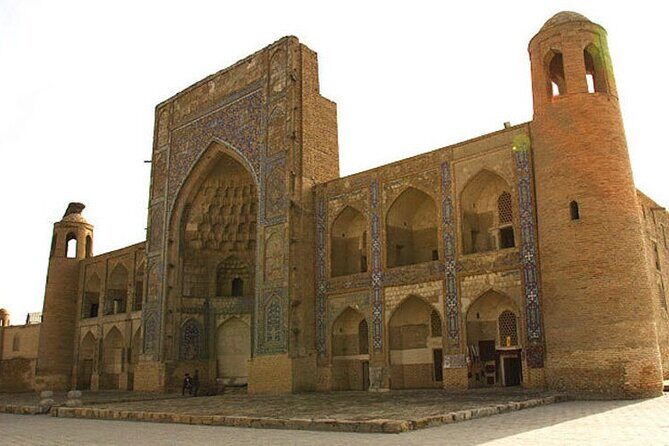
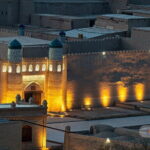
The tour kicks off at the Allakuli Khan Madrasah. This is a smart first stop because it sets the visual language of the city right away: Islamic design, careful craftsmanship, and a sense that architecture here was built to teach and inspire.
Expect a mix of time for photos plus guided time inside or around the site. The stop isn’t long, but it’s enough to give you a framework—so when you move to the minaret and mausoleum, the shapes and symbols won’t feel random.
Practical tip: wear shoes you can trust. Even if it’s only 4 hours, you’ll be on uneven surfaces and stepping in and out of sites.
The Islam Khoja Minaret: photo stops with meaning
Next up is the Islam Khoja Minaret. It’s one of those landmarks that looks instantly familiar once you see it, even if it’s your first time in Khiva. The tour builds in time for viewing and photo stops, but the guide’s job is to give you the why behind the icon.
This is a good moment in the tour to slow down. A minaret is meant to be seen from a distance, so it helps to take a few minutes and look at how it sits in the surrounding city space. When you know what the guide is pointing out, your photos improve because you’re framing with purpose, not just shooting from the hip.
Pakhlavon Makhmud Mausoleum: where spirituality meets art
The walk continues to the Pakhlavon Makhmud Mausoleum, dedicated to a revered Sufi saint. This stop adds a different layer than the madrassah and minaret. Instead of focusing mainly on education or skyline, you’re pulled into a place tied to devotion and remembrance.
The guided segment helps you understand what you’re looking at—how mausoleums function, and why certain artistic choices show up in religious spaces. You’ll also get time to look closely and absorb the atmosphere without feeling like you’re being rushed out.
If you like symbolism in architecture, this is one of the moments that clicks. Mausoleums tend to reward slow attention, and the tour pacing gives you that breathing room.
Juma Mosque and its 10th-century wooden columns
The Juma Mosque is where the tour feels both historic and surprising. You’re looking at a masterpiece of wooden column architecture, dating back to the 10th century. That detail matters because it’s not just another “pretty building” stop—it’s a distinct architectural approach you don’t get in every Islamic site.
Here, the tour includes a guided visit plus time to walk around. In practical terms, this is also a good checkpoint to assess how you’re doing physically. If you’re feeling the walk, this kind of stop gives you a chance to pause without losing momentum.
Photography note: you can take photos, but flash photography is prohibited inside certain sites, so keep your camera set accordingly.
You can also read our reviews of more guided tours in Khiva
Itchan Kala walking time: how the whole route hangs together
After the main monuments, you head deeper into Itchan Kala for a photo stop plus guided time and sightseeing. This part is useful because it ties the earlier stops into a bigger sense of place. You’ll start to connect the dots between religious buildings, learning spaces, and the way Khiva arranged its sacred landmarks.
This is also where you’ll benefit from having a guide who can answer questions on the fly. Even small explanations—why a feature is there, what a name refers to, or what a tradition means—make the city feel less like a checklist.
From a value perspective, this “connective tissue” matters. A tour that only hits the big names can still feel like a string of snapshots. This one tries to keep the story moving as you walk.
Price and value: $19 for the guide, then tickets for the sites
The headline price is $19 per person for a 4-hour guided walk. That’s a bargain if you compare it to what you’d spend on a guide plus the time you save navigating old-city entrances.
But you should plan for the one key “not included” item: entrance tickets. Because entry to landmarks is part of what makes the tour worthwhile, you’ll want to budget for those tickets so you’re not stressed at the start. The good news is the guide helps you purchase tickets at the beginning, so you’re not stuck translating ticket windows or hunting down the right spot.
My take: if you’re the kind of traveler who likes understanding what you’re seeing, the guide fee is the real value. If you only care about pictures and don’t want explanations, you might feel the ticket add-on more sharply.
Logistics you’ll actually care about during the walk
This tour is built for a half-day pace, so your comfort matters. Bring water, and in warmer months also plan for sunscreen and a hat. Weather in Central Asia can shift, so I like the idea of being prepared for varying conditions even if the day looks calm.
You’ll also want to think about photos and site rules:
- Flash photography is not allowed inside certain sites.
- Photography is generally allowed, so normal photos should be fine—just avoid flash.
Finally, meeting points can vary depending on the option you book. Expect either the Caravan monument area or the ticket office of Khiva old town, and you’ll be dropped back at one of two common places: the ticket office of Khiva old town or Itchan Kala.
If you like smooth starts, arrive a bit early. In old cities, a few minutes can turn into a scramble.
Guides, language, and why communication changes everything
This tour offers a live guide in English, Uzbek, or Russian. That matters more than you’d think. Khiva’s sites have layers—religious purpose, architectural details, local context—and you’ll get more out of the buildings if you can ask questions and follow along clearly.
From the names people associate with the tour, Iroda (and similar spelling like Iroha) shows up as a frequent favorite. The bigger takeaway isn’t just the name—it’s the style: clear English, patience, and storytelling that makes past and present feel connected.
You’ll also appreciate that the tour offers private or small groups. In a small group, you can ask things like why a specific site is revered, what a name means, or how traditions show up in daily life today—without your questions getting cut off.
Who this tour suits best (and who should rethink it)
This walk is a great fit if you:
- want a focused intro to Itchan Kala in about half a day
- like monuments with explanations, not just sightseeing shortcuts
- appreciate architecture tied to religion and community life
It’s not suitable for people with mobility impairments or wheelchair users, since it’s a walking tour through multiple sites.
If you’re someone who hates walking or expects everything to be perfectly accessible step-by-step, you’ll likely find this harder than it sounds on paper.
Should you book this Khiva walking tour?
I’d book it if your priority is getting the most out of Itchan Kala with real guidance, especially for first-time visitors who want structure. The route hits the big symbolic sites—the Islam Khoja Minaret, Juma Mosque, and Pakhlavon Makhmud Mausoleum—while also starting at Allakuli Khan Madrasah so the story has a beginning.
I’d pause before booking if you strongly dislike entrance-ticket complexity or you’re traveling with tight constraints on walking. The guide can help with tickets, but you still need to pay the entrance fees, and the tour is designed around foot traffic.
FAQ
How long is the Khiva historical city highlights walking tour?
It lasts 4 hours.
What is included in the $19 per person price?
The price includes a professional guide and all taxes.
Are entrance tickets included?
No. Entrance tickets are not included, and you’ll buy them at the start of the tour with the guide’s assistance.
Where does the tour start?
The meeting point can vary. Options include the Caravan monument or the ticket office of Khiva old town.
Where does the tour end?
Drop-off is available at either the ticket office of Khiva old town or Itchan Kala.
What languages are the guides?
The live guide is available in English, Uzbek, and Russian.
Is flash photography allowed?
Flash photography is not allowed inside certain sites.
Are the groups private or shared?
You can choose private or small groups.
Is this tour suitable for people using wheelchairs?
No. It is not suitable for people with mobility impairments or wheelchair users.
Do I need WhatsApp to book?
The info provided recommends adding a WhatsApp number while booking (or downloading WhatsApp if you do not have it).
If you want, tell me your travel month and whether you prefer more photos or more explanations, and I’ll help you plan what time of day to go in Khiva and how to pace the walk.