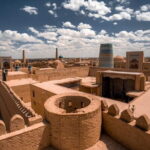
Khiva has a way of feeling timeless. This UNESCO Khiva walk strings together fortress walls, minarets, medreses, and palaces in one smooth 4.5-hour circuit. It’s the classic City of a Thousand Minarets vibe, without the hassle of figuring everything out on your own.
I especially liked two things. First, the guide approach: you get a professional English-speaking guide who helps you connect what you’re looking at, not just list names. Second, the major set pieces like Kunya Ark and the Djuma Mosque make the city feel real, not staged for tourists.
One consideration: this tour does not include entrance tickets for the sites, and it also does not include going upstairs to minarets. If your priority is climbing for views, plan for extra costs and maybe a separate visit plan.
In This Review
- Key highlights worth your attention
- Khiva’s UNESCO Old City: what this walk really brings to your day
- Meeting at Ata Darvaza and timing your 4.5-hour route
- The fortress core: Kunya Ark, coinage yards, and panoramic viewpoints
- Medreses and Kalta Minor: the City of a Thousand Minarets in fast focus
- Djuma Mosque and its carved-column character
- Tosh Hovli Palace: harem spaces, receptions, and the secret-corridor story
- Kutlug Murad medrese and surrealist paintings: the left turn that makes Khiva feel human
- East gates, Said Niyaz mosque, and medrese: less frantic, still essential
- Islamkhudja complex and its tall minaret: Khiva’s symbol zone
- Islamkhudja school: the first modern, secular-school signal
- Pahlavan Makhmud complex: the last flourish
- Bread in a clay oven: why this small stop matters (when it happens)
- Price and value: what $45 covers, and what you should budget extra for
- Who this Khiva tour suits best
- Should you book Asli Travel’s Khiva Guaranteed Tour?
- FAQ
- How long is the Khiva Guaranteed Tour?
- Where do I meet the guide?
- What time does the tour start?
- Is an English guide included?
- Are entrance tickets to the sights included?
- Is it possible to go upstairs to the minarets?
- What should I bring, and what’s not allowed?
- Is the tour wheelchair accessible?
Key highlights worth your attention
- Ata Darvaza start point: begin right at the main gate area, not far from the action.
- Kunya Ark panorama stops: built-in viewpoints over the citadel and key courtyards.
- Djuma Mosque columns: you’ll spend time with the carved-column character of the place.
- Tosh Hovli Palace details: harem, receptions, and even the secret-corridor story.
- Islamkhudja complex and its minaret: the symbol of Khiva plus the tall-minaret emphasis.
- Surrealist paintings at Kutlug Murad: a creative curveball inside the historical mix.
Khiva’s UNESCO Old City: what this walk really brings to your day
Khiva isn’t just “pretty old.” It’s the kind of place where buildings seem to keep their own memories. Walking here feels like you’re moving through a carefully preserved shell of the past, with minarets, mosques, madrassas, and mausoleum-like sites packed close.
This experience is interesting because it’s built for orientation. In a few hours, you get the big visual language of Khiva: fortress + sacred architecture + royal power centers. It’s an efficient way to understand why people call it the open-air museum and why the city is so strongly linked to the world of 1001 Nights storytelling.
You can also read our reviews of more tours and experiences in Khiva.

Meeting at Ata Darvaza and timing your 4.5-hour route
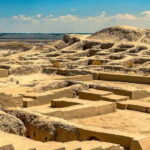
Your meeting point is on the ticket office of the main gates, and the walking route kicks off from the western gate area called Ata Darvaza. That matters. If you start inside the city’s rhythm instead of arriving after the first wave of sights, you’ll get your bearings faster and waste less time.
Start times are 09:00 and 15:00, and the duration is about 4.5 hours (listed as 4–5 hours). Plan your day so you’re not rushing afterward. Khiva’s walls and alleys can be deceptively time-consuming, and you’ll want a little breathing room for photo stops, short pauses, and the occasional “wait, look at that detail” moment.
Practical tip from experience-style travel logic: comfortable shoes are non-negotiable. You’ll be walking for long stretches, and the city’s surfaces can vary. Dress for warm/cool weather layering, because courtyard shade and sun can swing quickly.
The fortress core: Kunya Ark, coinage yards, and panoramic viewpoints
The first major “power center” stop is Kunya Ark, Khiva’s ancient citadel. This isn’t just another courtyard. It’s a layered complex where different sections connect to different eras of rule.
Here’s what you can expect as the tour moves through it:
- A panoramic view-tower element that gives context for how the fortress sits in relation to the city.
- A coinage yard area, which helps you imagine how authority became everyday objects.
- Separate summer and winter Khan reception spaces, which gives you a sense of how leadership adjusted to seasons and comfort.
This is one of the best parts for your understanding because it turns architecture into a story you can picture. You start seeing Khiva not as separate buildings, but as an organized system: rulers, religion, education, and civic life all interacting in the same walled world.
If you like history explained through “how people lived,” this stop will click. If you want only the most dramatic exterior photos, you’ll still get value, but you may feel the interior storytelling is doing more work than the stone alone.
Medreses and Kalta Minor: the City of a Thousand Minarets in fast focus
After Kunya Ark, the route lines up major education-and-spiritual landmarks. Two of the names you’ll hear early on are Muhammad Aminkhan medrese and Kalta Minor.
Muhammad Aminkhan medrese is noted as the largest in this territory. That size detail is more than trivia. It signals how central education was, and how big institutions were allowed to be within the city’s layout.
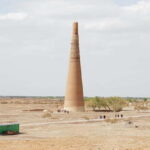
Then comes Kalta Minor minaret. Minarets in Khiva aren’t just skyline markers. They’re part of the city’s visual identity—vertical signatures you recognize even before you read a sign. Standing near them, you start understanding why Khiva gets linked to the Thousand Minarets nickname.
The only downside here is also part of the listing: upstairs to minarets is not included. So if you’re hoping to climb and look down from higher levels, keep expectations realistic and treat this as a “see the monuments and their placements” tour rather than an elevation challenge.
Djuma Mosque and its carved-column character
The Djuma Mosque stop is one of those “once you notice it, you can’t un-notice it” places. The big detail here is that it features more than 120 carved columns.
That number matters because it changes what you pay attention to. Instead of a single highlight—one dome, one arch—you get a pattern. The columns create repetition and rhythm, and that’s what makes the mosque feel like a hall of craftsmanship rather than a single-view stop.
This is where your guide can really help. When someone explains the function and setting of the mosque, the structure stops being just decorative. You understand why it’s built this way and why it’s still memorable.
Wear something comfortable for sitting or standing time inside. Even if you don’t go upstairs anywhere, you’ll spend time in and around interiors.
Tosh Hovli Palace: harem spaces, receptions, and the secret-corridor story
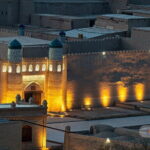
If Djuma Mosque is about sacred function, Tosh Hovli Palace is about political life. This is the second Khan palace with a harem and distinct seasonal receptions—summer and winter.
What makes this palace worth your time on a short tour is the mix of:
- A special reception area
- A secret corridor connection (the kind of detail that turns architecture into intrigue)
- A story-linked artifact reference: the gift car of Tsar Alexander III
Even if you only catch parts of each explanation, the palace layout gives you clues. You can see how public ceremony and private space were kept separate, then connected by controlled routes. This is exactly the kind of stop that makes a city tour feel like more than a checklist.
There’s also a small balancing act to keep in mind: palace interiors can be visually dense. If you’re easily overwhelmed by too many details, slow down and pick one theme—seasonal reception areas, ceremonial spaces, or the secret corridor—then let the rest support that idea.
Kutlug Murad medrese and surrealist paintings: the left turn that makes Khiva feel human
Not every stop is only about grand power and spiritual architecture. Kutlug Murad medrese is described as a museum of surrealist paintings.
That’s a big deal for your enjoyment because it interrupts the “everything is ancient, always ancient” mindset. In a city built from historical layers, you get a creative pause that feels like a reminder that culture keeps evolving.
If you love variety, you’ll appreciate this stop. It gives your eyes a new job. Instead of tracking tilework, domes, and minaret silhouettes, you shift into art interpretation. You might find yourself lingering longer here than you planned, just to understand what style means in this setting.
East gates, Said Niyaz mosque, and medrese: less frantic, still essential
As the route heads toward the east gates, the tour includes the East Gates plus the Said Niyaz mosque and medrese.
This part of the walk can feel calmer than the most famous landmarks, and that’s a good thing. It gives you time to absorb how Khiva’s city plan moves. You’re not just sprinting from one headline sight to another. You’re noticing how gateways frame the approach to religious and educational spaces.
If your main interest is photography and you prefer fewer crowds, the east-gate areas can help. Even if you take lots of pictures, you’ll likely still have time for a short pause to look at textures and doorways up close.
Islamkhudja complex and its tall minaret: Khiva’s symbol zone
Next comes Islamkhudja complex, described as a symbol of Khiva. The stop includes:
- A medrese-applied art museum
- A minaret noted as the tallest in this region
This is the kind of stop where the scale detail does the storytelling for you. A tallest minaret isn’t just a height measurement. It becomes a landmark that organizes how the city reads from within. You’ll likely see it as a kind of north star for orientation, even if you’re not plotting directions.
The medrese-applied art museum element is also important for anyone who likes craftsmanship. It’s another route into understanding how art, education, and design were connected.
If you’re hoping for a “go up to the top and look around” experience, remember that upstairs minaret access isn’t included. But even at ground level, tall minarets keep drawing your attention.
Islamkhudja school: the first modern, secular-school signal
One of the more interesting stops on this list is the Islamkhudja school, described as the first modern and secular school.
That detail shifts the story from medieval-and-traditional frameworks to a modernization moment. You start thinking about how the city’s identity wasn’t frozen in time. Institutions changed. Education changed. Ideas traveled.
In a short tour, it’s a smart inclusion. It prevents the experience from becoming only “look at old buildings.” You finish with a sense that Khiva’s culture adapted, not only preserved.
Pahlavan Makhmud complex: the last flourish
The route ends with the Pahlavan Makhmud complex, described as the cherry in the cake of your visit.
Without extra explanations listed for each micro-detail, I’d treat this as your payoff stop—where your brain finally has enough context to appreciate what you’ve been seeing. By now, you’ve already seen the city’s key religious and royal systems. So this final complex helps you tie the whole tour together.
If you’re the type who gets tired halfway through city walks, pace yourself early. Saving energy for the end helps you actually enjoy the finish instead of just collecting one more exterior photo.
Bread in a clay oven: why this small stop matters (when it happens)
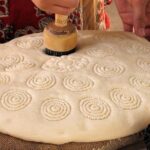
Along the way, there’s a chance to see how local bread is prepared in a clay oven. It’s listed as not guaranteed, depending on luck.
Even when it does happen, you’re only getting a quick window. Still, it’s a valuable one because it anchors all the architecture to daily life. These cities were built and maintained by ordinary people working inside everyday rhythms—food, markets, chores, and craft.
If you’re a foodie in a practical way (you like real process more than fancy presentation), this will make your day feel more complete. If it doesn’t happen, don’t let it sour the tour. The monument stops are still the core value here.
Price and value: what $45 covers, and what you should budget extra for
The price is listed at $45 per person, with a 4.5-hour duration. That’s a fair value for a guided loop through major Khiva landmarks—especially because you get a professional English-speaking guide and you can skip the ticket line.
But here’s the key part for planning: entrance tickets to all the specified objects are not included, and the tour also doesn’t include going upstairs to minarets. So budget for site admissions separately if you want to enter every listed object.
In plain terms: you’re paying for smart route planning and a guide who helps you understand what you’re seeing. If you already know you want to pay multiple separate entrance fees, your total cost will rise. If you want the tour mainly for orientation and exterior viewing, the $45 can feel like a strong deal because the guide does the heavy lifting.
Who this Khiva tour suits best
This tour is a good fit if:
- You want to see a lot of Khiva’s big names in one afternoon or morning without building your own route.
- You care about explanations and context, not just photos.
- You like a structured mix: citadel views, mosque craftsmanship, palace stories, and a creative stop at a surrealist painting museum.
It may not be the best fit if:
- You want minaret climbs included.
- You hate paying separate entrance fees for each site.
- You need frequent long breaks. The route is built to cover many places in a short time.
From the guide-quality angle, this experience clearly scores high. The strongest praise in the available feedback centers on guide friendliness, solid historical explanation, and good storytelling. One named guide, Farhod, shows up in feedback as delivering great details and even strong photo help.
Should you book Asli Travel’s Khiva Guaranteed Tour?
I’d book this if you want a first-time Khiva plan that feels organized and meaningful in about half a day. Starting at Ata Darvaza and finishing at Pahlavan Makhmud gives you a built-in arc: fortress power → sacred education → palace life → symbol sites → final payoff.
If your top priority is minaret-top views, you’ll need a different arrangement for upstairs access. If you’re okay paying separate entrance tickets and sticking to the walking-and-looking core of the route, this is a practical way to get your bearings and leave Khiva with real understanding, not just snapshots.
FAQ
How long is the Khiva Guaranteed Tour?
It’s about 4.5 hours, listed as 4–5 hours.
Where do I meet the guide?
You meet at the ticket office of the main gates.
What time does the tour start?
There are two start times: 09:00 and 15:00.
Is an English guide included?
Yes. A professional English-speaking guide is included.
Are entrance tickets to the sights included?
No. Entrance tickets to the specified objects are not included.
Is it possible to go upstairs to the minarets?
No. Upstairs access to minarets is not included.
What should I bring, and what’s not allowed?
Bring comfortable shoes and comfortable clothes. Smoking indoors is not allowed.
Is the tour wheelchair accessible?
Yes, it is listed as wheelchair accessible.