REVIEW · KHIVA
Best of Khiva: Exclusive Private Tour!
Book on Viator →Operated by tourgoCA · Bookable on Viator
Khiva feels like stepping into a living time machine. This private walking tour focuses you on Itchan Kala’s key monuments with a historian guide, plus entrance tickets already taken care of, and smart photo stops along the way. I especially love how guides like Nilufer and Nargis turn tiles, courtyards, and sermons into stories you can actually follow, and how the route helps you see the main sights without wasting time. One possible drawback: lunch isn’t included, and there’s an extra fee if you want to climb the highest tower.
If you’re tight on time, this is the kind of half-day plan that feels efficient. The trade-off is that it’s still a walking tour, so you’ll want comfortable shoes and a steady pace mindset—especially inside the walled old city.
In This Review
- Key highlights you’ll care about
- Khiva in a half-day: why this private walk works
- Price and logistics: what you’re really paying for
- Your historian guide: the real difference in Khiva
- Stop by stop: how the itinerary guides your eyes through Itchan Kala
- Stop 1: Itchan Kala walls and the start at the UNESCO core
- Stop 2: Citadel Kunya-ark and the power center of 17th-century Khiva
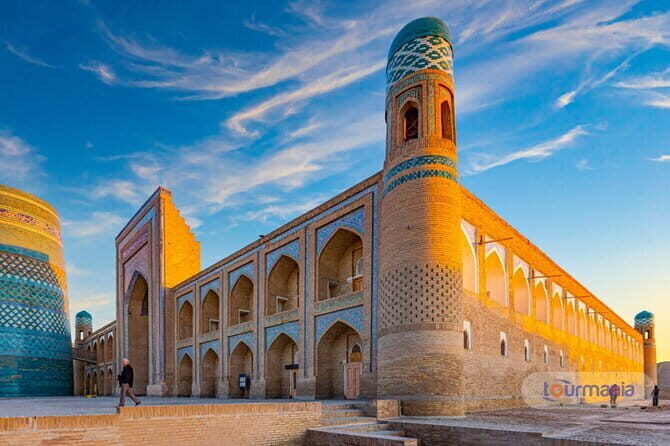
- Stop 3: Mohammed Rakhim Khan Madrassah and learning east of the citadel
- Stop 4: Kalta Minor minaret—the low tower that tells a story
- Stop 5: Toshhovli Palace for court life inside the walls
- Stop 6: Pahlavan Mahmoud Mausoleum and the poet-philosopher angle
- Stop 7: Mohammed Amin Khan Madrassah for another layer of education
- Stop 8: Juma Mosque in the central heart of Itchan Kala
- Stop 9: Polvon Darvoza gates and controlled entry
- Stop 10: Ota Darvoza and the Silk Road connection
- Optional highest tower climb: worth it or skip it?
- Who this tour is best for (and who should look elsewhere)
- Practical tips for a smoother half-day in the walled city
- Should you book this Best of Khiva private tour?
- FAQ
- How long is the Best of Khiva exclusive private tour?
- What’s included in the tour price?
- Is pickup available?
- Are entrance tickets included?
- Is lunch included?
- Is there an extra cost for a tower climb?
- What’s the cancellation policy?
Key highlights you’ll care about
- Private, just your group: no mixing, no waiting around for other schedules.
- Historian guide included: explanations are built into each stop, not tacked on at the end.
- Entrance tickets included: you don’t have to juggle buying tickets while you’re on the clock.
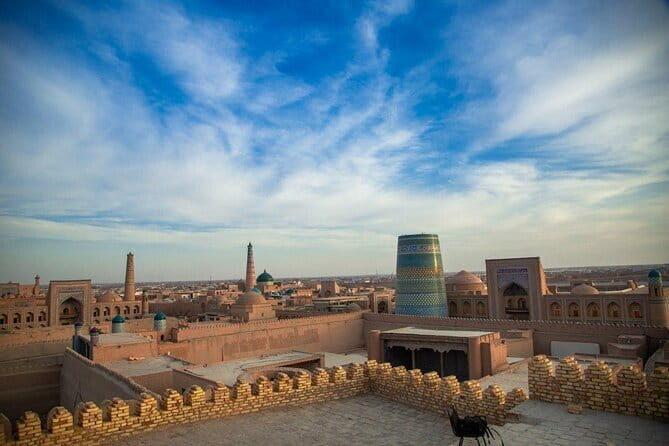
- UNESCO Itchan Kala route: you move through gates, palaces, mosques, and madrassas in a logical flow.
- Pickup offered + photo stops: it saves energy and helps you plan where to pause.
- Optional highest-tower climb: you can skip it or add it for an extra fee.
Khiva in a half-day: why this private walk works
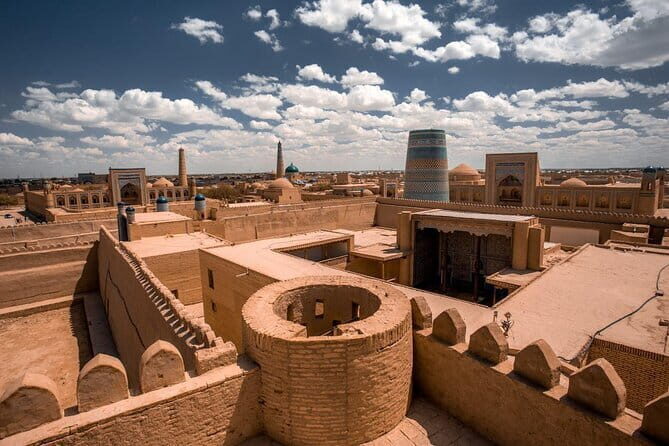
Khiva is one of those places where the details can overwhelm you if you show up alone. You walk through narrow lanes, you look up at minarets, and suddenly you’re asking: which building is this, and why does it matter? This tour is built for that exact moment. You get a focused itinerary inside Itchan Kala, the UNESCO-listed core, so your attention lands on the sights that define the city.
I also like that it’s private. In a historic walled town where every corner looks like a postcard, having your own guide matters. You’re not rushing to “catch up,” and you can ask questions as you go. In the reviews, guides such as Nilufer were praised for clear storytelling, while Nargis was credited with bringing the mosques, madrassas, and museum spaces to life.
The pace is roughly 5 to 6 hours, which is a sweet spot for first-time visitors. Long enough to feel like you actually saw Khiva, but short enough that you’re still free later for wandering on your own.
You can also read our reviews of more private tours in Khiva
Price and logistics: what you’re really paying for
At $76.80 per person, the value question isn’t just the guide—it’s what comes bundled. This tour includes:
- a tour guide historian
- entrance tickets to the monuments on the route
- all fees and taxes
- pickup offered (and there’s a pickup-with-transport option)
- photo stops at the best spots
- a mobile ticket
That matters because Khiva’s top sights sit inside a compact UNESCO zone. When entrance fees and planning are handled for you, you spend your energy on walking and looking—not on paperwork.
Two cost points to keep in mind:
- Lunch isn’t included, so plan food before or after.
- If you want to climb the highest tower, there’s an additional $15 fee. It’s listed as optional, so you can decide on the spot based on energy and time.
Your historian guide: the real difference in Khiva
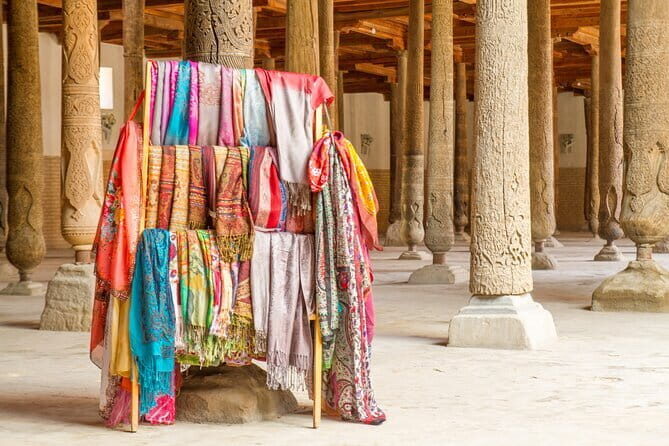
In Khiva, the buildings are the attraction—but the guide is what makes them understandable. This tour is led by a historian, and that’s the difference between snapping photos and actually noticing what you’re seeing.
The reviews highlight the guides’ style. People singled out Nilufer for excellent explanations and stories, and praised her for ensuring they saw everything. Another guide, Nargis, was praised for turning the city’s religious buildings and museum areas into something you can picture in your head.
What does that look like in practice? Expect each major stop to come with context: who built it, where it sits relative to the power center, and why it’s shaped the way it is. You don’t just pass monuments—you learn how the city functioned, from fortifications to learning spaces to prayer and trade.
Stop by stop: how the itinerary guides your eyes through Itchan Kala
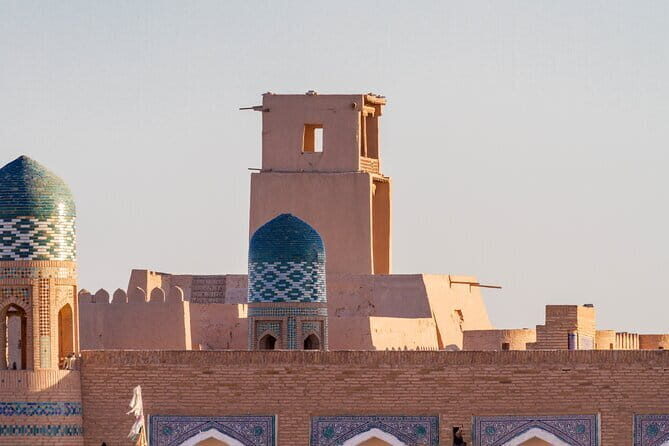
This route is essentially a loop through the heart of Khiva’s historic walled city. You start at the fortress zone, then move through power, education, worship, and finally the gates that connect Khiva to traders and travelers.
Stop 1: Itchan Kala walls and the start at the UNESCO core
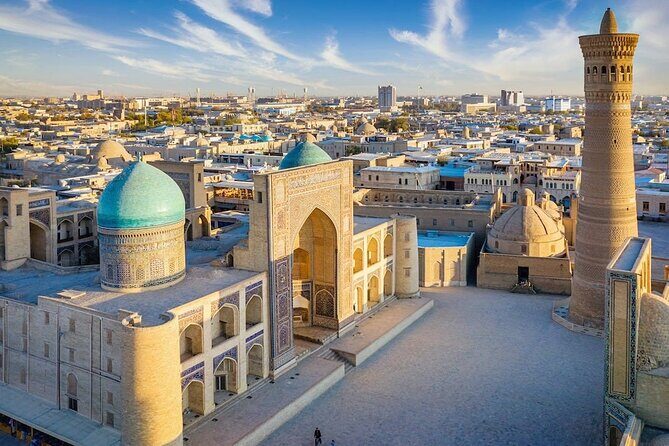
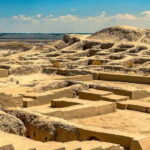
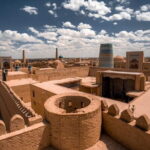
You begin at Itchan Kala, Khiva’s iconic walled fortress city. This is where Khiva’s “old city” feeling becomes real: historic streets, preserved monuments, and the kind of architecture where small details in tilework matter.
Why start here? Because it sets the frame. Once you understand you’re walking inside a protected historic core, everything that follows clicks into place. It’s also a practical choice for your time: you’re immediately inside the main zone rather than spending the morning orienting.
Potential drawback: if you prefer a slow warm-up, this tour starts with the big UNESCO context quickly. It’s not a problem—just know you’ll be looking up right away.
Stop 2: Citadel Kunya-ark and the power center of 17th-century Khiva
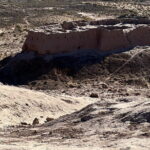
Next is Kunya-ark (the old castle). It was built in the late 17th century, specifically 1686–1688, by Arangakhan, the son of Anushakhan. The fortress was 130 x 93 meters, and it included spaces connected to official reception and the khan’s off… (the description cuts off, but the idea is clear: this was the administrative heart).
This stop is valuable because it anchors your trip in governance, not just decoration. You’ll look at the fortress and understand that Khiva wasn’t only a place of worship and learning—it was also a place of rule.
Tip: spend a few extra moments here if you like architecture. Even a short pause helps you “read” the city afterward, because you’ll start to see how other buildings relate to power.
Stop 3: Mohammed Rakhim Khan Madrassah and learning east of the citadel
From the citadel area, you move to the Muhammad Rahim-khan madrassah, located east of Kunya-ark. The full name given is Said Muhammad Rahim Bahadur Khan, and local people called him Madraim Khan II.
Madrassas can feel similar if you’re just looking from the outside. This is where a historian guide helps you notice what makes this one significant—its location and the person behind it. In practical terms, it also breaks up the walk with a different architectural mood than fortress walls and gates.
Consideration: your comfort matters here. You’ll be spending time looking closely, so plan for sun and stamina.
Stop 4: Kalta Minor minaret—the low tower that tells a story
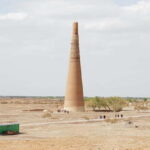
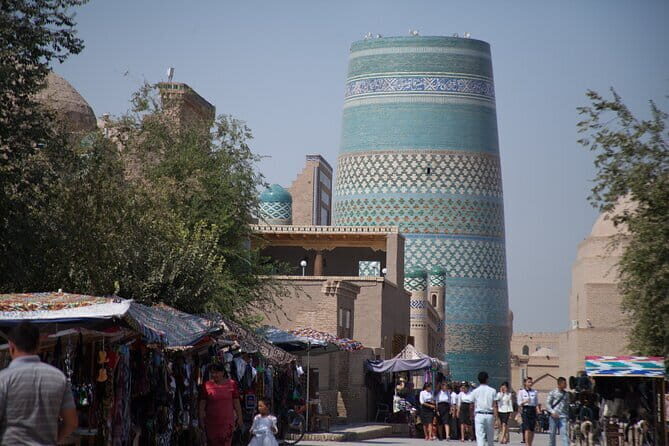
Then comes Kalta-Minar Minaret, meaning low tower. It was erected in the 19th century by ruler Mukhammad Amin-khan. Here’s the twist: it’s unique because it was not completed.
That unfinished quality gives the minaret a different kind of impact. Instead of only celebrating symmetry and completion, you’re seeing ambition, interruption, and the human side of building projects. It’s one of the reasons Khiva is so memorable in person: not every masterpiece was finished the way you might expect.
Photo note: with the guide’s photo stops, you’ll know where to pause for strong angles without wandering off-route.
Stop 5: Toshhovli Palace for court life inside the walls
Next is Toshhovli Palace, also spelled Tash-Hauli or Tosh-Hauli. It’s described as a prominent historical complex within Itchan Kala.
A palace stop often works best when you connect it to the earlier power center. You’ve just seen Kunya-ark; now you’re stepping closer to how the city’s elite life would have played out. Even without going into every room detail, this stop helps you understand the scale of Khiva’s inner world.
Potential drawback: palaces can feel a bit like “architecture viewing” compared to mosques or gates. If you want more interpretive storytelling, stick close to your guide and ask questions—this tour is set up for that.
Stop 6: Pahlavan Mahmoud Mausoleum and the poet-philosopher angle
After the palace complex, you visit the Pahlavan Mahmoud Mausoleum area. It’s not far from Juma Mosque. The site honors Pahlavan Mahmud, described as a local poet and philosopher famous for heroic strength and the ability to heal people.
This stop adds a human layer. Religious sites often get explained through faith and law, but this one is tied to character and legend. It helps you understand why certain figures mattered to ordinary people, not only rulers.
Stop 7: Mohammed Amin Khan Madrassah for another layer of education
Then it’s time for Muhammad Amin Khan Madrassah. It’s another landmark within Ichan Kala.
Seeing madrassas twice (with two different leaders and slightly different settings) helps you notice patterns—shared design ideas—and also differences in emphasis. If you’re the type who likes to compare, this stop will feel satisfying because you’ve already built a reference point.
Stop 8: Juma Mosque in the central heart of Itchan Kala
Next: Juma Mosque, located in the central part of Ichan Kala. It sits near other prominent structures—your description even hints at proximity to something starting with Muham… (the name is cut off), but the point is the same: this is a major center.
Mosque stops tend to land well because your senses do the work. Even if you don’t sit inside for long, you’ll feel where the focal point of daily worship would be. In a city where streets connect every kind of institution, Juma Mosque is a natural anchor.
Stop 9: Polvon Darvoza gates and controlled entry
Now you shift from worship and education to movement. Polvon Darvoza is one of Khiva’s historic gates, described as controlling access and welcoming merchants and trade.
A gate isn’t just a wall feature. It’s the city’s handshake with the outside world. Once you reach this point, your earlier stops start to make practical sense: fortress for protection, citadel for authority, madrassas for learning, mosques for worship, and gates for trade and flow.
Stop 10: Ota Darvoza and the Silk Road connection
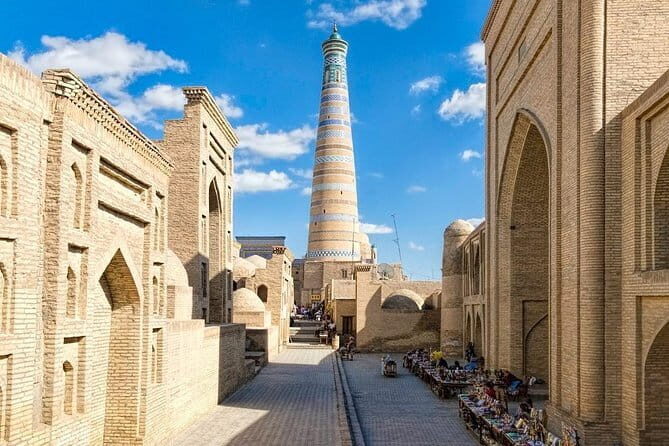
The final gate on the route is Ota Darvoza, one of Khiva’s main gates. It served as a key entrance for traders and travelers along the Silk Road.
Ending here works because it leaves you with a mental picture of why Khiva mattered. This city wasn’t isolated; it was a node on a long-distance network. When you finish at one of the major entry points, you’re ready to continue walking independently afterward—if you want.
Good to know: all stops listed include admission tickets in the tour price, so you won’t hit surprise costs at the door.
Optional highest tower climb: worth it or skip it?
There’s an extra fee if you want to climb the highest tower: $15. The data doesn’t specify which tower on the route is the one tied to that option, so the practical way to handle it is simple: ask your guide at the appropriate stop.
If you’re short on time or you prefer to conserve energy, skip it. If you love views and don’t mind the climb, the option can be a nice reward. Either way, your main experience—the guided walk through major monuments—doesn’t depend on it.
Who this tour is best for (and who should look elsewhere)
This tour shines if you:
- have limited time in Khiva and want a structured route
- enjoy walking through historic sites with story-led guidance
- want entrance tickets included so you don’t manage ticket logistics mid-day
- are traveling in a group and like the idea of a private setup
It may be less ideal if you:
- want a relaxed, open-ended wandering day without fixed timing between sights
- need a longer lunch break built into the plan (since lunch isn’t included)
- dislike walking through a historic core where the streets can feel tight
Practical tips for a smoother half-day in the walled city
A few things will make your tour more comfortable without complicating your schedule:
- Bring water and plan for the heat. Even if it’s mild, you’ll be walking for hours inside a desert-region city.
- Wear shoes you trust. The whole point of this experience is walking the monuments in sequence.
- Keep your camera ready for the photo stops. The tour is timed to include pauses in good spots.
- If you want the most out of it, ask questions at each stop. The guide’s historian background is what turns stone and tiles into meaning.
And because this is a private tour, you can adjust your pace slightly within reason—just check in with your guide rather than pushing through.
Should you book this Best of Khiva private tour?
I’d book it if you want a high-efficiency introduction to Khiva’s UNESCO core with a historian guide and included entry tickets. The biggest payoff is the guided understanding—especially if you’ve ever walked through a historic city and felt like you were reading signs in a language you don’t fully know. Here, your guide helps translate what you’re looking at.
I wouldn’t book it as strongly if you want a long, slow day with lunch provided, or if you’re determined to build your own route from scratch. In that case, a self-guided plan might feel better.
If you do book, treat it like your “base layer” of Khiva. After the tour, you’ll be far more confident stepping back into the streets and recognizing what each building is.
FAQ
How long is the Best of Khiva exclusive private tour?
It runs about 5 to 6 hours.
What’s included in the tour price?
The tour includes a tour guide historian, entrance tickets to the monuments, all fees and taxes, photo stops at the best spots, and pickup on foot. Pickup with transportation is included in the pickup-with-transport option.
Is pickup available?
Yes. Pickup is offered, and there’s also an option that includes private transportation transfer.
Are entrance tickets included?
Yes. Admission tickets to the monuments on the route are included.
Is lunch included?
No. Lunch isn’t included.
Is there an extra cost for a tower climb?
Yes. Climbing the highest tower has an additional $15 fee.
What’s the cancellation policy?
You can cancel for a full refund up to 24 hours in advance of the experience start time.