REVIEW · KHIVA
Khiva Historical City Highlights Guided Walking Tour
Book on Viator →Operated by Tourmania · Bookable on Viator
Khiva makes more sense on foot. This 4-hour walk strings together the city’s best-known landmarks in a relaxed, logical route. I love how the guide helps you read Itchan Kala (Khiva’s walled old-city core) without guessing, and I also like the clear architecture and cultural context at every stop. One thing to plan for: Itchan Kala admission isn’t included, so you’ll still need to budget an entrance fee.
The tour is small, too—maximum 15 people—so it doesn’t feel like a cattle-car history lesson. When the guide is Iroda, the vibe is especially good: smart, friendly explanations with humor, and time for questions instead of rushing you out of each site.
In This Review
- Key highlights worth knowing before you go
- How much this Khiva walking tour really costs
- Starting at the right spot: Caravan monument to Itchan Kala
- Itchan Kala for orientation: the one-hour move that pays off
- Islam Khoja Minaret: 20 minutes to understand Khiva’s skyline icon
- Pakhlavon Makhmud Mausoleum: why this one has a story
- Juma Mosque: wooden columns and a 10th-century feel
- Allakuli Khan Madrasah: the 19th-century learning powerhouse
- Timing and pacing: why 4 hours works well in Khiva
- What you’re really buying: a guide that makes details land
- Practical value: who should book this one (and who might want more time)
- Quick checklist before you head out
- Should you book the Khiva Historical City Highlights walking tour?
- FAQ
- How long is the Khiva Historical City Highlights guided walking tour?
- What is the price per person?
- Are entrance tickets included in the price?
- How many people are in the group?
- Where does the tour start and end?
- What happens if the weather is bad?
Key highlights worth knowing before you go
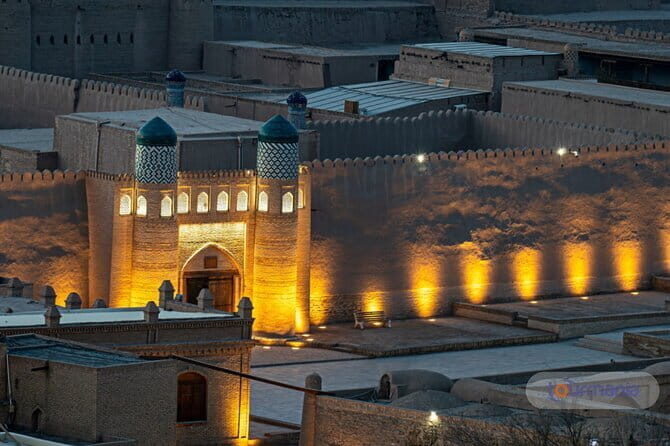
- Itchan Kala first, so everything clicks: you start in the historic walled center, where the rest of Khiva’s sights make more sense.
- Islam Khoja Minaret in short form: a quick, focused look at one of Khiva’s most iconic skyline landmarks.
- Pakhlavon Makhmud’s story connection: you’ll connect the mausoleum to a Sufi saint, poet, and wrestler figure.
- Juma Mosque’s wooden columns: a distinctive Central Asian Islamic design you can actually see and explain.
- Allakuli Khan Madrassah as a 19th-century learning hub: you get the madrasah’s education purpose, not just photos of tiles.
- Small-group pace: maximum 15 travelers means you can move briskly but still ask questions.
How much this Khiva walking tour really costs
This tour is priced at $25 per person, and it includes a professional guide plus taxes. That base price is mainly what you’re paying for: a guided route that hits major landmarks in about 4 hours without you having to plot the whole day yourself.
The main add-on is entrances. Itchan Kala’s entrance ticket isn’t included and is listed as approximately $15 USD. In practice, that means your total day spend is closer to about $40 once you’re inside—still a solid deal for a guided walkthrough of multiple iconic sites in one morning or afternoon.
Also note: the tour uses a mobile ticket, which is handy in Uzbekistan when you’re juggling a few different confirmations and tickets.
You can also read our reviews of more walking tours in Khiva
Starting at the right spot: Caravan monument to Itchan Kala
You meet at the Caravan monument (listed with the coordinate 99H4+CRQ). That’s useful because Khiva can be confusing at first—streets crisscross, and the most important sights are inside the old walled section.
The tour ends inside Itchan Kala, so you’re not finishing out on the edge of town. That matters because after the final stop, you’ll likely want time to wander a bit on your own, grab a snack, or re-see a favorite doorway or courtyard from a better angle.
If you’re using maps on your phone, zoom out once to confirm you’re at the right monument. Then zoom in and look for the exact meeting landmark, because “nearby” can be off by a street or two in older towns.
Itchan Kala for orientation: the one-hour move that pays off
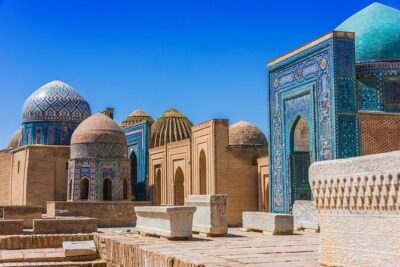
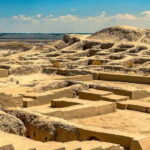
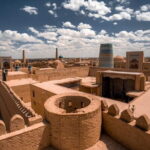
The first stop is Itchan Kala—the historical center of Khiva and a well-preserved example of a walled city. The big value of starting here is simple: when you understand where the walls, gates, and main clusters are, every other stop feels like part of a plan instead of random sights.
You’ll get about 1 hour at this opening segment. Also, entrance here is not included, so you’ll want to keep the ticket part in mind early—don’t wait until the last minute at the first gate.
Practical tip: plan to arrive a few minutes early. Itchan Kala’s gates and ticket lines can slow things down. Getting the timing right means you’ll actually use that first hour for orientation, not just standing around.
Islam Khoja Minaret: 20 minutes to understand Khiva’s skyline icon
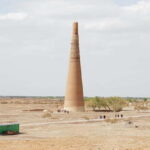
Next up is the Islam Khoja Minaret. It’s located inside Itchan Kala and is described as one of the most distinctive and iconic landmarks in Khiva. The stop is short—about 20 minutes—but that’s not a drawback. In a highlights tour, you want enough time to notice details and learn what to look for, then move on while your energy is still high.
What I like about this stop is the “fast learning” structure. A good guide helps you see the minaret as more than a tall object. You’ll be able to connect it to the site’s inner-city context and to Khiva’s architectural identity.
Admission is free for this stop, so there’s no extra payment hurdle. That makes it a low-stress moment if you’re trying to manage your day spend.
Pakhlavon Makhmud Mausoleum: why this one has a story
The Pakhlavon Makhmud Mausoleum (listed as 20 minutes) honors Pakhlavon Makhmud, who is revered as a Sufi saint, poet, and wrestler. That combination matters. In many places, religious sites are hard to “translate” if you’re just looking at stone and tile. Here, the human story gives you a handle.
You’ll spend a brief time here—again, not enough to be a long, slow pilgrimage-style visit, but enough to understand what the mausoleum represents. Since it’s free, you can take your time with photos and viewpoints without worrying about an entrance fee.
If you’re the type who likes context—how a building connects to people and beliefs—this is one of the stops that tends to click quickly.
You can also read our reviews of more guided tours in Khiva
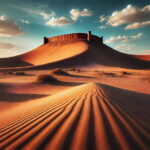

Juma Mosque: wooden columns and a 10th-century feel
The Juma Mosque gets about 15 minutes. It’s known for its distinctive wooden columns and a design that’s described as simple yet majestic. The tour data also points to a 10th-century dating for the mosque’s origins, which gives the stop extra weight.
This is a great example of why a guided tour helps. In a short visit, it’s easy to miss what makes the place meaningful. A good guide can point out design features that you might otherwise walk right past—especially in a city where everything is visually rich.
Admission is free for this stop. So if you’re trying to plan a budget day, this part is pure value.
Watch your pace here: 15 minutes can fly. If you want a careful look at column details or courtyard lines, position yourself early and don’t wait until the last few minutes to start photographing.
Allakuli Khan Madrasah: the 19th-century learning powerhouse
The final major stop is the Allakuli Khan Madrasah (about 20 minutes). This is a 19th-century educational and architectural landmark built under Allakulikhan’s reign. The madrasah served as a center for Islamic learning, which is an important reminder: these buildings weren’t just decorative. They were functional hubs for education and scholarship.
What you’ll likely appreciate here is how the guide ties the building’s purpose to its design. A madrasah is both architecture and institution, and it helps to know the difference between visiting a monument versus understanding what it used to do.
Admission for this stop is also free, so by the time you reach it, you’ve already “paid once” for the day with the Itchan Kala ticket and can enjoy the rest without extra costs.
Timing and pacing: why 4 hours works well in Khiva
A 4-hour walking tour is the sweet spot for Khiva’s old-city intensity. You get major landmarks in a tight sequence, but you’re not locked into a full-day itinerary where your brain goes on vacation.
The stop lengths (1 hour for Itchan Kala, then shorter windows for the key monuments) also help you manage attention. This city rewards looking closely, but you can’t do that at every stop for long. So the tour does what highlights tours should do: it teaches you where to look, then you take over after.
The tour is also described as requiring good weather. That matters for a walking-focused plan. If the sky looks questionable, it’s worth factoring that in so you don’t build the rest of your schedule around it.
What you’re really buying: a guide that makes details land
The standout theme from the guide experience is the quality of explanation. The guide Iroda is repeatedly described as smart, sweet, and very good at making history and architecture easy to understand. People also highlight good humor and an ability to answer questions.
That’s more important than it sounds. Khiva can feel like a lot at once—brick, tile, arches, domes, calligraphy, courtyards. A great guide turns that visual noise into a set of patterns you can recognize. You leave with a mental map, not just a pile of pictures.
And because the group size is small (maximum 15), it’s more likely you’ll get real answers instead of generic statements. If you’re the type who asks, this is the kind of tour where your questions actually get time.
Practical value: who should book this one (and who might want more time)
This walking tour is a strong fit if you:
- want a fast introduction to Khiva’s most iconic landmarks
- care about architecture and cultural meaning, not just quick photos
- prefer a small group and a guide who can explain clearly
- are visiting for a limited time and want to cover the essentials efficiently
You might want a longer, more specialized visit instead if you:
- hate timed stops and want deep exploration at one site
- already know Khiva’s history and want a slower, more detailed itinerary
- plan to spend several hours wandering inside Itchan Kala after the tour (you’ll still be able to, but you may feel a bit “scripted” during the walkthrough)
Quick checklist before you head out
Based on how this tour runs, here’s what helps most:
- Comfortable shoes for walking inside Itchan Kala
- Your entrance ticket readiness for Itchan Kala (since it’s not included)
- A camera/phone with enough battery for several short stops
- A light layer if the weather is changeable (the tour depends on good conditions)
If you’re traveling with anyone who gets tired fast, the short stops actually help—you can take a breath between highlights.
Should you book the Khiva Historical City Highlights walking tour?
If you want the best path through Itchan Kala with minimal stress, I’d say yes. The price is reasonable, the group size is small, and the itinerary is built around the sites that give you the clearest picture of Khiva—Islam Khoja Minaret, Pakhlavon Makhmud Mausoleum, Juma Mosque, and Allakuli Khan Madrasah.
The only real “gotcha” is the extra budget for Itchan Kala admission, but once you account for that, the value stays strong. Also, with a guide like Iroda getting high praise for clarity and friendliness, you’re not paying just for walking—you’re paying for understanding.
FAQ
How long is the Khiva Historical City Highlights guided walking tour?
The tour lasts about 4 hours.
What is the price per person?
It costs $25.00 per person.
Are entrance tickets included in the price?
No. Entrance tickets (approximately $15 USD) are not included. The Itchan Kala admission is listed as not included.
How many people are in the group?
The tour has a maximum of 15 travelers.
Where does the tour start and end?
It starts at the Caravan monument (99H4+CRQ) and ends in Itchan Kala.
What happens if the weather is bad?
This experience requires good weather. If it’s canceled due to poor weather, you’ll be offered a different date or a full refund.