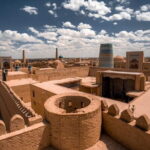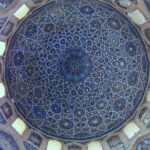
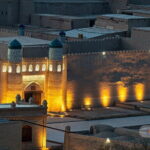
Khiva’s landmarks pack a lot in. This half-day walking tour threads through Itchan Kala, Khiva’s UNESCO World Heritage walled core, with a guide who helps you connect buildings to the people who used them. You’ll focus on the big hitters: the Kunya Ark citadel, the Mukhammad Rakhim Khan Madrasah, the Kalta Minaret, and the Tosh-Khovli Palace.
Two things I especially like here are the guided walking format (you’re not just wandering) and the way the stops build on each other—religion, power, and daily life all show up in different corners of the city. The main drawback to plan for is practical, not architectural: admissions tickets for the sights aren’t included, and you’ll be on your feet in a compact, hot (or windy) walled city.
In This Review
- Key points worth knowing
- Walking into Itchan Kala’s walled-city rhythm
- Kunya Ark Citadel: power made into architecture
- Mukhammad Rakhim Khan Madrasah: education with serious style
- Kalta Minaret: the iconic skyline marker (and why it’s unfinished)
- Tosh-Khovli Palace: the stone house built in brick
- Timing, walking comfort, and planning for weather
- Price and value: why $45 can still be a bargain—or not
- Guide style and languages: ask better questions, get more out
- Who this tour suits best
- Should you book the Khiva classic half-day walking tour?
- FAQ
- How long is the Khiva classic half-day walking tour?
- What sites does the tour include in Khiva?
- Is hotel pickup and drop-off included?
- Are admission tickets included in the price?
- What languages is the guide available in?
- Is this tour offered as a private group?
- What should I bring for the tour?
- Are there any restrictions during the tour?
Key points worth knowing
- Itchan Kala is the whole story: you’re walking the UNESCO walled center, not hopping between far-away areas.
- Power first, then learning: Kunya Ark shows government and authority before you shift to the madrasah.
- Kalta Minaret is a design lesson: the unfinished feel is part of what makes it unforgettable for photos.
- Tosh-Khovli Palace feels solid and real: brick architecture gives you a sense of permanence.
- Good guide energy matters: the best tours here slow down just enough for questions and photos (and don’t make you feel rushed).
Walking into Itchan Kala’s walled-city rhythm
Khiva’s old city, Itchan Kala, is built for slow attention. Once you’re inside the walls, the streets tighten, the architecture gets close, and you start to notice details you’d miss if you were simply scanning from the outside.
Your tour begins in the historical center and immediately uses that setting well. You get a photo stop, then you move into the main walking circuit while your guide sets the stage for what you’re about to see. Even if you’ve read about Khiva before, this kind of orientation helps you “place” each landmark in the same mental map.
Time-wise, expect about 40 minutes here before the tour shifts to the first major complex. That timing is useful: it’s long enough to get your bearings fast, but short enough that you don’t burn out before the big buildings.
You can also read our reviews of more tours and experiences in Khiva.
Kunya Ark Citadel: power made into architecture
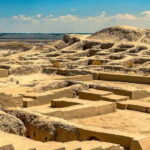
Next up is the Kunya Ark citadel, the old royal stronghold. This place was constructed around the mid-1600s (around 1647) by Arang Khan, and it served as the royal residence and administrative center. In other words: this wasn’t just where rulers lived—it was where the machine of government ran.
As you walk through, you can feel how the site is designed to project control. Thick walls, enclosed spaces, and the sheer “seat of authority” vibe make the history easier to understand. I like that a good guide connects it to how Khiva’s Khans ruled the Khorezm region, because it turns the building from a photo background into a political map.
Plan for roughly 20 minutes of guided time here. If you’re the kind of person who wants to read inscriptions or stare at masonry patterns, keep your pace steady—this part moves with the rest of the circuit.
Mukhammad Rakhim Khan Madrasah: education with serious style
After Kunya Ark, the tour shifts from political authority to religious education. The Mukhammad Rakhim Khan Madrasah dates to the late 1800s, built around 1876 during the reign of Muhammad Rakhim Khan II.
Madrasah buildings can feel similar at first glance across Central Asia, but this one carries its own personality through its architectural ensemble. With a guide explaining what you’re seeing, you start noticing how the space is arranged for learning and teaching, not just worship.
You’ll spend about 20 minutes here with a guided visit and walk. That’s enough to understand the basics—what it was for, where it fits in Khiva’s Islamic heritage, and why it belongs inside the broader UNESCO setting—without turning the tour into a museum marathon.
Kalta Minaret: the iconic skyline marker (and why it’s unfinished)
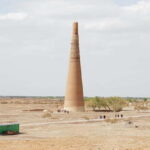
Then comes the famous one: the Kalta Minaret (often paired with the image of Khiva itself). It’s within Itchan Kala and is one of the city’s signature landmarks. What I find most compelling is the minaret’s distinctive design and the fact that it appears unfinished. That’s not a “defect” in the story—it’s part of the architectural history.
You’ll do a photo stop, followed by a guided visit and about 20 minutes of walking time. This is the moment to slow down for pictures and angles. A minaret works differently than flat facades: small changes in viewpoint can completely change how the design lines up against the sky and nearby buildings.
Quick tip: bring your hat and keep water in mind here. You may not feel the heat until you’re standing still for photos. The wall-city shade can be patchy.
Tosh-Khovli Palace: the stone house built in brick
The last major stop is the Tosh-Khovli Palace, built between 1830 and 1838 during the reign of Allakulikhan. Even the name matters: Tosh-Khovli translates as Stone House, and the key idea is that the palace was made primarily of brick.
This is where the tour closes the loop for me. You start with the royal center (Kunya Ark), move to religious learning (the madrasah), then end with a palace complex that feels built for long-term presence. The brick construction gives you a different texture than you might expect from places that sound grander than their materials.
Expect about 30 minutes here for photo stops, guided time, and sightseeing. This extra time makes sense because palace complexes tend to reveal more when you can wander a little within the group plan.
Timing, walking comfort, and planning for weather
Even though the official duration is 4–5 hours, the experience is still a walking tour. It’s not a “sit in a vehicle and look out the window” kind of day.
That’s why comfortable shoes are non-negotiable. The tour is also not suitable for mobility impairments or wheelchair users, so if walking is an issue for you, consider choosing a different format.
Weather can matter too. The info you’ll be given points out various conditions, and I agree—Khiva can shift from sunny to breezy fast. Bring sunscreen and a hat, and keep water handy. No one wants to be stuck inside a beautiful building while hunting for shade outside.
One more rule to plan around: flash photography is not allowed inside the buildings, and smoking isn’t permitted. Also, the tour doesn’t allow food or drinks during the walk, so if you need a snack plan, you’ll want to keep that for before or after.
Price and value: why $45 can still be a bargain—or not
The price is $45 per person, and hotel pickup and drop-off are included, along with a professional guide and taxes. That’s the base value proposition: you pay for transportation support, guidance, and interpretation.
The catch is admissions tickets. Those aren’t included in the $45, so your total cost will be higher once you add entry fees for the sites. If you’re working with a tight budget, check ticket costs in advance so you don’t get surprised at the counter.
One review complaint that sticks with me is about price fairness when comparing to other tour pricing. I can’t fix that for you, but I will say this: the best way to protect value is to confirm what’s included (especially tickets) and make sure the tour covers the specific landmarks you care about. If it does, this half-day format can be cost-effective because it concentrates your time in the most important monuments inside Itchan Kala.
Guide style and languages: ask better questions, get more out
The tour runs with a live guide in English, Russian, or Uzbek, and you can also opt for a private group if you prefer a quieter pace or more flexibility. A good guide is what turns this from “buildings you saw” into “buildings you understood.”
From the feedback I’ve heard about the guide experience, the strongest tours tend to keep things relaxed. The key is not rushing you through every stop. If your guide has a consultative style, you’ll get time for questions and photos instead of feeling like you’re on a conveyor belt.
Practical move: come ready with two or three questions. For example, ask what differentiates the citadel’s political role from the madrasah’s education role, or why the minaret’s unfinished look matters historically. Guides can’t read your mind, but a prepared question often earns you a better explanation.
Who this tour suits best
This tour fits best if you:
- Want an efficient orientation to Khiva’s UNESCO walled center
- Like architecture with context (power, learning, Islamic heritage)
- Can comfortably walk for about 4–5 hours with short guided stop times
It may not suit you if:
- You need wheelchair-accessible routes or minimal walking
- You’re hoping for a food-focused experience during the tour (food and drinks aren’t allowed while you’re walking)
If you’re traveling as a couple or solo, the private group option can be a nice way to avoid being stuck at the back of a larger group. If you’re traveling with kids, it depends on their attention span for guided stops—this is more “walking and understanding” than “rides and play.”
Should you book the Khiva classic half-day walking tour?
Yes, if you want a structured way to see Khiva’s key monuments without spending the whole day figuring out what matters. The combination of Itchan Kala walking plus the landmark set—Kunya Ark, Mukhammad Rakhim Khan Madrasah, Kalta Minaret, and Tosh-Khovli Palace—gives you a coherent story across politics, faith, and architecture.
Book with eyes open on the cost side: admissions tickets aren’t included, so check the ticket situation before you go. Also wear good shoes and plan for weather, because you’ll be outside moving through the old city.
If you like guided explanations and want to leave with a clear sense of how Khiva’s Islamic heritage shaped the city’s evolution, this is a strong use of a half day.
FAQ
How long is the Khiva classic half-day walking tour?
The tour lasts about 4–5 hours.
What sites does the tour include in Khiva?
You’ll visit Itchan Kala, the Kunya Ark citadel, the Mukhammad Rakhim Khan Madrasah, the Kalta Minaret, and the Tosh-Khovli Palace.
Is hotel pickup and drop-off included?
Yes. Hotel pickup and drop-off are included, and you’ll be given the exact pickup information the day before your tour.
Are admission tickets included in the price?
No. Admission tickets are not included.
What languages is the guide available in?
The live guide is available in English, Russian, and Uzbek.
Is this tour offered as a private group?
Yes, a private group option is available.
What should I bring for the tour?
Bring comfortable shoes, a hat, camera, sunscreen, and water.
Are there any restrictions during the tour?
Smoking is not allowed, flash photography is not permitted inside buildings, and food and drinks are not allowed during the tour.
![A Night In The Kyzylkum Desert [2] From Khiva - Day 2: Ayaz-Kala and the fortress circuit in Karakalpakstan](https://i.uzbekistantravelguide.com/wp-content/uploads/a-night-in-the-kyzylkum-desert-2-from-khiva.jpg)