REVIEW · KHIVA
A Night In The Kyzylkum Desert [2] From Khiva
Book on Viator →Operated by Oxus Travel · Bookable on Viator
The desert sky feels bigger than you expect. This is a private 2-day ride from Khiva that blends museum time, Aral Sea history, and a real desert overnight near Ayaz-Kala, where the night sky is the main event. You’ll also get a look at Karakalpak everyday life in the Kyzylkum zone, including meals and the sight of camels moving around camp.
I like this mix because it hits two very different kinds of Central Asia. First, the day starts with archaeology and a major stop in Nukus, including the Savitsky museum and the Muynak Aral Sea/eco story. Second, your second day is built around fortress-watching: Ayaz-Kala on a hill, then several Khorezm-era strongholds. One consideration: museum and fortress tickets cost extra, and the desert overnight is only included if you opt for the yurt package.
In This Review
- Key points worth knowing before you go
- Two days from Khiva, with a night you’ll remember
- Day 1: Nukus museums and Muynak’s Aral Sea reality
- Chilpiq (Shilpiq) Qala: a Zoroastrian monument you can picture
- Savitsky State Art Museum in Nukus: why this stop matters
- Muynak Regional Studies Museum: the Aral Sea, explained locally
- Ships Cemetery: the moment it becomes real
- Day 2: Ayaz-Kala and the fortress circuit in Karakalpakstan
- Ayaz-Kala: hilltop ruins built to watch the desert
- Fortress Toprak Kala: Khorezm power in Kushan-era form
- Guldursun Qala: walls, towers, and the things found inside
- Kyzyl Kala: late antique first, rebuilt on the eve of Mongol pressure
- Koi Krylgan Kala and Angka Kala: smaller sites, real atmosphere
- Itchan Kala: Duman Kala remains and the feel of layered enclosures
- Overnight in the desert: yurt life, camels, and stargazing
- What to pack for a desert night (so you stay comfortable)
- Price and value: where the money goes
- Who should book this desert overnight
- Should you book A Night In The Kyzylkum Desert from Khiva?
- FAQ
- What is the meeting time for the tour?
- How long is the experience?
- What does the $499 price include?
- Is the tour private?
- How many people can share one group booking?
- Are museum tickets included?
- Do I need tickets for the fortresses?
- Is the yurt overnight included?
- Where do you pick up and where do you get dropped off?
- What’s the cancellation policy?
Key points worth knowing before you go
![A Night In The Kyzylkum Desert [2] From Khiva - Key points worth knowing before you go](https://i.uzbekistantravelguide.com/wp-content/uploads/a-night-in-the-kyzylkum-desert-2-from-khiva-1.jpg)
- Private group up to 3 with hotel pickup and drop-off
- Nukus + Muynak pairing: Savitsky museum and the Aral Sea ecological story
- Ships Cemetery as a standout, sobering stop
- Overnight near Ayaz-Kala with stargazing and a lived-in yurt setting
- Seven Khorezm-era fortresses in one efficient 2-day sweep
- Audio guide included to help you follow what you’re seeing
Two days from Khiva, with a night you’ll remember
This tour is built for people who want more than a checklist. You’ll spend your daylight learning how this region worked—religion, trade, and power through fortress archaeology—then you switch gears to a modern, human-scale story of environmental loss around the Aral Sea. After that, you land in the Kyzylkum Desert for a night where stars are the entertainment.
The private format matters here. With pickup and drop-off arranged, you’re not negotiating shared vans while you’re crossing remote areas. Instead, you can keep your day rhythm: drive, see, pause, move on.
You can also read our reviews of more evening experiences in Khiva
Day 1: Nukus museums and Muynak’s Aral Sea reality
![A Night In The Kyzylkum Desert [2] From Khiva - Day 1: Nukus museums and Muynak’s Aral Sea reality](https://i.uzbekistantravelguide.com/wp-content/uploads/a-night-in-the-kyzylkum-desert-2-from-khiva-2.jpg)
You start at 8:00 am, and you’ll spend the first day on a cultural-and-historical track. That’s a good approach because the desert overnight hits hard, and you don’t want the entire second day to feel like one long travel blur.
Chilpiq (Shilpiq) Qala: a Zoroastrian monument you can picture
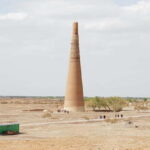
The day begins with Chilpiq (Shilpiq) Qala, a Zoroastrian ancient monument (a dakhma) with age estimates over 2,200 years. This is described as a round, roofless tower, about 15 meters high with a wide diameter. Even if you’re not a specialist, you can stand there and understand the scale.
Practical note: roofless stone structures and desert light can make the ground feel hotter than you expect. Wear breathable layers and plan for sun protection.
Savitsky State Art Museum in Nukus: why this stop matters
Next comes the I.V. Savitsky State Museum of Art in Nukus, the capital of Uzbekistan’s Karakalpakstan region. This museum is known as one of the most extraordinary tourist experiences in the country, and it has a story tied to the region itself—so you’re not just seeing art, you’re seeing how art survived and gathered meaning here.
What I like about fitting this museum early: it gives you a mental reset. Fortresses and ruins can feel severe. The museum adds human creativity before the day turns darker.
Muynak Regional Studies Museum: the Aral Sea, explained locally
After Nukus art, you shift into Muynak at the Regional History and Aral Sea Museum, also known as the ecological museum of Muynak. This is a small stop by big-city standards, but it’s framed around one of Central Asia’s most serious environmental tragedies: the disappearance of the Aral Sea.
If you like history with context, this is the right move. You’ll see how a whole landscape changed, and why the name Orol Dengizi (Aral Sea) still carries weight.
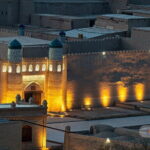
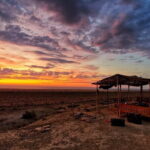
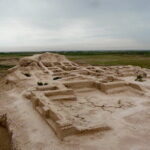
Ships Cemetery: the moment it becomes real
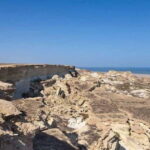
The last stop of day one is the Ships Cemetery, a place tied to the Aral Sea’s shrinkage and the disappearance of a once major body of water. The tone here is different from a museum hall. It’s physical. You’re looking at the evidence of a modern catastrophe.
This is one of the most emotional stops on the whole trip, so don’t rush it. Take time to absorb the scale and sit for a minute if you need to. It’s also a good place to stop and re-orient yourself: by tomorrow night, you’ll be under a sky that looks completely untouched, and that contrast is part of the experience.
Day 2: Ayaz-Kala and the fortress circuit in Karakalpakstan
![A Night In The Kyzylkum Desert [2] From Khiva - Day 2: Ayaz-Kala and the fortress circuit in Karakalpakstan](https://i.uzbekistantravelguide.com/wp-content/uploads/a-night-in-the-kyzylkum-desert-2-from-khiva.jpg)
The second day focuses on archaeology—often the best kind, because it gives you something tangible to track: architecture, location, and how these forts controlled movement across the region.
Many stops are short (around 20–60 minutes), but you’re not just passing by. Most fortresses sit on strategic ground—hilltops, open views, and routes that mattered long ago. Your job is to look for lines of sight and understand why someone would build there.
Ayaz-Kala: hilltop ruins built to watch the desert
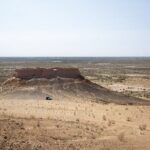
Ayaz-Kala is an archaeological site in Karakalpakstan, dated from about the 4th century BCE to the 7th century CE. It sits on a hill overlooking the Kyzylkum Desert, which is exactly why it’s so effective as a “next stop.” From here, the desert isn’t abstract. It’s a place people used and guarded.
You’ll also be sleeping close by. That’s the key value of this tour’s pacing: you see Ayaz-Kala in daylight, then return near it at night for star watching.
Fortress Toprak Kala: Khorezm power in Kushan-era form
Next is Toprak Kala, dated to the Kushan period (around the 2nd and 3rd centuries CE). It’s described as a royal residence for the kings of Khorezm and at times as a sanctuary. The important idea is that this isn’t just a wall. It’s a political space.
Even in limited time, try to picture daily life: where movement would funnel, where authority would be displayed, and how the fortress could signal control.
Guldursun Qala: walls, towers, and the things found inside
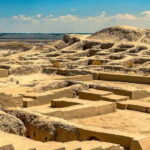
Guldursun Qala is a fortified town with exterior walls and towers dating to the 12th century CE. Archaeological finds mentioned include ancient and medieval pottery plus bronze items and coins. That detail matters because it’s one step toward understanding the fort as a lived place, not only a defensive structure.
This is a stop where your imagination helps. Use the visible walls as your scale marker and think about how much activity could happen within them.
Kyzyl Kala: late antique first, rebuilt on the eve of Mongol pressure
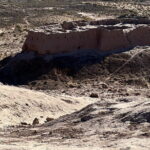
Kyzyl Kala (Kizil Kala) is described as originally constructed in the late antique period (1st to 4th centuries CE). It was abandoned and then rebuilt in the 12th–13th centuries, just before the Mongol invasions. The “rebuilt after abandonment” detail is a good clue that these places kept returning to importance as threats and systems shifted.
If you like history that shows change over time, this is your stop.
Koi Krylgan Kala and Angka Kala: smaller sites, real atmosphere
You’ll also visit Koi Krylgan Kala, located outside the village of Taza-Kel’тиminar in Ellikqal’a District (as listed), plus Angka Kala, a settlement found about 22 kilometers north of Turtkul city. Angka Kala is described as well preserved and almost square in architectural plan, with dating across two big blocks (I–III centuries and X–XII centuries A.D.).
These are not “big-city” attractions. The value is the feeling that you’ve stepped into a region where time stretches and the ruins still sit where people left them.
Itchan Kala: Duman Kala remains and the feel of layered enclosures
The final fortress stop is listed as Itchan Kala, with a description matching Duman Kala: three adjacent sections, including a square-shaped western enclosure with corner towers, a smaller square-shaped citadel, and an irregular four-sided northern enclosure. You’ll likely feel the layout more than you’ll read it like a book, so give yourself a few minutes to walk the outside edge where possible.
Overnight in the desert: yurt life, camels, and stargazing
![A Night In The Kyzylkum Desert [2] From Khiva - Overnight in the desert: yurt life, camels, and stargazing](https://i.uzbekistantravelguide.com/wp-content/uploads/a-night-in-the-kyzylkum-desert-2-from-khiva-4.jpg)
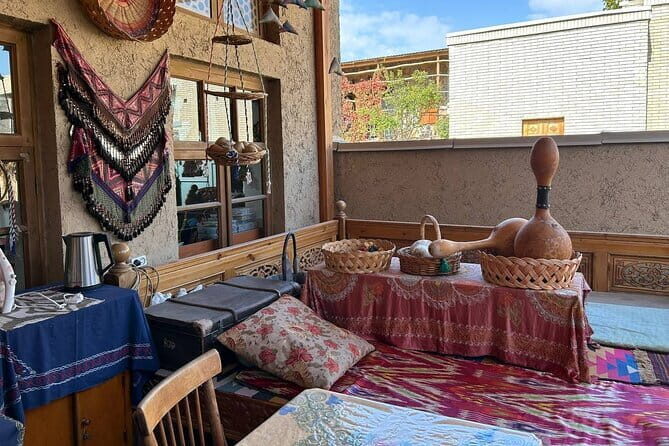
This is the main reason to book. The overnight is planned in the middle of the Kyzylkum desert near Ayaz Kala fortress. At night, you’ll be able to observe the stars in a place where there’s far less light than in cities.
What I find especially appealing is that the overnight isn’t sold as a performance. You’re positioned to see traditional life in Karakalpakstan, including local ways of living in the desert zone. The description also notes that camels walk around, and that you can drink the milk from local families.
A key practical point: the base tour price covers transport, pickup, and audio guide, but the yurt overnight accommodation is extra at USD 50/day and includes dinner and breakfast. So if you want the full experience, factor that into your total budget.
What to pack for a desert night (so you stay comfortable)
The data doesn’t list a dress code or gear, so think like this is a real desert camp. Bring:
- A light jacket or warm layer for nighttime (desert air can cool fast)
- Sun protection for daytime fortress stops
- Closed-toe shoes for uneven ground at ruins
- Water and snacks if you prefer having your own supply between stops
Price and value: where the money goes
![A Night In The Kyzylkum Desert [2] From Khiva - Price and value: where the money goes](https://i.uzbekistantravelguide.com/wp-content/uploads/a-night-in-the-kyzylkum-desert-2-from-khiva-5.jpg)
The tour price is $499 per group (up to 3) for about 2 days. That means your per-person cost depends heavily on whether you travel solo, as a couple, or with a friend. Even if you’re splitting with two people, you’ll still feel this is a premium day trip—because you’re covering real distance, private transport, and remote sites.
What’s included:
- Hotel pickup (from Khiva or Nukus) and drop-off in Khiva or Urgench
- Air-conditioned vehicle
- Private transportation
- Audio guide
- Driver transport between locations
- Mobile ticket
What’s not included:
- Yurt overnight: USD 50/day, with dinner and breakfast
- Museum tickets: Savitsky museum about USD 10, Muynak museum about USD 7
- Fortress tickets: around USD 2 (as listed)
So your total cost will likely rise once you add museum admissions and fortress entry fees, plus the yurt if you want to stay. Still, this is one of those trips where the value comes from coherence: a tight blend of museums, Aral Sea tragedy, archaeology, and then night sky time.
Who should book this desert overnight
![A Night In The Kyzylkum Desert [2] From Khiva - Who should book this desert overnight](https://i.uzbekistantravelguide.com/wp-content/uploads/a-night-in-the-kyzylkum-desert-2-from-khiva-6.jpg)
This works best if you:
- Want real contrast: museums and tragedy by day, stars and desert life by night
- Like ancient sites with clear dating and architecture details (Ayaz-Kala, Toprak Kala, Kyzyl Kala, and more)
- Prefer a private schedule with hotel pickup and drop-off
It might be less ideal if you hate early starts or dislike long travel days. The tour is also listed for travelers with moderate physical fitness, which makes sense given the walking and sun exposure around fortresses.
Should you book A Night In The Kyzylkum Desert from Khiva?
![A Night In The Kyzylkum Desert [2] From Khiva - Should you book A Night In The Kyzylkum Desert from Khiva?](https://i.uzbekistantravelguide.com/wp-content/uploads/a-night-in-the-kyzylkum-desert-2-from-khiva-7.jpg)
If you want a trip that blends the modern and the ancient without feeling rushed, this is a strong choice. The standout combo is straightforward: Aral Sea context at Muynak (especially the Ships Cemetery) plus a practical archaeological circuit, capped with a desert night near Ayaz-Kala where you can watch stars and experience yurt life.
Book it if you’re the kind of traveler who likes meaning, not just photos. Pass if you’re looking for a comfort-only itinerary or if added entry fees and a desert overnight cost would frustrate you.
FAQ
![A Night In The Kyzylkum Desert [2] From Khiva - FAQ](https://i.uzbekistantravelguide.com/wp-content/uploads/a-night-in-the-kyzylkum-desert-2-from-khiva-8.jpg)
What is the meeting time for the tour?
The tour starts at 8:00 am.
How long is the experience?
It takes 2 days (approx.).
What does the $499 price include?
The price covers hotel pickup and drop-off, an air-conditioned private vehicle, audio guide, and private transportation. The yurt overnight and many admissions are extra.
Is the tour private?
Yes. It’s a private tour/activity, and only your group will participate.
How many people can share one group booking?
The price is per group for up to 3 people.
Are museum tickets included?
No. Museum tickets are not included, including Savitsky museum (about USD 10) and the Muynak museum (about USD 7).
Do I need tickets for the fortresses?
Fortress tickets are not included. They’re listed as around USD 2.
Is the yurt overnight included?
The yurt overnight is not included. You can add it for USD 50/day, with dinner and breakfast.
Where do you pick up and where do you get dropped off?
Pickup is from Khiva or Nukus, and drop-off is in Khiva or Urgench.
What’s the cancellation policy?
Cancellation is free up to 24 hours in advance for a full refund.