Khiva’s old city feels like a living museum. This 3.5-hour guided walking tour takes you through Ichan-Kala’s top sights, with a licensed guide explaining how Khiva’s khans, caravan routes, and faith shaped what you see today.
I especially like two things: the way you get your bearings fast inside Ichan-Kala and the focus on standout architecture like the Juma Mosque and Tash-Khauli Palace. Hearing the stories behind places like Pahlavan Mahmud also makes the monuments feel personal, not just postcard pretty.
One possible drawback: depending on your guide, you might run into pronunciation or language clarity issues at times. For example, I’ve seen reports of guides with great vocabulary but harder-to-follow pronunciation, so don’t be afraid to ask them to repeat or slow down.
In This Review
- Key highlights to plan around
- Walking into Ichan-Kala: where Khiva’s story starts
- Juma Mosque: wooden columns, carved roof, and a minaret view
- Pahlavan Mahmud’s mausoleum: the turquoise dome and the hero-saint idea
- Tash-Khauli Palace: patterns, ganch, marble, and copper openwork
- Khorezm traditions you’ll actually remember
- The walking rhythm: small group, shade stops, and photo time
- Food after the monuments: what to plan for
- Price and value: is $35 a good deal here?
- What to bring (and what to avoid) for a smooth walk
- Languages and communication: choosing the right guide for you
- Should you book the Khiva city highlights walking tour?
- FAQ
- How long is the Khiva city highlights guided walking tour?
- How much does the tour cost?
- What is included in the price?
- Are entry tickets included?
- Is food included?
- How big is the group?
- Do I need hotel pickup and drop-off?
Key highlights to plan around
- Small-group pace (max 7) means more time for questions and photos
- Juma Mosque views from the minaret help you understand Khiva’s layout
- Turquoise-domed Pahlavan Mahmud ties local hero legends to the fortress skyline
- Tash-Khauli’s decoration: ganch, marble carvings, and copper openwork screens
- Khorezm culture context beyond dates: crafts, arts, Zoroastrianism, and math lore
- Heat management can make or break a walking tour in summer, and good guides adjust
Walking into Ichan-Kala: where Khiva’s story starts
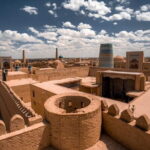
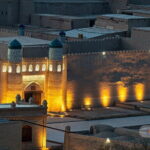
If you only visit Khiva for a quick photo sprint, you’ll miss the point. This tour is built to help you understand the place while you’re still fresh-eyed. You start by strolling past the colorful markets and the fortress walls of Ichan-Kala, Khiva’s UNESCO World Heritage core. Even before you reach the big monuments, you’ll notice how the city is organized for movement and protection—tight lanes, defensive walls, and the way major buildings visually anchor the landscape.
This is where a good guide really matters. You’ll hear the big forces that shaped Khiva: powerful local rulers, the economic pull of the Great Silk Road, and the practical reality of desert caravans. The guide keeps it readable too—less “countless names and dates,” more what’s relevant to what you’re walking past.
You can also read our reviews of more walking tours in Khiva
Juma Mosque: wooden columns, carved roof, and a minaret view
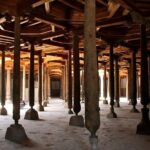
The Juma Mosque is one of the most eye-catching stops in Uzbekistan, and this tour makes you look in the right places. You’ll see the roof structure supported by 200 wooden columns with ornamental carvings. That detail is easy to overlook if you’re just scanning from ground level, but with a guide you start noticing how craftsmanship directs your attention—how carving patterns, woodwork, and roof lines work together.
Then you get the payoff: from the minaret, you have a view that helps everything click. From above, the historical center reads like a connected system rather than a pile of buildings. You can trace the fortress area, spot how key monuments cluster, and get a better sense of where your next steps will lead.
Practical note: climbing and time on stairways isn’t described here in detail, but expect some vertical walking around the mosque complex. Wear comfortable shoes and keep an eye on your pace in the heat, especially if you’re visiting when temperatures are high.
Pahlavan Mahmud’s mausoleum: the turquoise dome and the hero-saint idea
After the mosque, the tone shifts from architecture to legend. You’ll visit the mausoleum of Pahlavan Mahmud, a hero of Khiva who was later elevated to the rank of saints. That “hero to saint” arc matters because it explains why people return to certain places. It’s not just reverence for a building; it’s reverence for a story that shaped local identity.
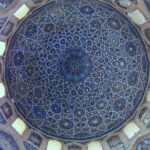
A key visual here is the turquoise dome, which rises above Ichan-Kala’s fortress skyline. Even if you’ve seen turquoise domes elsewhere, you’ll likely notice how this one sits in the context of the walls and nearby structures. From street level, domes can feel isolated; from the right viewpoint, it becomes a landmark that organizes your entire walk.
You’ll also learn about Pahlavan Mahmud as both poet and hero, with the guide tying together why the community remembers him. If you like travel that gives you a sense of who mattered and why, this stop delivers.
Tash-Khauli Palace: patterns, ganch, marble, and copper openwork
This is the “slow down and stare” part of the tour. Tash-Khauli Palace is described as Khiva’s most beautiful palace, and the details you’ll focus on back up that reputation. You’ll see walls, columns, and ceilings covered with patterns, plus ganch and marble carvings that reward close viewing.
One of the most distinctive features mentioned is the openwork copper grating that looks fit for a Khiva khan. It’s the kind of decoration that’s hard to capture in a single photo because the beauty is in the texture and repetition: the way metalwork creates a lace-like effect, how light plays through it, and how the design frames the eye.
This stop is also where the walking tour format pays off. If you’re alone, you can get lost in the “pretty, pretty” loop. With a guide, you’ll understand what to look for: not just the surface, but the craft choices that signal status and power.
Khorezm traditions you’ll actually remember
The tour doesn’t only point at buildings. It connects those buildings to cultural ideas that shaped Khiva in daily life.
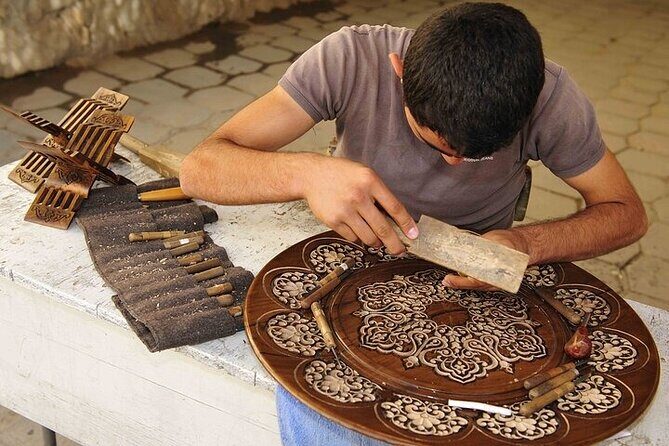
You’ll hear about local traditions and arts and crafts, plus the cult of Zoroastrianism. You’ll also get a mention of Khiva’s connection to the birthplace of algebra. Even if you didn’t come to Uzbekistan expecting math history, this kind of context makes the city feel less like a stage set and more like a real place where ideas traveled along with merchants and caravans.
I like this approach because it keeps you from turning history into a blur. Instead of memorizing names, you leave with a few strong concepts—how faith influenced art, how crafts built identity, and how knowledge moved across trade routes.
You can also read our reviews of more guided tours in Khiva
The walking rhythm: small group, shade stops, and photo time
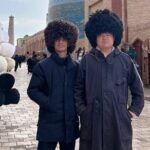
The group size is small, capped at up to 7 participants, and that’s a big part of why this tour works. In a large group, guides rush. Here, the guide can slow down when you need it, and you can ask questions without feeling like you’re interrupting.
You also get a photo/video pass, so you’re not constantly scanning for permission. That matters because Khiva’s details are visual: carved columns, turquoise domes, patterned ceilings, and metallic screens.
Heat is real in Khiva, and this tour feels designed for it. There are reports of guides taking extra care to find shade and places to sit while explaining. In summer, that’s not a luxury—it’s what keeps the tour enjoyable instead of miserable. One guide even checked in regularly to make sure people were okay due to the hot weather, which tells me pacing and comfort are part of how these tours are run.
Food after the monuments: what to plan for
At the end, you’ll get the chance to taste Khorezm cuisine. The tour mentions dishes such as pilaf, tukhum-barak, shivit osh (Khorezm lagman), and shish kebabs, plus more.
Here’s the important part: food and drinks are not included in the tour price. So treat the tasting opportunity as “budget for it,” not as a free meal. If you’re already paying entry tickets, that extra cash matters.
To make this smoother, I’d set aside some spending flexibility so you can try a couple of items rather than rushing through and settling for just one dish. Khorezm food is part of the culture story the guide is building, and it’s worth giving it time.
Price and value: is $35 a good deal here?
At $35 per person for a 3.5-hour walking tour with a professional licensed guide, the price feels reasonable for Khiva. You’re paying for three things you can’t easily DIY in the same way: expert guidance through Ichan-Kala, interpretation of what you’re seeing (especially the “why” behind the monuments), and an efficient route that hits major highlights in one stretch.
The main value trade-off is what’s not included. Entry fees are not included, and you’ll also want to account for food. The tour instructions suggest bringing 150,000 sums in cash per person for tickets (listed as about 15 USD / 850 rubles). If you come with that ready, you won’t feel stuck outside gate after gate.
So the math is simple: if you’re happy to pay for sites and food on top, the $35 covers a guided experience that’s built for first-timers and architecture lovers. If you’re trying to keep everything ultra-low-cost and you’re comfortable reading independently, you might choose a self-guided route. But if you want meaning with your walking—this price is fair.
What to bring (and what to avoid) for a smooth walk
This is a walking-focused tour, so comfort is your best friend.
Bring:
- Comfortable shoes
- Comfortable clothes
Avoid:
- Luggage or large bags (not allowed)
This matters because Khiva’s lanes inside Ichan-Kala can be tight. Large bags slow you down, and you don’t want to fight with your own stuff while you’re trying to move between monuments.
Also, bring cash for entry tickets—the tour specifically asks for 150,000 sums per person. If you don’t, you may end up scrambling or waiting.
Languages and communication: choosing the right guide for you
The live guide can speak Russian, Uzbek, English, or Turkish. That’s useful if you want the explanations to land clearly.
From reported experiences, language clarity can vary by guide. One guide (Maryam) was described as knowledgeable and took care to find shade, but pronunciation made some parts harder to follow, so asking for repetition helped. Another guide (Yulduz) was praised for passion and checking in during the hot weather.
My practical advice: if you feel like you’re missing details, ask right away. A simple request like could you repeat that or could you speak a little slower can rescue your experience quickly. In a small group, you’re more likely to get that attention.
Should you book the Khiva city highlights walking tour?
Yes, if you want a well-paced way to see the core monuments without turning history into a homework assignment. This tour is a strong fit for:
- first-time visitors who want Ichan-Kala orientation quickly
- people who enjoy architecture details (wood columns, patterned interiors, ganch/marble work)
- travelers who want culture context like Zoroastrianism and crafts, not just “here’s a building” sightseeing
- anyone who prefers a small group over crowded buses and fast explanations
Skip it only if you:
- hate walking in heat and can’t handle a gradual pace around fortress sites
- want everything fully included (because entry fees and food aren’t included)
- need perfectly clear English/Russian and are extremely sensitive to pronunciation differences
If you’re flexible with spending a bit extra for tickets and you’ll wear comfortable shoes, this is a smart way to get real value out of a short Khiva visit.
FAQ
How long is the Khiva city highlights guided walking tour?
It lasts 3.5 hours.
How much does the tour cost?
The price is $35 per person.
What is included in the price?
You get a professional guide, the 3.5-hour guided tour, and a photo/video pass.
Are entry tickets included?
No. Entry fees are not included, and you’re advised to bring 150,000 sums in cash per person for tickets.
Is food included?
No. Food and drinks are not included, though there’s an opportunity to taste Khorezm cuisine after the tour.
How big is the group?
It’s a small group, limited to a maximum of 7 people.
Do I need hotel pickup and drop-off?
No. Hotel pickup and drop-off are not included. You’ll be dropped off at a central location at the end.