REVIEW · KHIVA
Khiva Walking Tour
Book on Viator →Operated by Sayyah Uzbekistan · Bookable on Viator
Khiva is better on foot with a guide. This tour takes you through Ichan Kala with a multilingual guide, helping you connect the maze of courtyards and minarets to real everyday life in the old city. One thing to plan for: monument entrance fees are not bundled into the tour price.
I like that you can steer the visit by choosing which monuments to include, instead of being dragged through a fixed checklist. The guide language options (German, Russian, English, and French) also make it easier to ask direct questions and get answers you’ll actually use while you’re standing in front of the buildings.
Pickup is offered, and the walk starts at the Ichan Kala west gate (99H4+CRQ) and ends back at the same meeting spot. If you want to see a lot in half a day without stress, this setup is a practical way to do it.
In This Review
- Key highlights you’ll feel on the walk
- Ichan Kala: the one-day Khiva focus that actually makes sense
- A practical reality check
- Price and value: $25 is the guide, not the entry ticket
- Why separating fees can be good
- Languages that matter when you’re standing in front of the buildings
- When the guide turns into an experience
- Meeting at the Ichan Kala west gate: start where the old city begins
- The Ichan Kala walking route: thousand minarets, but on real streets
- What to watch for while walking
- Monument choice: your schedule should match your interests
- Lunch and the observation tower: a smart break from pure walking
- Timing, pace, and how to avoid getting rushed
- Accessibility and who this tour suits best
- The small risks to know before you book
- Should you book this Khiva walking tour?
Key highlights you’ll feel on the walk
- Ichan Kala first-timer plan: the focus stays inside the UNESCO old city core.
- Choose-your-own monument stops: entrance fees are separate, so your time matches your interests.
- Multilingual guidance: German, Russian, English, and French are covered.
- Real on-site context: the tour explains Central Asian social history, not just dates and names.
- Lunch + observation tower time: a break from constant walking, with a view payoff.
- Insider perspective possible: one guide mentioned (Moxira) grew up in Ichan Qala, which can make the details land.
Ichan Kala: the one-day Khiva focus that actually makes sense
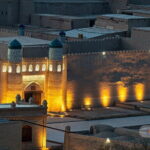
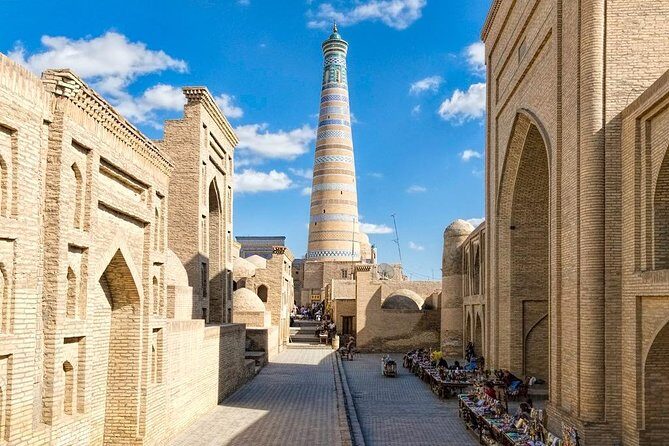
Khiva can feel like a puzzle at first. Streets twist, walls blend together, and every doorway seems to lead somewhere “important.” This walking tour is built to solve that problem by keeping you inside Ichan Kala, the UNESCO-listed inner city that still feels like a preserved medieval core.
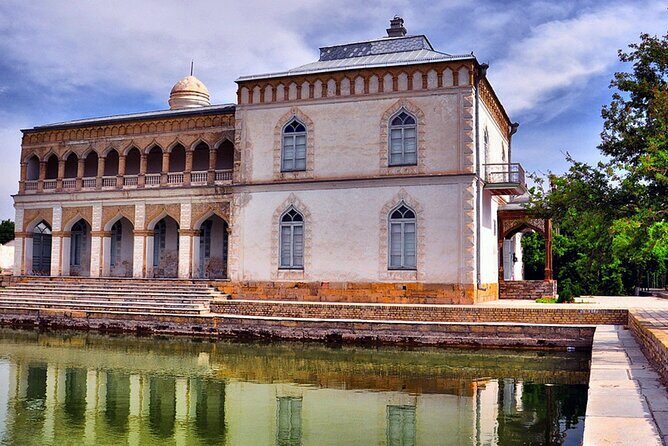
What I like about this approach is that it treats Ichan Kala as a lived space, not a theme park. Yes, you’ll see famous sights, but you’re also getting the story of how people organized their day around palaces, madrasas, mosques, and saintly shrines. That’s where the walk gets more than sightseeing value.
The old city is often described with big, catchy numbers. Still, they help you calibrate what you’re walking through: roughly 2 khans’ residences, 10+ minarets, 20+ madrasas, and about 5 mosques and mausoleums of saints. Even if those counts don’t feel literal while you’re moving, they signal why a guided route is worth it.
You can also read our reviews of more walking tours in Khiva
A practical reality check
This tour is designed for about 4 to 5 hours. If you’re the type who likes slow photos, long questions, or you stop for tea often, plan on the tour stretching toward the longer end. If you’re comfortable moving briskly, you may finish closer to the shorter end—one guest noted that around three hours felt like the right length for their pace.
Price and value: $25 is the guide, not the entry ticket
The headline price is $25, and that’s a fair deal for what you’re buying: a professional guide plus fees and taxes. The price also comes with a private format—meaning it’s just your group—so you’re not stuck waiting on someone else’s “slow moment” every ten minutes.
Here’s the key catch: monument entrance fees are not included. That means you’ll pay separately at the sites you choose, and you’ll want to have a rough amount ready in your pocket.
One review detail that’s worth taking seriously: an old town entrance fee was mentioned as 200,000 som per person. Even if the exact number varies with timing and rules, the message is consistent—budget for entry charges on top of the tour price.
Why separating fees can be good
When entrances aren’t bundled, you can avoid wasting time (or money) on stops you don’t care about. I like this model in historic cities, because your interests are the filter. If you’re more drawn to minarets and city layout, you’ll choose differently than someone who wants madrasas and devotional sites.
Languages that matter when you’re standing in front of the buildings
This is where a guided Khiva walk pays off. The guide language options include German, Russian, English, and French, and the included guide languages are EN, RU, FR.
That matters because the questions you’ll naturally ask in Ichan Kala are often the “why” questions:
- Why is a certain courtyard shaped this way?
- What does a specific madrasa function tell you about daily life?
- How did the city’s social order express itself in architecture?
If your guide can explain clearly in your language, you’ll understand more without needing to guess, translate, or rely only on signs.
When the guide turns into an experience
One highly praised guide detail: Moxira, who grew up in Ichan Qala, brought an insider feel to explanations. That doesn’t mean you should expect a biography on every tour, but it does show the potential upside. When a guide connects buildings to how a place feels from the inside, the walking becomes more vivid and less like reciting a brochure.
Meeting at the Ichan Kala west gate: start where the old city begins
The walk starts at the Ichan Kala west gate (99H4+CRQ) and ends back there. So you’re not scrambling across town to catch a return ride. If pickup is offered, it likely helps you get to the right spot without the “where is the gate” anxiety that can happen in older city cores.
Starting at the west gate also helps you because Ichan Kala is easiest to grasp when you enter with a route already planned. You’re not just wandering; you’re stepping into a guided rhythm: see, understand, then connect what you’re seeing to the story the guide is building.
The Ichan Kala walking route: thousand minarets, but on real streets
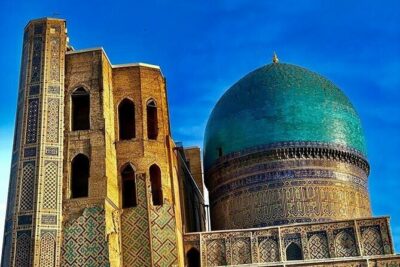
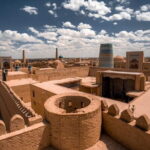
Your main stop is Ichan Kala, often called the City of a Thousand Minarets and an open-air museum. The nickname sounds like marketing, but on the ground it signals a real visual pattern: minarets punctuate the skyline like landmarks, and you start using them to orient yourself.
This part of the tour is built around what makes Ichan Kala feel “medieval.” You’ll move through a mix of:
- architectural power centers (khans’ residences),
- religious education (madrasas),
- worship spaces (mosques),
- and places tied to saints.
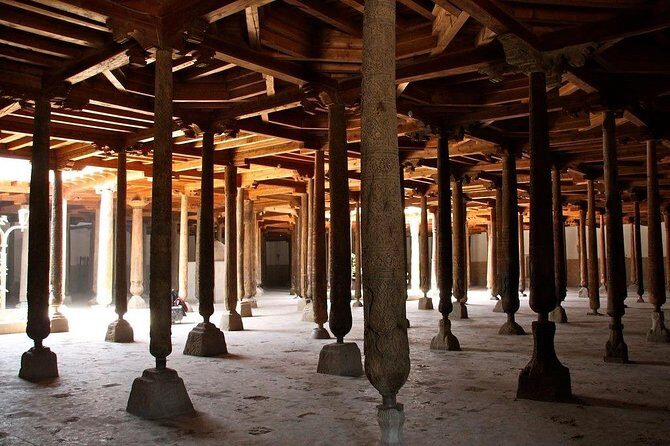
Even if you don’t know any names in advance, you’ll start recognizing building types and realizing they aren’t just decorative. The guide’s job is to explain how each kind of structure fits into social life—who would gather there, what it signaled, and how it shaped the city’s daily routines.
What to watch for while walking
Since the tour encourages choosing monuments, you’ll likely make decisions on the fly. Keep an eye out for:
- areas that look more ceremonial and formal (often a hint you’re near governance or elite spaces),
- madrasas that read as learning environments (space layout can help your understanding),
- and vantage points where the city opens up, which can pair nicely with the observation tower time later.
If your guide is moving quickly, don’t be shy about asking for a slower pass at one favorite spot. The best value is when you connect the explanation to your own view of the building.
Monument choice: your schedule should match your interests
A standout feature is that you can choose which monuments you visit. Entrance to monuments is not included, so it’s not a one-size-fits-all tour.
That’s a real advantage for value. A group that spends money on the wrong stops can feel “nickel-and-dimed.” With this structure, you decide where your time and entrance fees go.
Just keep your expectations realistic:
- If you choose fewer sites, you’ll spend more time lingering at the ones you pick.
- If you choose many, the tour still stays in the 4–5 hour range, so you may move brisker and get less “sit and process” time at each stop.
Lunch and the observation tower: a smart break from pure walking
The tour includes lunch and also includes time for stunning views from the observation tower. That’s not just comfort. In a place like Ichan Kala, a view point can help your brain map the city.
Walking makes you learn the city as corridors and courtyards. An observation tower lets you learn it as a whole. That two-level understanding is what makes the rest of the visit click.
If you’re doing Khiva in one day, don’t treat these “break” elements as optional fluff. They’re the mental reset that keeps the afternoon from feeling like nonstop stone.
Timing, pace, and how to avoid getting rushed
This tour runs about 4 to 5 hours. One mixed note from a lower rating: the guide was described as pushy and in a hurry, with time spent greeting other guides. That kind of situation can happen in group travel when guides are juggling logistics.
Here’s how you protect your experience:
- Be clear about what you want most before the walking starts (for example: minarets and street views, or madrasas and religious education).
- If you feel the pace is too fast, ask for a slower route at the next major stop.
- Use your monument selection to control the flow. Don’t add a “must-see” at the end if you can already tell you’re running out of time.
Most tours will feel smooth, but you’re in control of how many extras you pick.
Accessibility and who this tour suits best
The tour notes that most travelers can participate, and it’s a walking format inside an old city. If you have limited mobility, steep steps, or long-distance walking constraints, you’ll want to think twice before booking. The data doesn’t list specific wheelchair or step-free details, so consider the physical nature of a historic walking circuit.
This tour is especially suitable if:
- you want a guided first-time introduction to Khiva in half a day,
- you like learning how places function socially, not just what they look like,
- you’re comfortable paying separate entrance fees for the monuments you choose,
- and you value multilingual explanations.
It’s less ideal if you dislike walking in older city streets or you absolutely want everything bundled into one single payment.
The small risks to know before you book
Most of the feedback is very positive—people loved how worth it the time felt and how clearly the guide explained palaces and madrasas. Still, two concerns show up in the range of ratings:
- One person felt the guide experience was rushed.
- Another had a no-show situation and had to book a different (cheaper) tour through their hotel.
You can’t remove every travel risk, but you can reduce it:
- confirm the tour day plans in advance,
- arrive at the west gate on time,
- and have a backup way to contact the provider if something seems off.
With that mindset, you give yourself the best chance of a smooth experience.
Should you book this Khiva walking tour?
Book it if you want the best odds of understanding Ichan Kala in one afternoon. The combination of a professional multilingual guide, a route built around the UNESCO inner city, and built-in lunch plus an observation tower view is strong value—especially at $25—as long as you budget separately for monument entrance fees.
Skip it or reconsider if:
- you want a fully bundled ticket price with no extra payments,
- you can’t handle the walking style of a historic old town,
- or you know you’re sensitive to rushed pacing and prefer a very unstructured walk.
If you’re planning Khiva as a one-day stop, this is the kind of tour that helps you get your bearings fast and see the city in a way you can actually remember later.