REVIEW · TASHKENT
Samarkand One-Day Tour Departure from Tashkent
Book on GetYourGuide →Operated by GOTOUZBEKISTAN · Bookable on GetYourGuide
Samarkand in a single day feels impossible. It is also the smart way to beat Tashkent-to-city logistics: Afrosiyob trains get you in fast, and a local guide stitches the day together with stories you cannot pick up from photos alone. I especially like the way Registan Square is explained as a living design plan, and how the stop at the local market gives you real texture beyond monuments. The one real drawback is timing: it is a long day, so build in patience for early pickup and a late return.
If you want your Silk Road fix without committing to an overnight stay, this trip is built for you. You also get tight, efficient coverage of the city’s “greatest hits,” from Tamerlane’s legacy to Ulugbek’s science—so the 1 day format does not feel like a checklist. Just know you are moving most of the day, and the sites can get crowded around peak hours, so wear good shoes and keep your expectations practical.
In This Review
- Key things you will notice on this one-day Samarkand run
- Afrosiyob speed: how the Tashkent–Samarkand train saves your day
- Registan Square: the architecture stop that makes Samarkand click
- Gur-Emir Mausoleum: Tamerlane’s shadow in blue and stone
- Bibi-Khanym and Shah-i-Zinda: mosaics, mausoleums, and a lot of walking
- Ulugbek Observatory: where medieval science is part of the tour
- Market time and shopping: how to enjoy it without losing control
- Lunch and pacing: a full day done the right way
- Price and value: what $219 really buys you
- Guides and group size: why small-group energy matters
- When the high-speed train cannot run
- Who should book this one-day Samarkand tour
- Should you book this tour?
- FAQ
- How long is the Samarkand one-day tour from Tashkent?
- What train is included for the trip?
- Is hotel pickup and drop-off included?
- What language are the guides available in?
- What is included in the price?
- What is the cancellation policy?
Key things you will notice on this one-day Samarkand run
- Round-trip train is the centerpiece, with hotel pickup and drop-off making the day feel easy
- Registan Square gets explained, not just photographed, so you understand why the architecture matters
- Gur-Emir + Tamerlane’s story gives context for Samarkand’s power and myths
- Shah-i-Zinda is a maze of mausoleums, where you slow down and absorb tilework up close
- Ulugbek Observatory adds science to the scenery, connecting medieval scholarship to the city
- Lunch is included, typically a traditional Uzbek meal at a local spot (plan for a full day, not a quick bite)
Afrosiyob speed: how the Tashkent–Samarkand train saves your day
The biggest win here is simple: you trade a long, stressful travel day for a fast rail hop. The tour uses round-trip Afrosiyob high-speed tickets, with the train ride taking about 2.17 hours each way, so your sightseeing window in Samarkand stays meaningful.
In practice, that means you do not spend your limited time stuck at terminals or negotiating rides. Hotel pickup and drop-off are included, which matters in Tashkent where the “last mile” can otherwise eat up your day. A lot of people also comment that the train is clean and comfortable, and some even note small onboard comforts like water/snacks, which helps when you’re starting early.
One thing to consider: you are on a schedule. The tour handles the timing and train boarding, but the day is still long. If you hate early starts, this is not a gentle option. Plan to eat breakfast, and keep a small snack or water backup in your bag—because once you’re out in Samarkand, you will be walking and entering places with limited time to “figure it out.”
You can also read our reviews of more tours and experiences in Tashkent.
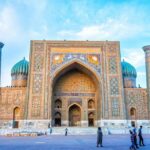
Registan Square: the architecture stop that makes Samarkand click
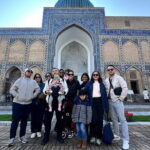
If you only saw one thing in Samarkand, Registan Square would likely be it. On this tour, it is not just a photo moment. Your guide helps you read what you’re looking at—why three grand madrasahs face the same open space, and how that design controls the mood of the square.
What I like about this format is that it turns the square from a pretty backdrop into a lesson in city planning. The tiles, patterns, and the way the buildings frame the square all make more sense once someone points out the logic behind the layout. When you understand the “why,” the “wow” lasts longer.
Practical tip: this is a place where people slow down naturally to look up. That’s good, but it also means time disappears. Go for one wide shot, then step closer for details—especially around doorways and tilework—because that’s where the craftsmanship is easiest to appreciate. And if you get a few minutes for independent wandering, use them to step into your own rhythm instead of rushing with the group.
Gur-Emir Mausoleum: Tamerlane’s shadow in blue and stone
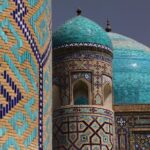
From Registan’s open drama, the day shifts to a more grounded kind of power at Gur-Emir Mausoleum, associated with Tamerlane. This stop hits because it ties the monument to a person—Samarkand’s story isn’t just art, it’s also rule, legacy, and how empires wanted to be remembered.
Your guide’s job here is crucial. Without context, you can feel like you’re looking at another major tomb complex. With context, the symbolism lands: the architecture and decoration are part of the messaging of authority. It’s one of the best ways to understand why Samarkand mattered on the Silk Road, not only as a crossroads, but as a center of ambition.
If you’re someone who likes details—domes, inscriptions, the feel of old craftsmanship—take a little time inside the complex and let your eyes adjust. If you’re more of a “main idea” person, don’t force it. The guide will usually point you toward what to notice in a quick, clear way.
Bibi-Khanym and Shah-i-Zinda: mosaics, mausoleums, and a lot of walking
The tour continues with two stops that feel different in mood but connected in theme: Bibi-Khanym Mosque and Shah-i-Zinda.
Bibi-Khanym Mosque is worth your time because it speaks to scale. Even when parts of the structure have changed over centuries, you still sense the original ambition. It helps to have a guide here to connect the mosque to the wider story of Samarkand’s influence and the way rulers shaped public monuments.
Then comes Shah-i-Zinda, often the highlight for people who love “I didn’t expect that” moments. It’s a line of mausoleums and corridors where the decoration stays close to you. You’re not looking at one single facade from a distance; you’re moving through a space where tilework and tomb architecture stack into a kind of living gallery.
A practical note: Shah-i-Zinda is not a quick stop. Even if the schedule says “visit,” you will naturally want to linger. Wear comfortable shoes and plan for stops that may involve steps, uneven surfaces, and crowd movement. If your group is small, you’ll likely get more flexibility to pause for photos without getting dragged onward too quickly.
Ulugbek Observatory: where medieval science is part of the tour
Not every city tour includes science, but Samarkand does, and the Ulugbek Observatory stop brings that side into view. The guide explains how medieval scholars studied the heavens with impressive precision—an idea that helps you see Samarkand as more than just architecture.
What makes this stop valuable is that it reframes the city. Yes, the mosaics are stunning. But Ulugbek’s legacy reminds you the Silk Road wasn’t only trade. It was also knowledge transfer, scholarship, and practical astronomy tied to real-world navigation and timekeeping.
If you like museums or anything that mixes human brains with physical objects, you’ll enjoy the observatory explanation. If you’re less into academic topics, ask your guide to translate the significance into “what it means for Samarkand,” not only “what scholars did.” A good guide will do exactly that.
Market time and shopping: how to enjoy it without losing control
One of the nice surprises here is the inclusion of time for the local market. This is not random wandering; it’s the kind of stop that adds day-to-day texture to the monuments. You get a chance to see ingredients, textures, and the small commercial rhythms that keep a city feeling real.
I also like that guides often help you interpret what you’re seeing. You might get quick context on goods, local habits, and what tends to be worth your money. It’s a good moment to ask questions—about food, crafts, and how people live now—because you’re not just collecting facts from stone.
Shopping tip that saves money and stress: set a small budget in your head before you start browsing. Markets can be fun, but they can also turn into a slow drain of time and attention when you start “just looking.” If you see something you genuinely want—ceramics, small textiles, spices—go for it, but don’t buy only because you feel pressured to be decisive.
Lunch and pacing: a full day done the right way
This tour includes lunch, which is a big deal on a one-day format. Without it, you’d be forced to hunt for food in between major sites, and that often turns into a compromise you regret. With lunch handled, you keep momentum and energy.
The lunch tends to be traditional Uzbek, and some guests specifically remembered comfort foods like manti from the restaurant stop. Even if your meal is different, the value is the same: you are eating locally while staying on schedule.
Still, this is a long day. Plan for it. Some people report the overall rhythm as early pickup and a late return (often close to evening). The tour is structured to see major sights without feeling like a sprint, but your feet and your attention do the real work.
Small practical checklist:
- Eat breakfast before pickup
- Bring a light layer (mosques and indoor spaces can feel cooler)
- Carry water for walking time between stops
- Keep your phone charged for blue-tile photo sessions
Price and value: what $219 really buys you
At $219 per person, you’re paying for speed, organization, and a guide who can connect the sights into a story. The train alone (round-trip) is a major cost driver, and you also get hotel pickup and drop-off, entrance fees, and lunch.
In other words, you are not just buying “transportation plus tickets.” You’re buying the hard parts: timing, meeting points, guiding through the important sites, and not having to plan an exact city route while you’re jet-lagged or new to the area.
Is it expensive? Compared with DIY travel, yes. Compared with the real cost of booking trains, negotiating local transport, paying for individual guides, and losing time trying to make it all fit, it can be good value—especially if Samarkand is the only day trip you can spare.
If you can only visit once, this is one of those cases where paying for guidance helps you get more out of fewer hours. And if your group is small or private, you’re even more likely to get pacing that suits you.
Guides and group size: why small-group energy matters
This tour runs with private or small groups, which is a big practical advantage. In a small group, the guide can slow down when questions pop up and speed up when you’re ready to move. It also makes museum-and-mosaic attention easier—no endless waits.
The language options are English and Russian. If you’re choosing English, you’ll want to confirm your guide language preference when booking, since the quality of the experience hinges on being able to follow the explanations easily.
A nice detail from feedback: guides like Mokhigul, Hakimjon, Alina, Sevinch, Moha, Maftuna, Henry, and Zaynab have been described as passionate and fun to travel with, not only reciting dates but bringing the city to life. You might meet different guides depending on dates, but the point stays: this experience is built around storytelling, and the guides are clearly a core strength.
When the high-speed train cannot run
This tour uses the high-speed option, but on rare days when it is unavailable, the transport is replaced with the most-comfortable class of regular train. That matters because it means the tour does not collapse if schedules shift. You still get the day structure and the same major sightseeing plan, with just a different train mode.
Who should book this one-day Samarkand tour
This is a great fit if:
- You only have one day to spend outside Tashkent
- You want the key Samarkand sights in one organized push
- You like guided interpretation, especially for architecture and science
- You value hotel pickup and not dealing with day-of logistics
It may be less ideal if:
- You hate long days and lots of walking
- You want a slow, flexible pace where you linger for hours without a schedule
- You plan to photograph everything for long periods and might get frustrated by time limits
Should you book this tour?
If your goal is to see Samarkand’s most famous sights with minimal hassle, I think this tour is a strong choice. The fast trains do the heavy lifting, and the guided stops (Registan, Gur-Emir, Bibi-Khanym, Shah-i-Zinda, Ulugbek) turn a single day into a coherent experience instead of a rushed scrapbook.
Book it if you can handle a long schedule and you want someone to translate the city into something you actually understand. If you want a calmer pace or you’re already taking a longer multi-day stay in Samarkand, then you might choose a slower plan later. But if this is your one shot from Tashkent, this is the kind of day trip that makes your Uzbekistan story feel complete.
FAQ
How long is the Samarkand one-day tour from Tashkent?
The tour runs for 1 day, including round-trip train time and about 6 hours of guided sightseeing in Samarkand.
What train is included for the trip?
The tour includes round-trip Afrosiyob high-speed train tickets. If the high-speed train is unavailable on rare occasions, it is replaced with the most-comfortable class of regular train.
Is hotel pickup and drop-off included?
Yes. You are picked up from your hotel in Tashkent and dropped back after returning.
What language are the guides available in?
The live tour guide is available in English and Russian.
What is included in the price?
Included items are entrance fees, transportation, the guide, lunch, and hotel pickup and drop-off.
What is the cancellation policy?
You can cancel up to 24 hours in advance for a full refund, and you can also reserve and pay later.