REVIEW · TASHKENT
Shymkent Day Tour from Tashkent
Book on GetYourGuide →Operated by Asli Travel · Bookable on GetYourGuide
Border day, ancient legends, and a sobering museum. I love how this trip manages the border crossing with local drivers, and how guides such as Larissa turn Shymkent’s sites into stories you actually remember. The trade-off is simple: the price can feel steep, and the border line can stretch the schedule.
You’ll cover about 240 km round-trip in A/C vehicles, with a guided sweep of Shymkent’s main sights plus a few meaningful stops on the road. Expect a real day of walking, photos, and explanations—along with the kind of border experience you can’t fully control.
In This Review
- Key things that make this tour worth your time
- Price and Logistics: Why This One-Day Trip Costs What It Costs
- From Tashkent Pickup to the Border: The Ride That Sets the Tone
- Crossing the Uzbekistan–Kazakhstan Border: What to Expect When Time Feels Elastic
- Kazygurt Stop and the Noah’s Ark Legend: A Roadside Detour With Real Myth Power
- Shymkent First Look: A City Shaped by Silk Roads and Conquests
- Citadel of Shymkent: Old Town, Preserved Landmarks, and Best Views
- Ordabasy, Zher Ana, and Independence Square: Modern Kazakhstan, Visible and Specific
- Metallurgists Park and Arbat Shymkent: Parks as Storytelling Tools
- Museum of Victims of Political Repression: Heavy, Necessary Context
- Russian Orthodox Cathedral of St. Nicholas and Abay Park: Different Eras, Same City
- Guide Choice Matters: The Difference Between Seeing and Understanding
- Timing Reality Check: Why “8 Hours” Can Become 10 to 12
- What You’ll Actually Get: A Strong “Highlights Package” for One Extra Country
- Should You Book This Shymkent Day Tour?
- FAQ
- How long is the Shymkent day tour from Tashkent?
- What is the price for this tour?
- Is this a private tour or shared group?
- What languages are available for the guide?
- What’s included in the price?
- Are entrance tickets included?
- Is lunch included?
- How does the border crossing work?
- Is the vehicle air-conditioned?
- Can I cancel for a refund?
Key things that make this tour worth your time
- Border handled smartly: you ride to the checkpoint, cross yourself, and drivers meet you on the other side with a vehicle change
- Kazygurt’s Noah’s Ark legend: a roadside detour with major “Great Silk Road” mythology behind it
- Shymkent citadel panoramas: old-town views from the highest point, with preserved religious landmarks
- Parks and squares with a backstory: Independence-era monuments, WWII memorials, and a POW-built park
- Museum of political repression: heavy subject matter, but it’s included for context, not as decoration
Price and Logistics: Why This One-Day Trip Costs What It Costs
This Shymkent day tour from Tashkent runs $250 per group (up to 3 people). That sounds like a lot at first glance, but you’re not just paying for sightseeing. You’re paying for the whole “cross two countries in one day” setup: an English- or Russian-speaking guide, A/C transportation in both countries, and a driver-to-driver handoff at the border.
What you’re not buying is unlimited time. It’s one day, and border queues can be slow. Even with a smooth vehicle transfer plan, you’ll want mental flexibility—because the schedule is only as good as the checkpoint flow.
Also note what you’ll likely spend separately: entrance tickets and meals. The tour doesn’t include lunch/dinner, and the guide will point you toward good options once you’re in Shymkent.
You can also read our reviews of more tours and experiences in Tashkent.
From Tashkent Pickup to the Border: The Ride That Sets the Tone
The day starts with pickup from your hotel, airport, or train station in Tashkent. From there, you transfer to the Uzbekistan–Kazakhstan border, and your guide stays part of the process before you physically cross.
On the way, you’ll get a few road-experience touches. You may see camels, and there’s often an optional stop where you can try mare’s milk. It’s one of those small cultural moments that makes the trip feel less like a bus tour and more like a border-era journey.
Then the key logistics moment: the guide and drivers get you to the crossing, but you handle the border crossing itself. Reviews describe passport checks that can feel like multiple steps—so bring patience and keep your documents ready. One of the best pieces of practical advice here: don’t treat it like a quick formality. Treat it like part of the day.
Crossing the Uzbekistan–Kazakhstan Border: What to Expect When Time Feels Elastic
This is the part that can make or break your day. The overall concept is consistent: you cross yourself, then your Kazakhstan-side driver meets you on the other side. And yes, the car changes at the border—one driver in Uzbekistan, another in Kazakhstan.
Timing varies a lot. Some people report a crossing around 20 minutes, while others describe closer to an hour or even 1.5 hours depending on the day and line flow. The point for your planning is simple: assume you might need extra buffer. If you have a tight flight later that day, confirm the timing with your guide so you’re not gambling.
One more practical tip: keep calm and organized. Border lines can get physical with people trying to move first. Your goal is to move forward steadily, stay polite but firm, and not waste energy arguing with the process.
Kazygurt Stop and the Noah’s Ark Legend: A Roadside Detour With Real Myth Power
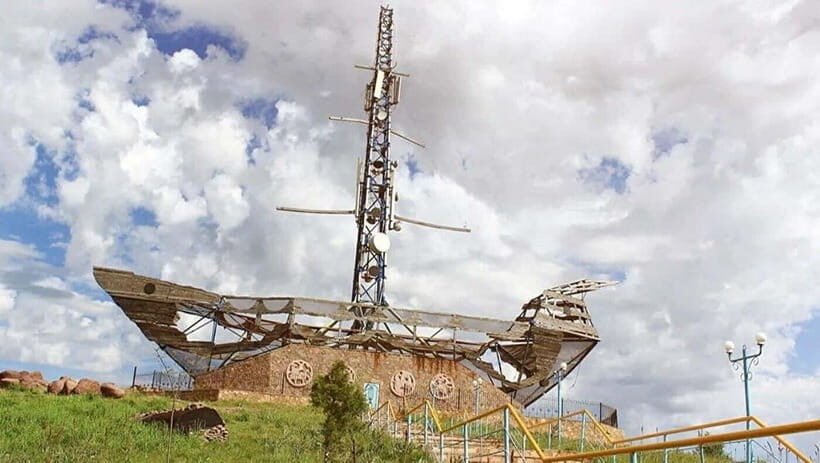
Before you reach Shymkent, you’ll make a pit stop near the Sacred Mound of Kazygurt. This stop matters for two reasons: it breaks up the drive and it gives you a story that connects the region to the Great Silk Road.
The legend attached to Kazygurt is that Noah’s Ark landed on the top of the mountain. Whether you treat it as faith, folklore, or folklore turned history, it makes the landscape feel purposeful. You’re not just passing through farmland—you’re hearing why people built meaning into these places long before modern borders.
If you like travel that mixes geography with belief systems, this is a good moment. It’s also an easy photo stop if the light is right and you have a minute.
Shymkent First Look: A City Shaped by Silk Roads and Conquests
Once you arrive, Shymkent hits you as a city with layers. You’ll hear that it’s at least 800 years old and that the name appears in medieval records tied to Tamerlane’s military campaign in the 1365–1366 period. The story also connects caravans of the Great Silk Road passing through the area, later followed by Mongol-era captures in the 13th century.
That matters because it explains the vibe. Shymkent doesn’t feel like a single-era museum city. It feels like a working city where older roots are still visible in the old-town core and religious sites, while newer monuments and parks tell what the city chose to celebrate more recently.
Citadel of Shymkent: Old Town, Preserved Landmarks, and Best Views
The citadel is one of the strongest reasons to do this trip with a guide. The old town dates back to the 9th century, and you’ll hear that the oldest mosque and minaret have been preserved here. The tour frames the citadel as being around the same age as Tashkent—over 2200 years—so you’re walking in a place with a long timeline and a clear physical center.
You’ll also get one of the best rewards of the day: a panoramic view of Shymkent from the highest point within the citadel. It’s the kind of viewpoint that helps you understand how the city fits together, especially once you’ve spent the morning crossing borders and driving through open spaces.
If you’re short on time in Shymkent, the citadel is still the “do not miss” stop. The religious landmarks and the view give you both meaning and orientation.
Ordabasy, Zher Ana, and Independence Square: Modern Kazakhstan, Visible and Specific
Under and around the citadel area, the tour includes the Ordabasy complex, described as a shopping zone built in that territory. It’s useful context: it shows you how the old-town core now functions for daily life, not only as heritage.
Then comes the Zher Ana complex, created in this area to symbolize independence and freedom of Kazakhstan. If you’re used to monuments that feel generic, pay attention to how this one is tied to place—sitting where the city’s older layers are still present.
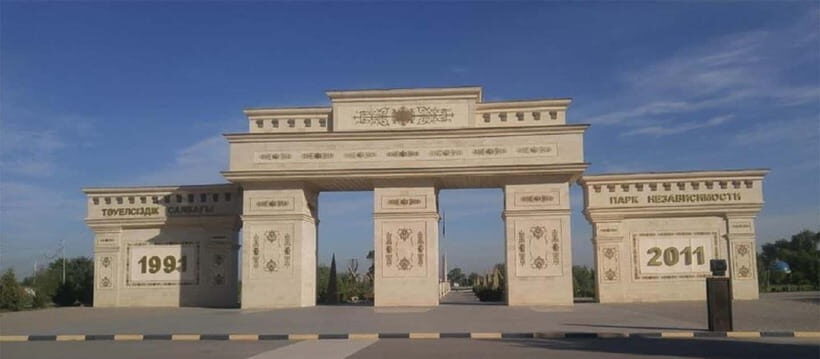
Independence Square, opened in 2011, is the city’s largest and newest park in its historical part. It’s the kind of stop that helps you shift from “history through buildings” to “history through public space,” where people actually meet, walk, and spend time.
Metallurgists Park and Arbat Shymkent: Parks as Storytelling Tools
Two of the most interesting “walk” stops are Metallurgists Park and Arbat Shymkent.
Metallurgists Park is described as one of Shymkent’s prettiest parks, built before the war and located in a quarter developed by German and Japanese prisoners of war. That fact changes how you see the park. It’s not only greenery and paths—it’s also a physical reminder of how forced labor and war-era movements shaped parts of the city.
Arbat Shymkent is the local Broadway-style street. This is where you’ll likely feel the day go from “sites” to “people and energy.” It also includes an attraction that’s become a crowd favorite: an upside-down house. It may sound like a novelty, but it’s a fun pause after heavier stops, and it gives you a break for photos and laughs.
Museum of Victims of Political Repression: Heavy, Necessary Context
The Museum of Victims of Political Repression is one of the most serious stops on the tour. It focuses on Stalin’s repressions against the Kazakh people, and the tone is clearly somber.
This is not a short, shallow “remembering moment.” The whole point is to understand what repression meant and how it affected the Kazakh people. If you want to visit Kazakhstan and understand why certain historical narratives still matter in everyday life, this museum gives you context that you won’t get from monuments alone.
It also helps explain why the tour includes both modern-day parks and older city cores. The city is telling stories in multiple directions—future and independence outside, while historical trauma remains visible inside.
Bring the right mindset: slow down, read what you can, and don’t rush. If you’re traveling with kids, this stop can be emotionally intense, so it’s worth checking how your group handles serious history.
Russian Orthodox Cathedral of St. Nicholas and Abay Park: Different Eras, Same City
You’ll also visit the Russian Orthodox Church, Cathedral of St. Nicholas, built in 1988 during the Soviet Union’s perestroika reforms. It’s a useful counterpoint to the Kazakh independence symbols in the tour. You see how Shymkent’s identity includes religious and cultural layers from different periods.
Then you’ll move to Abay Park. In the center is the Alley of Glory, a WWII memorial complex. The main memorial is the Memorial of Glory, and the park is named for Abai Kunanbayev, the Kazakh poet and educator often linked to modern Kazakh literature and philosophy. You’ll also see a monument to him on the territory of the park.
This pairing—St. Nicholas Cathedral plus Abay Park—helps you understand Shymkent’s balance. Soviet-era religious architecture sits alongside a Kazakh literary hero and WWII remembrance. It’s not just “one story.” It’s multiple stories, placed in the same city grid.
Guide Choice Matters: The Difference Between Seeing and Understanding
A big reason this tour scores well is the guide experience. I’ve seen names like Larissa and Maftuna (and also Samandar, Mohammed, and Nuriddin) linked with strong storytelling and flexibility.
What that means for you: the guide isn’t only ticking boxes. A good guide helps you connect what you’re seeing—citadel age, mosque preservation, WWII memorial meaning, and repression history—into one coherent picture.
It also matters when timing gets messy at the border. Some days you’ll have more time in Shymkent; other days you’ll have less. In that situation, a guide who can adjust your pace—without skipping key stops completely—changes the whole feel of the day.
Timing Reality Check: Why “8 Hours” Can Become 10 to 12
The tour duration is listed as 8 hours, but real-world border experience can add time. Some people report total days stretching to around 11 hours door-to-door. Others warn that the border can be chaotic and that it may take longer than you expect to make it through.
So here’s the practical approach I recommend: don’t schedule tight plans immediately after. If you need to catch a flight, coordinate with your guide early, and ask for a realistic return estimate based on the day’s border conditions.
Also keep your expectations matched to the pace. This is a sightseeing sweep with walking, not a sit-and-stroll country drive. Bring comfortable shoes and plan to keep moving.
What You’ll Actually Get: A Strong “Highlights Package” for One Extra Country
If your goal is to add Kazakhstan to a Tashkent-based trip without eating your whole week, this is a solid format. You get:
- a route that includes a major border experience,
- a meaningful myth-and-landscape stop at Kazygurt,
- Shymkent’s citadel and panoramic views,
- parks and squares tied to independence, WWII, and even POW-era urban development,
- and a museum stop that explains political repression in Kazakh history.
It’s not trying to be a slow deep study. It’s trying to be a complete day that still feels grounded in place.
Should You Book This Shymkent Day Tour?
Book it if you want an organized, guided path that turns logistics-heavy border travel into something you can handle. This is especially worth it if you care about history beyond monuments, and you want the contrast of Kazakhstan’s independence symbols alongside WWII remembrance and repression history.
Skip it or rethink it if you hate uncertainty. The border crossing timing can vary, and the tour value depends on you having that mental buffer. Also consider the cost: entrance tickets and meals aren’t included, and at $250 per group, you’re paying for convenience more than for bare sightseeing.
If you do book, do two things: wear comfortable shoes, and give yourself breathing room for delays. With that, you’ll come back with a real sense of Shymkent—not just photos.
FAQ
How long is the Shymkent day tour from Tashkent?
The tour duration is listed as 8 hours, but the border crossing can add time depending on conditions.
What is the price for this tour?
It’s $250 per group, for up to 3 people.
Is this a private tour or shared group?
It’s a private group tour.
What languages are available for the guide?
The live tour guide is available in English and Russian.
What’s included in the price?
A professional guide and an A/C vehicle (in both countries) are included, plus pickup from your hotel/airport/train station.
Are entrance tickets included?
No. Entrance tickets for the mentioned monuments are not included.
Is lunch included?
No. Lunch and dinner are not included, though the guide recommends good restaurants.
How does the border crossing work?
You’re transferred to the border and cross yourself. After crossing, a Kazakhstan-side driver meets you. The car changes at the border.
Is the vehicle air-conditioned?
Yes. The A/C vehicle is provided in both countries.
Can I cancel for a refund?
Yes. Free cancellation is available up to 24 hours in advance for a full refund.