REVIEW · BUKHARA
Bukhara: Walking Tour with a Small Group
Book on Viator →Operated by UzLocalGuide · Bookable on Viator
One walk through Bukhara can feel like a whole education. This small-group, English-language walking tour strings together major UNESCO sights, market domes, and city landmarks with a guide who stays focused on real local context, not classroom-style lectures. I especially like the way it’s paced for a morning-or-afternoon visit, and the professional guide element keeps the stories sharp and grounded. A key thing to consider: entry fees aren’t included, so a couple of stops may cost extra.
The route is built to help you read the city as you walk. You’ll spend time around the Lyabi-Hauz ensemble and then move toward the Kalon complex, the trading domes (Telpakfurushon and Zargaron), and the big architectural hitters like the Great Minaret and the Ismail Samani Mausoleum. If you’re hoping for a shopping-focused itinerary, this isn’t that kind of tour; it’s more about architecture and everyday life than browsing stalls.
One more practical note: the guide mostly shows the Ark Fortress from the outside. If you want the Ark Museum too, that visit would take extra time (about 1.5 hours), and it’s not part of the standard walking plan.
In This Review
- Key things I’d plan around
- A 4.5-hour Old City plan that fits how you’ll actually travel
- Professional English guide: what you gain with a real expert
- Lyabi-Hauz Ensemble: the square where Bukhara’s public life happens
- Magoki-Attori Mosque and the carpet museum add texture
- Toki Telpakfurushon: trading dome energy, without the shopping pressure
- Madrasas on the move: Abdulaziz-Khan and Ulugbek
- Toqi Zargaron and the jewelry trade story
- Kalon Minaret and Miri Arab: where scale becomes a story
- The Ark Fortress: outside views now, museum later if you want
- Bolo Hauz Mosque and Ismail Samani Mausoleum: closing with meaning
- What it costs and why it feels like good value
- Who this tour suits best
- Quick practical notes that help on the day
- Should you book this Bukhara walking tour?
- FAQ
- How long is the Bukhara walking tour?
- How much does it cost?
- Is the tour small group and in English?
- What does the tour include?
- Are entry fees included?
- Where do we meet and where does the tour end?
- What if the weather is bad or I need to cancel?
Key things I’d plan around
- Maximum 10 people keeps it personal and lets you ask questions without shouting over the group
- Professional English guide (examples include Sunny and Nuriddin) means clear storytelling and flexible explanations
- Ark Fortress is outside-only on this tour, with the museum requiring extra time
- Some key sites have entry fees while others are free, so total cost can vary
- No shopping focus: artisan workshops are included only to show local life and culture
A 4.5-hour Old City plan that fits how you’ll actually travel
Bukhara rewards slow walking, but most people don’t have unlimited time. This tour is about 4–4.5 hours, which is long enough to feel satisfying and short enough to stay usable after lunch plans, a transfer, or a hot afternoon. The walking approach matters here: the city’s power isn’t just in what you see, it’s in how the buildings relate to each other along the streets and squares.
The small-group size (up to 10 travelers) also changes the experience. With a tighter group, the guide can slow down when you’re staring at tilework, stop when you spot something confusing, and answer questions on the spot. That’s exactly what you want in an old city where details can look similar from a distance.
This is also a tour format that helps you get your bearings fast. You leave with a “map in your head”: key squares (like Lyabi-Hauz), market domes, and the big religious complex around Kalon. That mental map makes later self-guided wandering far less tiring.
You can also read our reviews of more walking tours in Bukhara
Professional English guide: what you gain with a real expert
A tour lives or dies by the guide. The standout theme from the guide experiences connected with this walk is not just English fluency, but how smoothly the guide handles questions and adjustments.
Sunny, for example, was praised for sharing knowledge in an interactive way. Nuriddin was praised for speaking fluent English, having deep answers, and being flexible enough to adapt the route when needed. In practical terms, that flexibility is useful when the day feels different than you expected—heat, timing, or the mood of your group.
Here’s what I think you’ll enjoy most if you choose this tour: the guide doesn’t treat monuments like separate postcards. Instead, explanations tie architecture to what people needed in daily life—education, worship, trade, and power. You’ll likely leave understanding why those trading domes exist where they do, and why the major mosques and madrasas cluster around key points.
Lyabi-Hauz Ensemble: the square where Bukhara’s public life happens
The walk opens around Lyabi Khause Square, centered on the Lyabi House complex of three architectural monuments: Kukeldash Madrasah, Nodir Divan Begi Madrasah, and Hanaka Nadir Devanbegi. You’ll have about 40 minutes here, which is a good chunk. This isn’t a “look at it, move on” stop.
What makes this moment valuable is that it sets the city’s rhythm. A square like this is where architecture meets daily movement. Even if you don’t go inside every building, the outside shapes tell you what mattered: education institutions on the corners, public structure around water/space, and the sense that the city was designed for gatherings.
If you like photos, this is also a strong area because you’re getting multiple building faces and relationships in one frame.
Magoki-Attori Mosque and the carpet museum add texture

Next comes Magoki Attori Mosque and the carpet museum. It’s roughly 20 minutes, and the mosque itself is described as a 12th-century piece within the Lyab-i Hauz religious complex.
Even with limited time, this stop gives you something more than grand exterior views. You’re stepping into the world behind the scenes of religious life and the visual culture that travels with it. The carpet museum angle helps you connect textiles to place—something you’ll likely appreciate later when you see how craft and trade fit into the city’s identity.
Potential drawback: admission here isn’t included, so if you’re budgeting tightly, plan for an extra ticket cost depending on current pricing.
Toki Telpakfurushon: trading dome energy, without the shopping pressure
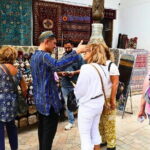
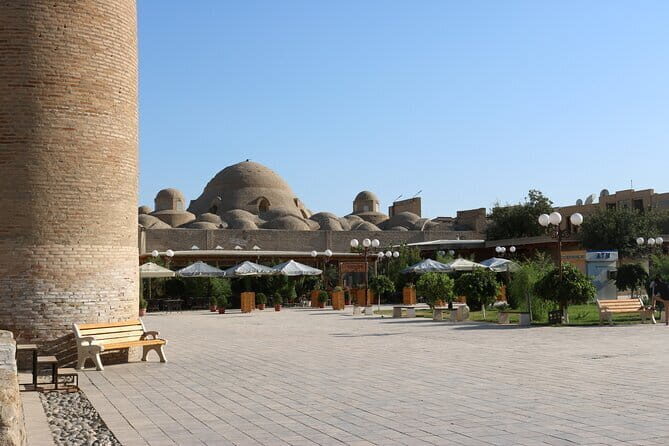
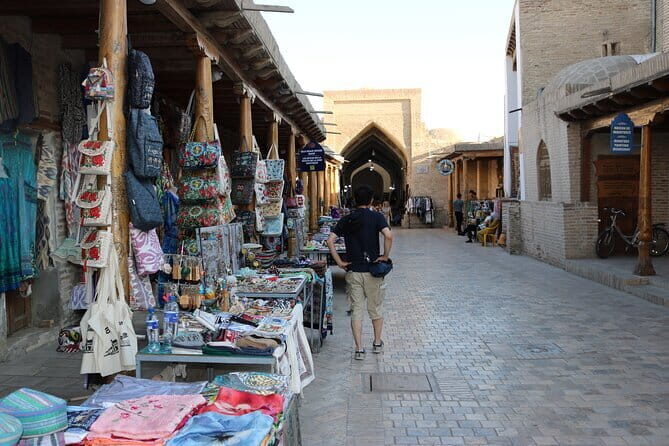
At around 20 minutes, Toki Telpakfurushon gives you one of Bukhara’s classic market-domes. This is “commerce architecture,” built to keep trade flowing while creating shade and structure. The best part is that you’re not sent off to shop. The tour notes that it doesn’t focus on shopping, and this stop supports that approach: it’s about understanding trade space, not pushing purchases.
You might notice how domes change movement. Instead of wandering an open bazaar with no focus, the dome gives the trade a center line. That’s why these domes remain so visually memorable long after you’ve left.
Also, admission for this one is listed as free, which helps keep your total cost predictable.
Madrasas on the move: Abdulaziz-Khan and Ulugbek
Two madrasas follow, and they’re different enough to keep things interesting.
- Abdulaziz-Khan Madrasah (about 20 minutes) was built in 1652 during Abdulaziz Khan’s reign and is noted for intricate tile work and decorative frescoes.
- Ulugbek Madrasah (about 15 minutes) is described as one of the oldest buildings, built by Ulugbek, the grandson of Amir Timur.
Both of these have entry fees not included. So, consider whether you want to budget for interior access. Even if you decide not to pay an entry fee at every stop, the guide’s explanations can still help you understand why these buildings matter.
The reason madrasas belong in a walking tour like this is simple: they explain how knowledge traveled. Not only through books, but through institutions that sat in the same city blocks as trade and worship.
Toqi Zargaron and the jewelry trade story

When you reach Toqi Zargaron, you’re walking into a dome known historically as the Dome of Jewelers. The described dating is 16th century, and it functioned as a central hub for gold and jewelry trading.
This stop is about 15 minutes, and admission is free. It’s an easy win for value because you’re getting a specific, named trade identity—not a vague “market dome” label. You can use the information here to help you read other domes later.
If you like cultural details, this is the kind of moment where the guide can help you imagine what was being sold, who came for it, and why the city built dedicated trade architecture for it.
Kalon Minaret and Miri Arab: where scale becomes a story
The route continues into the big landmarks around the Kalon complex area.
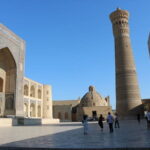
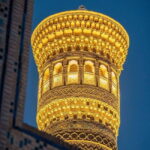
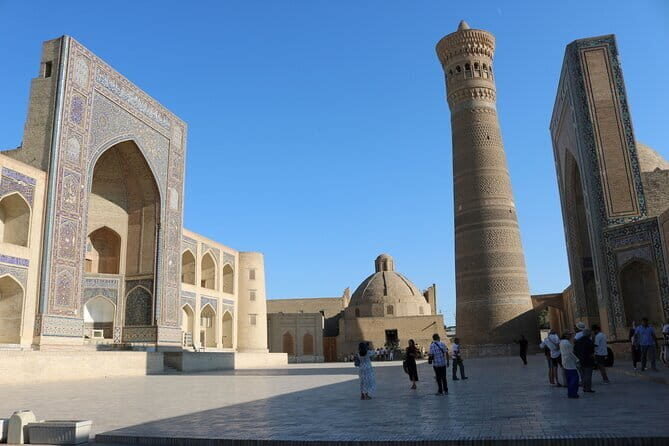
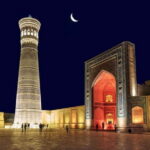
- Great Minaret of the Kalon: about 20 minutes, described as one of Bukhara’s iconic landmarks, built in 1127 by Arslan Khan, and standing about 47 meters tall. Admission is free.
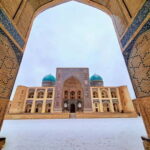
- Mir-i-Arab Madrasah: about 20 minutes, built in the early 16th century by Shaybanid ruler Ubaydullah Khan, named after his spiritual mentor (the name is cut off in the provided info, but the key detail is that it’s named for that mentor). Admission is free.
Scale hits you here. A 47-meter minaret isn’t just a tall structure—it’s a long-distance navigation tool and a statement of authority. And the madrasah next to it reinforces the idea that learning and religion weren’t separate from political power.
Then you pass by Poi Kalyan Mosque (about 15 minutes). Admission is not included on this tour. It’s described as part of the historic Poi Kalyan complex and built in the 16th century during the Shaybanid period.
Practical advice: if the mosque interior fees don’t fit your budget, you can still learn a lot just from the position in the complex and the guide’s explanation of the site’s role.
The Ark Fortress: outside views now, museum later if you want
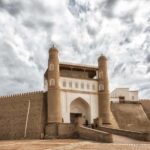
Next is Ark of Bukhara, a fortress described as dating back to the 5th century and historically serving as a royal residence for emirs and a military stronghold. You’ll have about 30 minutes, but here’s the big planning detail: you’ll see it from the outside only.
If you want to visit the Ark Museums, the additional time is about 1.5 hours, which would change your day significantly. I like that this tour is honest about it. It keeps the main walking flow from turning into a long, tiring detour.
Outside-only still works if your main goal is to understand the city’s layout and power centers. But if you’re museum-first, plan a separate block of time or choose an experience that includes the Ark interior.
Bolo Hauz Mosque and Ismail Samani Mausoleum: closing with meaning
The final stretch turns toward two very different but equally important religious sites and then lands at the mausoleum that many people remember most.
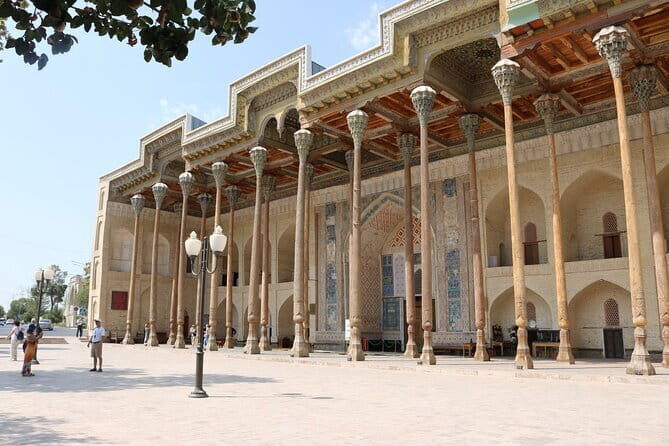
- Bolo Hauz Mosque: about 15 minutes, described as from the 18th–20th centuries. Admission is free.
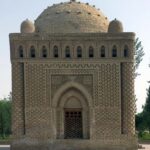
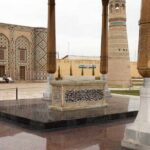
- Ismail Samani Mausoleum: about 30 minutes, described as an iconic early Islamic architecture site and the oldest funerary building of Central Asian architecture (as stated in the provided tour info). Admission is not included.
One subtle reason this ending works: after you’ve spent hours learning how trade and institutions shaped the city, you finish where permanence and legacy take over. A mausoleum is different in mood from a market dome or a madrasa. It’s quieter. More about memory than daily activity.
Depending on the season, the tour end point can vary. In late autumn and winter, the walk ends at Bolo Khauz Mosque instead of Ismail Samani Mausoleum. If you hate surprises, check the season note before you plan dinner nearby.
What it costs and why it feels like good value
The price is $28 per person for about 4–4.5 hours with a small group and a professional guide. That’s a solid deal for the amount of guided time, especially in a place where architecture and history rewards someone to interpret it.
Where cost can change is straightforward:
- Entry fees are not included (meals and drinks also not included).
- Some sites are listed as free (like Magoki-Attori mosque is noted as not included for admission; other domes and certain landmarks are listed as free), while others are not.
So I’d think of the $28 as the guided-walk foundation, and then budget extra for whichever paid interiors you want to include. If you’re the type who likes seeing interiors, you’ll spend more. If you mainly care about structure, exteriors, and guide stories, you might keep costs close to the base price.
Who this tour suits best
This is a great match if you:
- Want a single structured walk through Bukhara’s core monuments
- Prefer an English-speaking guide who can answer questions and adapt when needed
- Like history tied to how cities function (education, worship, trade), not only big dates
It’s less ideal if you:
- Want a shopping-heavy bazaar experience
- Want a long museum session inside major sites like the Ark Museum
Quick practical notes that help on the day
- You’ll use a mobile ticket, which keeps things simple.
- The tour includes online support, which is useful if you’re trying to line up start points.
- The tour requires good weather. If it’s canceled due to poor weather, you’ll be offered another date or a full refund.
Should you book this Bukhara walking tour?
I’d book it if you want a guided Old City walk that helps you understand Bukhara without getting stuck in one place too long. The price is fair for the time and the small-group format, and the emphasis on professional guiding (with guides like Sunny and Nuriddin cited for flexibility and strong English) is a big advantage.
I’d hesitate only if you’re planning on spending lots of money on paid interiors, because several important stops list admission as not included. Also, if Ark Museums are a must, you’ll need extra time since this version is outside-only.
If you’re mainly after architecture, city logic, and a manageable walking day, this is the kind of tour that makes later exploring much easier.
FAQ
How long is the Bukhara walking tour?
The tour runs about 4 hours 30 minutes (approximately 4 to 4.5 hours).
How much does it cost?
It costs $28.00 per person.
Is the tour small group and in English?
Yes. It’s a small group with a maximum of 10 travelers, and the tour language is English.
What does the tour include?
It includes a professional guide, online support, a small group, and the walking tour itself. Meals, drinks, and entry fees are not included.
Are entry fees included?
No. Some stops are listed as free, but several key sites show admission fees as not included.
Where do we meet and where does the tour end?
It starts at Nodir Devonbegi Madrasah on Bakhowuddin Nakshbandi Str., Bukhara, Uzbekistan. The tour ends at Ismail Samani Mausoleum, but in late autumn and winter it ends at Bolo Khauz Mosque.
What if the weather is bad or I need to cancel?
The experience requires good weather. If it’s canceled due to poor weather, you’ll be offered a different date or a full refund. You can cancel for a full refund up to 24 hours in advance.