REVIEW · BUKHARA
Full-Day Private Guided Tour to Islamic 7 Saints of Bukhara
Book on Viator →Operated by Malika ST Tours · Bookable on Viator
A dusty road of tombs, and the stories stick. This full-day private guided tour in Bukhara traces the Seven Saints of Sufism, tied to the Hadzhagan and influential Naqshbandi tradition, with stops across several burial sites and sacred places. It’s a focused day: not shopping, not wandering just to wander.
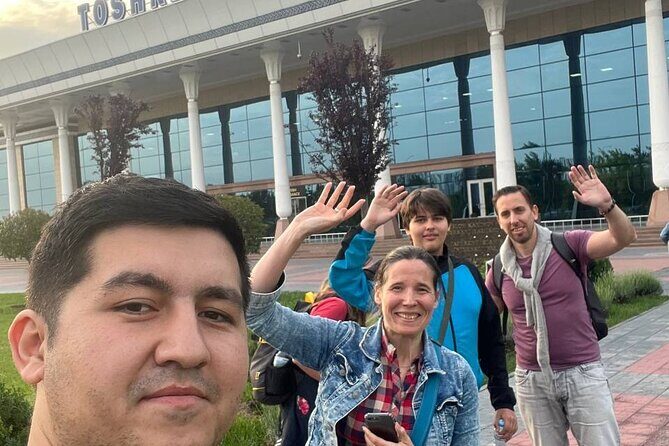
I especially liked the way Hamza, the guide on my departure, made the chain of teachers feel personal and easy to follow. Two other things I really appreciated: private transportation that keeps you on schedule, and entrance tickets handled for you so the day doesn’t stall at counters and lines.
The main drawback to think about is that this is a long, spiritual-route day: you’ll spend around 40 minutes at each site, so if you want lots of variety beyond tomb visits, you might find it a bit repetitive. Also, the tour needs good weather, and you’ll want to budget a bit extra for photo/video fees and lunch.
In This Review
- Key things I’d highlight before you book
- Sufism in Bukhara: Seven Saints in one long, meaningful day
- Your private setup: pickup, licensed guide, tickets, and a real schedule
- Gijduvon and Safirkon: where the Hadzhagan line starts
- Vobkent and Ramitan: spiritual authority and the idea of wisdom
- Ramitan and Kogon: the fifth saint and Mir Kulal’s craft
- Bahaaddina Naqshbandi’s mausoleum: ending with the biggest name
- Price at $160 per person: what you’re actually paying for
- Practical tips: photos, lunch, timing, and how to make it meaningful
- Who this tour suits best (and who should think twice)
- Should you book the Full-Day Private Guided Tour to the Seven Saints of Bukhara?
- FAQ
- How long is the Seven Saints of Bukhara tour?
- Where does the tour start and end?
- Is hotel pickup included?
- What’s included in the tour price?
- Are photo or video fees included?
- Is lunch included?
- Does the tour run in any weather?
- Is this a private tour?
Key things I’d highlight before you book
- A single guide who connects the names: you hear how Abdalhalika Gijduvani, Khoja Arif, and the later figures link into the Hadzhagan / Naqshbandi story.
- Seven sites, one smooth route: pickup included, private car, and a plan that fits a 7–8 hour day.
- Most admissions are covered: entrance tickets and fees are included, with photo/video fees only if you choose to shoot.
- Each stop has a time box: about 40 minutes per location helps you see a lot without feeling rushed.
- The day ends at Bahaaddina Naqshbandi’s mausoleum: the final stop carries the emotional weight of the whole silsila.
Sufism in Bukhara: Seven Saints in one long, meaningful day
Bukhara has a knack for putting faith and daily life close together. The city is often described as one of the oldest in Central Asia, with titles like Star of the Islamic world and Holy city of Central Asia—linked to medieval-era claims of 360 mosques and 80 madrasas. Whether you take the legend literally or treat it as local poetry, it sets the mood: people here measure time with spiritual lineage.
This tour leans hard into that idea. Instead of trying to cover every landmark in Bukhara, you follow the Seven Saints—great Sufi figures associated with the Naqshbandi world and the Hadzhagan school of mysticism. You’ll move from birthplace and burial places to a finale at the Naqshbandi mausoleum, with your guide doing the key work: turning names and dates into a coherent story.
The result is a day that feels like a guided reading of a single book, not random sightseeing. If you like context, you’ll do well. If you want big panoramic views and new photo angles every 10 minutes, you may need to adjust expectations.
You can also read our reviews of more guided tours in Bukhara
Your private setup: pickup, licensed guide, tickets, and a real schedule
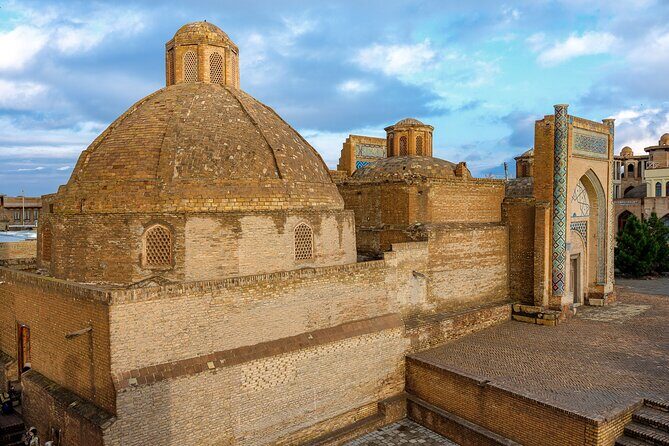
I like private tours most when they remove friction. Here, pickup is included (from Hotel Malika-Bukhara on Gavkushon Road 25), and you return to the same meeting point at the end. That matters because you don’t have to figure out transport between sites spread across the region.
You’re also not left guessing about access. The package includes a licensed guide, private transportation, and entrance tickets to all monuments, plus all fees and taxes. In practice, that means fewer awkward moments of paying at the last second or trying to confirm where tickets are required.
My experience with Hamza was a good match for this style of tour: he didn’t just name places, he connected themes. One highlight was how he explained Sufism through the lens of teachers and disciples—the chain idea—so the day didn’t feel like a list of unrelated shrines.
One small “heads up” for your budget: photo/video fees are not included, and you’ll pay $1–$2 per site directly at the entrance if you want to record.
Gijduvon and Safirkon: where the Hadzhagan line starts
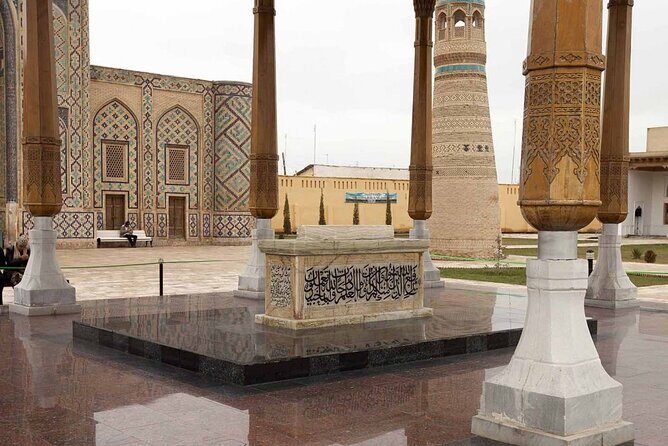
You’ll begin in the direction of Gijduvon, tied to Abdalhalika Gijduvani (1103–1179). This stop isn’t just about a tomb; it’s also described as the birthplace of the first saint of the seven. The big idea your guide ties to this location is that Gijduvani founded an independent school of mysticism in Maverannahr called Hadzhagan, often translated as the path of teachers.
Why this stop matters: it gives you a starting point. When you hear later names—Khoja Arif, Khoja Mahmud Angirey Fagnaviya, Ali Ramitani—the guide can point back to this foundational figure. Without that context, you might treat each site as a separate story. With it, the day feels like one continuing line.
Next you move to Safirkon, visiting the burial place of Khoja Arif Rivgariya—also referenced here as Saint Khoja Arif Mohi Tobon. This figure is described as one of the most famous Sufi names in Central Asia, and the tour frames him as someone connected to the Hadzhagan tradition.
A practical note: these early stops are usually calmer and easier to absorb, because you’re still building your mental map. If you’re the type who likes to ask questions, the first two locations are a great time to do it, since the guide is still setting up the framework for the rest of the route.
Vobkent and Ramitan: spiritual authority and the idea of wisdom
After Safirkon, the route moves you toward Vobkent, where you visit the burial place of Khoja Mahmud Angirey Fagnaviya. This stop is presented as recognition of his role as a spiritual authority in Maverannahr. Even if you don’t catch every detail on first listen, the tour’s structure helps: you’re learning why people mattered, not just where they are buried.
Then comes Ramitan, where you visit the burial place of Ali Khoja Romitaniya (Khoja Ali Ramitani). This is one of the places where the tour wording focuses on character: he’s described as one of the famous spiritual authorities of the Sufi Hadzhagan school, with high spiritual quality and charisma, and positioned as a master of wisdom.
Here’s the value for you: in many faith tours, the guide’s job is to explain architecture and history. This tour’s job is slightly different—it helps you understand why a community would preserve someone’s memory in a dedicated sacred place. By the time you reach Ramitan, the day is no longer just “where to go.” It becomes “why these people are worth remembering.”
Ramitan shows up again later for the next saint, so you’ll start to notice the tour uses repetition on purpose. It’s not a mistake. It’s part of building a clear ladder of lineage.
Ramitan and Kogon: the fifth saint and Mir Kulal’s craft
The next stop in the Ramitan area focuses on Khoja Muhammad Babai Sammasi, described as the fifth of the Seven Saints. The tour also links him directly to the Hadzhagan tradition, and specifically places him as a follower and student of Khoja Ali Ramitani.
This part matters because it turns the idea of “lineage” into something concrete. Instead of thinking of saints as isolated legends, you hear about how teachers pass spiritual teachings to students. That’s the point of doing multiple stops instead of one big highlight.
Next you go to Kogon, visiting Saint Mir Kulal. The tour gives you a nickname and a craft connection: Kulal, also mentioned as Hanchar, meaning potter. It frames him as a spiritual authority and Sheikh of the Hadzhagan school, and calls him the sixth in the chain of spiritual succession, referred to here as silsila.
If you like small but telling details, Mir Kulal’s craft reference is a nice one. It pulls the saint out of the purely mythical zone and reminds you that many spiritual leaders were also tied to everyday work. Your guide should connect this to the broader Hadzhagan worldview, but even on a first pass, the potter image helps you hold onto the person rather than just the title.
Time-wise, each stop keeps you on a gentle rhythm—about 40 minutes. That’s long enough to read, listen, and ask questions, but not so long you lose the thread of the day.
You can also read our reviews of more private tours in Bukhara

Bahaaddina Naqshbandi’s mausoleum: ending with the biggest name
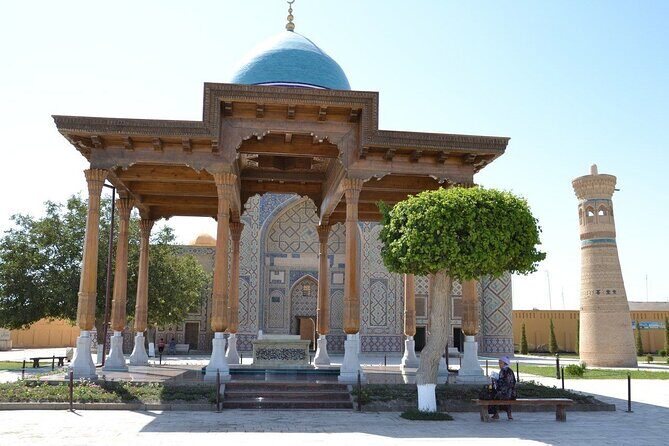
The day’s emotional finish is Bakhautdin Naqsband Mausoleum, where you visit the burial place of Saint Bahaaddina Naqshbandi.
This stop is described as the largest representative of Central Asian Sufi life in the 14th century. The tour also connects his influence to the name Naqshband, explaining it as tied to his craft—described as chaser, from the word naqshband in this tour’s framing.
Why it’s a strong finale for you: by the time you reach this mausoleum, you’ve already heard multiple names and roles. The guide can now use earlier stops as stepping stones, so the end doesn’t feel like a random grand attraction. It feels like a conclusion to a chain.
Also, because this is the final stop, it’s your last chance to slow down. If you want a quiet moment—no rushing, no decoding—this is where it usually happens naturally. Just remember photo/video fees can apply at entrances, so check before you start shooting.
Price at $160 per person: what you’re actually paying for
At $160 per person for a private full-day tour, you’re not paying for a bus and a generic stop list. You’re paying for three things the day really depends on:
- A licensed guide who can explain Sufi lineage without you feeling lost.
- Private transportation, so the route works as a single day plan rather than a patchwork of taxis.
- Entrance tickets and all fees/taxes included, which helps you avoid small cost surprises at sites.
That said, it’s still a premium price if you’re traveling solo and you expected a low-cost cultural walk. One way this becomes better value is when you split costs with a companion; the tour description also mentions group discounts, which can help if you’re booking with friends.
Don’t forget the likely extras:
- Photo/video fees: $1–$2 per site, paid directly at the museum entrance.
- Lunch: not included, listed as $10 extra per person.
If you add up those costs, the tour remains reasonable for a full-day private guide and transport. If you prefer to DIY with public transport and self-guided reading, you may find the price hard to justify. But for many people, this is precisely the kind of day where a real guide saves you hours of confusion.
Practical tips: photos, lunch, timing, and how to make it meaningful
This tour is weather-dependent, and that’s not just fine print. If conditions are poor, you may be offered another date or a full refund. Plan around that reality, especially if you’re in Bukhara during a variable season.
Bring water and plan for a long day. Even with 40-minute site blocks, you’ll be walking, entering, and standing at places where you’ll want a few minutes to look and listen.
For photos: you’ll likely have the option, but photo/video fees aren’t included, so don’t assume a free-for-all. Pay attention at entrances, and keep your receipts if you’re doing multiple sites.
Lunch: the tour doesn’t include it. If you’re the kind of person who forgets meals until you’re starving, add a buffer and plan your post-tour food calmly. The listing suggests lunch can be added for $10 per person, which may be easiest for timing.
Finally, respect matters on sacred sites. You don’t need to be overly formal, but do keep your voice down, cover what’s required by the site, and treat the spaces as religious places, not just “photo stops.” Your guide should help you with the basics as you go.
Who this tour suits best (and who should think twice)
This tour fits you if:
- You want a clear guided story connecting seven important Sufi figures.
- You enjoy understanding traditions like Hadzhagan and seeing how lineage works through teaching and discipleship.
- You like private days where transportation and admissions are handled.
It might not fit you as well if:
- You want lots of variety in sights (this is purposefully shrine-focused).
- You dislike long days of similar environments: each stop is spiritual and site-based, not a changing-scene city tour.
- You’re traveling on a tight budget and you’re comfortable skipping a guide.
Should you book the Full-Day Private Guided Tour to the Seven Saints of Bukhara?
I’d book it if you’re in Bukhara for long enough to slow down and you want more than architecture photos. This day is structured around meaning: teachers, students, and spiritual succession, finished at the Naqshbandi mausoleum. With Hamza-style storytelling and private transport, you get a smooth schedule and a guide who can connect the names into a coherent thread.
If your idea of a great day is nonstop variety, you may find the shrine sequence a little samey. But if you’re curious about Sufism and want to understand why these places mattered to people long after the saints’ lifetimes, this is one of the most direct ways to do it.
FAQ
How long is the Seven Saints of Bukhara tour?
The tour runs about 7 to 8 hours.
Where does the tour start and end?
It starts at Hotel Malika-Bukhara (Gavkushon Road 25) and ends back at the same meeting point.
Is hotel pickup included?
Yes, pickup is offered and included as part of the tour.
What’s included in the tour price?
The price includes a licensed guide, private transportation, entrance tickets to all monuments, and all fees and taxes.
Are photo or video fees included?
No. Photo/video fees are paid directly at the museum entrance and are listed as $1–$2 per site.
Is lunch included?
Lunch isn’t included. The listing notes an extra $10 per person for lunch.
Does the tour run in any weather?
The experience requires good weather. If it’s canceled due to poor weather, you’ll be offered a different date or a full refund.
Is this a private tour?
Yes. It’s a private tour/activity, and only your group participates.