REVIEW · BUKHARA
One-Day Private Tour in the Old Town of Bukhara
Book on Viator →Operated by Shohruh&Madina · Bookable on Viator
Bukhara can feel like a living museum, and this one-day private loop keeps it practical. You’ll move through major Old Town sights at a comfortable pace, with an air-conditioned vehicle when you need it, plus a guide who can explain both the architecture and how people lived around it. I especially like that the day balances big monuments with the busy-domed markets where crafts still matter.
Two things I like a lot: the guide-led context, and the fact that you’re not stuck with a rushed “see everything” schedule. Guides such as Madina (praised for fluent German) and Sho (praised for English and even five-language ability in some cases) are consistently noted for answering real questions and adjusting to your interests. One thing to consider: several top stops have entrance fees on top of the tour price, so you’ll want a little cash ready.
If you want a smooth, guide-heavy day focused on Bukhara’s center—plus some downtime at squares and pond-side benches—this is a smart way to do it.
In This Review
- Key highlights at a glance
- Private Old Town Bukhara: what this day is really for
- Price and entrance fees: the real cost picture
- Start point, end point, and how the route feels on the ground
- Stop-by-stop: what you’ll see and why it matters
- Ismail Samani Mausoleum: 1,000 years in one shape
- Chashmai Ayub: the well story and the water museum
- A newer Imam Al-Bukhari museum building
- Bolo Hauz Mosque: wooden columns and a place to slow down
- Ark of Bukhara and Poi Kalon: the heavy hitters
- Ark of Bukhara: the emir’s citadel
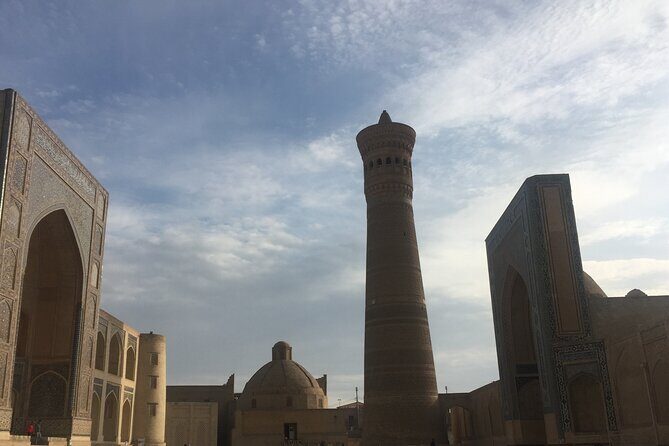
- Great Minaret of Kalon and the Poi Kalon ensemble
- Markets under domes: crafts you can still touch
- Taqi-Zargaron: craft workshops in a trading dome
- Kosh Madrasah: two schools facing each other
- Taqi-Telpakfurushon: domed intersection and the 16th-century bathhouse
- Magoki Attori and the Carpet Museum: the fire-temple idea
- Taqi-Sarrafon and the domed trading logic
- Lyab-i-Hauz: shade, pond-side time, and the living square
- Kukaldosh Madrasah: wall paintings that explain routine life
- The guides are the difference: languages, pacing, and real Q&A
- Who should book this private Old Town tour
- Should you book this one-day private Old Town tour?
- FAQ
- What’s included in the tour price?
- How long does the private Old Town tour take?
- Is pickup from my hotel included?
- Are entrance fees included for every stop?
- Where does the tour start and where does it end?
- Is the tour only for private groups?
- What’s the cancellation policy?
Key highlights at a glance
- Private group up to 4: your pace, your questions, your priorities
- Air-conditioned vehicle + short walking blocks: easier than doing it all on foot
- Top monuments in one route: Samani Mausoleum, Ark of Bukhara, and Poi Kalon ensemble
- Markets with craft detail: Taqi-Zargaron and the domed trading street intersections
- Free time built into the best squares: shade and sitting areas like Lyab-i-Hauz and near Bolo Hauz
- Optional paid entries: Magoki Attori carpet museum and Ark of Bukhara let you choose what’s worth it
Private Old Town Bukhara: what this day is really for
This tour is designed for people who want the classic Bukhara highlights, but without the typical chaos. You get a private setup for up to four people, which changes the whole feel: you can pause for photos, ask follow-ups, and slow down if a place catches your eye.
And the best part is the pacing. Most stops are about 20 minutes, with longer time at the Ark area, so you don’t end up feeling like you’re sprinting from one doorway to the next. I also like that there’s built-in breathing space: squares for sitting, and coffee breaks where they fit naturally into the route.
You can also read our reviews of more private tours in Bukhara
Price and entrance fees: the real cost picture
The tour price is $67 per group (up to 4) for about 5–6 hours. That’s a solid value when you compare it to the amount of ground you cover and the fact that you’re paying for a guide’s time, not just transportation.
Two paid add-ons come up in the plan:
- Magoki Attori Mosque and Carpet Museum: $2.00 per person
- Ark of Bukhara: $3.50 per person
So your total out-of-pocket depends on whether you choose those entries. If you do both, you’re looking at about $5.50 per person on top of the tour price—plus whatever you might want to buy in the markets.
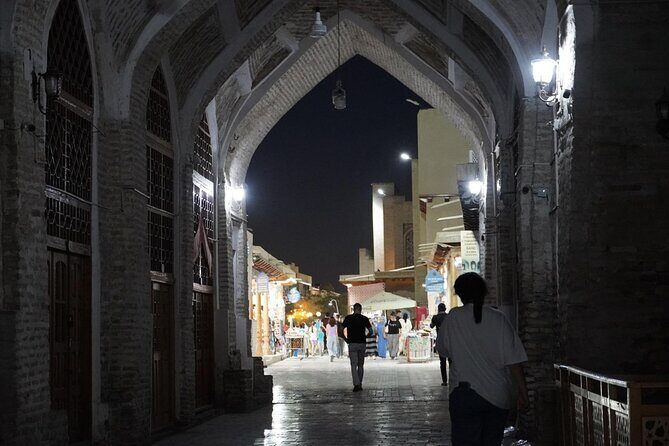
The good news: many of the most photogenic spots are free to enter, including areas like Bolo Hauz Mosque, Taqi-Zargaron, Taqi-Telpakfurushon, Taqi-Sarrafon, Lyab-i-Hauz, and Kukaldosh Madrasah. That makes this route feel less like a “ticket lineup” and more like a guided walk through daily life and heritage.
Start point, end point, and how the route feels on the ground
The meeting point is Lyabi Khause Square (Divan-Beghi, Bukhara), and the tour ends at Ismail Samani Mausoleum. In practice, that means you’re starting in the heart of the Old Town atmosphere and working your way through the key historic zones before finishing near one of the city’s most iconic mausoleums.
You’ll also have pickup available. Some departures are set up for hotel pickup and drop-off, and in past experiences guides have handled arrivals like train-station timing and airport-to-city scheduling for specific guests. You don’t have to make your day fit the tour—this kind of private format is built for real travel schedules.
Stop-by-stop: what you’ll see and why it matters
Ismail Samani Mausoleum: 1,000 years in one shape
Your first major historical anchor is the Ismail Samani Mausoleum. It’s described as the only preserved structure from a period when Bukhara’s power and culture were at their peak, and it’s over 1,000 years old.
What makes it special is the architectural idea: it combines three architectural styles tied to three religions. Even if you’re not an architecture nerd, you’ll feel how unusual that is once you’re standing in front of it. This stop works best if you like detail—because you’re getting a snapshot of how Bukhara’s identity was shaped by many influences.
Drawback: the stop is only around 20 minutes, so if you want to linger for close-up photos, you may need to ask your guide to give you extra time.
Chashmai Ayub: the well story and the water museum
Next is the Chashmai Ayub Mausoleum, tied to the story of the prophet Job. The key curiosity here is that the site is built around a well, and the attraction doesn’t end with legends: inside, there’s a Museum of Water Supply in old Bukhara.
This is a great counterpoint to the “temples and towers” crowd. Water systems are one of the reasons old cities worked, and this stop gives you a practical way to think about how people survived and built their lives.
Again, it’s a short stop (~20 minutes), so go in with one question in mind—how water mattered here—and let your guide connect the dots.
A newer Imam Al-Bukhari museum building
You’ll also see a new museum building about the life of Imam Al-Bukhari, an important religious scholar. This part of the day is a nice reminder that Bukhara isn’t only about ancient stones; it also teaches through newer presentation.
Since admission details aren’t clearly listed for this particular stop, I’d treat it as a “check on the spot” moment. Your guide will help you decide if it’s worth paying extra time for.
Bolo Hauz Mosque: wooden columns and a place to slow down
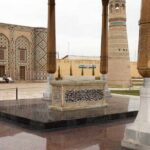
The Bolo Hauz Mosque is functioning and about 300 years old, and one of its standout features is the wooden columns. Even better, it includes a chill-out square with benches and trees—so it’s not just a photo stop.
This is where your brain gets a break. You’ll often spend the last part of the day thinking about mosques, schools, and markets, so having a sitting area nearby is genuinely useful.
Good news: admission here is free, so you can enjoy both the building and the pause without paying more.
Ark of Bukhara and Poi Kalon: the heavy hitters
Ark of Bukhara: the emir’s citadel
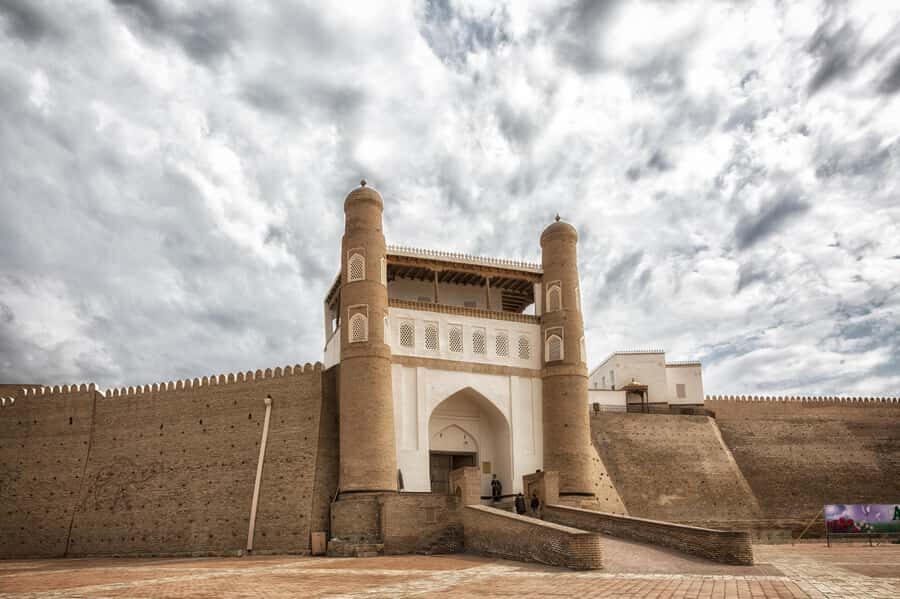
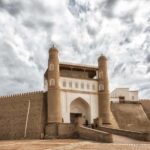
The Ark of Bukhara is the citadel and the historic residence of the emirs. It’s allotted around 40 minutes, which is the right amount of time for a place this big because you’ll need a little orientation first—where you are in the story, and what function each area served.
Admission isn’t included, listed at $3.50 per person. If you’re short on time or budget, this is the one fee that’s easiest to skip. But if you love power centers, this is one of the day’s best “this is what ruled the city” stops.
Great Minaret of Kalon and the Poi Kalon ensemble
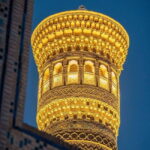
After the Ark, you’ll hit the Great Minaret of the Kalon—about 900 years old. You’ll also visit the broader Poi Kalon ensemble, which includes:
- Kalon Minaret
- Grand Mosque of Kalon
- Miri-Arab religious school
This is the skyline moment for Bukhara. Even when you only spend about 30 minutes, you get the feeling of a whole district organized around religious education and ceremony.
Admission isn’t included for this stop, so budget accordingly. The structure is also best appreciated if you take a moment to look up and then step back to understand the ensemble as a unit.
Markets under domes: crafts you can still touch
Bukhara’s Old Town isn’t only monuments. The money and skills were here too, and the tour gives you multiple chances to see that.
Taqi-Zargaron: craft workshops in a trading dome
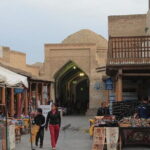
Taqi-Zargaron is a trading dome where you’ll see craft workshops and souvenir shops focused on things like silk carpets, ceramics, embroidery, and clothes. The stop is about 20 minutes and admission is free, so it’s ideal even if you’re not shopping.
Tip: if you’re buying gifts, this is a place to compare styles. You’ll often find better value when you’ve seen what’s available in more than one dome.
Kosh Madrasah: two schools facing each other
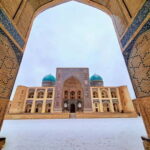
At Kosh Madrasah, you’ll see two madrasahs facing each other, with facades described as representing two outstanding historical periods. This is a calmer stop than the markets, and it works best if you like visual design—symmetry, scale, and how the facade tells you what mattered.
Admission isn’t included, but it’s a strong architectural stop for the cost.
Taqi-Telpakfurushon: domed intersection and the 16th-century bathhouse
Taqi-Telpakfurushon sits at the crossing of five trading streets, and it’s described as a dome with workshops. You’ll also see a 16th-century bathhouse, plus miniature and embroidery workshops.
Admission is free, making this another “walk in, look carefully, then keep moving” stop. If you want a feel for everyday craftwork rather than just big monuments, this is a good moment in the day.
Magoki Attori and the Carpet Museum: the fire-temple idea
The Magoki Attori Mosque and Carpet Museum adds a twist. The mosque is described as being in depth, and it was once a temple of fire. That kind of layering helps explain why Bukhara feels complex: religious sites changed over time, but the sacred geography remained.
Admission isn’t included, and the carpet museum is listed at $2.00 per person. If you’re a textile person, this is likely worth it. If you just want the main idea, you can still enjoy the exterior and the story—then decide with your guide how much time to spend inside.
Taqi-Sarrafon and the domed trading logic
The tour also includes Taqi-Sarrafon, another trading dome with souvenir shops and miniature workshops. This stop is also free, and it’s a nice “last market contrast” before you shift back to squares and madrasahs.
One practical takeaway: once you’ve seen multiple domed markets, you start to understand how trade moved through Old Town. You’re not just seeing shops; you’re seeing a system.
Lyab-i-Hauz: shade, pond-side time, and the living square
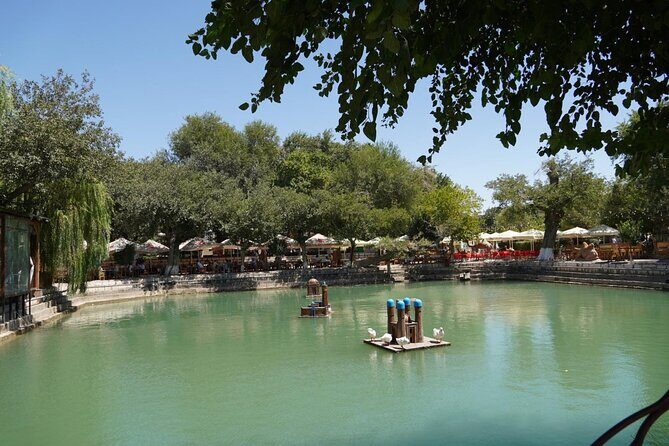
Lyab-i-Hauz is one of those places where your body relaxes before your mind catches up. The ensemble includes three named pieces:
- Devonbegi Madrasah
- Devonbegi Khanaka
- Devonbegi pond
You’ll have about 30 minutes, and it’s described as a lively and chilly (cool, shaded) place to sit under the shade and have drinks. Even if your schedule is packed, this stop is one of the most useful parts of the tour because it breaks the “constant standing” rhythm.
Admission is free here, so you get the best kind of value: a calm moment in the heart of the action.
Kukaldosh Madrasah: wall paintings that explain routine life
The final big learning stop is Kukaldosh Madrasah, described as the biggest madrasah in the Old Town. The standout feature here is the unique wall paintings, which depict the routine life of old Bukhara.
This is a smart way to close the day. You’ve seen power (the Ark), teaching districts (Poi Kalon, Kosh Madrasah), and trade (multiple domes). Now you get daily life on the walls, which ties it together without needing a long lecture.
Admission is listed as free, and you’ll have about 30 minutes.
The guides are the difference: languages, pacing, and real Q&A
This is a private tour, so the guide matters more than on group-only walking tours. The names that come up again and again—Madina, Nargiza, Shahrouh, Saodq, Sho, Shokhrukh—are praised for doing more than reciting dates.
In particular:
- Some guides have led in German (Madina is specifically praised for fluent German).
- There’s evidence of Japanese-language service (with a guide named Shoさん).
- English-language service also shows up, with praise for strong Q&A and patience.
- One guide is praised for being able to speak five languages, which helps if you have mixed-language needs or you want more nuance.
I also like the way guides handle real-world timing. Pickup at the right moment and dropping you back where you need to be makes the day feel smooth, and it reduces the stress that comes with exploring Old Town on your own.
Ask your guide one thing at the start: what should you notice at the next stop. You’ll get a better photo, and you’ll understand the site faster.
Who should book this private Old Town tour
You’ll likely love this if you:
- Want a guided introduction to Bukhara’s top monuments in one day
- Prefer a private group so you can ask questions and set your own pace
- Like markets and crafts, not just temples and minarets
- Appreciate built-in breaks at squares like Lyab-i-Hauz
It’s also a strong choice if you don’t want to juggle multiple tickets across the city. Only a couple of major entries are typically paid, while many other spots are free to enjoy.
One more practical note: you should have moderate physical fitness. You’re doing plenty of short walking segments, plus standing for views and photos. The vehicle helps, but this isn’t a fully car-only day.
Should you book this one-day private Old Town tour?
Yes, if your goal is a guided highlights pass that still feels human. For $67 per group up to 4, you’re paying for a focused tour of Bukhara’s key historic zones, with optional fees that are small compared with the number of major sights you see.
Skip it only if you want a totally free-form day with no guidance at all, or if you’re trying to avoid any paid entries ever. Otherwise, this is a sensible, high-value way to see the city’s most important stories—plus the craft places where those stories keep living.
FAQ
What’s included in the tour price?
The tour includes an air-conditioned vehicle. Pickup is offered, and you’ll have a mobile ticket for the experience.
How long does the private Old Town tour take?
It runs for about 5 to 6 hours.
Is pickup from my hotel included?
Pickup is offered, and the tour can start from Lyabi Khause Square. Your exact pickup details depend on your arrangement at booking.
Are entrance fees included for every stop?
No. Magoki Attori Mosque and the carpet museum is listed at $2.00 per person, and the Ark of Bukhara is listed at $3.50 per person. Many other stops are listed as free.
Where does the tour start and where does it end?
It starts at Lyabi Khause Square (Divan-Beghi, Bukhara) and ends at Ismail Samani Mausoleum.
Is the tour only for private groups?
Yes. It’s a private tour/activity and only your group will participate, with a group size of up to 4.
What’s the cancellation policy?
You can cancel for a full refund if you cancel at least 24 hours before the experience starts. If you cancel less than 24 hours before, the amount isn’t refunded.