REVIEW · BUKHARA
Bukhara Walking Tour
Book on Viator →Operated by Sayyah Uzbekistan · Bookable on Viator
Bukhara hits hard when you walk it with context. This tour strings together the city’s best-known religious sites, madrasas, and mausoleums into an easy, logical route that makes Bukhara’s “Pillar of Islam” reputation feel real.
I like how the stops are arranged around places where people actually gathered, prayed, studied, and traded. You’ll also get strong guidance in multiple languages, and the experience is priced to keep things accessible at about $28 for the whole loop.
One thing to plan for: monument entry fees aren’t included, so you may want to bring a little extra for the specific sites along the way (and there’s no lunch in the package).
In This Review
- Key points before you go
- Why Bukhara feels different on foot
- Price and what you truly get for $28
- Meeting at Lyabi Khause and setting the pace
- Stop 1: Lyabi Hauz ensemble (Divan-Beghi, Nadir Divanbegi, Kukeldash, and dervishes)
- Stop 2: The history of puppet theater (plus a short show)
- Stop 3: Magoki Attori Mosque (first mosque-era significance) and a carpet museum
- Stop 4: Ulugbek Madrasah (the oldest in Bukhara)
- Stop 5: Abdulaziz-Khan Madrasah (the most magnificent and the yellow-color clue)
- Stop 6: Poi Kalyan complex—Minaret Kalan and the city’s biggest mosque
- Stop 7: Ark of Bukhara (the emir’s city within a city)
- Stop 8: Bolo Hauz Mosque and the 40 columns idea
- Stop 9: Chashmai Ayub Mausoleum (water supply history meets a tomb)
- Stop 10: Samanid Mausoleum (a strong ending)
- What makes the guides matter (from what I’d expect you to notice)
- How long should you plan to stay in Bukhara?
- Who this tour is best for
- Should you book this walking tour?
- FAQ
- How long is the Bukhara Walking Tour?
- How much does the tour cost?
- What’s included in the price?
- Are monument entrance tickets included?
- Is there lunch included?
- Where does the tour start and end?
- Can I cancel for a full refund?
- Is this tour suitable for most people?
Key points before you go
- Lyabi Hauz as your anchor point, where the complex comes alive, especially later in the day
- A rare stop for Central Asian puppet theater history, with a short master-led show
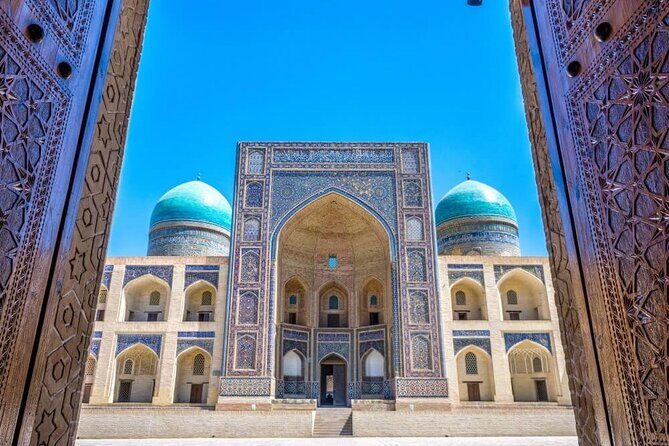
- Oldest and most luxurious madrasas in one walk, including Ulughbek and Abdulaziz-Khan
- Poi Kalyan’s scale, from Minaret Kalan to the huge Friday-mosque complex
- Samanid Mausoleum as a strong ending, one of Central Asia’s earliest monumental tombs
Why Bukhara feels different on foot
Bukhara is the kind of place where the buildings don’t just sit there. They explain each other. One stop makes the next one easier to read, whether you’re looking at a minaret’s height, a madrasa’s layout, or a courtyard’s role in daily life.
This is also a practical way to see the core of the city without getting stuck in “taxi-only sightseeing.” You’re on a 5 to 6 hour walking plan, which is long enough to feel like a real orientation, but not so long that you’ll be shattered by the afternoon. And because it’s a private tour/activity, it’s only your group.
You can also read our reviews of more walking tours in Bukhara
Price and what you truly get for $28
At $28, the tour is built around value. You’re paying for a professional guide (offered in en, es, fr, de, ru) plus all fees and taxes tied to the tour itself.
What you should budget separately: entrance to the monuments listed in the program. The tour covers the guiding and the included fees, but the “ticket” part for individual sites is not included. Also, there’s no lunch, and air-conditioned vehicle service isn’t included—so you’re thinking like a walker from start to finish.
If you’re trying to do Bukhara in limited time, this format is usually efficient. You’re getting a tight route with minimal wandering, and the guide helps you understand what you’re looking at so you don’t just collect photos.
Meeting at Lyabi Khause and setting the pace
You start at the Lyabi Hauz ensemble near Divan-Beghi (listed as QCFC+686 in Bukhara). From a traveler’s point of view, that’s smart. Lyabi Hauz is a natural hub, so it’s easier to orient yourself and find your bearings.
The timing also matters here. Even if you begin earlier in the day, Lyabi Hauz is one of those spots that intensifies later—so if your tour time lines up with the evening rhythm, you’ll get a more social, lived-in feel.
Stop 1: Lyabi Hauz ensemble (Divan-Beghi, Nadir Divanbegi, Kukeldash, and dervishes)
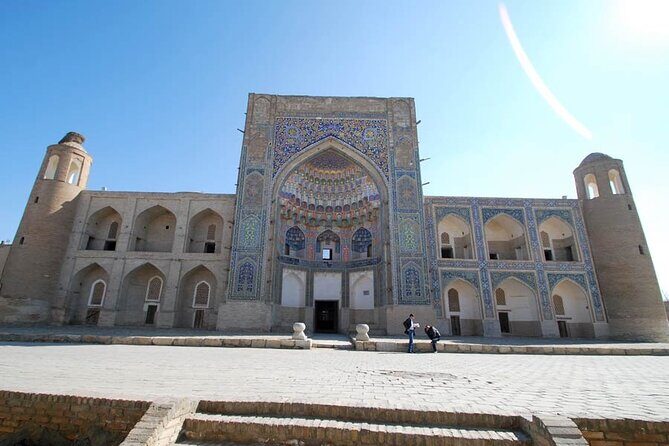
Lyabi Hauz is the center of social life in Bukhara. This is where you can look at the complex and understand how religion, education, and daily gathering all overlap.
During this first hour, you’ll focus on:
- Kukeldash madrasah
- Nadir Divanbegi madrassah
- Hanaka, a dwelling for dervishes
This is a good “start strong” stop because the buildings around the water weren’t designed as isolated monuments. They functioned as part of a system: students, scholars, and religious communities all orbiting a public center.
Practical note: you’re likely to stand and look up a lot here. If you’re sensitive to sun, plan for shade where possible and keep water handy.
Stop 2: The history of puppet theater (plus a short show)
One of the most distinctive parts of this walk is the puppet theater stop—described as the only place in Uzbekistan where you can get acquainted with the history of Central Asian puppets and puppet theater.
You’ll also have a brief show from the master himself, about two minutes. The tour info even hints that you might spot a puppet, if luck is on your side.
Is this a “must” for everyone? If you like culture that isn’t only about big architecture, it’s a standout. If you’re only chasing mosques and tombs, it’s still worth a short detour because it adds human texture: entertainment, craft, storytelling, and performance all built into the same worldview that produced the monuments.
Stop 3: Magoki Attori Mosque (first mosque-era significance) and a carpet museum
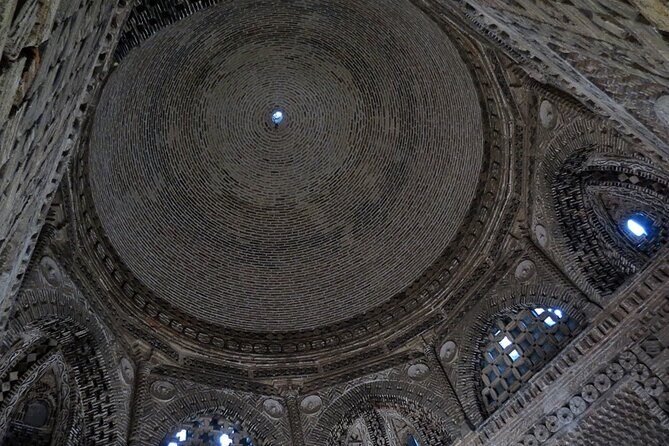
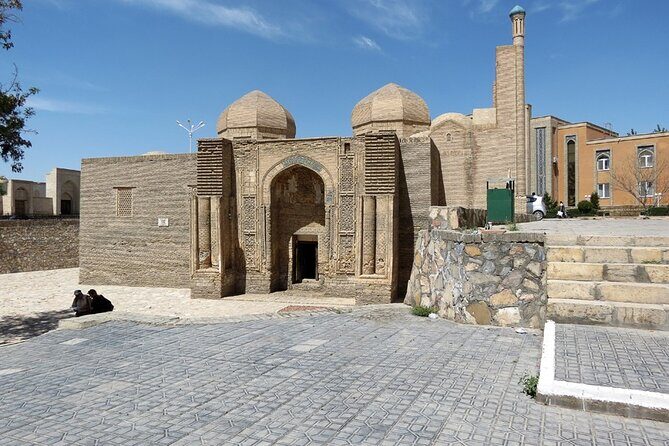
Next comes the Magoki Attori Mosque. The program describes it as the first mosque in Uzbekistan and a pre-Mongol period monument, which instantly shifts how you look at the site. You’re not just seeing a pretty religious building—you’re stepping into something tied to the early layers of the city’s Islamic era.
The stop also includes a carpet museum. Even though this isn’t a tomb or a madrasa, it fits the theme of Bukhara as a place where art and identity matter. Carpets are a cultural language you can understand with your eyes even without deep background.
Time check: this part is brief (around 15 minutes). If you want more time for reading or close-up viewing, you’ll be glad your guide is there to tell you what to notice first.
Stop 4: Ulugbek Madrasah (the oldest in Bukhara)
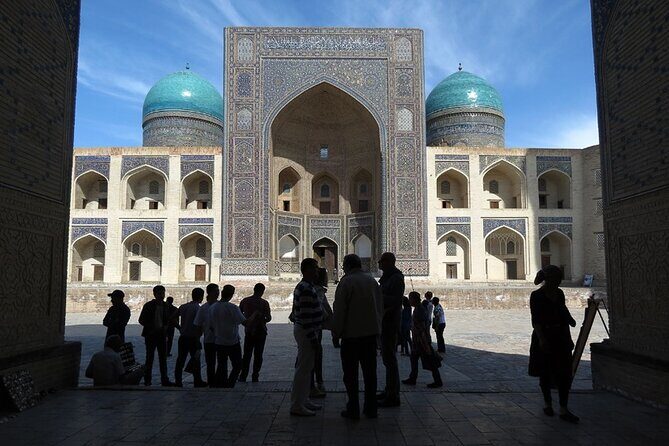
You’ll then move to Ulugbek Madrasah, described as the oldest madrasa in Bukhara and the only Timurid period monument in the city.
Why this works on a walking tour: it gives you a historical “anchor.” When you’ve got oldest vs. most luxurious later in the route, the contrast becomes meaningful. You begin to see how styles and ambitions shift over time.
Also, this is a fast stop—about 15 minutes—so keep your expectations realistic. You’re there to understand its place in the city’s timeline, not to spend an hour deep in every corner.
Stop 5: Abdulaziz-Khan Madrasah (the most magnificent and the yellow-color clue)
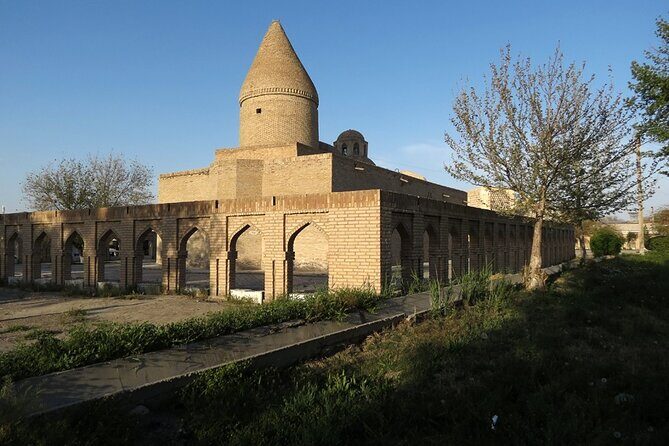
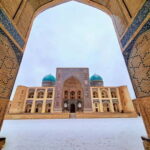
Abdulaziz-Khan Madrasah is next, and it’s framed as the most magnificent madrasa in Bukhara. The program also calls out a visual detail: it was the first monument where the city began using the yellow color.
That’s a great example of the kind of guidance that turns sightseeing into learning. If you simply walk by, you might register “decorative.” With context, you can start to notice how color choices signaled status, style, or era.
Again, this stop runs around 15 minutes. Bring your curiosity, but don’t plan on lingering too long unless your guide builds in extra time.
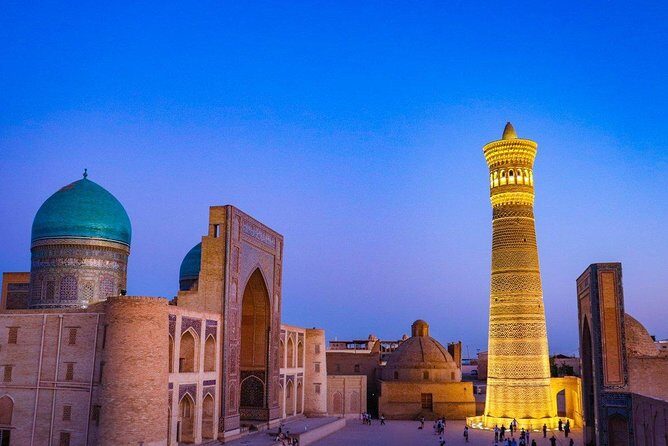
Stop 6: Poi Kalyan complex—Minaret Kalan and the city’s biggest mosque
Poi Kalyan complex is one of the main “wow” areas. The program describes it as three monuments:
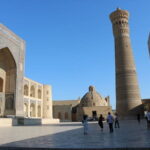
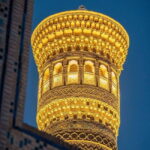
- Kalon Minaret (the highest minaret in the city, pre-Mongol invasion monument)
- Kalon Mosque (restored medieval largest mosque of the city)
- And the Minaret-Mosque ensemble as the center of the complex
This is the point where scale becomes the story. A minaret’s height isn’t just architecture—it’s wayfinding, symbolism, and a statement of identity meant to be seen across the city.
You’ll spend about an hour here, which is enough to do more than rush photos. If you’re the kind of person who likes to understand design, ask your guide what to look for first—shape, materials, proportions, and how the complex pulls your eye through the space.
Stop 7: Ark of Bukhara (the emir’s city within a city)
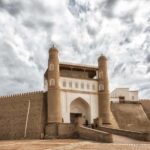
Next is the Ark Citadel, described as the winter residence of Bukhara’s emirs. The Ark is often explained as a “city within the city,” and that framing makes sense once you see it as an entire fortified administrative center rather than a single building.
You’ll spend around 40 minutes here. That’s a reasonable chunk for a place that can otherwise feel like “walls and rooms.” With good guiding, Ark becomes a map: who lived where, what the power center meant, and how it shaped the city’s layout.
Stop 8: Bolo Hauz Mosque and the 40 columns idea
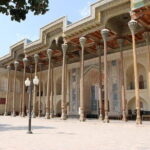
Bolo Hauz Mosque comes next, described by its highest columns in the city and also called Chilustun, meaning 40 columns. The program notes that it only has 20 columns, but that reflection on the reservoir can make it seem like something else.
This is a perfect stop for the “eyes + explanation” method. If you know to look for the reflection effect, you’ll start noticing how the space is used visually, not just structurally.
Time-wise it’s around 20 minutes. Don’t over-stretch here. It’s a spot for careful looking, not an all-day revisit.
Stop 9: Chashmai Ayub Mausoleum (water supply history meets a tomb)
Chashmai Ayub Mausoleum is both a water supply Museum of the city of Bukhara and the mausoleum of St. Jehovah, as stated in the program.
That combination is unique. Instead of treating a mausoleum as only spiritual, the stop places it in the practical world of water management. In Central Asia, water isn’t a detail—it’s survival, and it shapes neighborhoods and schedules.
This stop runs about 20 minutes, so you’ll want to listen closely for what the guide highlights in the museum aspect. It’s easy to miss the point if you’re only scanning the building.
Stop 10: Samanid Mausoleum (a strong ending)
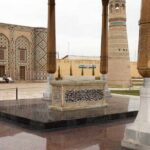
The walk finishes at the Ismail Samani Mausoleum, with the tour ending here. The program calls it the first mausoleum of Central Asia and the second in the Islamic world, and it’s also framed as the tomb of the founder of the first local Emperor of Central Asia.
This ending works well because it’s monumental without being confusing. After the madrasas, the mosque complex, and the citadel, the mausoleum gives you a clean final “statement building” that ties the themes together: power, faith, and memory.
Plan for about 30 minutes here. It’s long enough for a meaningful look, especially if your guide points out features that help you read why it matters historically.
What makes the guides matter (from what I’d expect you to notice)
The guide is the glue for this tour. The program specifies professional guides with multiple language options, and the quality shows in how the sites are explained.
One past guide described as Peri stood out for being patient and for unpacking details about each monument. Another guide, Nilufar, was described as punctual, high-energy, and with English that’s easy to follow. The consistent theme: you’re not stuck translating your way through the city. The guide helps you know what to look at and why.
If you care about getting more than postcard views, this is the right kind of guided walking tour.
How long should you plan to stay in Bukhara?
A 5 to 6 hour walk is a solid chunk of a day, especially in warm seasons. You’ll likely want to schedule this when you can tolerate heat and sun, because you’ll be moving between multiple sites in a tight time frame.
You’ll also be walking enough that your shoes should be comfortable from the start. Even if you’re not covering huge distances, old city surfaces and frequent looking up can slow you down.
If you’re doing Bukhara in a short stay, this route is a good way to get an overview quickly and then pick a few places to revisit later at your own pace.
Who this tour is best for
This tour fits best if you:
- want a structured way to see Bukhara’s main monuments without planning each stop
- enjoy learning the meaning behind architecture and religious spaces
- travel with a small group and want flexibility and focused explanations
- like short cultural detours, like the puppet theater history stop
It may feel less ideal if you:
- hate entrances that require extra tickets later
- want a long, slow visit at each monument with minimal moving
- expect an included lunch or vehicle comfort
Should you book this walking tour?
Yes, if your goal is a high-value orientation to Bukhara’s core monuments in a single outing. For $28, you get a professional guide, all tour fees and taxes, and a route that connects squares, water-centered complexes, madrasas, mosques, and the Samanid Mausoleum in a way that makes the city easier to understand fast.
Before you book, do two simple checks:
1) confirm that you’re comfortable paying separate monument entrance fees where required
2) plan to cover your own food (no lunch included)
FAQ
How long is the Bukhara Walking Tour?
It runs about 5 to 6 hours.
How much does the tour cost?
The price is listed as $28.
What’s included in the price?
A professional guide (in en, es, fr, de, ru) and all fees and taxes are included.
Are monument entrance tickets included?
No. Entrance to monuments specified in the program is not included.
Is there lunch included?
Lunch is not included.
Where does the tour start and end?
It starts at the Lyabi Khause ensemble near Divan-Beghi in Bukhara. It ends at the Ismail Samani Mausoleum.
Can I cancel for a full refund?
Yes. Free cancellation is available, and you can cancel up to 24 hours in advance for a full refund.
Is this tour suitable for most people?
The tour states that most travelers can participate.