REVIEW · BUKHARA
All You Need To Know About Bukhara. A Walk In The Town
Book on GetYourGuide →Operated by Your Guide in Bukhara · Bookable on GetYourGuide
Bukhara feels big until someone maps it for you. This 4.5-hour Old Town walk led by guide Hamza helps you understand the city layout fast, with Q&A breaks so you’re not just watching. You get a guided circuit aimed at real context—how power, trade, and religion shaped the streets you’re standing in.
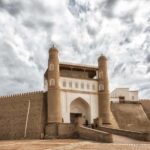
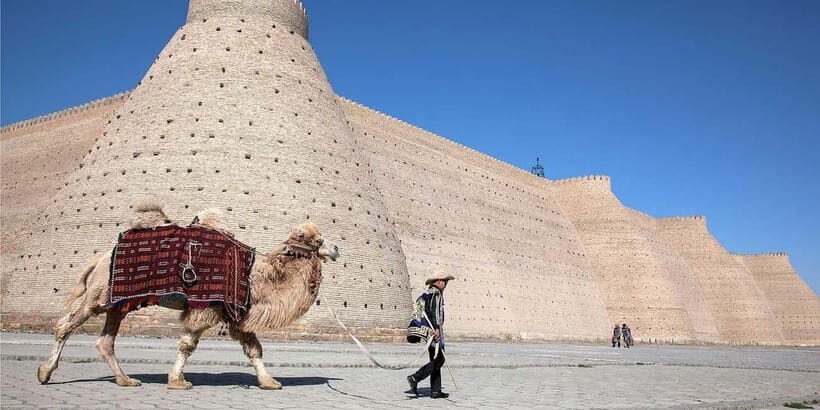
I especially like the mix of big-name monuments and street-level details. You’ll hit star sights like the Citadel Ark and the Poi Kalan minaret area, then slow down for market domes where craftsmanship still matters.
One thing to consider: this isn’t a one-on-one private tour. Expect around 10–15 people, and some stops are short, with entrance tickets handled separately if needed.
In This Review
- Key points before you go
- A 4.5-Hour Bukhara Walk That Gets You Oriented Fast
- Meeting Near the Donkey Statue: What the Group Tour Feels Like
- Nadir Divan Begi Madrasah and the First Clues in the Streets
- Lyabi Khauz: Courtyard Life, Easy Photo Stops, and Shopping Leads
- Toqi Sarrafon Bazaar: Trading Domes and Uzbek Craft You Can Actually Shop
- Magok-i-Attari Mosque: Small Stop, Big Meaning
- Ulugʻbek Madrasasi and the Learning-City Connection
- Poi Kalan, Kalan Mosque, and the Great Minaret: The Architecture Lesson You Remember
- Mir-I-Arab Madrasa and Bolo Haouz: Faith Spaces and Power Centers
- Chashma-Ayub and the Samanid Mausoleum Finish: A Calm Big Moment
- Price and Value: Why $55 Can Make Sense Here
- Who This Tour Suits Best (And Who Might Want a Different Pace)
- Should You Book This Bukhara Walking Tour?
- FAQ
- How long is the Bukhara walking tour?
- Where do we meet for the tour?
- Is the tour private?
- What language is the guide?
- Are entrance tickets included?
- Does the tour skip ticket lines?
- Is transportation included during the tour?
- Is lunch included?
- What should I bring?
- Is the tour wheelchair accessible?
Key points before you go
- UNESCO Old Town route: You’re walking through Bukhara’s historic core, not just a sample of it.
- Hamza’s teaching style: Clear storytelling that connects buildings to the timeline, without turning it into a lecture.
- Bazaar time with purpose: Market domes and textile shopping stops aren’t random stops.
- Mosques and minarets in one sweep: You’ll see how the Kalan complex and nearby sites relate.
- Built for questions: Q&A moments make it easier to ask what you’re actually looking at.
A 4.5-Hour Bukhara Walk That Gets You Oriented Fast
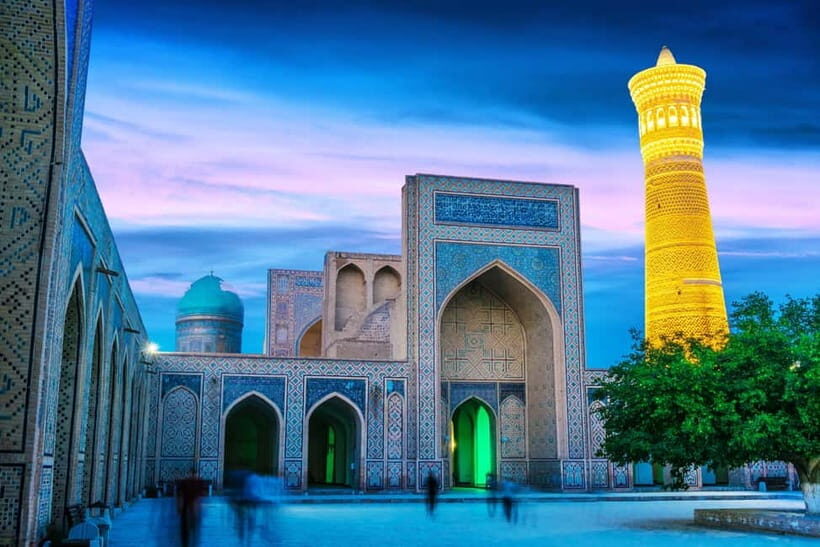
If you only have a half-day in Bukhara, this format works. The tour is built to give you a usable map of the Old Town—where you are, why it matters, and what to notice next time. I like that the focus stays on history plus architecture, so you’re not stuck with dates that don’t connect to the view in front of you.
You’ll move at a walking pace through the historic core, with enough stops to build continuity. That matters in Bukhara, because the city’s layout is part of the story: gates, courtyards, domes, and prayer spaces all link together in one long urban design.
The guide also keeps things interactive. If something doesn’t make sense—why a building looks a certain way, or what life was like here—you can ask. That simple Q&A structure turns a “sight list” into an actual experience.
You can also read our reviews of more walking tours in Bukhara
Meeting Near the Donkey Statue: What the Group Tour Feels Like
Your meeting point is near the donkey statue, so show up ready to start walking in the Old Town. Even though the tour is described as a private group, it runs with around 10–15 people. The upside is value: group pricing keeps the guide time affordable, and you still get live English narration.
The tour is also set up so you’re not constantly breaking your flow to figure things out. You’ll get suggestions for what to watch for and where to shop or eat after the walk. On days when the weather isn’t perfect, the tour can still run smoothly because the core experience is outdoors walking plus short guided stops.
One practical note: because transportation with a driver isn’t included, you’ll want to plan how you get to the meeting point on your own. After that, the route is designed for foot traffic in the historic center.
Nadir Divan Begi Madrasah and the First Clues in the Streets
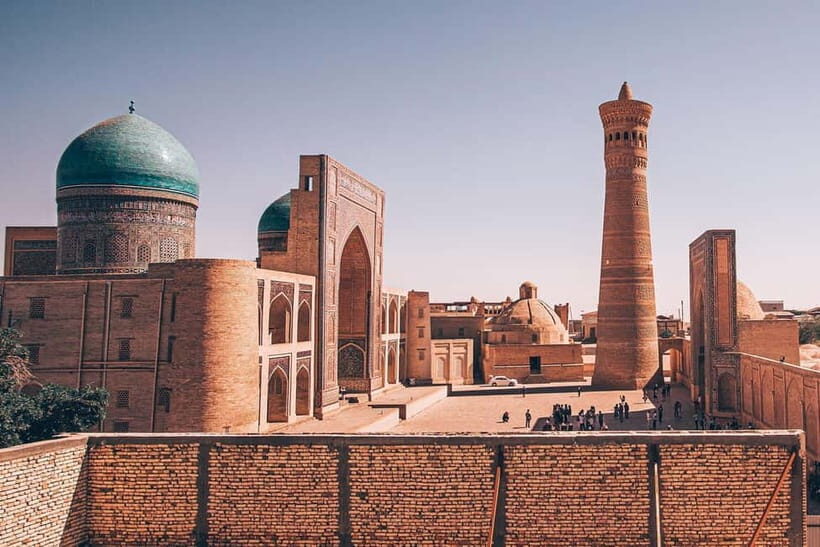
The tour starts at Nadir Divan Begi Madrasah, and it’s a smart opening. This is the kind of place that helps you read Bukhara as a whole city, not just as individual monuments. You get an early sense of why medinas here feel planned: religious spaces, learning centers, and trade zones are woven into the same urban fabric.
Early on, the guide also helps you understand the layout—how to orient yourself so later, when you pass something you saw on the tour, it clicks. That’s one of the biggest advantages of a guided loop: you don’t have to memorize everything, because you learn how to recognize patterns.
If you like asking questions, this is a good time to use it. Getting your terminology straight early makes the later stops much easier to follow—especially when you start seeing ensembles of buildings rather than single structures.
Lyabi Khauz: Courtyard Life, Easy Photo Stops, and Shopping Leads
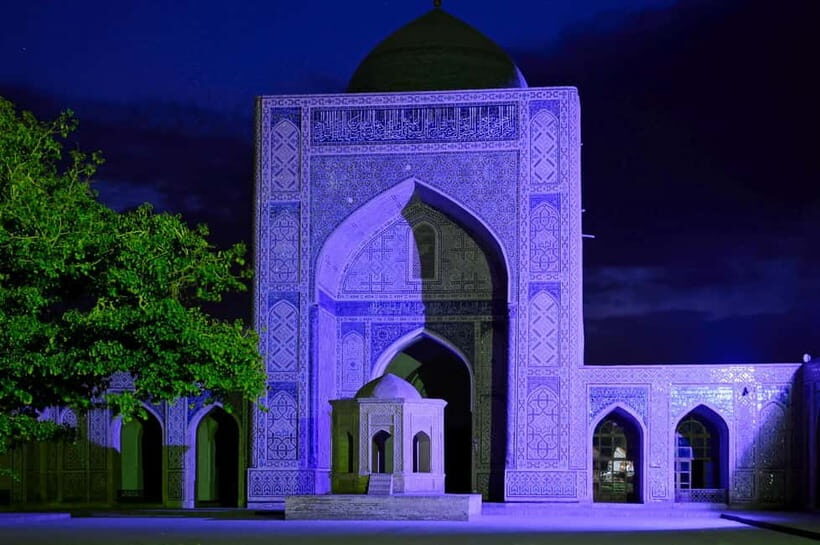
Next you’ll visit Lyabi Khauz. This stop is short in guided time, but it’s a powerful orientation point. The setting helps you see how people gathered around water and public space—an everyday rhythm layered onto the more monumental architecture.
What I like here is the balance between “look around” and “listen.” You get a quick guided framing, and then you’re in a place that naturally encourages you to notice details: the way people move, the mix of shop fronts, and the street textures that make Bukhara feel like a living city.
This is also where textile and craft culture enters the conversation more clearly. In Bukhara, you can’t really wander the pedestrian-friendly lanes without seeing the kind of hand-woven textiles Uzbek artisans are known for. Even if you don’t buy anything, this stop gives you context for what you’ll see in the bazaars.
Toqi Sarrafon Bazaar: Trading Domes and Uzbek Craft You Can Actually Shop
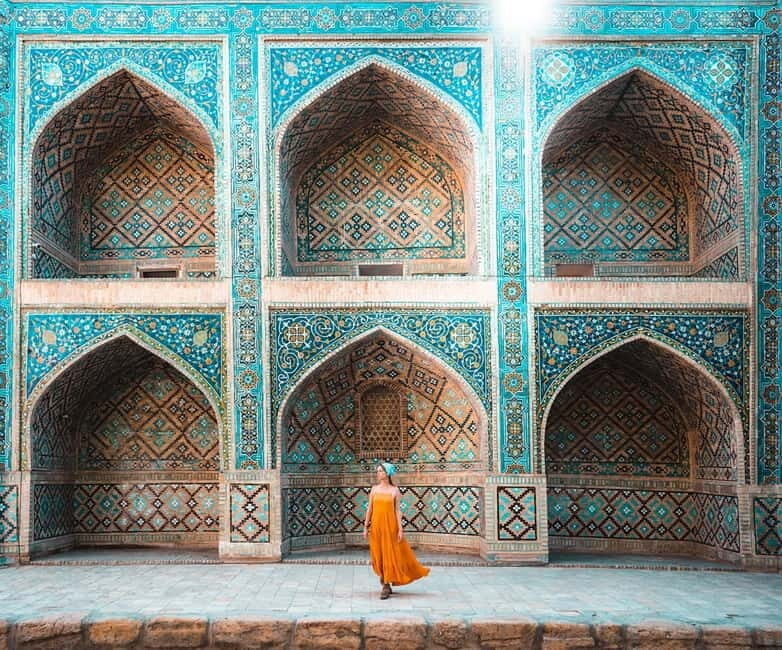
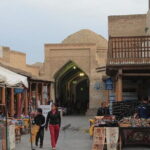
Toqi Sarrafon Bazaar is where the tour turns from architecture to commerce. The trading domes have a nickname for a reason, and the guide explains what makes these covered markets feel distinctive. You’ll hear the story behind the name and then get a sense of how trade worked through spaces like this.
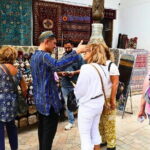
This is also a practical shopping moment. The guide can point you toward local goods—carpets, crafts, and spices—and helps you understand what you’re looking at. If you want Uzbek souvenirs that feel connected to place, this is the stop to focus on.
One thing to keep in mind: bazaars can tempt you to sprint from stall to stall. Since you’re in a timed tour, I recommend slowing down for the last 5–10 minutes of each market stop. Use that time to compare materials and designs rather than buying the first thing that looks good.
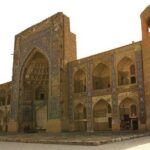
Magok-i-Attari Mosque: Small Stop, Big Meaning
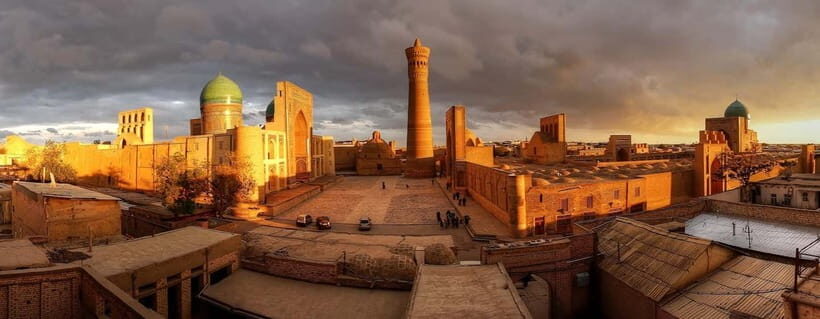
Magok-i-Attari Mosque is one of those stops that works because it’s not just a photo-op. It helps you understand how religious buildings in Bukhara sit inside the city’s long timeline—layers built over time, in a place where older structures and newer ones coexist in the same space.
The guide’s narration is what makes this kind of stop click. You’ll get architectural pointers you might otherwise miss, and you’ll learn how to read the space instead of just walking past it.
This is also a good example of what makes the tour worth the money even if you’re not a “museum person.” You’re guided through the logic of why these buildings are placed where they are, and what they were built to do.
Ulugʻbek Madrasasi and the Learning-City Connection
The tour includes Ulugʻbek madrasasi, and I like this stop for one reason: it explains how learning worked here, not just what the building looks like. You’ll hear how madrasas are more than facades—they’re linked to instruction and religious study.
The guide also shares details that make you rethink what you saw earlier. For example, once you know how these institutions are set up, you’ll start noticing how lecture spaces and mosque functions relate. That kind of explanation is exactly what turns a quick visit into an understanding you can carry with you.
If you’re the type who likes structure and meaning, this portion is a highlight. Even if you don’t go inside every area (some spaces can require ticketed entry), the guided framing helps you interpret what you see.
Poi Kalan, Kalan Mosque, and the Great Minaret: The Architecture Lesson You Remember
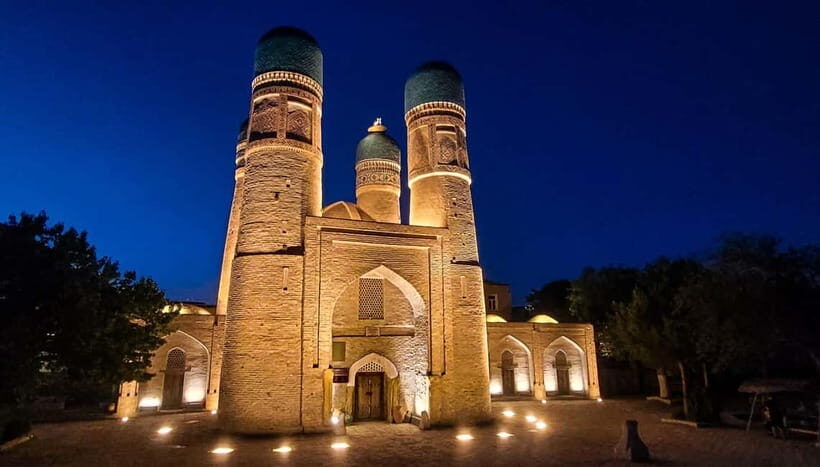
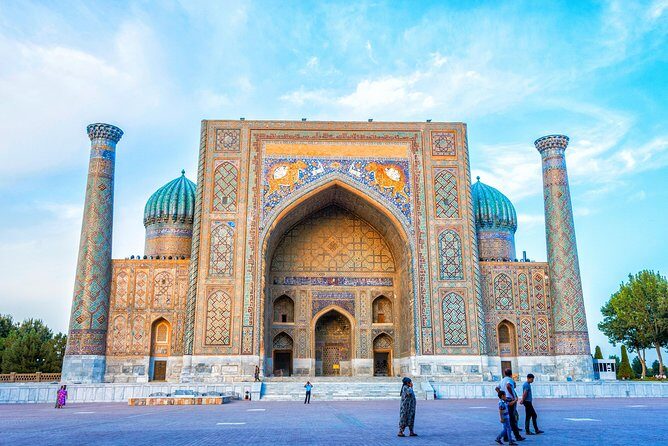
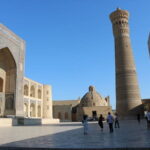
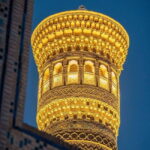
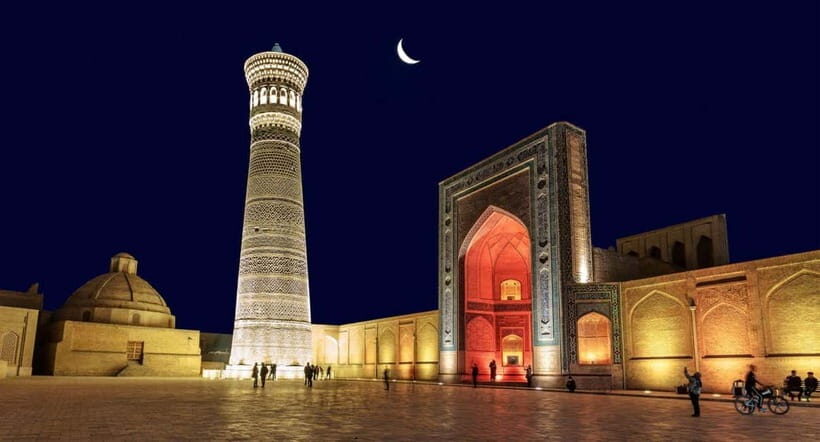
Now you hit the Poi Kalan complex and the area around the Kalon minaret. This is Bukhara at full visual strength. The guide focuses on how the major elements belong together—minaret, mosque, and ensemble layout—so it stops being a single landmark and becomes an architectural statement.
This is also where I’d spend your attention. Look up, but don’t only look up. The guided explanation helps you notice how the space is organized around movement and gathering. When you understand that logic, the place feels less random and more intentional.
A common trap in historic cities is to treat every monument like an island. This stop helps you connect the dots: the minaret isn’t just tall for tall’s sake; it’s part of a larger religious and civic geography.
Mir-I-Arab Madrasa and Bolo Haouz: Faith Spaces and Power Centers
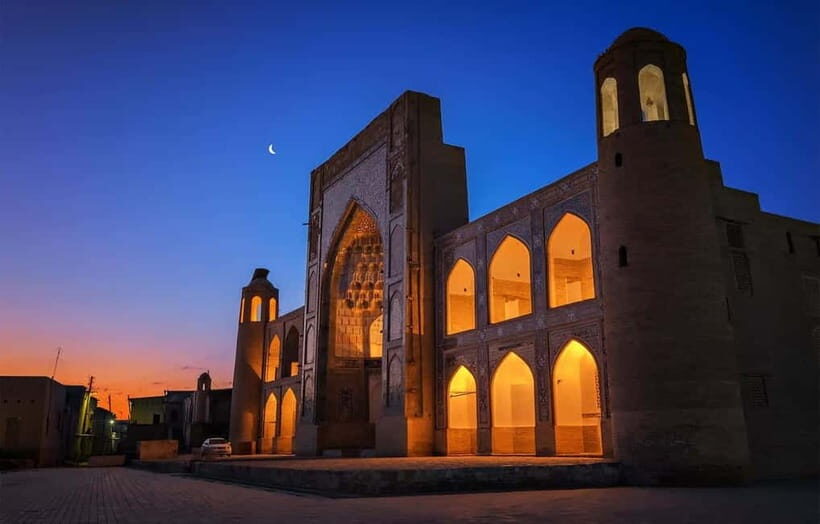
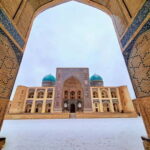
The route includes Mir-I-Arab madrasa and later Bolo Haouz Mosque. Together, they show two sides of Bukhara’s built environment: education and worship, framed by courtyards and urban space.
The guide’s style stays consistent—history and architecture, with clear explanations and room for questions. That’s why this doesn’t feel like you’re collecting signatures of famous buildings. Instead, you’re building a mental model of how these sites worked in daily life.
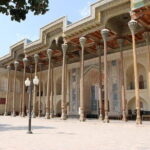
Then comes Bolo Haouz Mosque, tied to public space and the rhythm of the city. If you’re wondering what “Old Town” means in real terms, this is one of the best places to see it. You can feel the city as a system: where people come together, where learning happens, and where worship anchors the day.
Chashma-Ayub and the Samanid Mausoleum Finish: A Calm Big Moment
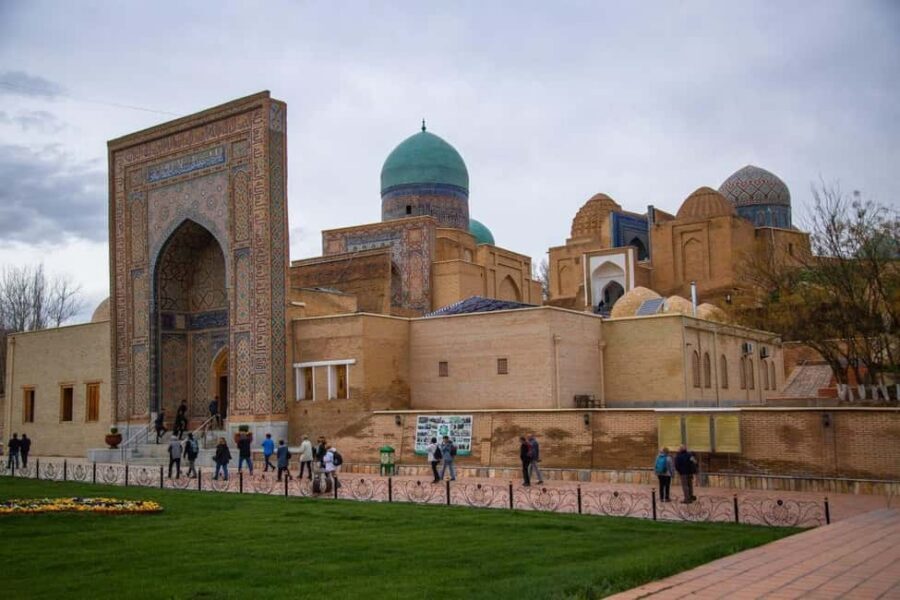
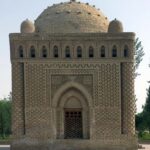
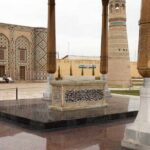
As the walk winds down, you’ll see Chashma-Ayub Mausoleum and then the Samanid Mausoleum, finishing at Ismail Samani Mausoleum. Mausoleums can feel like final stops that don’t teach you much, but in Bukhara they do. The guide uses these end points to land the story: rulers, belief, and architectural legacy in one place.
This is where the tour’s pacing pays off. After markets and minarets, the mausoleum area gives you a slower, more reflective moment. Even if the guided time is limited, you leave with the feeling that the city’s design has an emotional arc, not just a checklist.
I also like that this ending helps you plan what to do next. Once you’ve seen where the story ends, you’ll know which sights you want to revisit on your own with fresh eyes.
Price and Value: Why $55 Can Make Sense Here
At $55 per person for about 4.5 hours, the value depends on what you care about. You’re paying for a live English guide, live context, and a structured loop through major sights without wasting time figuring out what connects to what.
A big value lever: ticket-line skipping. Entrance tickets aren’t included, but being helped through the process (and having the guide keep things moving) can save frustration. Also, the guide offers suggestions, including local restaurant guidance, which helps you convert your time in Bukhara into better meals and smarter shopping.
Because it’s a group setting (around 10–15 people), it’s priced lower than a true one-to-one private tour. If you want total control of pace and entrances, you’d need a private option. But for most visitors, this group format is the sweet spot: affordable guide time plus enough flexibility to ask questions.
Who This Tour Suits Best (And Who Might Want a Different Pace)
This tour fits you if you want an efficient Old Town orientation with strong emphasis on history and architecture. It’s especially good for first-timers because you’ll get a framework you can use to revisit later.
It’s also a nice choice if you don’t love marathon tours. You get a lot of key sights in one loop, without trying to do everything at breakneck speed.
You might want a different option if you need lots of free time inside each building. Some stops are brief, and entrances may require tickets paid on the spot. If you prefer a slow, deep architectural walk with long courtyard time, look for a more flexible private setup.
Should You Book This Bukhara Walking Tour?
If you have half a day and you want Bukhara to make sense, I’d book it. The guide’s approach—history connected to what you’re seeing, plus Q&A—gets top marks for a reason. You’re also getting an easy group structure near the center, with a route that covers major monuments and the market spaces where local life continues.
One more reason: the feedback points to strong, fluent English and a guide who can keep the mood light even when the weather turns. That combination matters when you’re walking and listening for hours.
If you’re choosing between self-guided chaos and guided clarity, this one leans toward clarity. Just bring water, a sun hat, and your best curiosity. If you do that, the walk will feel like more than a route—it’ll feel like learning the city’s language.
FAQ
How long is the Bukhara walking tour?
The tour duration is 4.5 hours.
Where do we meet for the tour?
You meet near the donkey statue.
Is the tour private?
It’s described as a private group, but you will usually tour with around 10–15 people, which helps keep the price lower. A fully private option may be available if you contact the provider.
What language is the guide?
The live tour guide speaks English.
Are entrance tickets included?
Entrance tickets are not included and can be paid on the spot.
Does the tour skip ticket lines?
Yes, the tour includes skip the ticket line.
Is transportation included during the tour?
Transportation during the tour with a driver is not included.
Is lunch included?
Lunch and dinner are not included.
What should I bring?
Bring a sun hat, camera, water, and a charged smartphone.
Is the tour wheelchair accessible?
Yes, it is wheelchair accessible.
—
If you tell me your travel dates and whether you prefer early morning or late afternoon wandering, I can help you decide if a 4.5-hour loop is the best fit for your day in Bukhara.