REVIEW · BUKHARA
City Tour Around Bukhara
Book on Viator →Operated by Kamilla Yu Tour Guide Bukhara · Bookable on Viator
Bukhara feels like time-travel on foot. This private city tour is built around handmade messages from the past and short, clear storytelling as you move through the old city. I like that it connects major sites with the lived culture you can still feel today, not just dates on a plaque.
My other favorite part is how craft and daily-life culture gets woven into the route, with options for local music and even hands-on food/bread learning if you want it. One thing to plan for: several key entrances list admission as not included, so you should budget a bit for on-site tickets, and the experience runs best in good weather since it’s an outdoor walking tour.
In This Review
- Key highlights worth planning around
- Walking Bukhara the way you’ll actually enjoy it
- Price and what you really get for $66 per group
- Meeting in the right spot: Ismail Samani to Lyabi Hauz
- Stop-by-stop: what each place adds to the story
- Ismail Samani Mausoleum: brickwork that stays elegant
- Chashmai Ayub: a healing well with deep spiritual layers
- Bolo Hauz Mosque: wood-carved pillars and a political use
- Ark of Bukhara: fortress power, long timeline, big views
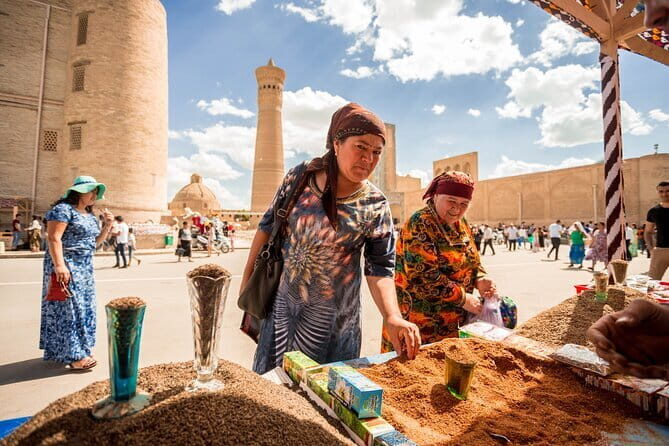
- Great Minaret of the Kalon: a tower that survived
- Poi Kalyan Mosque: domes, scale, and active use
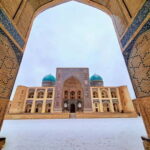
- Mir-i-Arab Madrasa: religion as a living system
- Trading Domes: profit and purpose made physical
- Kosh Madrasah: two styles in one square
- Magoki Attori Mosque and Carpet Museum: worship under the surface
- Lyabi Hauz: the old city’s center to finish the day
- The culture side: music, folk shows, and possible hands-on moments
- What I’d watch for before you book
- Who this tour suits best
- Should you book City Tour Around Bukhara?
- FAQ
- FAQ
- How long is the Bukhara city tour?
- Is pickup included?
- What’s included in the tour price?
- Are admission tickets included for the sights?
- Does the tour include coffee or tea?
- What’s the cancellation policy?
Key highlights worth planning around
- Handmade messages from the past that turn monuments into a story, not a checklist
- Guide-led pace designed to stay short and simple, with time to ask questions and take photos
- Old-city route that hits the classics plus less-obvious layers under and around the main sights
- Culture elements included, like local music and traditions, plus folk shows when available
- Craft-focused stop options (puppets, blacksmithing, embroidery, fabric making, wood carving, and more) depending on timing
- Flexibility for your interests, including the possibility of adding a local meal stop
Walking Bukhara the way you’ll actually enjoy it
Bukhara can feel overwhelming fast. Lots of domes. Lots of gates. Lots of “this is old” moments. The smart move on this tour is that it keeps the day moving with clean, human storytelling, so you’re not stuck decoding history like it’s homework.
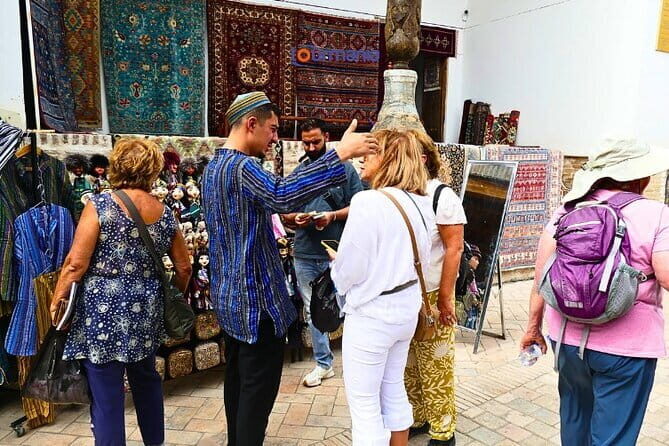
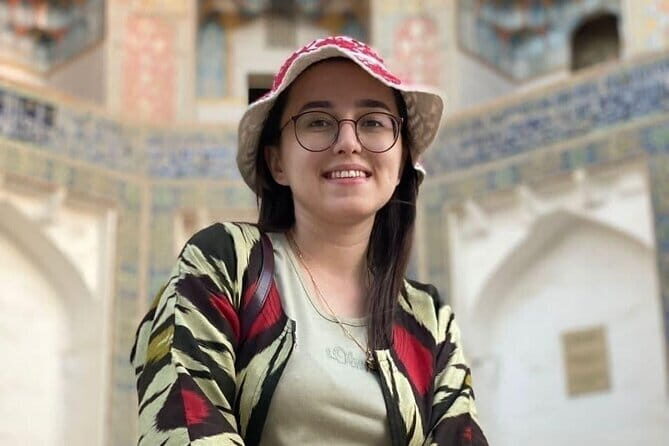
You’ll be in good hands with Kamilla Yu Tour Guide Bukhara. The tone is friendly and conversational, with strong English, and she’s known for spotting the small details most people walk right past. In practical terms, that means you’ll get context as you go—why a place looks the way it does, what people used it for, and how that past connects to modern Uzbek life.
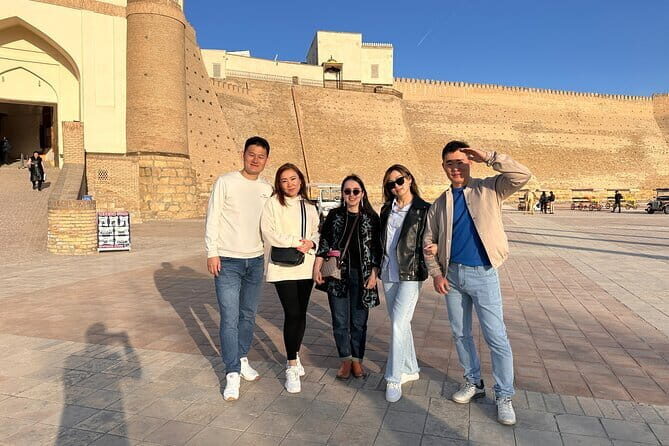
And the structure fits real travel life. It’s private (only your group), designed for up to 6 people, and it runs about 4 to 6 hours. That sweet spot means you can still have energy for dinner afterward, without feeling like you spent the whole day in a slow museum line.
You can also read our reviews of more city tours in Bukhara
Price and what you really get for $66 per group
The price is $66.00 per group (up to 6), and that matters more than the raw number. For a private, guide-led experience covering major sights across the old city, you’re essentially paying for time, access to interpretation, and an efficient route—not just “someone to walk with.”
Two practical notes that affect value:
- It’s listed as including pickup and a mobile ticket, so you’re not stuck guessing where to start or waiting around.
- Some admissions are not included at multiple stops, so your final total may be a bit higher depending on how many entrances require tickets that day.
Still, if you’re traveling as a small group, this format can be a strong deal. It’s also why solo travelers or couples often like it: private guide attention without paying “private tour for one” pricing.
The tour has good momentum lately too, with 10+ bookings in the last month, which usually signals people are finding it worth repeating.
Meeting in the right spot: Ismail Samani to Lyabi Hauz
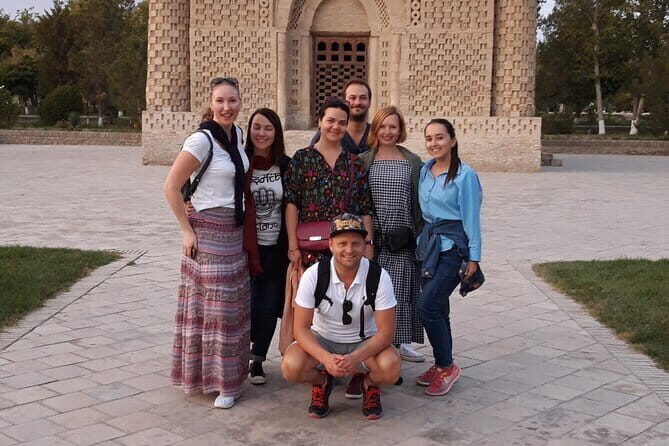
You start at Ismail Samani Mausoleum, and the tour ends near Lyabi Khause Square by the pond called Lyabi Hauz. That’s a very sensible flow: you begin around one of Bukhara’s major historical anchors and gradually move through the densest cluster of landmarks in the old city.
Knowing the end point is useful. Lyabi Hauz is a natural place to decompress—good for sitting down, scanning menus, and fitting in shopping nearby without rushing to catch the last light somewhere else.
Stop-by-stop: what each place adds to the story
Ismail Samani Mausoleum: brickwork that stays elegant
This is often described as the oldest mausoleum in Bukhara, tied to the 9th–10th centuries. What you’ll notice fast is that it doesn’t rely on colorful decoration or tilework. The interest is in the brick patterns—over 20 laying styles, all arranged with real discipline.
Admission isn’t included here, so check what you need before you enter. Even with a ticket cost, it’s worth it because this is where Bukhara’s “quiet craftsmanship” becomes visible. It sets the tone for the rest of the day: beautiful things aren’t always loud.
Chashmai Ayub: a healing well with deep spiritual layers
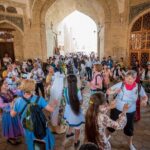
Next up is Chashmai Ayub Mausoleum, a holy site for three religions. The highlight is the association with the Prophet Job and a natural well with healing water people connect to skin conditions. The complex is from the 12th century.
Admission isn’t included. Still, this stop adds something key to the tour: it shows how Bukhara’s spiritual geography overlaps and how sites gather meaning over time. You’re not just looking at stone—you’re watching faith and local belief take physical form.
Bolo Hauz Mosque: wood-carved pillars and a political use
At Bolo Hauz Mosque, the story shifts from sacred water to architecture and communication. You’ll see carved wooden details and pillars—commonly referenced as 20 pillars, but known in local talk as the mosque of 40 pillars. It also had a role in announcing news about a new king.
Admission is listed as free here. That’s a big practical win: you get a meaningful context-rich stop without added entry fees. This is the kind of place where a guide makes the difference because the “why it mattered” is the point, not just the look of the building.
Ark of Bukhara: fortress power, long timeline, big views
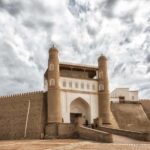
Ark of Bukhara is the fortress where rulers lived from the 4th century BC until 1920. In other words, you’re standing at a site that outlived empires and political systems, and that long timeline shows in the ruins.
The stop combines ruins in the citadel area with a view from the top. Admission isn’t included, so you’ll want to factor ticket costs. Even so, this is one of the best places on the route to connect Bukhara’s shape to its past. From a high point, the city’s old layout starts to make sense.
Great Minaret of the Kalon: a tower that survived
The Great Minaret of the Kalon is tied to the 12th century and is known for never falling. You’ll hear about what made it solid and how builders handled stability. If you’re on an evening schedule, you can also see how it looks when illuminated.
Admission is free here. So you get one of Bukhara’s most recognizable silhouettes without extra cost. If you’re the type who likes architecture details—how something stands, not just that it exists—this stop scratches that itch.
Poi Kalyan Mosque: domes, scale, and active use
Poi Kalyan Mosque is active and dates to the 16th century. The headline number is 288 domes, and it’s described as the biggest mosque in the city. Each corner is a good photo angle.
Admission isn’t included for this stop, so expect ticket rules may apply. If you’re trying to see the “main stage” of Bukhara’s monumental architecture, this is it.
Practical tip: bring your camera mindset down a notch. Don’t just take photos—look at how the domes and geometry frame light. The guide’s explanation helps you slow down.
Mir-i-Arab Madrasa: religion as a living system
Mir-i-Arab Madrasa has been functioning since the 16th century, which means you’re seeing an institution that still works, not a frozen exhibit. You’ll learn about the steps and system of getting religious education and how madrassahs are constructed in the typical way.
Admission is listed as free. The value here is clarity: you’ll walk away understanding the building as a teaching environment. That makes the surrounding architecture feel less random.
Trading Domes: profit and purpose made physical
The Trading Domes are a fascinating shift from religion and ruling power to business life. You’ll see three trading domes, each serving a specific purpose, and you’ll have a chance to cross through them to feel the space as traders once used it.
Admission is free. This is one of the most “ordinary life” stops on the route. It reminds you Bukhara wasn’t only built by rulers—it was sustained by merchants, routines, and the daily work of moving goods and making deals.
Kosh Madrasah: two styles in one square
Kosh Madrasah brings contrast. You’ll see two different madrassahs with two different styles in the same square, plus an original classroom from the 17th century and a mosque designed in a cave-like style.
Admission isn’t included here. If you like comparisons—one building showing one religious or educational approach, another showing a different one—this stop is a good place to pay attention. It’s a reminder that even inside one city, ideas can take different architectural shapes.
Magoki Attori Mosque and Carpet Museum: worship under the surface
Magoki Attori is an oldest-mosque type of stop: a 12th-century mosque hidden underneath the ground. You’ll also connect this space to both Judaism and Islam, since it served as a worship place for two beliefs.
Admission isn’t included. There’s also a carpet museum involved here, which can help break up the day if you want something more tactile after lots of outdoor stone and brick.
This stop is strong for travelers who like layered history—places that literally carry more than one era in the same footprint.
Lyabi Hauz: the old city’s center to finish the day
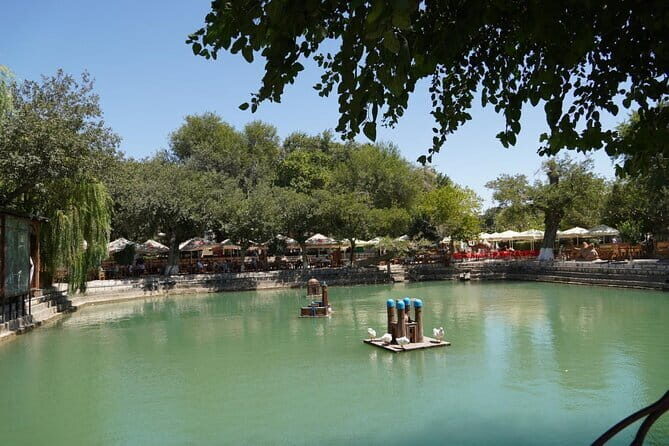
Lyab-i-Hauz is the heart of the old city, with a big complex that includes a mosque and two unique madrassahs. You’ll also have a chance to visit a caravanserai—an old-style hotel of the days—plus see how it still functions.
Admission is listed as free here. It’s also a natural landing spot because it’s calm enough to rest. This makes the whole tour feel complete: you end where people historically gathered to pause, trade, talk, and keep living.
The culture side: music, folk shows, and possible hands-on moments
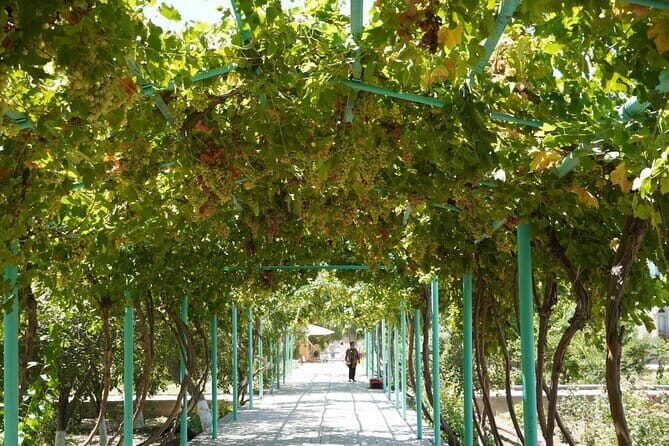
This tour doesn’t treat culture as a side quest. It includes culture diving through local music and traditions. Folk shows are available at different times, so your exact lineup can vary, but the goal stays the same: you should leave with a sense of how Bukhara sounds and feels, not only how it looks.
There’s also an optional angle if you want to lean into “hands-on learning.” The experience description mentions that a masterclass of preparation of a traditional meal or bread can be organized if you wish. That’s a great fit if you’re the kind of traveler who remembers food and cooking as much as monuments.
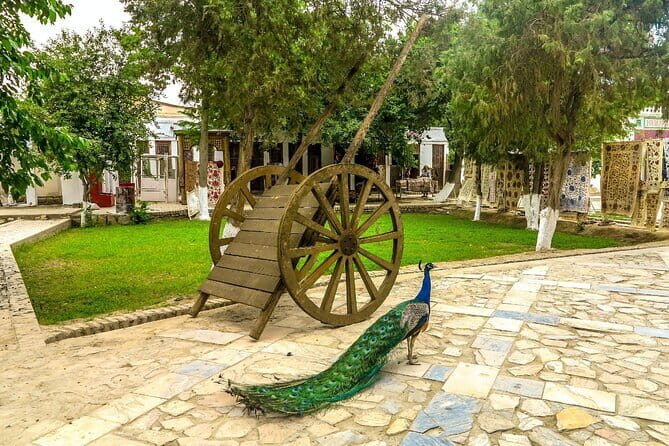
Finally, there’s craft focus built into the idea of the day—puppets, blacksmithing, gold embroidery, fabric making, wood carving. Not every craft might be a separate formal stop on your specific timing, but it’s baked into the way your guide frames the city.
What I’d watch for before you book
A few practical considerations that matter:
- Admissions add up. Some stops are free; others explicitly list admission tickets not included. If you hate surprises, ask your guide what’s paid that day.
- Weather matters. The experience notes it requires good weather. If it’s a hot or rainy day, your comfort level will depend on timing and outdoor walking.
- Walking time is real. You’re moving across the old city with multiple stops. Pace is not described as slow, so plan comfortable shoes.
- You’ll want breaks. Coffee and tea breaks are part of the tour experience, but coffee/tea itself is listed as not included. You’re likely to pay for what you order.
Who this tour suits best

This is ideal if you want:
- A guided old-city route without getting lost in names and dates
- Story-led architecture (brickwork, domes, minarets, fortress ruins) explained in plain language
- Cultural context beyond monuments, including music/traditions and chances for crafts or food learning
- A private group experience that stays flexible to your interests
It’s also a strong choice for first-timers in Bukhara who want the essentials plus extra meaning, and for returners who want a guide to point out the details they missed.
If your travel style is strictly “stand back and read everything yourself,” you may not get the most from this format. But if you like asking questions and hearing how locals think about place and time, this one fits.
Should you book City Tour Around Bukhara?
Yes—if you want Bukhara explained like a story you can walk through. The combination of handmade messages from the past, strong guiding by Kamilla, and a route that balances major monuments with everyday-life themes makes this tour feel purposeful instead of rushed.
Book it especially if you’re traveling in a small group (up to 6) and you value time-efficient route planning. Just budget for the fact that some entrances may cost extra, and choose your day with weather in mind. If you do that, you’ll likely come away with the kind of Bukhara memory that lasts: architecture with meaning, and culture that still feels present.
FAQ
FAQ
How long is the Bukhara city tour?
The tour runs about 4 to 6 hours, depending on timing and the day’s flow.
Is pickup included?
Yes, pickup is offered.
What’s included in the tour price?
It includes an in-person guide and handmade messages from the past.
Are admission tickets included for the sights?
Admission tickets are not included for several stops (for example Ismail Samani Mausoleum, Chashmai Ayub, Ark of Bukhara, and others). Some stops are listed as free, but you should expect to pay for certain entrances.
Does the tour include coffee or tea?
Small breaks for coffee and tea are part of the tour, but coffee and/or tea are listed as not included, so you may pay for what you order.
What’s the cancellation policy?
You can cancel for free up to 24 hours in advance for a full refund. The experience may also be rescheduled or refunded if canceled due to poor weather.