Samarkand feels like a time machine with rules. In one focused day, you’ll see major Great Silk Road landmarks with a guide who explains what you’re actually looking at, not just where to stand. I love how the route balances big-ticket monuments with a real market stop like Siab Bazaar. The main thing to watch is that site entry tickets are extra, and mosques require modest dress (cover legs and shoulders).
What makes this tour stand out is the human factor: guides such as Murod, Ganisher, and Charos are repeatedly praised for patience, clear explanations, and adjusting the pace when questions multiply. I also like that you get private, air-conditioned transport with a driver, so you spend your energy on the sights instead of haggling over logistics. And yes, you’ll do a fair amount of walking because these places were never meant to be seen from a bus window.
In This Review
- Key highlights you’ll care about
- Samarkand as a Great Silk Road reality check
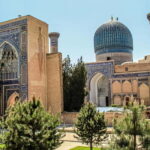
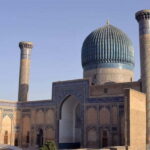
- Gur-Amir Mausoleum: Tamerlane’s resting place sets the tone
- Registan Square: the madrasas as a single architectural story
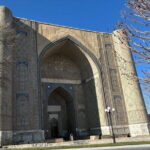
- Bibi-Khanym Mosque: big scale, old ambition
- Siab Bazaar after lunch: the Silk Road trade you can touch
- Khazrat Khizr Mosque: a quick viewpoint with meaning
- Shah-i-Zinda: sacred necropolis with 20+ mausoleums
- Private vehicle and English guide: why it matters more than you think
- Timing and pacing: a 6-hour day that doesn’t feel rushed
- Price and value: what $59 buys (and what it doesn’t)
- How to dress and plan for comfort at mosques
- Should you book this Samarkand Silk Road tour?
- FAQ
- How long is the Samarkand Silk Road tour?
- What sites are visited during the tour?
- Is pickup from my hotel included?
- What language will the guide speak?
- Are entry tickets included in the price?
- Is lunch included?
- Is there a dress code?
- Is this tour suitable for wheelchair users?
- FAQ
- Are there any restrictions on what I can bring?
- Do they offer free cancellation?
- Can I reserve without paying right away?
Key highlights you’ll care about
- Gur-Amir Mausoleum first, so the day starts with the Tamerlane story in the right place
- Registan Square viewed as one dramatic architectural ensemble, not three random buildings
- Bibi-Khanym Mosque to appreciate scale and Islamic design details
- Siab Bazaar for spices, crafts, and the older market feel
- Shah-i-Zinda as a necropolis walk with 20+ decorated mausoleums spanning the 11th to 14th centuries
Samarkand as a Great Silk Road reality check
You can read about the Silk Road for years. Then you stand in Samarkand and feel how trade reshaped art, power, and daily life. This tour does a smart job connecting those dots: it moves from rulers and architecture to a working market, and then finishes in one of the most visually memorable sacred sites in the city.
The best part is that you’re not left to decode everything alone. Signs and explanations can be inconsistent once you’re on the ground, so a good guide matters here. In the strongest guiding moments I’ve seen on this route, you stop seeing buildings as background and start noticing how decoration, layout, and restoration tell a timeline.
You can also read our reviews of more tours and experiences in Samarkand.
Gur-Amir Mausoleum: Tamerlane’s resting place sets the tone
You start at the Gur-Amir Mausoleum, the final resting place of Tamerlane and his royal descendants. This is the perfect opener because it frames the rest of the day around one central idea: Samarkand was a political stage as much as a trading hub.
Even if you’ve visited other grand tombs, this one lands differently because it’s tied to a dynasty narrative that keeps showing up in later monuments. A guide helps you read what’s in front of you, and also what you might miss if you simply rush through. Plan to spend about an hour here so the experience doesn’t turn into a quick checklist.
Practical note: this is a stop where you’ll want comfortable shoes and a steady pace. You’ll likely do some indoor/outdoor movement, and you’ll want your attention for the details that make the architecture feel intentional.
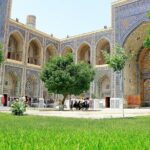
Registan Square: the madrasas as a single architectural story
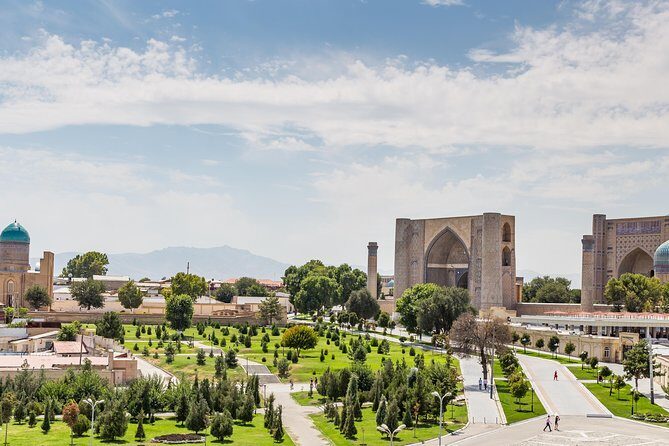
Next comes Registan Square, and it’s easy to see why it’s the postcard star. The square is defined by three grand madrasas that work like one unified composition, so the best way to experience it is as a “designed view” rather than three separate photo stops.
With a guide, Registan becomes easier to understand. You learn what each complex is doing for the city’s education, status, and community life. Without that context, it can still be stunning, but it’s more random—pretty facades without the meaning attached.
You’ll spend about 1.5 hours here, which is a good amount of time for slow looking, photos, and asking questions. One drawback to expect: this is the type of place where your group might pause repeatedly for photos. If you’re the kind of person who gets impatient, you’ll still be fine, but you’ll want to keep your pace flexible.
Bibi-Khanym Mosque: big scale, old ambition
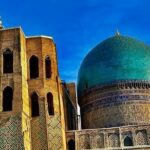
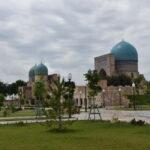
Then you head to Bibi-Khanym Mosque, once described as one of the largest and most magnificent mosques in the Islamic world. It’s a monument that makes a strong first impression because of its sheer presence. The second layer is appreciating Islamic architecture as a language—geometry, surface patterning, and the way the building dominates the surrounding urban space.
This stop is shorter (about 40 minutes), so I’d treat it like a targeted visit. You’re not meant to linger forever. If you want to maximize it, arrive ready to look closely rather than just taking quick wide shots.
Also, don’t ignore the clothing expectation here. The tour has no formal dress code across Uzbekistan, but mosques ask for modest coverage—cover legs and shoulders. If you’re traveling light, bring something simple for this, like a scarf you can adjust quickly.
Siab Bazaar after lunch: the Silk Road trade you can touch
After the main monument run, you shift gears to Siab Bazaar, described as the oldest market in Samarkand. This is the moment that makes the day feel real. Instead of only seeing history in stone, you experience it through everyday life: spices, local flavors, and traditional crafts.
This is also where a guide earns their keep. Even a great guide can’t control the price tags or stock, but they can help you navigate what’s worth browsing and what’s more hype than value. In some past tours, guides have helped with practical bargaining basics and suggested where to grab a satisfying local lunch.
You’ll spend about 50 minutes here. That’s long enough to see variety without turning the market stop into an exhausting shopping sprint. If you love markets, this timing works well. If you’re only a casual shopper, you can still enjoy the sights, smells, and the bustle without needing to buy anything.
Khazrat Khizr Mosque: a quick viewpoint with meaning
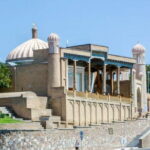
Next up is the Khazrat Khizr Mosque, perched with a beautiful view. This isn’t the kind of stop that grabs you because of size. It works because it gives you a perspective shift—physically and mentally—after moving through major architectural landmarks.
A good guide helps you understand why a “viewpoint” mosque matters. It’s not only about scenery; it’s also about how religious spaces relate to the city’s layout and how people used sightlines in daily life. The visit is shorter, so plan to soak it in quickly.
If you’re sensitive to steep or uneven walking surfaces, this is a place to watch your footing. The tour is not designed for wheelchair use, and some stretches may be challenging even for able-bodied travelers with mobility issues.
Shah-i-Zinda: sacred necropolis with 20+ mausoleums
Finally, you finish at the Shah-i-Zinda Ensemble, an awe-inspiring sacred necropolis with over 20 decorated mausoleums dating from the 11th to the 14th centuries. This is one of those places where the architecture feels like it’s moving with you. As you walk, each mausoleum pulls the story forward.
This stop is usually the emotional peak of the day. It’s visually intense, but the calm way a guide paces you makes it easier to take in. With the right explanations, the colors, patterns, and repeated design themes stop looking random and start feeling like a carefully maintained tradition.
You’ll have about 1.5 hours here. I’d use that time for slow walking and photo breaks. Also, keep expectations realistic for photography: the tour notes that photo and video charges may apply during sightseeing, so don’t assume everything is free to record.
Private vehicle and English guide: why it matters more than you think
A lot of tours in historic cities can feel like a race. This one is built to reduce the friction. You travel by air-conditioned private vehicle with a driver, and pickup and drop-off are included. That means you don’t waste your limited day figuring out routes or negotiating rides between far-flung monuments.
Even better, the tour is private-group. That usually translates into more flexibility: if you’re slower, you’re not punished; if you have lots of questions, you’re not competing with a large herd.
The strongest praise in the experiences shared with the tour centers on the guide. Several people singled out guides like Murod, Ganisher, and Charos for being patient, good with questions, and even helpful with photography. Another name you’ll see in past experiences is Akram, noted for making the day feel welcoming and approachable. The point isn’t that every guide will be identical—it’s that this route consistently seems to reward a thoughtful guide.
Language-wise, you can expect an English-speaking guide, and Russian is also available. If you don’t speak either, you’ll still see everything, but you’ll feel the difference most at places where signage is light.
Timing and pacing: a 6-hour day that doesn’t feel rushed
The tour runs about 6 hours and focuses on roughly 5–6 hours of sightseeing. That schedule matters because Samarkand monuments are clustered in a way that makes a tight day possible, but not so tight that you feel permanently behind.
The walking is real, especially around Shah-i-Zinda. You’re on your feet for multiple segments, and some surfaces can be uneven. Bring shoes you trust. If you’re the type who needs frequent breaks, mention it early so your guide can build in pauses without making you feel awkward.
Also, you’ll have a market stop after the monument-heavy first half. That sequence is smart. You get architecture saturation, then you get sensory variety with food and crafts. It’s a good rhythm for a single day.
Price and value: what $59 buys (and what it doesn’t)
At $59 per person for a 6-hour private tour, the value is mostly in the pairing: monuments you can’t fully interpret without context plus private transportation that keeps the day efficient.
What’s included:
- English-speaking local guide on the excursion
- Air-conditioned private vehicle with driver
- 24/7 assistance
What’s not included:
- Entry tickets for sites (paid on the spot)
- Food and drinks
- Accommodation
- Photo and video charges during sightseeing
So the way to think about value is this: you’re paying for someone to organize the day, explain what you’re looking at, and get you from point to point smoothly. Entry tickets and site recording fees are the add-ons that can change the final cost. Even so, people often feel comfortable with the total because the day covers several of Samarkand’s top landmarks rather than just one or two.
If you’re traveling with kids, this format can be a win too. One past experience noted a guide being patient with children, and that matters when you’re walking through crowded or detailed spaces.
How to dress and plan for comfort at mosques
Uzbekistan doesn’t have a strict dress code generally, but mosques are the exception. Expect modest coverage—cover legs and shoulders. A light scarf and a long, loose layer solve most of the problem.
Bring sunglasses and sunscreen if it’s sunny, and keep water in mind even though food and drinks aren’t included. If you’re taking photos, remember that photo/video rules can differ by site, so plan for the possibility of extra charges.
And don’t forget basics for walking: comfortable shoes, a small bag you can keep with you, and the patience to slow down for the best views. In Shah-i-Zinda, the best photos often take a second try.
Should you book this Samarkand Silk Road tour?
I’d book this if you want a one-day “Samarkand hits” plan that feels organized, not chaotic. It’s especially worth it if you care about Islamic architecture and want a guide to connect the symbolism and layout across multiple monuments. The private transport and English guidance also make the day more relaxing, which is hard to beat in a busy city.
Skip it or reconsider if you’re a wheelchair user, because the tour is listed as not suitable. Also, be ready for extra costs at the sites and for mosque dress expectations.
If your goal is to see Registan Square, Gur-Amir, Bibi-Khanym, Siab Bazaar, and Shah-i-Zinda without guessing how to make sense of them, this tour is one of the most practical ways to do it in a single stretch.
FAQ
How long is the Samarkand Silk Road tour?
The tour lasts about 6 hours, including pickup and a 5–6 hour sightseeing schedule.
What sites are visited during the tour?
You’ll visit Gur-Amir Mausoleum, Registan Square, Bibi-Khanym Mosque, Siab Bazaar, Khazrat Khizr Mosque, and the Shah-i-Zinda Ensemble.
Is pickup from my hotel included?
Yes, pickup is included. The driver will coordinate the pickup time, and you’ll meet in the hotel lobby at the scheduled time.
What language will the guide speak?
The tour offers a live guide in English and Russian.
Are entry tickets included in the price?
No. Entry tickets for the sites are not included and can be paid on the spot.
Is lunch included?
Food and drinks are not included.
Is there a dress code?
There’s no general dress code in Uzbekistan, but when you visit mosques you should dress modestly, covering legs and shoulders.
Is this tour suitable for wheelchair users?
No, it is not suitable for wheelchair users.
FAQ
Are there any restrictions on what I can bring?
Drones and explosive substances are not allowed.
Do they offer free cancellation?
Yes, you can cancel up to 24 hours in advance for a full refund.
Can I reserve without paying right away?
Yes. Reserve now & pay later is available.