REVIEW · SAMARKAND
A City Tour Of Samarkand: The Pearl Of The East
Book on Viator →Operated by Fayoziddin · Bookable on Viator
One walk can explain a whole empire. This Samarkand highlights tour strings together the city’s biggest landmarks, with Amir Timur legends woven into what you see. I like how the route keeps moving while still making room for photos and quick orientation so you can plan your own time afterward.
Two things I especially value: first, you get a real guide (not just a map) who explains why each site matters; second, the pace is built for a comfortable group walk through the core sights. One possible drawback: several entrances are not included, and a couple stops are outside views only, so you’ll want extra time if you want to linger.
In This Review
- Key highlights at a glance
- Why this route from Gur-i Amir to Shah-i Zinda works
- Gur-i Amir Mausoleum: the center of Timur’s story
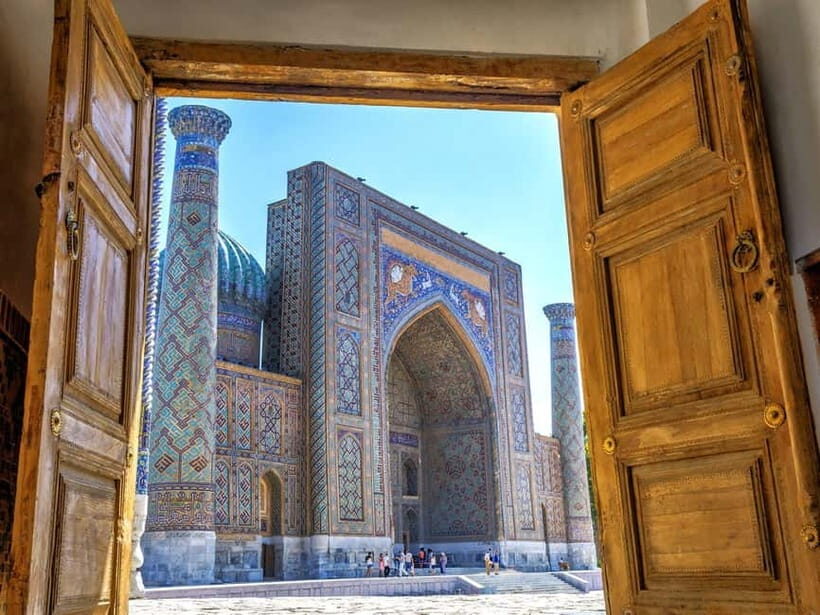
- Registan Square: madrasas, education, and spiritual power
- Bibi-Khanum Mosque: a legendary dome viewed from outside
- Hazrat Khizr Mosque: why rebuilding matters (and dates back further)
- Shah-i Zinda (Shakhi-Zinda): necropolis walking with meaning
- Price and value: what $16 buys you in real terms
- Timing tips: how to use the 3.5 hours well
- What to expect from the guides and group vibe
- Who this tour suits best in Samarkand
- Should you book this Samarkand city tour?
- FAQ
- How long is the Samarkand city tour?
- How much does the tour cost?
- What is included in the price?
- Are entrance fees included for the monuments?
- Where does the tour start and end?
- Is this tour very difficult to walk?
- How large is the group?
- Can I cancel for a full refund?
Key highlights at a glance

- Gur-Emir Mausoleum: Tamerlane’s burial site, with stories tied to the family line
- Registan Square: see the three madrasas, including Ulugbek and Sherdor
- Bibi-Khanum Mosque: iconic scale and legends, with viewing from outside
- Hazrat Khizr Mosque: a 19th-century rebuild on an older 8th-century site
- Shah-i-Zinda: a walking necropolis visit with the best “stroll and look up” energy
- Small group feel: maximum 20 people, designed for a manageable walk and questions
Why this route from Gur-i Amir to Shah-i Zinda works
Samarkand can feel like a maze if you arrive with only a list of monuments. This tour makes it easier by stacking the sites in a practical order: you start near the Gur-i Amir complex and finish at Shah-i Zinda (the necropolis area). That matters because it reduces backtracking and helps you understand how the city’s power center shifted over time.
The tour runs about 3 hours 30 minutes of on-site time, but it also notes that extra time goes to travel from pickup to drop-off. So even if your day is tight, you’ll come away with a clear mental map of where everything is and what to prioritize next.
Group size is capped at 20, which is big enough to feel social but small enough that the guide can keep an eye on the group and adjust timing. Also, it’s marked medium difficulty: expect a walking tour with a caution if you have serious leg problems.
You can also read our reviews of more city tours in Samarkand
Gur-i Amir Mausoleum: the center of Timur’s story
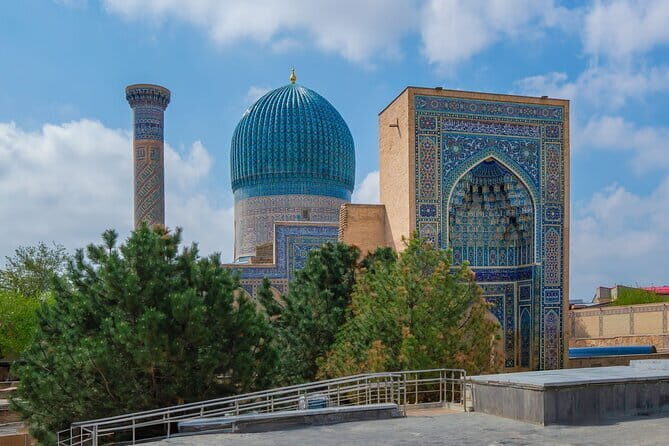
Your first stop is Gur-Emir Mausoleum, the burial place of Amir Timur and also his descendants, including Muhammad Sultan and Ulugbek. That gives the site more weight than a pretty building stop. You’re not only looking at tiles and arches; you’re looking at how rulers used architecture to project legitimacy and memory.
Plan for about 50 minutes here. Entrance is listed as not included, so budget for monument entry if you want to go in. Either way, the guide’s job is to connect the details of the architecture to the people linked to the tombs and to the legends that grew around them.
A practical tip: if you’re the type who likes to take photos but also hates rushing, this is a good first target. Starting early helps, and the guide’s explanations help you know what to look for so you’re not just snapping pictures of “another mausoleum.”
Registan Square: madrasas, education, and spiritual power
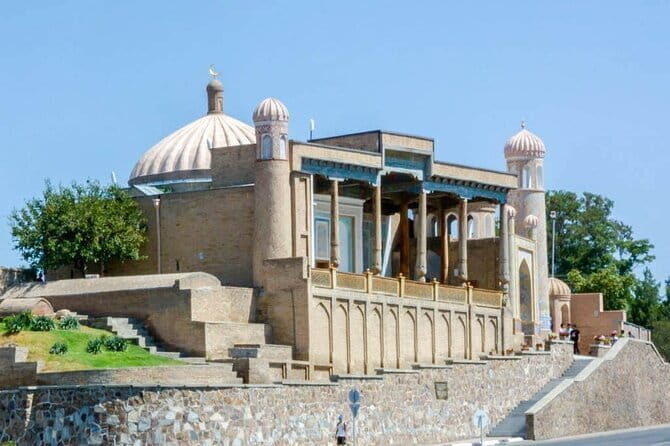
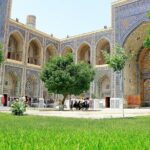
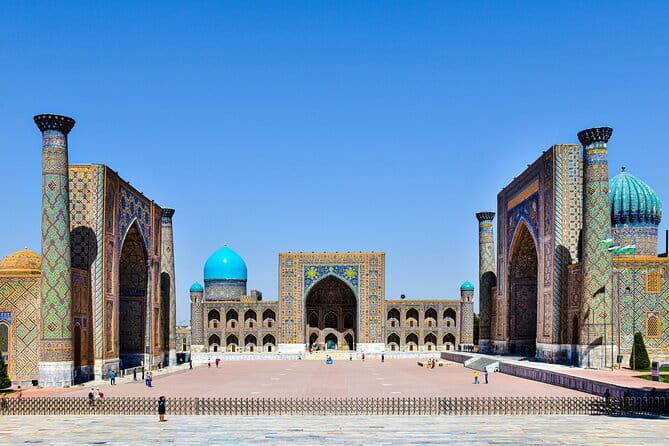
Next comes Registan Square, often described as a visiting card of Samarkand. Here, the tour focuses on why the space mattered: in the 15th–17th centuries, it served as an educational and spiritual hub. In other words, this wasn’t just a scenic plaza. It was a stage for learning, faith, and public life.
You’ll spend about 45 minutes at the square, focusing on the three main madrasas:
- Ulugbek Madrasa
- Sherdor Madrasa
- Tillyakari Madrasa
Entrance at this stop is also not included, so consider this your guided “pattern recognition” stop. After the tour, when you return on your own, you’ll know what each building is and why the designs feel so deliberate.
One drawback to keep in mind: this part of Samarkand is visually intense, and time is limited. If you want to study inscriptions, mosaics, and layout in depth, use the tour to identify what sparks your curiosity, then plan a longer independent return.
Bibi-Khanum Mosque: a legendary dome viewed from outside
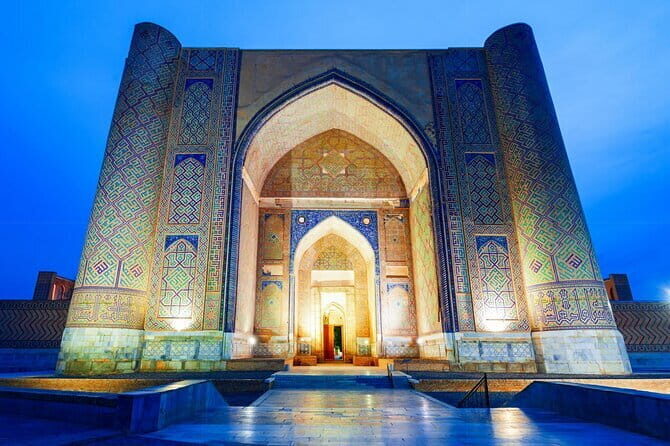
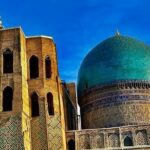
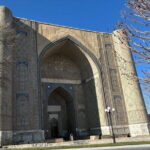
The tour then moves to Bibi-Khanum Mosque. You won’t be going inside on this stop because you’ll admire it from the outside. That still works, though, because the stories and the scale are part of why people talk about it.
The tour description highlights a sky-blue dome and legends connected to Amir Timur. In practical terms, this is a “look first, ask questions second” stop. From the exterior views, you can appreciate the massing and the way the mosque presents itself as a statement building.
You’ll have about 40 minutes here. Since it’s outside viewing, it’s less affected by entrance ticket logistics, and you can focus on photos and the guide’s story-based context. If you prefer sites where you can roam freely inside, you may want to add a separate visit later.
Hazrat Khizr Mosque: why rebuilding matters (and dates back further)

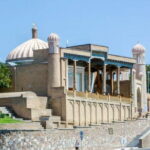
At Hazrat Khizr Mosque, the tour gives you something really useful: the lesson that buildings in Samarkand are often layers of time. The current mosque was reconstructed in the 19th century, replacing an earlier one destroyed in the 13th century. And the tour notes that the original site dates back to the 8th century.
You’ll spend about 30 minutes here, and importantly, admission ticket is marked included for this stop. That’s one of the ways this tour can balance out the extra costs at other monuments.
Why I like this stop for first-timers: it trains your eye to notice continuity. You’ll start seeing Samarkand not as a set of isolated monuments, but as a city where history keeps getting rebuilt, renamed, and re-used in new forms.
Shah-i Zinda (Shakhi-Zinda): necropolis walking with meaning
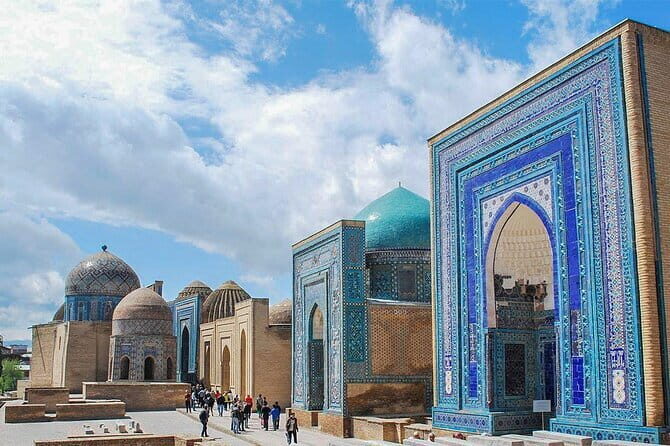
Your final major stop is Shah-i Zinda, also known as Shakhi-Zinda. This memorial complex is described as mysterious and architecturally striking, and the tour connects it to a major belief: it is believed to be the burial place of Kusam ibn Abbas, an associate of the Prophet Muhammad.
You’ll have about 45 minutes here. Entrance is listed as not included in the itinerary for this stop, so again, you may pay extra depending on what’s required on the day and which areas you enter.
This is also a stop where the tour format makes sense. Shah-i Zinda is ideal for walking and looking up, and a guided explanation helps you understand why the place feels like more than a tourist walkway. It’s a necropolis with an emotional tone, and the guide’s framing helps it land.
Because the tour ends at Shah-i Zinda necropolis, you can keep going after the group finishes. If you find one section you love, you don’t have to race back to your starting point.
Price and value: what $16 buys you in real terms
The listed price is $16 per person, with a note that it’s been booked multiple times recently and that group discounts may apply. That’s not just a cheap sightseeing add-on. In practical terms, you’re paying for:
- Guide service (storytelling and context at each stop)
- A walking tour route that helps you cover core highlights in a short window
- A mobile ticket system
On top of that, the tour lists monument entrance fees separately: entrance fee to the monuments cost $6. The itinerary also says one stop (Hazrat Khizr Mosque) has admission included, while others are marked not included. So you should treat this as: base tour price covers the guided walk; you may add a small extra amount for entry depending on where you go inside.
Here’s why the value can be strong: you’re not just collecting stamps. When the guide explains what you’re seeing—like the rebuild timeline at Hazrat Khizr or the educational role of Registan—it changes how you experience the sites. And with a cap of 20 people, the guide can keep the group together without turning it into a shouting match.
Timing tips: how to use the 3.5 hours well
This tour is designed to fit a day without exhausting you. You’ll have quick stop structure across five main points and enough time to take photos without feeling like the guide is constantly dragging you along.
A lot of the best feedback focuses on pacing and practical breaks. On days like winter or rain, it helps that the guide is described as flexible and willing to arrange time to warm up or pause for coffee and restrooms. If you’re planning your own schedule around this tour, don’t cram the next activity immediately afterward. Give yourself time to revisit one favorite building section or shop nearby if you still feel curious.
Also, if you’re the type who likes a “learning starter pack,” this is ideal. You’ll get enough background to make your self-guided visits smarter later. And because the tour ends at Shah-i Zinda, you can turn your next hour into a continuation rather than a commute.
What to expect from the guides and group vibe
The tour is run by professional guides, and the guide names that come up often include Fayoziddin, Sitora, and Javlonbek. The recurring strengths are pretty clear from the way guides are described:
- Engaging storytelling that keeps people paying attention
- Humor mixed into the explanations
- Clear pacing and time management
- Practical end-of-tour suggestions, including where to eat next
- Extra effort to help the group stay comfortable, including restroom and coffee breaks
Language is also a real factor. Some comments note that the guide spoke excellent English, which matters a lot when you’re trying to understand architectural terms and the background behind legends. If you want to actually understand what you’re seeing—not just pose for photos—this is the kind of tour that can deliver that.
One potential mismatch: the tour naturally leans into major religious and monument-based sites. If you want a wider angle on everyday life, politics, or other sides of Central Asia culture beyond the mosque and madrasa storylines, you might feel it focuses more on faith and architecture than on other themes.
Who this tour suits best in Samarkand
I think this is a strong fit if:
- It’s your first time in Samarkand and you want fast orientation
- You like history and stories, not just sightseeing
- You prefer a small group walk instead of driving between distant points
- You want a guide who will help you decide what to revisit later
It’s less ideal if:
- You have serious leg issues and can’t handle a walking route
- You hate any extra costs for entrance tickets at major sites
- You want every stop to include long interior time (a couple are exterior-view focused)
If you’re traveling solo, the small group format can still work well. A solo traveler can get the attention of a guide without being stuck with a huge crowd.
Should you book this Samarkand city tour?
I’d book it if your goal is to see the essentials—Gur-i Amir, Registan Square, Bibi-Khanum, Hazrat Khizr, and Shah-i Zinda—with enough context to make those sights feel meaningful. The price is low for what you get: guided stops, a walkable route, and a clear end point that lets you keep exploring.
I’d think twice if you want long, unhurried interior visits at every stop, because some entrances are not included and not every monument is an inside visit. Also, if you’re sensitive to extra ticket costs, factor in the stated monument entrance fee.
If you’re planning a short visit to Samarkand, this tour can do something simple but powerful: it gives you the city’s “storyline” in one afternoon, so your later choices feel informed instead of random.
FAQ
How long is the Samarkand city tour?
The tour is about 3 hours 30 minutes (approx.), not counting the time for pickup and drop-off travel.
How much does the tour cost?
It costs $16.00 per person.
What is included in the price?
The tour includes guide service and a walking tour.
Are entrance fees included for the monuments?
No. Entrance fee to the monuments costs 6 $. The itinerary also marks Hazrat Khizr Mosque as admission ticket included, while other stops are marked as not included.
Where does the tour start and end?
The tour starts at Amir Temur Mausoleum Gur-i Amir (Oqsaroy 1 area) and ends at Shah-i-Zinda necropolis (Shohi Zinda ko’chasi area).
Is this tour very difficult to walk?
It’s rated medium difficulty. Only walking ability is required, but it is not recommended for travelers with serious leg problems.
How large is the group?
The tour has a maximum of 20 travelers.
Can I cancel for a full refund?
You can cancel up to 24 hours in advance for a full refund. If you cancel less than 24 hours before, the amount paid is not refunded.