REVIEW · SAMARKAND
Samarkand: Historical City Highlights Guided Walking Tour
Book on GetYourGuide →Operated by Tourmania Uz · Bookable on GetYourGuide
Samarkand makes history walkable. In about 4 hours, this guided route links the Gur-e-Amir mausoleum to the legendary tiles of Registan Square, then continues through major mosques and the UNESCO Shah-i-Zinda complex with context from a local guide. It is a practical way to see the headlines of Samarkand without getting lost in the details.
I like two things right away. First, the guides get real praise for staying calm with questions and pacing the tour so you can look closely (not just pose and move on). Second, the sequence of stops works: you get Timurid power at Gur-e-Amir, the urban theater of Registan, the scale of Bibi Khanym Mosque, the older spiritual feel of Hazrat Khizr Mosque, and then the tile-and-tomb spectacle at Shah-i-Zinda.
One drawback to plan for: it is a walking tour, so you should expect uneven ground and time in the open. Bring comfortable shoes, plus a hat and sunscreen because the sun and weather can change your energy fast.
In This Review
- Key Highlights You’ll Actually Feel
- Why This 4-Hour Samarkand Walk Works
- Starting at Gur-e-Amir Mausoleum: Where Tamerlane’s Power Is Tangible
- Registan Square and the Three Madrasahs: The Photo Stop With Real Meaning
- Bibi Khanym Mosque: Enormous Scale, Ruins, and Legends That Make Sense
- Hazrat Khizr Mosque: A Calm Pause With Older Spiritual Roots
- Shah-i-Zinda Complex: The Street of the Dead and UNESCO Tile Magic
- Price and What You Really Get for $18
- Guide Style: Why People Keep Mentioning the Same Kind of Magic
- Practical Tips for a Smoother Day (And Better Photos)
- Should You Book This Samarkand Walking Tour?
- FAQ
- FAQ
- What is the duration of the Samarkand historical highlights walking tour?
- How much does the tour cost?
- Which languages are the live tour guide services offered in?
- What sites are included in the tour?
- Are admission tickets included in the price?
- Is the tour private or small group?
- Where is the meeting point?
- Do I need to provide a WhatsApp number?
- Is free cancellation available?
Key Highlights You’ll Actually Feel
- A tight four-hour route that hits Samarkand’s biggest architectural names without dragging
- Gur-e-Amir to Registan as a story, not a checklist of monuments
- Registan’s three madrasahs (Ulugh Beg, Sher-Dor, Tilya-Kori) explained in plain terms
- Bibi Khanym’s scale and symbolism, including the meaning behind the partially ruined look
- Shah-i-Zinda as a UNESCO necropolis with tile artistry you’ll want to photograph slowly
- Small-group or private options that let your guide tailor the pace and answer questions
Why This 4-Hour Samarkand Walk Works
This tour is built for the way most people actually travel. You only have half a day, you want the iconic sites, and you also want to understand what you’re seeing so it doesn’t blur together. The format helps: you spend enough time at each place to notice details, but the overall route stays short enough to keep your attention—and your legs—intact.
A big value point here is the guided part. Samarkand’s buildings can look similar at first glance—same blue tones, same tile patterns, same big domes. A local guide connects the symbols, the patrons, and the design choices so the sights start to feel like they belong to one timeline instead of five random stops.
You also benefit from good on-the-ground handling. Even though it is primarily a walking experience, the transport side scores well in feedback, and the day is organized so you spend more time at the monuments and less time figuring out logistics. If you hate wasting your limited sightseeing hours on navigation, you’ll appreciate that.
You can also read our reviews of more walking tours in Samarkand
Starting at Gur-e-Amir Mausoleum: Where Tamerlane’s Power Is Tangible
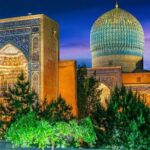
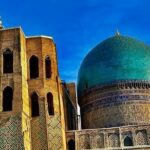
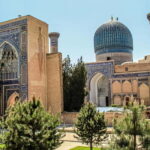
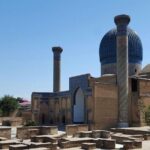
Most of the story of Samarkand begins at Gur-e-Amir, the mausoleum connected with Amir Temur (Tamerlane). This is where the “why” of the architecture shows up fast. Even if you only glance at the outside, the structure signals status: huge presence, strong symmetry, and a look designed to communicate authority.
Inside the experience, the focus isn’t only on the wow-factor dome and mosaics. Your guide’s job is to translate the symbolism—what the building was meant to say and how the Timurid era wanted to be remembered. That matters because without the explanation, you’re left with beauty and general history. With it, you start noticing how the whole complex is a statement.
Practical tip: arrive ready to look up. A lot of the artistry here is meant for your upward gaze, not just your phone camera. If you pace yourself, you can get those tight mosaic shots without skipping the bigger composition.
Registan Square and the Three Madrasahs: The Photo Stop With Real Meaning
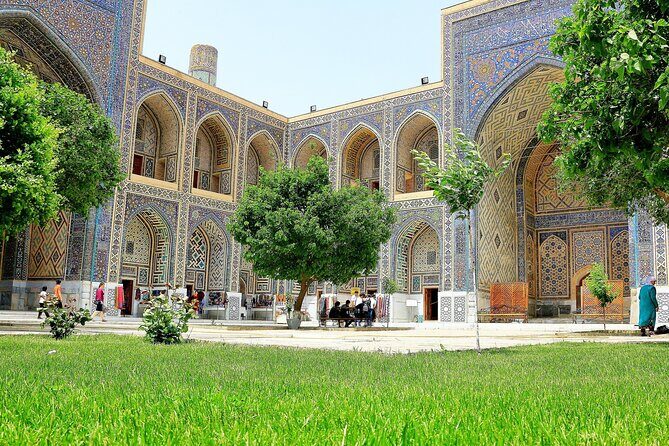
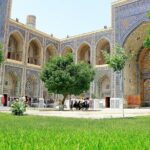
If Registan Square is the star, the show is in the details. This is the cultural and intellectual heart of medieval Samarkand, and it is surrounded by three major madrasahs: Ulugh Beg, Sher-Dor, and Tilya-Kori. From a distance, it’s dramatic. Up close, it becomes a lesson in how Timurid-era design used color, geometry, and scale to impress.
Your guide’s explanation is what turns the buildings into something more than backgrounds for photos. You’ll learn what each madrasah contributes to the overall impression—why the square feels like a civic stage, and how the architecture supports the idea of learning, prestige, and public life.
Timing-wise, you won’t be stuck forever. You’ll get a photo stop and a guided visit that balances looking and learning. That balance shows up in feedback: people liked that the guide does not rush you, and they appreciated the chance to ask questions without feeling cut off.
Practical tip for your camera: plan a few positions, not a hundred. Take a wide shot first, then switch to tighter angles on tile and entrance details. Otherwise, you’ll burn time chasing every angle and miss the overall look of the square.
Bibi Khanym Mosque: Enormous Scale, Ruins, and Legends That Make Sense
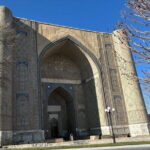
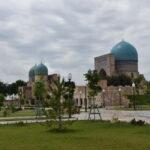
Next comes Bibi Khanym Mosque, built by Tamerlane to honor his wife. Even in its partially ruined state, the complex carries weight. The arches and sheer grand scale still make it hard to pretend you’re not seeing something big.
What makes this stop worth your time is the combination of architecture and storytelling. The tour frames the site with the legends around love and ambition, but it also encourages you to read the building visually. You start to understand how the structure was designed to project power—and how age and history changed what you see today.
A small consideration: ruins can be tricky for your expectations. You might arrive wanting the building to look perfectly intact. Instead, you get something more interesting: a monument that shows both ambition and time. If you like seeing how history looks after centuries, you’ll enjoy it. If you only want pristine restoration, you may find some parts less satisfying.
Hazrat Khizr Mosque: A Calm Pause With Older Spiritual Roots
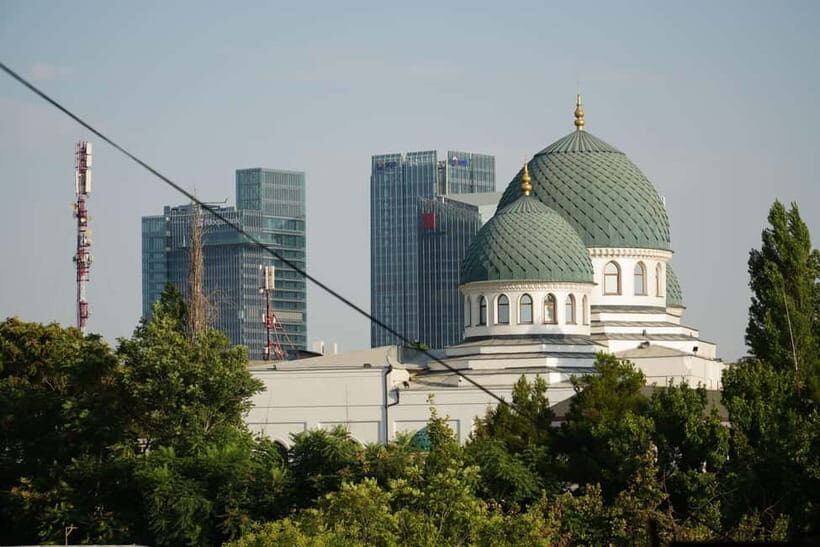
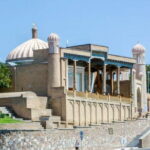
Hazrat Khizr Mosque is the quieter emotional reset on the route. The tour describes it as one of the city’s oldest and most revered spiritual sites, and the tone here shifts. Instead of the big public theater feeling of Registan, this stop leans more reflective.
You’ll also get the benefit of a change in scenery and pacing. When you move from grand plazas to a more peaceful setting, you naturally slow down, and that helps your brain absorb the history. Your guide’s talk here focuses on what makes this mosque spiritually important and how it fits into Samarkand’s broader religious landscape.
Practical tip: this is a good place to step back and just watch. If your group is small, you’ll likely have enough space to take photos respectfully and avoid feeling like you’re constantly squeezed between other people.
You can also read our reviews of more guided tours in Samarkand

Shah-i-Zinda Complex: The Street of the Dead and UNESCO Tile Magic
Then the tour ends at Shah-i-Zinda, described as a necropolis of royal tombs and religious figures, and known as the Street of the Dead. It is also a UNESCO World Heritage site, and it earns that status through repetition done right: step after step of mausoleums, framed by tilework that keeps pulling your attention deeper.
This is one of those places where a guided visit really matters. The architecture is visually stunning, but the meaning depends on knowing what you’re looking at—whose tombs are here, why the site has its reputation, and how devotion and artistry show up together.
Expect the experience to feel like a living museum of tile artistry and faith. The best way to enjoy it is to slow down. If you race through, you’ll miss the way patterns change from one section to the next and how the corridor of tombs creates a strong sense of movement.
Practical tip: photography is allowed, but religious-site customs still apply. Keep your pace steady, avoid blocking entrances, and treat it like a sacred place first, sightseeing stop second.
Price and What You Really Get for $18
At $18 per person for a roughly 4-hour guided walking tour, the price is about what you’d expect for a professional guide and a focused route through major landmarks. The tour includes the professional guide and taxes, but admission tickets are not included.
So the real value question is: do you save time and confusion compared to going DIY? In Samarkand, the answer is often yes. You’re hitting several top-tier sites in one go, and your guide connects architecture to people and power. That connection is what makes $18 feel like more than a sightseeing discount.
Also, the small-group or private option can be a hidden money-saver. If you end up with fewer people, the guide can answer questions faster and tailor pacing, which means you spend your time more efficiently at the monuments you care about.
Guide Style: Why People Keep Mentioning the Same Kind of Magic
The strongest theme in feedback is not just that guides know facts. It is how they deliver the day.
Guides like Abdulaziz and Sarvinoz get singled out for making the tour more meaningful, answering questions, and keeping the pace comfortable—even when weather is cold or people get distracted by shopping. Several groups mention that the guide gives extra time when needed, without losing control of the schedule.
You’ll also see praise for guides who explain details without turning it into a lecture. One recurring note is that the information stays clear and not boring, which is exactly what you want when you’re walking for hours in historical settings.
If you want a human touch, this tour has it. Some guides help with practical needs during the day, like assisting with phone calls or offering help finding what someone is looking for. That’s not guaranteed in the fine print, but it does reflect the general guide approach.
And if you care about language learning and regional connections, don’t skip this angle. A couple of comments mention ties to Central Asia, and even connections to Indian history came up in the explanations. That kind of context is what makes Samarkand feel part of a bigger map.
Practical Tips for a Smoother Day (And Better Photos)
A few basics can make a big difference on this route:
- Wear comfortable walking shoes. You’re moving between major sites with enough walking time that foot comfort becomes your real priority.
- Bring a hat and sunscreen. The day includes open outdoor time, and you’ll want protection.
- Carry some local currency. Personal expenses come up naturally when there are markets and small food stops.
- Photography is allowed, but behave respectfully at religious sites. Move with care, don’t block, and keep it dignified.
- Be ready for varying weather. Feedback includes cold conditions, and the tour still runs as a complete route.
One more helpful note: you may need to share your WhatsApp number when booking so the meeting point and day-of contact go smoothly. Since meeting point details can vary by option, this is a good way to avoid confusion.
Should You Book This Samarkand Walking Tour?
If your priorities are iconic sights, good pacing, and someone explaining what you’re looking at, I think this is a strong choice. The monuments are top-tier—Gur-e-Amir, Registan Square, Bibi Khanym Mosque, Hazrat Khizr Mosque, and Shah-i-Zinda—and the tour seems designed to keep you engaged instead of overwhelmed.
I’d book it if:
- You want a half-day plan that feels like a coherent story
- You prefer small-group or private interaction
- You care about understanding the symbolism behind the architecture
- You want time to ask questions and take photos without feeling rushed
I’d skip or rethink it if:
- You have very limited mobility or can’t handle a walking-focused day
- You only want fully restored buildings and dislike ruins
- You’re trying to minimize guided narration and prefer total independence
FAQ
FAQ
What is the duration of the Samarkand historical highlights walking tour?
The tour lasts 4 hours.
How much does the tour cost?
It costs $18 per person.
Which languages are the live tour guide services offered in?
The live guide is available in English and Chinese.
What sites are included in the tour?
You’ll visit Gur-e-Amir, Registan Square, Bibi Khanym Mosque, Hazrat Khizr Mosque, and Shah-i-Zinda.
Are admission tickets included in the price?
No. Admission tickets are not included.
Is the tour private or small group?
Private or small groups are available.
Where is the meeting point?
The meeting point may vary depending on the option booked. One listed option includes a Ziraat Bank ATM area, and another includes a plus code reference (MX6Q+H4).
Do I need to provide a WhatsApp number?
You are asked to add your WhatsApp number while booking. If you do not have one, you may need to download it.
Is free cancellation available?
Yes. You can cancel up to 24 hours in advance for a full refund.