REVIEW · SAMARKAND
Bukhara: Historical City Highlights Guided Walking Tour
Book on GetYourGuide →Operated by Tourmania Uz · Bookable on GetYourGuide
You can feel Bukhara’s history in every corner. This 4-hour walking tour strings together the city’s big-name Islamic sites with clear explanations and time to actually look. I especially love the Lyabi Khause pond ensemble for its calm, local-atmosphere start, and I love how the sunken Magoki Attori Mosque shows layers of belief stacked over centuries. One thing to keep in mind: entrance tickets are not included, so you may pay a little extra on the day.
What makes the tour work well is the pace and the people leading it. The price is low for a guided route that hits major landmarks, and the small-group options mean you’re less likely to get rushed from stop to stop. The main drawback is simple: it’s a lot of walking, so comfortable shoes matter.
In This Review
- Key highlights you’ll care about
- Getting Your Bearings at Khodja Nasreddin
- Lyabi Khause Pond: Where Bukhara Feels Like a Real Place
- Khanaka Nodir Devonbegi: Sufi Meaning in the Tilework
- Miri Arab Madrasah: When a Famous School Is Still a School
- Magoki Attori Mosque: The Sunken Place Where Time Stacks Up
- Kalyan Minaret and Mosque: The Tower of Death Story and the Main Ensemble
- Ark of Bukhara: Fortress Power Inside Thick Walls
- Price and Value: What $19 Really Buys for 4 Hours
- Who This Tour Fits Best (and Who Should Skip It)
- Tips to Get the Most Out of Your 4-Hour Walk
- Should You Book This Bukhara Walking Tour?
- FAQ
- Where does the tour start?
- How long is the Bukhara walking tour?
- Is the tour guided, or self-guided?
- Which languages are available?
- Are entrance tickets included?
- Do I need WhatsApp for the tour?
- What should I wear?
- How early should I arrive at the meeting point?
- Is this tour private or small group?
- Can I cancel and get a refund?
Key highlights you’ll care about
- Lyabi Khause Ensemble: a 17th-century pond surrounded by historic madrasahs, great for photos and people-watching
- Khanaka Nodir Devonbegi: a Sufi lodge known for intricate tilework and an impressive façade
- Miri Arab Madrasah: one of the most iconic schools in the Islamic world, still functioning
- Magoki Attori Mosque: partially sunken structure that preserves older layers beneath the Islamic level
- Kalyan Complex: Kalyan Minaret (often called the Tower of Death) plus the Kalyan Mosque and surrounding religious buildings
- Ark of Bukhara: the massive fortress of the emirs, now with courts and museums inside its thick walls
Getting Your Bearings at Khodja Nasreddin
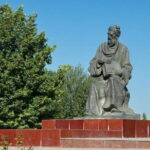
Your walk starts near the Khodja Nasreddin statue, which is a smart move. Instead of meeting somewhere abstract, you’re placed right in the heart of old Bukhara, so the first ten minutes already feel like you’re inside the city—not on the edge of it.
Expect an easy start: your guide meets you near the statue and then you follow on foot. The tour runs about 4 hours, and the route is structured to keep you seeing key monuments without sprinting between far-apart districts. If you’re the type who likes to understand what you’re looking at (not just take photos and guess), this part matters a lot.
The guides here get praised for strong communication and for making the walk feel smooth even when the city is complex. You’ll see names like Ruby, Dildora, Dildora Safarova, Makhbuba, Hulkar, Aziza, Shahnoza, and others mentioned with consistent themes: English ability, confident explanations, and a friendly attitude. I’d treat that as a good sign that you won’t be staring at tiles wondering what you’re seeing.
You can also read our reviews of more walking tours in Samarkand
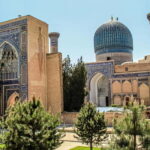
Lyabi Khause Pond: Where Bukhara Feels Like a Real Place
Lyabi Khause is one of those stops that does more than look pretty. It’s a living gathering area built around a pond, and that changes the mood of the whole tour. You start with something serene, not something intimidating.
Here’s what you’re doing at this first big photo-and-walk segment:
- You’ll pause for photos
- You’ll get a guided introduction to the ensemble
- You’ll take in the surrounding madrasahs around the pond
This ensemble is associated with the 17th century, and that time marker helps you frame what comes next. Bukhara isn’t only “old buildings.” It’s a city where religious learning, civic life, and daily routines grew up side by side.
One small practical consideration: pond-area spots can be busy with locals, especially in nicer weather. If you want clean photos, go slow with your timing and let the guide show you the best angles first.
I also like this stop because it gives you an easy landing before the architecture turns more dramatic. By the time you reach the more famous complexes, you’ll already understand the city’s layout and visual language.
Khanaka Nodir Devonbegi: Sufi Meaning in the Tilework
Next you head to Khanaka Nodir Devonbegi, a Sufi lodge. The key detail for me is that it wasn’t just an ornamented building—it was meant for spiritual retreat life. Even if you don’t go in expecting deep mysticism, you can still appreciate why the design is the way it is.
This stop is described as admired for:
- intricate tilework
- a majestic façade
And the tour gives you both a photo stop and a guided visit. That combination is ideal here. Up close, tile patterns can look like decoration unless someone explains what you’re seeing. A good guide turns those surfaces into something you can read.
Tip: if you’re a photographer, bring your patience for close detail shots. You’ll get a chance to focus, but the best results come when you let your eyes slow down.
One more reason this stop feels valuable: it balances the route. After Lyabi Khause’s open pond setting, Khanaka Nodir Devonbegi brings you into the more formal, spiritually centered architectural side of Bukhara.
Miri Arab Madrasah: When a Famous School Is Still a School
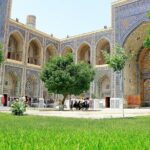
Miri Arab Madrasah is one of the most iconic religious schools in the Islamic world, and the tour’s framing makes that feel real. This is not presented as a dead monument; it’s a functioning madrasah with a living identity.
Expect:
- a guided visit and sightseeing time
- time to take photos
- explanations tied to its long legacy
You’ll hear about its major architectural elements, including:
- the blue domes
- finely carved mosaics
- the madrasah’s historical role
This is a high-value stop for two reasons. First, madrasahs explain how Islamic education shaped cities like Bukhara—not just how rulers decorated them. Second, the blue-domed look becomes a reference point. After you see Miri Arab, other structures start to make more sense stylistically.
Potential drawback to plan for: this area can feel visually intense. Don’t worry if you can’t absorb every detail at once. Let the guide do the heavy lifting, then circle back mentally as you move toward the Kalyan Complex.
Magoki Attori Mosque: The Sunken Place Where Time Stacks Up
If you want one stop that feels genuinely unusual, make it Magoki Attori Mosque. It’s described as one of the oldest surviving mosques in Central Asia, and the most fascinating part is that it’s partially sunken below ground level.
That design creates an architectural history lesson in the open:
- you see layers of earlier religious space beneath the Islamic structure
- the site is described as revealing earlier pre-Islamic Zoroastrian temples before later Islamic construction
The tour includes a photo stop, a guided visit, and time for sightseeing. You’ll have the chance to look at how space feels when the structure sits lower than street level. It’s a reminder that cities aren’t erased and rebuilt cleanly. They accumulate.
What to watch for: partially sunken areas can mean uneven surfaces and steps. Wear shoes that can handle that without stressing your feet.
This stop also helps you understand Bukhara’s cultural continuity. It’s not only a story of one era winning and replacing another. It’s more like a layered conversation across time.
You can also read our reviews of more guided tours in Samarkand
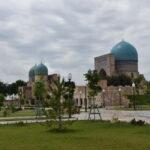
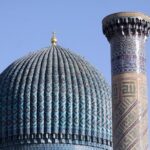
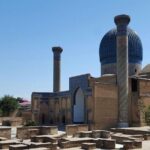
Kalyan Minaret and Mosque: The Tower of Death Story and the Main Ensemble
Next comes the Kalyan Complex, the spiritual centerpiece of the city. The focal point is the Kalyan Minaret, often called the Tower of Death. Even if you’re not familiar with the name, the guide will give you the context so it doesn’t feel like a random scary label.
At this stage, you’ll see:
- the towering Kalyan Minaret
- the vast Kalyan Mosque
- the broader ensemble that includes Miri Arab Madrasah connections in the same complex area
This is where the tour becomes cinematic. The scale of the buildings changes your sense of distance, and the guided pacing helps you take it in without losing track of what belongs together.
I like how the tour treats this as an ensemble rather than individual monuments. In Bukhara, buildings form visual arguments with each other—domes, minarets, courtyards, and mosque spaces all connected by design logic.
Practical note: this section is famous for a reason, which means it can be a photo stop magnet. If you’re trying to avoid crowds in your shots, trust your guide’s timing and be flexible with angles.
Ark of Bukhara: Fortress Power Inside Thick Walls
The finale is the Ark of Bukhara, a royal fortress that served as the residence of Bukhara’s emirs. This isn’t just a defensive structure in name. It’s described as a massive fortress with thick walls, and once you’re inside, it’s easy to understand why rulers wanted space they could control.
The tour includes:
- a guided visit
- time to explore key areas
- a longer walking segment compared with earlier stops
Inside, you’ll find areas such as:
- the royal court
- the throne room
- historic museums that tell the story of the fabled city
This stop is valuable because it connects the religious architecture you’ve just seen with political power. Madrasahs and mosques show education and faith. The Ark shows governance, authority, and how a city managed itself.
One consideration for your timing: because it’s the last stop, make sure you’re mentally ready for it. If your feet are tired, slow down and let the guide direct your attention so you still get the meaning, not only the shapes.
Price and Value: What $19 Really Buys for 4 Hours
At $19 per person for a 4-hour guided walking tour, you’re paying for time with a professional guide and a structured route through major monuments. Entrance tickets are not included, so think of the $19 as the guided component—your explanations, route planning, and the ability to move through the sites efficiently.
This matters because in Bukhara, the difference between seeing something and understanding it can be huge. A guide helps you connect:
- what you’re looking at (tiles, domes, courtyards)
- why it was built (education, spiritual life, political authority)
- how it fits together as a city
Some people also end up paying for entrance tickets during the tour. One example from the guide experience is a comment about paying for two entrances while the rest of the stops were free. Your exact costs can vary depending on what’s ticketed that day.
Is it a deal? Usually, yes—especially if you enjoy architecture and want a first organized pass through the old city. If you only want casual photos and don’t care about explanations, you might spend less by self-guiding. But if you want clarity fast, $19 is hard to beat for 4 hours.
Who This Tour Fits Best (and Who Should Skip It)
This tour is best for you if:
- you’re in Bukhara for a short time and want the big Islamic landmarks in one walk
- you like architecture with context, not just surface-level pictures
- you enjoy learning from guides who answer questions and keep a good pace
It’s also a strong choice for people booking morning or afternoon, since guides can adjust timing in small groups. Reviews often mention flexible pacing, and one guide was praised for not rushing even with a class to attend later.
You might want to reconsider if:
- you hate walking (this is a comfortable-shoes situation)
- you’re sensitive to uneven or sunken areas (Magoki Attori is partially sunken)
- you’re going at times when some places may have different hours; it can affect how long you spend at each stop
Tips to Get the Most Out of Your 4-Hour Walk
A good tour still needs good basics. Here’s how to set yourself up:
- Wear comfortable shoes. You’ll walk between multiple historic sites, and some areas can have uneven ground.
- Bring a camera. You’ll want to photograph domes, tiles, minaret views, and fortress interiors.
- Check the weather forecast. Weather matters more than you’d think when your “transport” is your feet.
- Be respectful of local customs and traditions, especially around active religious spaces.
- Keep some local currency for personal expenses and tips.
- Arrive about 5 minutes early at the Khodja Nasreddin statue so your start stays smooth.
One more practical thing: the tour company contacts you the day before. Add your WhatsApp number while booking so communication is easy, and you can ask questions directly if you’re unsure about timing.
Should You Book This Bukhara Walking Tour?
Yes, I’d book it if you want an efficient, high-impact introduction to Bukhara’s Islamic landmarks with guided context. The route covers the core sights that shape how the city looks and thinks: Lyabi Khause, Khanaka Nodir Devonbegi, Miri Arab Madrasah, Magoki Attori Mosque, the Kalyan Complex, and the Ark of Bukhara.
You should only skip it if you strongly prefer independent sightseeing, or if you don’t want to pay any additional entrance fees. Since tickets are not included, budget a bit for possible entries.
If you do book, choose comfortable shoes, plan to move at a calm pace, and be ready to ask questions. This is the type of tour where the guide can turn Bukhara from impressive photos into a place you actually understand.
FAQ
Where does the tour start?
You meet near the Khodja Nasiriddin (Khodja Nasreddin) statue.
How long is the Bukhara walking tour?
The tour lasts about 4 hours.
Is the tour guided, or self-guided?
It’s a live tour with a professional guide.
Which languages are available?
The guide is available in English, Uzbek, and Russian.
Are entrance tickets included?
No. Entrance tickets are not included.
Do I need WhatsApp for the tour?
You should add your WhatsApp number while booking, since the company contacts you the day before.
What should I wear?
Wear comfortable shoes, because there will be a lot of walking.
How early should I arrive at the meeting point?
Arrive about 5 minutes before the tour begins.
Is this tour private or small group?
Private or small groups are available.
Can I cancel and get a refund?
Yes. Free cancellation is available up to 24 hours in advance for a full refund.