REVIEW · TASHKENT
Uzbekistan 3 Day Private Tour Tashkent-Bukhara-Samarkand Bullet Train
Book on Viator →Operated by Silk Tour Ltd · Bookable on Viator
Tashkent, Bukhara, Samarkand in just three days? Yes, and it works. This private itinerary stitches the big Silk Road names together fast, with bullet train tickets included and a licensed guide in each city so you’re not just looking at pretty tiles. It’s a good fit if you want maximum sights with fewer logistics headaches.
What I like most is how you get guided visits to the core monuments in Bukhara and then the standouts in Samarkand, without having to plan transfers or hunt down entry points. I also like the practical structure: air-conditioned vehicle in-country, central 3–4 star or boutique hotels for two nights, and breakfast included twice.
One thing to weigh: the schedule is tight and involves early starts, plus strong Central Asian sun in warmer months. If you’re sensitive to heat or you want extra, slow time in bazaars and courtyards, you might wish you had more than three days.
In This Review
- Key points worth knowing before you go
- Why this 3-day route feels efficient (and still meaningful)
- Tashkent morning start: Shimoliy station and the early-day rhythm
- Bullet train legs: faster transfers, less wasted time
- Bukhara day: the Ark, the mosques, and bazaar color in one sweep
- Day 2 in Bukhara: free morning or optional countryside add-ons
- Samarkand afternoon and evening flow: Registan to Gur Emir
- Ulugbek Observatory and Siab Bazaar: science and everyday life in one day
- Hotels, breakfasts, and the guide team that keeps the pace sane
- Price and value: where the $500 goes, and what you still must budget
- Who this tour fits best (and who may want a slower plan)
- Should you book this Uzbekistan 3-day private bullet train tour?
- FAQ
- Where does the tour start and end?
- Is pickup available in Tashkent?
- Are bullet train tickets included?
- What’s included in the price?
- What’s not included?
- Do I need separate entry tickets for monuments?
- Is this a private tour?
- What is the cancellation window for a full refund?
- Booking decision in one sentence
Key points worth knowing before you go
- Bullet train tickets are included on both long legs, so you won’t waste time buying transport separately.
- Private party format means you’re not stuck matching pace with a large group.
- Two-night hotel stay in central 3–4 star or boutique properties keeps evenings easy after big walking days.
- Entrance tickets to monuments are included, with only small add-ons possible for photo/video at some sites.
- English-speaking guides you may meet include names like Muhlio and Malika in Bukhara, and Max in Samarkand (based on assignments reported).
- Seasonal heat is real, and the operator has acknowledged the need to start earlier in summer.
Why this 3-day route feels efficient (and still meaningful)
Uzbekistan’s star cities are close on a map, but the experience is not close in time. In three days, you need transport that’s fast and predictable, and you need someone to explain what you’re seeing. That’s where this tour lands: it uses the high-speed train to cover the distance cleanly, then spends your daylight on the architecture and city squares that people come for in the first place.
You get a concentrated sweep of two of the most iconic historic centers—Bukhara and Samarkand—plus a Tashkent departure that avoids wasting your trip on slow intercity travel. If you care about how Islamic architecture evolved over centuries (minarets, domes, mausoleums, madrassas), the itinerary gives you a clear storyline without requiring you to do homework beforehand.
The “private” part matters too. With a smaller party, you tend to move more naturally between stops, and it’s easier to ask questions about the details you’ll notice—like why certain buildings are paired, why courtyards matter, or what symbolism is tied to rulers and saints.
You can also read our reviews of more private tours in Tashkent

Tashkent morning start: Shimoliy station and the early-day rhythm
The tour begins at Toshkent Railway Station (Shimoliy), with a start time of 7:30 am. That early start is what makes the train day feasible, and it’s also why this plan is best for people who don’t mind mornings.
Pickup is offered if it helps, but transfers aren’t always guaranteed as part of the base offer for the first-day morning. The meeting point is still the railway station, so your best move is to confirm pickup details after booking. In practice, many people report that drivers arrive on time and make the handoff smooth, which is exactly what you want when you’re dealing with a new station and a new country.
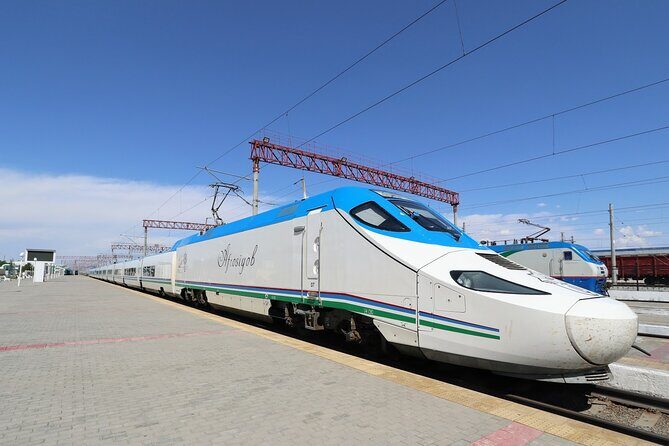
After the morning launch, you’ll jump right onto the long leg of the trip by high-speed train to Bukhara (about four hours, subject to availability). This is one of the tour’s biggest wins: you start sightseeing in historic surroundings instead of spending your first afternoon stuck in traffic.
Practical tip: carry water and something light to eat. Your first day includes a full run of Bukhara sights after you check in, and the pace can feel brisk before you’ve fully adjusted to the schedule.
Bullet train legs: faster transfers, less wasted time
The bullet train isn’t just a transportation choice here—it’s the backbone of the trip. By including Tashkent–Bukhara and Samarkand–Tashkent (plus the Bukhara–Samarkand connection), the tour reduces decision fatigue. You don’t need to hunt for schedules last-minute or worry about whether you’ll arrive in time for a timed entry.
It’s also more comfortable than the alternative. Rail travel gives you a stable travel block so the day doesn’t fall apart if road traffic runs late. And because these are set routes, you get more consistent timing across the itinerary.
One logistical note: the tour specifies that the Bukhara-to-Samarkand train involves a transfer to Kagan station (about 10 km). That’s normal for rail setups in the region, but it does mean you should expect a short drive before boarding.
If you’re trying to see Uzbekistan for the first time and you only have a few days, this is the smart compromise between “fast” and “still worth it.”
Bukhara day: the Ark, the mosques, and bazaar color in one sweep
Bukhara is the kind of city where you feel history just by walking. This tour keeps you in the center area and hits the major monuments in a sensible loop.
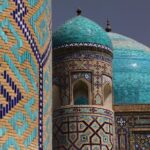
After arriving and checking in, your guide leads you through a sequence of architectural highlights, starting with the great mosque complex around the Poi Kalyan area. The star here is the Kalyan Minaret, which is a surviving fragment from the Kara-khanid era mosque built in 1127, long before the Mongol conquests. It rises to 45.6 meters, and standing near it helps you understand Bukhara’s skill with brick and vertical scale—how something tall becomes a landmark for everyone who passes through.
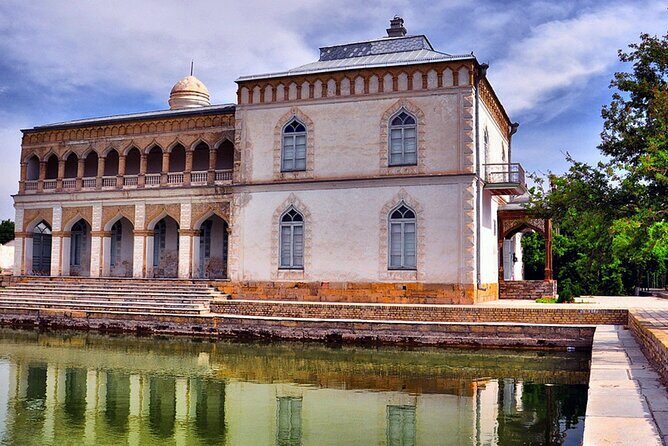
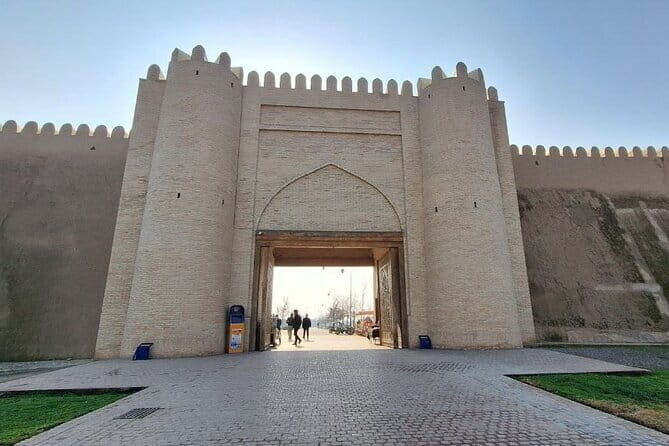
Next comes the Ark of Bukhara, Bukhara’s oldest structure—a “town within a town” that served rulers for over a millennium. The Ark’s value on a guided tour is context. Without explanations, it can look like another fortress ruin. With a good guide, you start seeing it as the civic and political center that shaped the city’s layout.
Then you shift to the pairs and spaces that make Bukhara feel intentional. The Bolo Hauz Mosque sits opposite the Ark in a planned arrangement, and its name points to an octagonal pond (“hauz”) once part of the setting. Nearby, the Maghak-i ‘Attari Mosque is included as a standout for unusual layers of use: it’s described as having served as a Buddas and Zoroastrian temple before later Islamic use. Whether you focus on the architectural details or the historical crossings, it gives you a bigger-than-one-religion perspective on the region’s past.
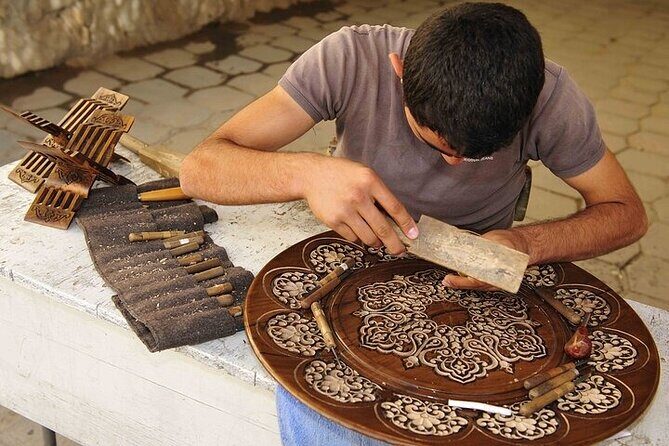
Midday you move into the commercial feel of the city with stops like the Trading Domes, colorful old bazaars where artisans’ workshops line up under domed roofs. This is where the Silk Road idea stops being a slogan and starts being a lived economy: trade routes brought goods, but they also brought crafts, styles, and techniques.
You end the day around the Lyab-i Hauz Ensemble, a major square dating to the 16th–17th centuries. It’s one of the easiest places to slow down for a moment. The square works as a decompression zone after temple and fortress visuals—plus it’s a nice spot to watch daily life without feeling rushed.
A small pacing warning: many Bukhara stops are fairly walkable, but you’ll still rack up steps. If your knees complain early, ask your guide about quick breaks between stops.
Day 2 in Bukhara: free morning or optional countryside add-ons
Day two is built around flexibility. You get a morning free block for leisure, or you can take an optional add-on to Bukhara countryside—including places like the Emir Summer Palace, the Naqshbandi Mausoleum, and the Samani Mausoleum.
This matters because it lets you choose your style. If you like wandering at your own pace, the free morning gives you time to revisit favorites from day one or shop calmly at your own speed. If you want the “more structure, more sights” approach, the optional countryside trip adds another layer of monuments tied to rulers and religious scholarship.
A practical note: weather can affect how enjoyable this day feels. One key lesson from the program’s feedback is that summer heat can make midday walking miserable. The operator has acknowledged the need to adjust by starting tours earlier in warmer seasons. When it’s hot, that timing shift turns a painful afternoon into something you can actually enjoy.
A few more Tashkent tours and experiences worth a look
Samarkand afternoon and evening flow: Registan to Gur Emir
Samarkand is where the architecture looks like it was designed for photos—and then rewards you even more when someone explains what you’re seeing.
After a transfer to the train station area, you take the bullet train from Bukhara to Samarkand (subject to availability). Once you arrive, you transfer to the hotel and then move into the heart of the city’s historic core.
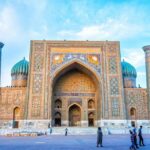
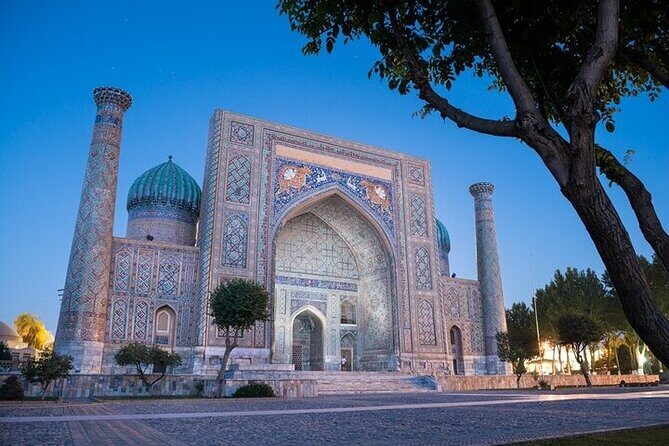
The anchor stop is Registan, the great central square surrounded by three medreses: Ulugbek, Sherdor, and Tilla-kori (also shown in the itinerary as Tillokori). Even if you don’t memorize names, the guided visit helps you read the space: you learn how it became the city square when life shifted away from Afrosiab, and you see why the reconstruction history matters.
Next is Gur Emir Mausoleum, Tamerlane’s tomb complex. This is the kind of site that can feel overwhelming if you treat it like a checklist. With a guide, it becomes a story about power and legacy—how a conqueror’s memory is maintained through architecture and careful design.
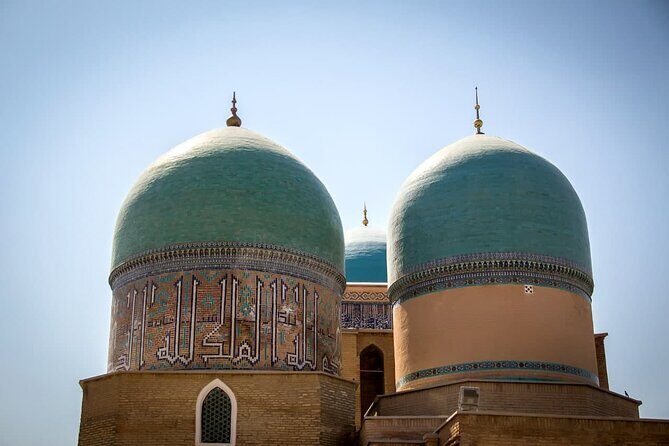
Then you head to Shah-i Zinda, described as an ensemble of tombs and mausoleums tied to Afrosiab’s southeastern mound. The itinerary notes it includes 44 tombs in more than 20 mausoleums, which is a clue to the stop’s biggest strength: scale and variety. You get a long visual walk through different spaces, not just one building.
After that, you visit Bibi Khanym Mosque, named after the wife of Temur and built between 1399 and 1404. It’s one of the best-known architectural attractions of Central Asia, and the guided context helps explain why Timur’s building efforts mattered beyond aesthetics—because they reinforced authority and cultural identity.
Ulugbek Observatory and Siab Bazaar: science and everyday life in one day
The itinerary doesn’t stop at monuments alone. After the big historic complex stops, it includes time for a more everyday feel and a science connection.
Siab Bazaar is a quick but useful contrast: it’s still active, with produce and handicrafts that point to Uzbekistan’s natural wealth and the work ethic of local artisans. Even a short visit here helps you remember that these cities were never only museums.
Then comes Ulugbek’s Observatory, included as an “astronomer’s legacy” site. You’ll see that only the foundations remain, but it’s still extraordinary because Ulugbek—Timur’s grandson—was described as an astronomer, scientist, and architect. For me, this stop is a reminder that the Silk Road wasn’t only about trade in goods; it was also about movement of ideas and scientific curiosity.
Finally, at the end of the tour you return to Tashkent by bullet train from Samarkand (subject to availability). The day includes a transfer back toward Toshkent Railway Station (Shimoliy), with final “from the RS to hotel or airport” transfers not listed as included. So plan your own next steps for the evening.
Hotels, breakfasts, and the guide team that keeps the pace sane
This tour includes two nights in twin/double rooms in a central 3–4 star or boutique hotel. That’s a solid level of comfort for a fast-moving itinerary like this, especially because the days are built around multiple stops. Breakfast is included twice, which matters more than it sounds: it gives you a predictable start before museum doors open and walking begins.
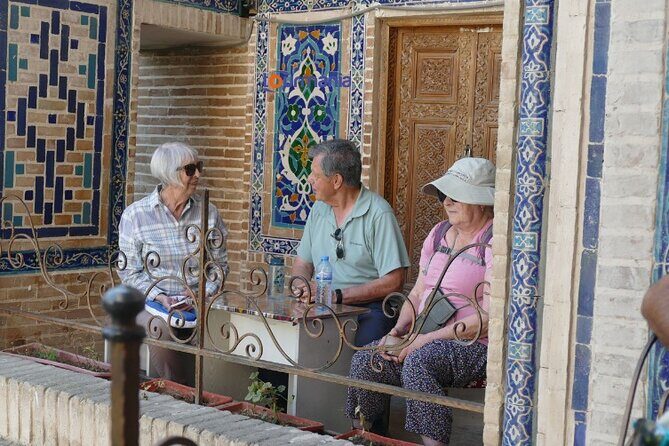
The guide support is a big reason the tour scores well. Names that show up in the tour feedback include Muhlio and Malika in Bukhara, and Max in Samarkand. People also mention guides like Amir, and additional operators like Umid and coordinators like Hussaine helping with smooth problem-solving.
That “coordination” is more than friendliness. When your schedule depends on trains, rail timing and station navigation can make or break the day. Good guidance turns stress into straightforward movement.
One caution: the hotel is described as decent rather than luxurious. If you’re expecting a resort vibe, you’ll be happier thinking of the hotel as a clean base to sleep and reset.
Price and value: where the $500 goes, and what you still must budget
At $500 per person for about three days, this is best viewed as a package value check: transport plus guides plus hotels plus major entrance tickets.
Here’s what’s included:
- Entrance tickets to monuments (key sites throughout Bukhara and Samarkand)
- Bullet train tickets for Tashkent–Bukhara and Bukhara–Samarkand–Tashkent connections listed in the plan
- Licensed guides in each city
- Air-conditioned vehicle
- Central hotel for two nights
- Breakfast (2) and 24-hour customer service
What’s not included:
- Photo/video charges at museums paid cash at entrance (noted as typically $1–2 per site)
- Tips for guides and drivers
- Single room supplement of $40
- Some transfers on the first morning and last evening are not included in the base offer
For your budgeting, the hidden variable is usually tips and small cash museum charges for photos. The big costs—train tickets and monument entry—are handled, which is why the price feels more reasonable than it first appears. If you tried to DIY this circuit, you’d quickly spend time and money on matching transport, booking entrance tickets, and coordinating guides across three cities.
Who this tour fits best (and who may want a slower plan)
This is a great match if you:
- Want a first-timer’s route that hits Bukhara and Samarkand’s signature sites
- Prefer rail travel for the long-distance segments
- Like having a guide explain what you’re seeing, especially around monuments and city squares
- Want private pacing for your group, rather than joining a huge tour bus crowd
You might think twice if you:
- Want lots of free time for shopping, long cafe breaks, or unstructured wandering
- Are extremely heat-sensitive in summer and don’t want a schedule that may start early
- Expect guaranteed pickup for every transfer moment without needing to confirm details
The itinerary packs in a lot of walking and visual intensity. The upside is that you’ll see the core highlights without spending weeks planning. The tradeoff is that the days don’t stretch.
Should you book this Uzbekistan 3-day private bullet train tour?
I’d book it if you want a smart, time-efficient Silk Road sampler with major monuments handled, including the bullet train that keeps the trip from turning into a transportation puzzle. The biggest payoff is the combination of private guiding and included entry tickets, which makes the three days feel organized rather than rushed.
Skip it only if your top priority is downtime or if you plan to travel with specific mobility limits, since the schedule is stop-heavy and depends on early starts. If you do book, plan to bring water, be ready for short museum cash photo/video fees, and confirm your first-day pickup/transfer expectations so your morning runs as smoothly as the train ride itself.
FAQ
Where does the tour start and end?
The tour starts at Toshkent Railway Station (Shimoliy) in Tashkent, Uzbekistan at 7:30 am, and it ends back at the same meeting point.
Is pickup available in Tashkent?
Pickup is offered and you can request it if it is easier than finding the departure point yourself, but transfers on the first day morning to the railway station are listed as not included in the offer, so you should confirm what’s arranged for your booking.
Are bullet train tickets included?
Yes. Bullet train tickets are included for the Tashkent–Bukhara–Samarkand–Tashkent route (subject to availability).
What’s included in the price?
Included features are entrance tickets to monuments, air-conditioned vehicle, licensed guides in each city, bullet train tickets, two nights in a central 3–4 star or boutique hotel, breakfast for two mornings, and 24-hour customer service.
What’s not included?
Not included are photo and video charges paid in cash at museum entrances (noted as $1–2/site), tips for guides and drivers, a single room supplement of $40, and some transfers on the first day morning and last day evening.
Do I need separate entry tickets for monuments?
Monument entrance tickets are included. The only extra charges noted are cash photo/video fees at some museums.
Is this a private tour?
Yes. It is private, meaning only your group participates.
What is the cancellation window for a full refund?
You can cancel up to 3 days in advance for a full refund, as long as you cancel at least 3 full days before the experience start time.
Booking decision in one sentence
If you want Bukhara and Samarkand highlights with trains and entry tickets handled, this is a strong way to do it in three days.