REVIEW · TASHKENT
Uzbekistan 6 days private tour Tas-Khiva-Buk-Sam-Tas
Book on Viator →Operated by Silk Tour Ltd · Bookable on Viator
Six days can feel like a speed run, yet this one works. You get a private Silk Road route connecting Tashkent, Khiva, Bukhara, and Samarkand, with guides in each city and most key tickets handled for you. It’s a clean way to see Uzbekistan’s big-name sites without juggling timing.
I especially like the built-in comfort: accommodation + breakfast are included, plus local internet access so you can actually use maps and message home. You also have a city guide to help you move around quickly in the larger city areas, which matters once you’re doing back-to-back sights.
One consideration: the pace is active. It’s also smart to be flexible about individual site closures—one past traveler noted last-day closures affecting scheduled stops—so go in expecting some adjustments.
In This Review
- Key things that make this tour worth your attention
- A Private Silk Road Sprint: What You Really Experience in Six Days
- Price and Logistics: Where the Value Comes From (and One Missing Piece)
- Day 1 Tashkent Arrival: Using the First Half-Day Wisely
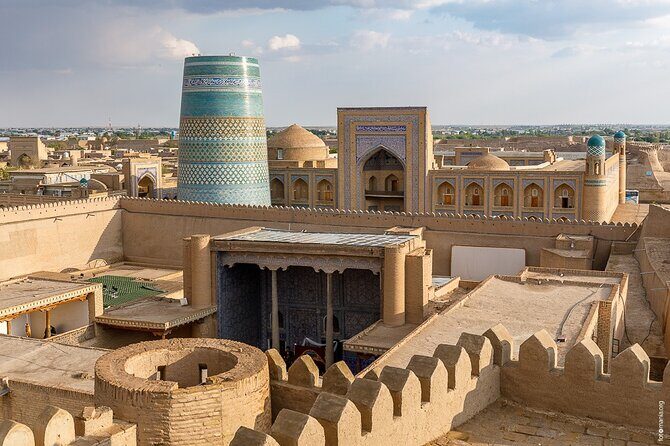
- Day 2 Khiva: Itchan Kala and the Fortified Heart of the Old City
- Kunya-ark Citadel: Power at the center
- Pakhlavan Makhmud Mausoleum: Local legend, human scale
- Juma Mosque: A Friday-prayer landmark
- Islam Khoja Minaret and complex: Ceremonial architecture
- Stone Palace (Tash Khauli) and Kalta Minor: Visual storytelling in tilework
- Day 3 Khiva to Bukhara: The Train Ride as a Breather
- Day 4 Bukhara: Lyab-i Hauz Square to the Ark Fortress
- Lyab-i Hauz Ensemble: A square that still works
- Great Minaret of the Kalon: A surviving giant
- Bolo Hauz Mosque and the Ark of Bukhara: Between pool and palace
- Day 5 Samarkand: Timurid Grandeur and the Best Architecture Walking Route
- Gur Emir Mausoleum: Tamerlane’s legacy in blue and stone
- Registan: The square that defines Samarkand
- Bibi Khanym Mosque: Scale and symbolism
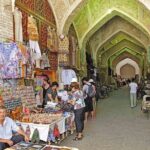
- Siab Bazaar: Real life in the middle of monuments
- Shah-i Zinda: A long staircase of tombs
- Ulugbek Observatory: Science, not only monuments
- Day 6 Tashkent: Metro Architecture, Historic Squares, and a Final Museum Sweep
- Alisher Navoiy Theater: A 20th-century landmark
- Hazrati Imam complex: A spiritual center in the old city
- Tashkent Metro: Built like an art gallery
- Amir Temur Square and the State Museum of History of Uzbekistan
- Logistics That Matter: How Guides, Drivers, and Transfers Keep the Trip Calm
- Who Should Book This Tour (and Who Should Consider Alternatives)
- Should You Book This 6-Day Private Uzbekistan Tour?
- FAQ
- What is included in the tour price?
- Is the flight from Tashkent to Urgench included?
- Which cities does this 6-day tour cover?
- Are entrance tickets for attractions included?
- Can the itinerary be customized?
- Do I need cash for museum photo or video charges?
Key things that make this tour worth your attention
- Private guides in each city so you get context, not just photos
- Hotels and breakfast included, which keeps the budget predictable
- Entrance tickets included for the main museums and sites
- Included trains between cities (plus planned local transfers)
- Local internet access and mobile tickets to keep logistics simple
- Customizable itinerary with small/no changes offered
A Private Silk Road Sprint: What You Really Experience in Six Days
This tour is built for people who want the highlights—fast—without feeling rushed in the planning. Your day-to-day gets structured around Uzbekistan’s most famous ensembles: Khiva’s walled old town, Bukhara’s minarets and courtyards, Samarkand’s monumental squares and tombs, then a final sweep through Tashkent’s key history and modern landmarks.
The biggest value is how much you avoid. You don’t have to research what’s open, buy every ticket, coordinate meeting points, or worry about getting from one city’s center to another’s station area. You still get to see the real places in real light, and your guides help you understand what you’re looking at.
You can also read our reviews of more private tours in Tashkent
Price and Logistics: Where the Value Comes From (and One Missing Piece)
The price is $850 per person for a 6-day private tour. On paper, that can look steep for Uzbekistan. In practice, it covers a lot that usually adds up quickly when you travel independently: guides, centrally located 3-star or boutique hotels, breakfast for five mornings, and entrance tickets for the major sites.
Transport is also a big chunk of what you’re paying for. You get air-conditioned vehicle support and train tickets for the longer legs: Khiva to Bukhara to Samarkand to Tashkent. That’s not just convenience; trains are often the easiest way to cover distance without losing half a day to routing decisions.
One thing not included: the Tashkent to Urgench flight (needed for the Khiva day). You should budget extra for it. Also check the small print around museum photo/video charges—those can be paid cash at entrance, listed at about $1–2 per museum.
Finally, there’s a single-room supplement of $20 per single room/night if you’re traveling solo or want your own room.
Day 1 Tashkent Arrival: Using the First Half-Day Wisely
Day 1 is light on sightseeing and heavy on setting you up. You arrive in Tashkent, enjoy the view, and then you’re transferred to your hotel. It’s only about 30 minutes, and that’s actually a smart design choice if you want to hit the ground running without burning energy immediately.
Why I like this approach: you’re not dragged into a long list of stops before you’ve had a meal, shower, and a chance to orient yourself. Tashkent can be broad and spread out, so a calm start helps.
Day 2 Khiva: Itchan Kala and the Fortified Heart of the Old City
This is the day that really turns the volume up. You travel from Tashkent to Urgench by domestic flight and then move into Khiva’s old city, Itchan Kala—the walled area that covers about 26 hectares and draws on traditions stretching back centuries.
Once you’re inside, the sites work like a guided loop. You start at the big power structures and ceremonial spaces, then move toward religious monuments and the architectural flair Khiva is famous for.
Kunya-ark Citadel: Power at the center
You visit Citadel Kunya-ark, described as a fortified citadel at the heart of Khiva, with origins reaching back to at least the 12th century. Standing there, you get a sense of how the city organized authority—this wasn’t a loose collection of buildings. It was a system.
A few more Tashkent tours and experiences worth a look
Pakhlavan Makhmud Mausoleum: Local legend, human scale
The Pakhlavan Makhmud Mausoleum is a great reminder that Central Asian history isn’t only rulers and wars. It’s tied to a local poet and philosopher, known for strength and for healing. The tone shifts from political power to cultural memory.
Juma Mosque: A Friday-prayer landmark
The Juma Mosque is positioned near the center of Itchan Kala, tied to how the ruling Khan’s name would be read during Friday prayers. It’s a small but telling detail that helps you see religion as part of daily governance, not separate from civic life.
Islam Khoja Minaret and complex: Ceremonial architecture
The Islam Khoja complex includes a madrasa and minaret. You’re walking a route that highlights how learning, status, and skyline-making all came together in one place.
Stone Palace (Tash Khauli) and Kalta Minor: Visual storytelling in tilework
Two stops show Khiva at its most theatrical. Tash Khauli Palace is tied to Khorezm architectural grandeur from the 1830s, while Kalta Minor Minaret is famous for its decorated surface and the fact that it’s unfinished. The incomplete part matters—it’s a physical clue that history doesn’t always follow the plan.
One practical note: Itchan Kala is dense. Comfortable shoes matter. You’ll likely move more than you think, even though the schedule shows individual visit times that look short.
Day 3 Khiva to Bukhara: The Train Ride as a Breather
Day 3 is half travel, half choice. You get free time in Khiva, then you head to Bukhara by afternoon train (about 6 hours) or by car transfer for the same general duration.
I like this structure because it gives you flexibility. If you want a second pass at a view spot in Khiva, you can. If you’d rather conserve energy, you can use the morning to rest and save your legs for Bukhara’s walking days.
Also, the included train ticket matters. When the transport is handled, you can focus on enjoying the ride instead of decoding station logistics.
Day 4 Bukhara: Lyab-i Hauz Square to the Ark Fortress
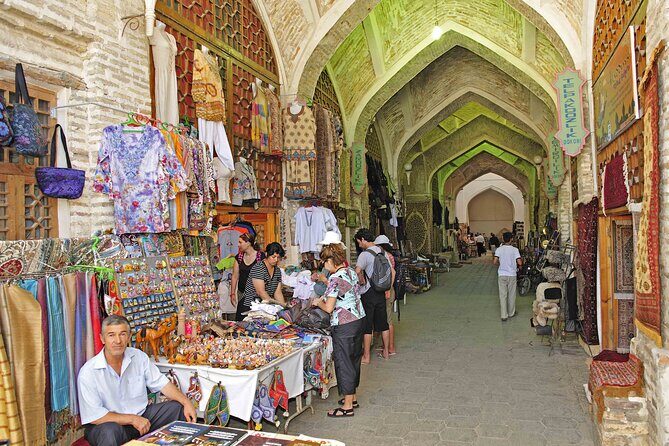
Bukhara has a different rhythm than Khiva. You still get monumental architecture, but it feels more like daily life around courtyards, pools, and long-used squares.
Lyab-i Hauz Ensemble: A square that still works
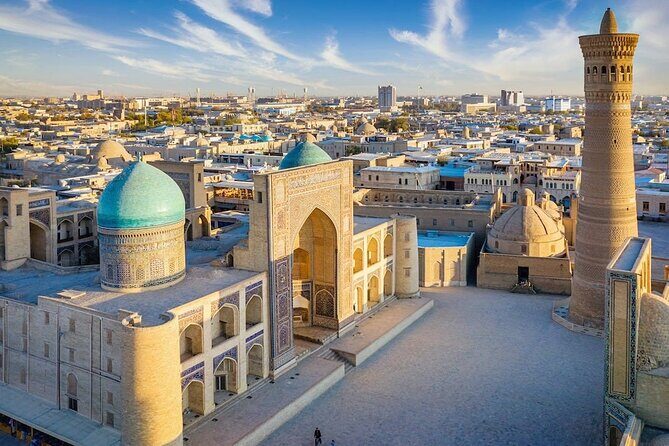
You visit Lyab-i Hauz Ensemble, a major Bukhara square from the 16th–17th centuries. It’s still a gathering point, and that’s what makes it more than a pretty stop. You get to see how historic urban planning keeps doing its job.
Great Minaret of the Kalon: A surviving giant
The Kalyan Minaret is next. It’s listed as about 45.6 meters tall and connected to the Kara-khanid era. It’s also described as the last surviving fragment of a much older mosque complex, which adds weight to what you’re seeing: this is a remnant, not a reconstruction fantasy.
Bolo Hauz Mosque and the Ark of Bukhara: Between pool and palace
Then you move to Bolo Hauz Mosque, opposite the Ark Fortress. The Ark is described as Bukhara’s royal town-within-a-town and the oldest structure type in the city’s history. Seeing Ark and mosque in the same day helps you connect power and faith without needing a lecture.
In the late afternoon, you transfer to the train station area in Kagan (about 15 km), then travel onward to Samarkand. You’ll arrive and be transferred to your hotel in Samarkand.
Day 5 Samarkand: Timurid Grandeur and the Best Architecture Walking Route
Samarkand is the day you remember months later. The stops are arranged so the city feels like a set of linked masterpieces: ruler power, grand squares, dynasty tombs, then a scenic route of tombs and a look at science.
Gur Emir Mausoleum: Tamerlane’s legacy in blue and stone
You start at Gur Emir Mausoleum, tied to Tamerlane and dated to the early 1400s. The mausoleum is described as beautifully reconstructed, which is important: you get a sense of intention and craft, not only ruin.
Registan: The square that defines Samarkand
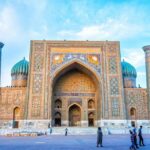
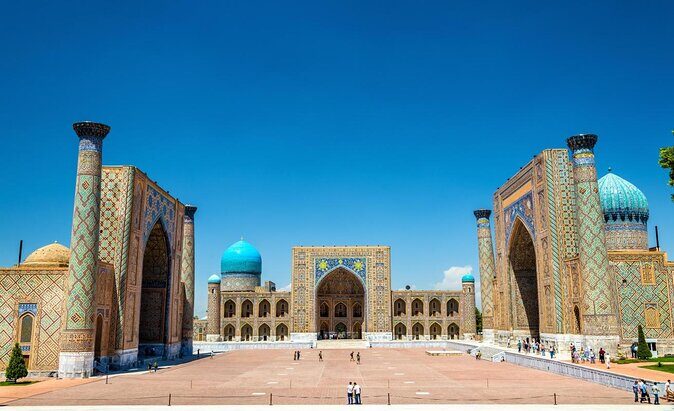
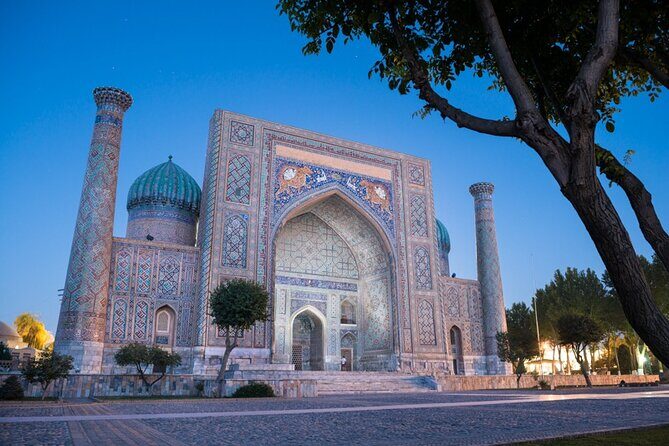
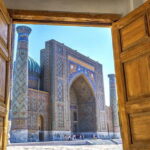
Then comes Registan, the city square that took shape as life shifted from Afrosiab. Today it’s surrounded by three medreses: Ulugbek, Sherdor, and Tillokori. Even with time limits, this stop is the emotional center. It’s where you can’t help but look up.
Bibi Khanym Mosque: Scale and symbolism
Next is Bibi Khanym Mosque, built between 1399 and 1404 on Timur’s order. It’s described as one of the best-known architectural attractions in Central Asia. You get a strong sense of why so many stories orbit Samarkand: the scale isn’t subtle.
Siab Bazaar: Real life in the middle of monuments
You then get Siab Bazaar. It’s not a museum stop; it’s a living market space with produce and handicrafts. It’s useful because it resets your brain after heavy architecture. You see texture, color, and everyday Uzbekistan.
Shah-i Zinda: A long staircase of tombs
Shah-i Zinda is next, an ensemble of tombs and mausoleums on the southeastern mound of Afrosiab. The listing notes 44 tombs across more than 20 mausoleums. That makes this a route you walk for an hour and still feel like you’re just scratching the surface.
Ulugbek Observatory: Science, not only monuments
Finally, Ulugh Beg Observatory is a different flavor. Only foundations remain, but it’s still described as extraordinary. For me, that balance matters: Samarkand isn’t only about power. It also ties back to astronomy and scientific curiosity.
Day 6 Tashkent: Metro Architecture, Historic Squares, and a Final Museum Sweep
The last day brings you back to Tashkent with early travel. You take an early morning train from Samarkand to Tashkent (subject to availability), then meet your guide and head out for sightseeing.
Alisher Navoiy Theater: A 20th-century landmark
You visit Alisher Navoiy Theater, designed by Alexey Shchusev, built between 1942 and 1947, and opened to the public around the time of the 500th anniversary of Alisher Navoi’s birth. It’s short, but it helps connect Uzbekistan’s modern cultural identity to its historical roots.
Hazrati Imam complex: A spiritual center in the old city
You also stop at the Hazrati Imam complex (Khast-Imam). The listing describes it as one of Tashkent’s main spiritual monuments, made up of several buildings including Tillya Sheikh mosque and Abu Ba—though the details are cut off in the summary.
One reason I’d plan mentally for flexibility: a previous traveler noted that Hazrati Iman complex closures were an issue when it was on the schedule. If something is closed on your date, ask your guide to swap it quickly rather than waiting.
Tashkent Metro: Built like an art gallery
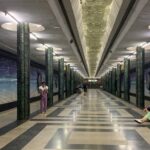
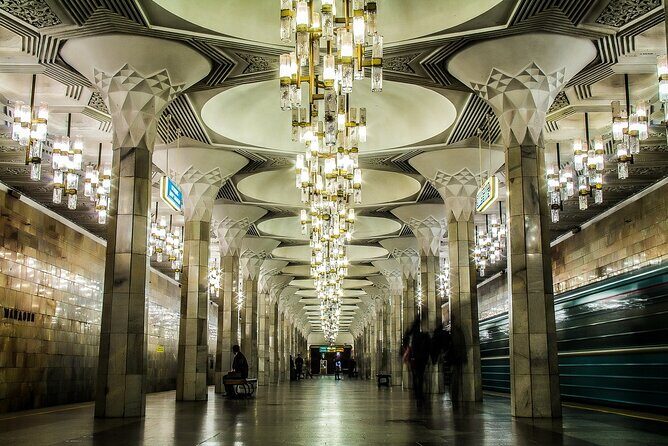
Then you hit one of the standout modern experiences: the Tashkent Metro, described as the first underground in Central Asia when it opened in 1977. Every station has its own architectural character—marble, granite, columns, bas-reliefs, and ganch.
If you only have one metro segment, I’d take your camera anyway. The appeal here isn’t speed; it’s how much design you get in transit.
Amir Temur Square and the State Museum of History of Uzbekistan
You finish at Amir Temur Square, then visit the State Museum of History of Uzbekistan, founded in 1876 (previously known as the National Museum of Turkestan). This is a helpful wrap-up because it gives you a broad timeline after the city-specific stories.
The day ends with transfer to the airport for your outbound flight.
Logistics That Matter: How Guides, Drivers, and Transfers Keep the Trip Calm
The best part of a private tour isn’t just comfort. It’s reduced stress. In the reviews, coordination names came up, including Amir as the organizer and Umid as a tour coordinator, and the common theme is simple: drivers were ready at airports or stations, and guides met on time so you weren’t stuck figuring out what to do next.
You also get a local licensed experienced guide in each city, which makes a difference when language barriers show up. Even if you’re not struggling with directions, a guide helps you interpret what you see. And because the guides come from different generations, the explanations can feel less like a script and more like lived knowledge handed down.
Another practical bonus: the tour includes local internet access and mobile tickets. That may sound minor until you’re in a place where tickets and meeting points matter. You can confirm plans, share maps, and keep everyone on the same page without hunting for Wi-Fi.
And yes, there’s also an option for hassle-free border pick-up upon request. If you’re combining this with other countries, or you’re planning an arrival route that involves crossing borders, that’s a nice safety net.
Who Should Book This Tour (and Who Should Consider Alternatives)
This tour is ideal if you:
- Want the big Silk Road highlights in a short time
- Like history and architecture but don’t want to micromanage logistics
- Prefer private pacing with city-by-city guides and included entry tickets
- Appreciate hotels and breakfast already sorted
It might be less ideal if you want:
- A slow travel style with lots of free days in each city
- A highly flexible schedule where you can easily drop or add stops last minute without any impact
- Zero tolerance for the occasional schedule change if a specific site is closed
Should You Book This 6-Day Private Uzbekistan Tour?
I’d book it if your goal is a high-value overview of Uzbekistan’s star cities with the heavy lifting handled. The inclusion of guides, hotels, breakfast, and entrance tickets, plus the train legs between cities, is the core reason the price can make sense. You’re paying for fewer decisions and more time spent actually looking at what matters.
If you’re booking, do one smart prep step: ask your coordinator what to expect for site closures on your dates, especially for the last-day Tashkent stops. If anything changes, you want your guide to propose a swap quickly.
If you want a clean, guided Silk Road route that doesn’t turn into a logistics project, this is a strong choice.
FAQ
What is included in the tour price?
The tour includes an air-conditioned vehicle, train tickets covering Khiva to Bukhara to Samarkand to Tashkent, local licensed guides in each city, accommodation in twin rooms at centrally located 3-star or boutique hotels, entrance tickets to museums and sites, and breakfast for five mornings.
Is the flight from Tashkent to Urgench included?
No. The flight ticket for Tashkent to Urgench is listed as not included, even though the Khiva day uses that domestic flight.
Which cities does this 6-day tour cover?
It covers Tashkent, Urgench (for access to Khiva), Khiva, Bukhara, Samarkand, and then back to Tashkent for departure.
Are entrance tickets for attractions included?
Yes. Entrance tickets to museums and sites are included in the tour.
Can the itinerary be customized?
Yes. The itinerary can be customized to your requests for no or small charge.
Do I need cash for museum photo or video charges?
You might. The tour notes that photo and video museum charges may be paid cash at the entrance, listed at about $1–2 per museum.