REVIEW · TASHKENT
Uzbekistan 8 Days Private Tour Tashkent-Urgench-Bukhara-Samarkand-Tashkent
Book on Viator →Operated by Silk Tour Ltd · Bookable on Viator
If you want fast history, this route delivers. In eight days, you’ll cover Tashkent, Khiva, Bukhara, and Samarkand with guides who handle the logistics so you can focus on the sites. I like how the trip mixes big iconic stops with quieter moments like bazars and time to wander on your own.
Two things I especially like: you get licensed guides in each city (including named guides from past groups like Nusrat in Tashkent, Tulkin in Khiva, Behrus in Bukhara, and Jusra in Samarkand), and the tour includes entrance tickets plus hotels and breakfasts. One drawback to consider: there’s a domestic flight segment Tashkent–Urgench mentioned in the day-by-day plan, but domestic air is not listed as included in the package price.
In This Review
- Key Highlights at a Glance
- A Strong Silk Road Loop Through Four Cities
- Day 1 in Tashkent: Metro, Museums, and Amir Timur Square
- Day 2: The Quick Jump to Khiva Through Urgench
- Day 3 in Khiva: Itchan Kala’s Walls, Tiles, and Famous Mosques
- Kalta Minor and the city’s skyline effect
- Kunya-ark and power under the ramparts
- Mausoleums, mosques, and crafted detail
- Khiva silk workshop time
- Finish with the Khiva to Bukhara train
- Day 4 in Bukhara: Lyab-i Hauz and the Ark of a City-Within
- The Ark: Bukhara’s oldest structure
- Trading domes and old mosque history
- Day 5: Flexible Bukhara Time and the High-Speed Train to Samarkand
- Then: Bukhara to Samarkand by train
- Day 6 in Samarkand: Registan, Timurid Power, and the Tomb Complex Day
- Shah-i-Zinda for procession-road energy
- Bibi Khanym and bazar time
- Day 7: Samarkand on Your Terms, Then Back to Tashkent
- Day 8 in Tashkent: Airport Transfer Without Extra Stress
- Price and What You Really Get for $975
- Who This Private Tour Best Fits
- Should You Book This 8-Day Private Uzbekistan Tour?
- FAQ
- What cities are included in the 8-day private tour?
- Is pickup included?
- Are entrance tickets included?
- Which train rides are included?
- Is the domestic flight included?
- How many hotel nights and breakfasts are included?
- Is free cancellation available?
Key Highlights at a Glance
- Khiva’s Itchan Kala in one efficient, guided day, packed with major madrasas, mosques, and palaces
- Bukhara’s Silk Road centerpieces like Lyab-i Hauz, the Ark, and the trading domes area
- Samarkand’s top monuments: Registan, Gur-Emir, Shah-i-Zinda, and Bibi-Khanym
- Private group touring with an experienced guide and an air-conditioned vehicle
- Train travel that saves time, including Khiva–Bukhara and high-speed Bukhara–Samarkand–Tashkent
A Strong Silk Road Loop Through Four Cities
This 8-day private route is built for momentum. You start in Tashkent, then go west to Khiva, drop into Bukhara, and finish with the heavy hitters of Samarkand before returning to Tashkent for departure.
What makes it work is the pacing and the mix of travel styles. You’re not just road-tripping; you use trains where the schedule allows, and you pair guided visits with free time so you can rest and choose how much shopping, photography, or extra wandering you want.
If you’re the type who likes to see a lot without feeling rushed every minute, this plan is a good fit. You’ll still move fast, but the included logistics (drivers, hotels, entrances) remove the stressful parts of travel planning.
You can also read our reviews of more private tours in Tashkent
Day 1 in Tashkent: Metro, Museums, and Amir Timur Square
Your day begins with a pickup-style transfer: you meet your driver in the arrival hall exit using a name shield, then head to a centrally located hotel. After that, the itinerary focuses on Tashkent’s blend of Soviet-era landmarks and older spiritual life.
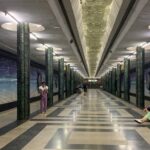
A standout stop is the Tashkent Metro, Central Asia’s first underground. It opened in 1977, and stations are known for different architectural designs, from marble and granite to columns and bas-reliefs. This is one of those quick experiences that changes your mood fast—because it’s not a museum stop in theory, yet it feels like one in practice.
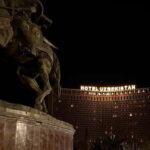
Then you shift into history and architecture. The Ensemble Hazrati Imam (often called Khast-Imam) sits in the old city core and includes the Tillya Sheikh mosque. The day also includes Amir Temur Square, a landscaped modern focal point with a statue of Tamerlane on horseback.
For museums, you visit the State Museum of History of Uzbekistan, founded in 1876 and previously known as the National Museum of Turkestan. It’s a solid way to set context before you move deeper into the Silk Road story.
Possible consideration: the Alisher Navoiy Theater visit is listed with time but not included for admission. If you’re sensitive to paying extra on the spot, keep a little flexibility in your budget for museum/theater-type charges.
Day 2: The Quick Jump to Khiva Through Urgench
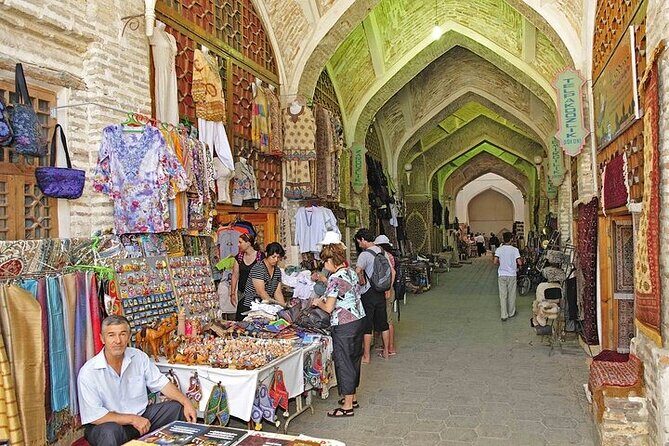
Day 2 is the travel day that gets you into the Khiva chapter. You’ll transfer to the airport, fly to Urgench, and then continue onward to Khiva, where you stay overnight.
One practical point: the package includes trains later in the trip, but domestic airline tickets are not included in the “Not Included” list, which explicitly mentions Tashkent–Urgench starting around $50. So plan on budgeting for that flight unless the operator advises otherwise when confirming your details.
Once you land and check in, your “Khiva” portion is ready to start fast the next morning. This is a smart setup: Khiva’s old city experiences are at their best when you can start early rather than arriving after dark.
Day 3 in Khiva: Itchan Kala’s Walls, Tiles, and Famous Mosques
Khiva is where the tour really tightens into a single compact story. The main target is Itchan Kala, the inner town of Khiva. It’s described as about 26 hectares, laid out as a regular rectangle (roughly 650 by 400 meters) using long-standing Central Asian town-building traditions.
You’ll start with highlights across the old city, moving from structure to structure without spending half your day guessing where to go.
Kalta Minor and the city’s skyline effect
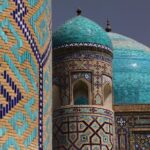
You visit the Kalta Minor Minaret, known for its distinctive glazed tile decor and the fact that it’s famous partly for being incomplete. The minaret is commissioned in 1851 by Mohamm… (the itinerary text cuts off, but the date and general story are clear). Even if you’ve seen similar towers before, this one’s tilework and visual style make it memorable.
Kunya-ark and power under the ramparts
Next is the Citadel Kunya-ark, a fortified complex at the heart of Itchan Kala against the western ramparts near the west gate. The core dates back as early as the 12th century, and it’s the kind of stop that helps you visualize how cities worked—rulers, defenses, and daily life all bundled in one space.
Mausoleums, mosques, and crafted detail
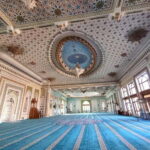
The day includes the Pakhlavan Makhmud Mausoleum, Juma Mosque, and the Islam Khodja Complex. The Juma Mosque is noted for its 64 hand-carved columns, each with different designs. That’s a specific detail I love because it tells you the architecture isn’t just big; it’s also craft-driven.
The Stone Palace (Tash Khauli) adds a different flavor. It’s dated to 1830–1838 and is described as an example of Khorezm architectural grandeur, built by order of Allakuli-Khan.
Khiva silk workshop time
You also stop at a Khiva silk workshop, described as a community-sponsored operation run by local women where you can see hand weaving and carpet design. This isn’t just a “shop” stop; it’s a chance to connect the craft to the city’s identity.
Finish with the Khiva to Bukhara train
You then transfer to the Khiva train station and take the train to Bukhara in the 15:00–21:00 or 18:00–00:00 windows (depending on the schedule listed). Train timing is one of the biggest “you either love it or you don’t” factors on this itinerary, but here it’s used well: it reduces long road hours and keeps the day structured.
Day 4 in Bukhara: Lyab-i Hauz and the Ark of a City-Within
Bukhara’s power comes from how many layers you can see in a short walk. The day is built around key ensembles and monuments that explain why it was such a famous stop on the Silk Road.
You start at Lyab-i Hauz, built in the 16th–17th centuries, and still one of Bukhara’s major squares. The description notes it’s often used as a rest stop, which is exactly what you’ll want here—Bukhara can be visually intense, so a pause matters.
Then comes Poi Kalyan Mosque, featuring the Kalyan Minaret. It’s described as the last surviving fragment of the Kara-khanid era mosque, built in 1127—predating the Mongol conquests. The minaret’s height is listed at 45.6 meters, which helps you appreciate why you’ll feel the city’s scale even when you’re standing still.
The Ark: Bukhara’s oldest structure
One of the most meaningful stops is the Ark of Bukhara. It’s described as Bukhara’s oldest structure and home to rulers for over a millennium—essentially a royal town-within-a-town. When you’re standing there, this stop can do something a guide can’t fake: it makes the city feel like it had a “center of gravity.”
Trading domes and old mosque history
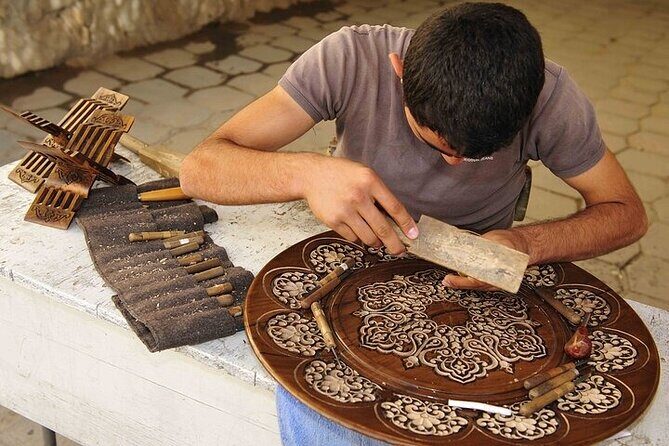
You also visit the Trading Domes, described as a colorful bazar area dotted with artisan workshops. This is where you can shift from monument viewing to everyday commerce energy.
Two mosque stops add deeper context through unusual background: Maghak-i ‘Attari Mosque, described as the oldest Mosque in Central Asia, is noted as having once served as a Buddas and Zoroastrian temple (so the site has a long religious timeline). The Bolo Hauz Mosque is set opposite the Ark in a kosh arrangement with the resistance between them, with its name linked to an octagonal pool (hauz).
The day is well paced for value. You’re not just ticking boxes; you’re walking through different functions of a Silk Road city: power, worship, crafts, and trade.
Day 5: Flexible Bukhara Time and the High-Speed Train to Samarkand

This is where the tour gives you control. The day starts with Bukhara and explicitly offers two choices: discover on your own, or purchase an optional half-day tour covering the Summer Residence of the Emir, the Bakhautdin Naqsband Mausoleum, and the Samani Mausoleum.
That optional time is useful because it lets you tailor the balance between city core and surrounding context. If you want more context around Sufism and early dynastic stories, the optional countryside route may fit. If you just want slow time, you can use the free hours to revisit your favorite streets, rest, or browse without a strict schedule.
Then: Bukhara to Samarkand by train
In the afternoon you transfer to the Kagan train station (15 km) and take the high-speed train Bukhara–Samarkand subject to availability. You arrive in Samarkand, transfer to the hotel, and get an overnight stay.
This train segment is one of the biggest “value signals” in the whole itinerary. It cuts down fatigue and keeps the overall schedule tight enough to justify the 8-day total.
Day 6 in Samarkand: Registan, Timurid Power, and the Tomb Complex Day
Samarkand is designed for big-photo days, but this itinerary avoids the worst mistake—only showing you the most famous square. It spreads the focus across architecture types: public squares, royal mausoleums, shrine corridors, and market energy.
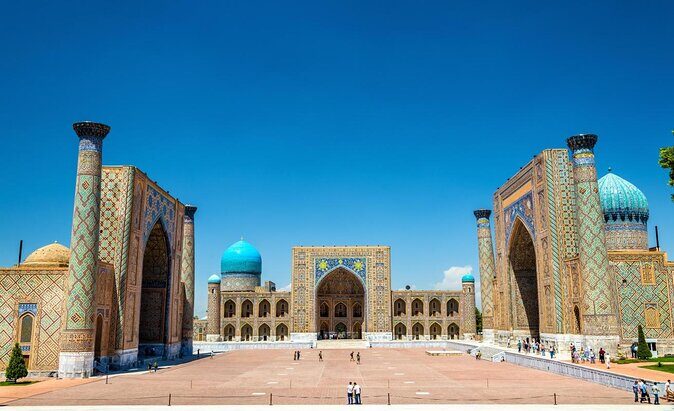
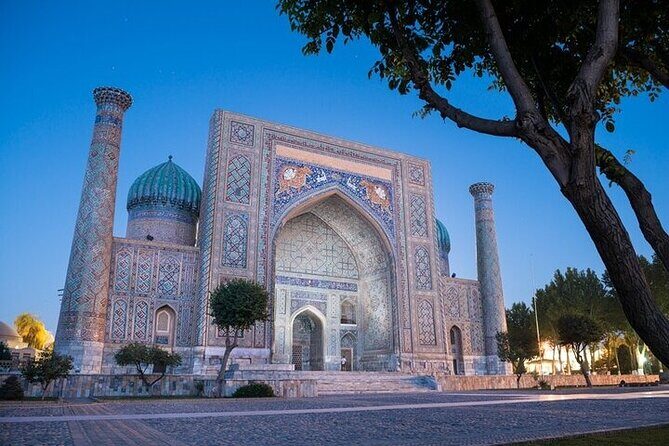
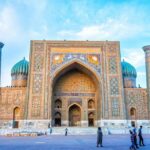
The morning anchors at Registan, the central city square where life shifted after Afrosiab. Today it’s surrounded by three medreses: Ulugbek, Sherdor, and Tillokori. The key here is that you’re not only looking at buildings—you’re looking at how a city educated and organized public life.
Then you move to Gur Emir Mausoleum, tied to Tamerlane. The itinerary highlights the tomb setting in a beautifully reconstructed mausoleum dating to 1404–1405. This stop hits a different feeling than Registan: it’s quieter, heavier, and it makes the city’s political legacy feel tangible.
Shah-i-Zinda for procession-road energy
Next is Shah-i-Zinda, described as an ensemble with 44 tombs across more than 20 mausoleums. The site is on a southeastern mound of Afrosiab, and the complex’s significance is tied to being the resting place connected to a figure named in the itinerary description (Shakhi-Zinda Ensemble). Whatever your prior knowledge is, the layout is built to create a “moving corridor” effect as you walk.
Bibi Khanym and bazar time
Then you visit Bibi Khanym Mosque, built 1399–1404 and named after Tamerlane’s wife. After all that monumental time, you finish with Siab Bazaar, noted for produce and handicrafts, framed as evidence of the natural wealth and local talent.
This mix is smart. It prevents the day from feeling like one museum room after another.
Day 7: Samarkand on Your Terms, Then Back to Tashkent
Day 7 starts with more free choice: discover Samarkand on your own, or take an optional half-day tour to the Ulugbek Observatory, Afrosiyob Museum, and Hodji Danior Mausoleum.
If you’re curious about astronomy and science-era Timurid interests, Ulugbek’s side of Samarkand can be a great add-on. If you prefer to keep things simple and wander, staying flexible is totally valid here.
In the late afternoon you transfer to the train station and take the high-speed train Samarkand–Tashkent subject to availability. That overnight-last-day feel is useful: you don’t lose your last day to long-distance travel on the road.
Day 8 in Tashkent: Airport Transfer Without Extra Stress
Your final day is straightforward: transfer to Tashkent International Airport for your departure. It’s only listed as a short transfer time, which matters because it means you can usually plan your flight without major guessing.
This ending also makes the trip feel complete. You start with Tashkent’s metro and history museum, and you end with a calm airport transfer—no last-minute scrambling across the city.
Price and What You Really Get for $975
At $975 per person for 8 days, the headline question is whether you’re paying for convenience or for actual included value. Here, you’re getting a lot baked in.
Included items cover:
- Air-conditioned vehicle and guides in each city
- Entrance tickets to all sights & museums
- 6 nights in centrally located 3–4 star or boutique hotels (twin rooms)
- Breakfast (6)
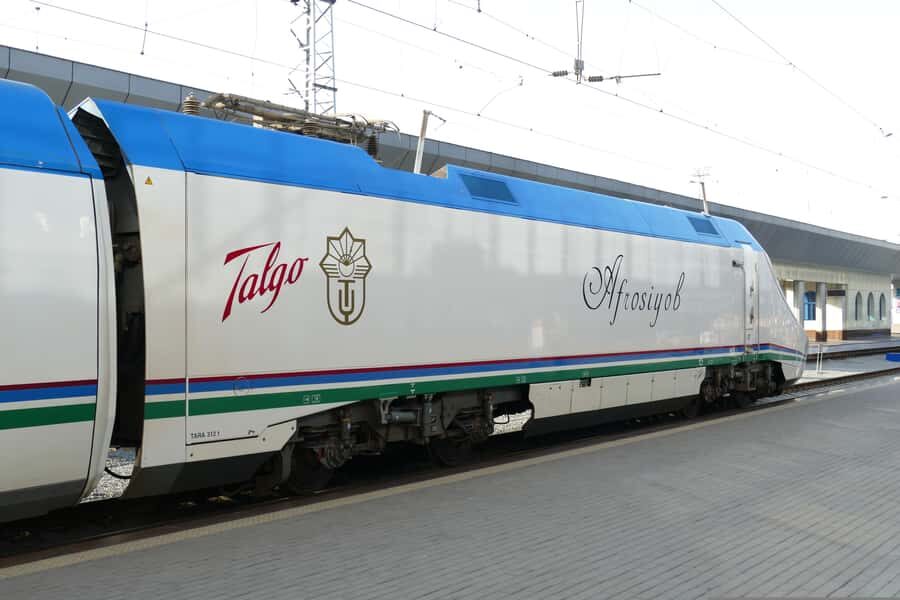
- Train Khiva–Bukhara plus high-speed trains for Bukhara–Samarkand–Tashkent
- 24-hour customer service and visa support if needed
- Mobile ticket noted as a feature
What’s not included (and can affect your total budget):
- Tips for guides & drivers
- Photo museum charges you pay cash at entrance (listed as $1–2 per site)
- Single room supplement $20 per single room/night
- Domestic airline ticket Tashkent–Urgench, starting at $50
So is it good value? For many people, yes—because you avoid paying for a pile of entrances, guided time, and major transport segments separately. If you want to travel with less planning and more certainty, this package structure makes sense.
If you dislike domestic flights, the Tashkent–Urgench step is the one part you’ll want to plan around early.
Who This Private Tour Best Fits
This tour fits best if you want:
- A private group and a guide who can keep the day flowing
- A history-heavy itinerary that still includes time to rest and roam
- Efficient movement between cities without giving up guided context
- Hotels in central areas and daily breakfasts handled for you
It’s also a strong pick for people who value craftsmanship and architecture details. Khiva’s 64 carved columns and the glazed work of Kalta Minor aren’t the kind of details you’ll always catch on your own.
Should You Book This 8-Day Private Uzbekistan Tour?
I’d book it if your priority is seeing the headline Silk Road cities with guided explanations and minimal logistics work. The combination of entrance tickets included, train segments, named guide quality from prior groups (like Nusrat, Tulkin, Behrus, and Jusra), and six hotel nights plus breakfasts makes it feel like a complete package rather than a skeleton itinerary.
I’d think twice if you’re trying to keep costs ultra-tight, since domestic air and photo-related cash charges can add up. Also, if you prefer ultra-slow travel with fewer transitions, the schedule is still compact—so it’s best if you can handle a fast but structured pace.
If you go in with clear expectations, this is the kind of trip that gives you real “wow” moments and a sense of how these cities connected across centuries.
FAQ
What cities are included in the 8-day private tour?
The route is Tashkent, Khiva, Bukhara, Samarkand, and then back to Tashkent.
Is pickup included?
Yes, pickup is offered, and you meet your driver at the arrival hall exit with a name shield.
Are entrance tickets included?
Yes. Entrance tickets to sights and museums are included.
Which train rides are included?
The tour includes the Khiva–Bukhara train and the high-speed train segments Bukhara–Samarkand and Samarkand–Tashkent (subject to availability).
Is the domestic flight included?
No. Domestic air ticket for Tashkent–Urgench is listed as not included, starting at $50.
How many hotel nights and breakfasts are included?
You get 6 nights in twin rooms at centrally located 3–4 star or boutique hotels, plus breakfast 6 times.
Is free cancellation available?
Yes. You can cancel up to 24 hours in advance for a full refund.