REVIEW · BUKHARA
Bukhara: Walking Tour with a Small Group
Book on GetYourGuide →Operated by UzLocalGuide - Travel Guide in Uzbekistan · Bookable on GetYourGuide
Bukhara is history you can walk through. This small-group 4–4.5 hour tour strings together the city’s most important religious buildings and trade landmarks, so you don’t just see monuments—you understand how Bukhara worked. I like that the tour is led by professional, English-speaking guides (not trainees), and I also like the pace: it feels full without turning into a sprint. One thing to keep in mind: entry fees aren’t included, and some sights may be under restoration, so your guide may swap in alternatives.
What makes this tour especially useful is that you learn the city’s logic fast—courtyards, domes, madrasahs, and mosques all connect. I also appreciate that it’s not built around shopping; you’ll get a few artisan workshop visits and optional local masterclasses with no payment expected for those stops.
In This Review
- Key things I’d mark on your map before you go
- A 4–4.5 hour Bukhara walk that helps you read the city
- Small-group size: why it makes the guide feel personal
- Meeting at Nodir Devonbegi Madrasa: your start point is easy to find
- Lyabi-Hauz Square: the heart of old Bukhara’s daily life
- Covered domes and caravan life: how commerce shaped the city
- Sayfuddin Caravanserai: compact and to the point
- Toki Sarrafon: money changers made it essential
- Toki Telpakfurushon: hats, skullcaps, and everyday clothing culture
- Abdullakhan Tim: a domed bazaar built for silk trade
- Toki Zargaron: where jewelers worked
- Magoki-Attori, Toki Sarrafon, and the oldest mosques: layers of time
- Magoki-Attori Mosque and the Carpet Museum connection
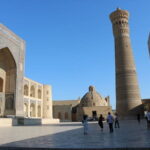
- Kalyan Minaret and Kalyan Mosque: the emotional center
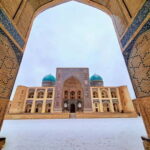
- Mir-i-Arab Madrasa: living education across the square
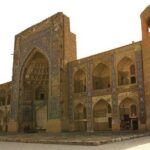
- Madrasahs with math and meaning: Ulugbek and Abdulaziz Khan
- Abdulazizkhan Madrasah: color and carved detail
- Ulugbek Madrasah: astronomy in stone
- Ark Fortress viewpoints, Bolo-Hauz reflections, and the legend stops
- Bolo-Hauz Mosque: the pool and the wooden pillars
- Chashma-Ayyub Mausoleum: Job’s Spring legend
- Ismail Samani Mausoleum: a 10th-century masterpiece
- When restoration happens: your guide keeps the itinerary on track
- Artisan workshops and optional masterclasses: culture without pressure
- Price and what you actually get for $26
- Practical tips for a smooth afternoon in Bukhara
- Who should book this tour, and who might prefer something else
- Should you book this Bukhara walking tour?
- FAQ
- How long is the Bukhara walking tour?
- How big is the group?
- Are the guides professional and do they speak English?
- Are entry fees included?
- Is pickup and drop-off included?
- Does the tour focus on shopping?
- Where do I meet the guide?
- What should I wear and bring?
- What if monuments are closed or under restoration?
Key things I’d mark on your map before you go
- Professional English guides lead the walk, not students or trainees
- Poi-Kalyan Ensemble (Kalyan Minaret + Kalyan Mosque) is the emotional center of the tour
- Covered trading domes show how commerce shaped Bukhara
- Madrasahs and old mosques explain religion, education, and everyday life
- Low-pressure artisan stops focus on craft and culture, not sales
A 4–4.5 hour Bukhara walk that helps you read the city
Bukhara’s old town can feel like a maze of domes, courtyards, and tiled walls—beautiful, but easy to miss the big connections. This tour is built to fix that. In just 4 to 4.5 hours, you move across the city’s main “systems”: where people studied, where they worshipped, and where goods and money changed hands.
That time window matters. Too short, and you only skim highlights. Too long, and you start rushing or forgetting what you saw. Here, you get enough stops to build a mental map, and you still have room to pause, ask questions, and regroup.
And yes, it’s a walking tour. This is best done with comfortable shoes and a light mindset: you’re walking a historic core, not touring by car.
You can also read our reviews of more walking tours in Bukhara
Small-group size: why it makes the guide feel personal
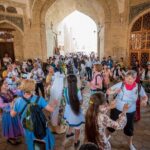
This is not a huge-group bus tour. Depending on the season, the group is usually 2 to 8 participants (late autumn and winter) or 3 to 10 (spring–autumn). In practical terms, that means you can actually hear your guide, and your guide can adjust the pace.
I also like that many guides have been praised for being flexible—slowing down for photos, taking breaks when needed, and answering questions without making you feel rushed. If you prefer an afternoon where you feel oriented at the end, this small-group setup does that job well.
Meeting at Nodir Devonbegi Madrasa: your start point is easy to find
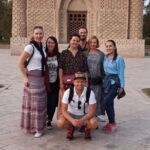
You’ll meet at the entrance gate area of Nodir Devonbegi Madrasa. The meeting point can vary based on which starting option you book (Nodir Divan Begi Madrasa is also listed), but the main idea is the same: you start in the old town core, so you’re walking from the first minutes.
Two practical notes:
- You need your WhatsApp number for meeting-point details.
- Show up 5 minutes early so the group doesn’t shuffle around in the street.
Lyabi-Hauz Square: the heart of old Bukhara’s daily life
Your walk kicks off around Lyabi-Hauz Ensemble—a focal point of old Bukhara with madrasahs and khanaka structures facing a historic pool. This is a great first stop because it sets the tone. You see how religious education and community life sit side-by-side.
Look for how the buildings frame the water. Even if you don’t know the details yet, you’ll feel why a central pool mattered: it anchored daily rhythms, gatherings, and the “social center” of the city.
Covered domes and caravan life: how commerce shaped the city
Once you’re oriented, the tour shifts into Bukhara’s trading world. This is where the architecture stops being just pretty and starts becoming functional.
Here’s what you’ll see, and why it’s worth paying attention:
Sayfuddin Caravanserai: compact and to the point
A caravanserai was a place for merchants to rest while goods moved through the Silk Road era. At Sayfuddin Caravanserai, the focus is on the idea of transit and shelter—an older Bukhara “infrastructure” that supported trade.
Toki Sarrafon: money changers made it essential
Toki Sarrafon is an old trading dome once famous for money changers. That one detail changes how you read the space: this isn’t just a marketplace anymore; it’s a checkpoint for exchange, trust, and deals.
Toki Telpakfurushon: hats, skullcaps, and everyday clothing culture
At Toki Telpakfurushon, you’re walking through a covered bazaar that used to be a hub for hat and skullcap sellers. It’s a reminder that commerce wasn’t only about luxury items. Clothing and identity mattered too.
Abdullakhan Tim: a domed bazaar built for silk trade
Abdullakhan Tim is another domed trading space, tied to silk trading. The domes matter here: covered markets let business happen regardless of weather, and the geometry helps you understand how the city organized crowds.
Toki Zargaron: where jewelers worked
Toki Zargaron was a trading dome where jewelers sold their crafts. It’s a fitting stop because you can literally picture the work happening inside—hands, tools, and finished items moving through the same arc of space.
Magoki-Attori, Toki Sarrafon, and the oldest mosques: layers of time
The tour includes some of Bukhara’s older sacred spaces, which is useful because Bukhara’s religious architecture has layers.
Magoki-Attori Mosque and the Carpet Museum connection
Magoki-Attori Mosque is one of the city’s oldest mosques and is now associated with a Carpet Museum. Even if you don’t spend a long time inside museums during a walking tour, the stop gives you a key idea: Bukhara’s heritage shows up in objects people used every day—especially textiles.
Kalyan Minaret and Kalyan Mosque: the emotional center
If you’re trying to understand why Poi-Kalyan Ensemble is the heart of Bukhara, this is where you’ll feel it. You’ll visit:
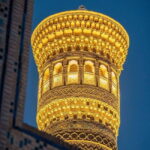
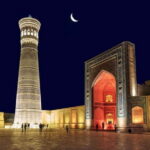
- Kalyan Minaret (12th-century tower)
- Kalyan Mosque (Friday mosque with space for 10,000 worshippers)
The minaret is the landmark you’ll keep “re-finding” in your mind as you walk. Then the scale of the mosque tells you something important: this wasn’t a small neighborhood place for a small group. This was built for major gatherings and community identity.
Mir-i-Arab Madrasa: living education across the square
Opposite the mosque, you’ll see Miri Arab Madrasah—an active Islamic school. That “active today” element matters because it makes the old stones feel less like a museum and more like a living system.
Madrasahs with math and meaning: Ulugbek and Abdulaziz Khan
You’ll also spend time in decorated madrasahs, where design isn’t random. It reflects learning, patronage, and religious authority.
Abdulazizkhan Madrasah: color and carved detail
Abdulazizkhan Madrasah is described with richly decorated mosaics and carved details. In a walking tour format, this is one of those stops where your guide’s stories help you see patterns, not just surfaces. Take a minute to look up—these places reward slow glances.
Ulugbek Madrasah: astronomy in stone
At Ulugbek Madrasah, the tie to the astronomer Ulugbek makes the stop more than scenic. It connects Islamic education to science and observation—an angle that helps the whole city feel more coherent.
Ark Fortress viewpoints, Bolo-Hauz reflections, and the legend stops
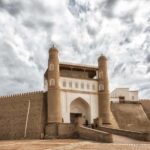
The tour includes the famous Ark Fortress—but you’ll see it from the outside only. The reason is simple: visiting museum sections would add extra time, and this tour is designed to fit a lot into 4–4.5 hours without turning into a marathon.
Even from outside, the Ark area is valuable. It gives you the sense of political power sitting above the rest of the city’s daily life.
Bolo-Hauz Mosque: the pool and the wooden pillars
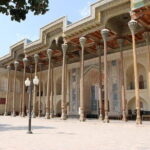
At Bolo-Hauz Mosque, the key feature is the famous wooden pillars reflected in the pool. This is one of those “look at the shape, then look again” moments. Don’t rush past it—this stop is partly visual poetry.
Chashma-Ayyub Mausoleum: Job’s Spring legend
You’ll visit Chashma-Ayyub Mausoleum, linked to the legend of Prophet Job and known as Job’s Spring. Legend isn’t just trivia here. It shows how stories become part of sacred geography.
Ismail Samani Mausoleum: a 10th-century masterpiece
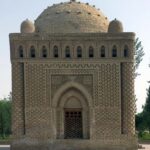
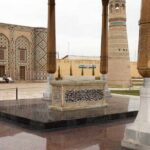
Finally, you’ll reach Ismail Samani Mausoleum, one of the oldest and most acclaimed structures in Bukhara, dating to the 10th century. This is the kind of stop that makes you slow down even if the tour pace stays brisk. It’s also a good final anchor: after domes and schools and mosques, you end with a monument that feels like a capstone.
When restoration happens: your guide keeps the itinerary on track
Some monuments might be under restoration. The good news is that the guide doesn’t leave you hanging. If a site is inaccessible, your guide will suggest alternative stops so you don’t lose too much of the sightseeing flow.
This matters because Bukhara is actively cared for. A tour that handles changes smoothly saves you the frustration of showing up at scaffolding and staring at a closed door.
Artisan workshops and optional masterclasses: culture without pressure
This tour isn’t centered on shopping. You’ll see a few artisan workshops as a way to show local life and craft traditions. Optional masterclasses by locals can be offered, and the important detail is: no payment is expected for these workshop visits in the way tourists sometimes fear.
Based on guide behavior described in feedback, the craft stops also tend to be respectful. You’re not forced into buy-now sales. If you like seeing how materials turn into objects—textiles, metalwork, carving—this structure works well.
Price and what you actually get for $26
At $26 per person for 4 to 4.5 hours, you’re paying mainly for guided interpretation and a well-sequenced walk. That’s the core value.
Included:
- Professional guide
- Walking tour structure
- Online support
- You can skip the ticket line (for applicable sites)
Not included:
- Entry fees
- Meals and drinks
- Pickup/drop-off (unless you booked a city outside variant)
So if you budget, think: guide time and routing are covered, but entrances and food are on you. For many people, that’s a fair trade—because you’re seeing a dense set of UNESCO-style highlights without paying separate tour add-ons.
Practical tips for a smooth afternoon in Bukhara
A few details will keep the experience comfortable and respectful:
- Dress modestly for mosque visits.
- Bring some cash for personal expenses.
- Plan around the weather. Late autumn and winter group sizes are smaller, but it can still be cold for walking outdoors.
- Use the WhatsApp instructions for meeting point updates.
- The tour is not suitable for wheelchair users, since it’s a walking route through historic areas.
Also: bring patience for pictures and questions. Several guides described keeping the pace easy and not rushing people through the hard parts of history. That style makes a big difference when you want the buildings to “stick” in your mind.
Who should book this tour, and who might prefer something else
This tour is a strong fit if:
- you want a fast orientation to Bukhara’s old town
- you like learning what you’re seeing—stories, purpose, and context
- you prefer a small group over crowds
- you’d rather see craft culture than get pulled into shopping
You might choose a different format if:
- you need a fully accessible route (this one isn’t wheelchair-friendly)
- you want long museum time inside the Ark Fortress (this tour keeps it mostly external)
Should you book this Bukhara walking tour?
I think you should book it if you want the most efficient “first taste” of Bukhara without losing the meaning behind the monuments. The biggest selling point is the mix: Poi-Kalyan’s major religious landmarks, the trading domes that explain how commerce ran, and madrasahs that connect learning, religion, and science. At $26 for a professional English guide over half a day, it’s good value—especially because it’s designed for a small group pace.
If you’re choosing between this and a lighter option, go heavier. Bukhara rewards context, and this tour gives you enough stops to make the city feel readable by the time you’re done.
FAQ
How long is the Bukhara walking tour?
The tour runs about 4 to 4.5 hours.
How big is the group?
Group sizes depend on the season. Late autumn and winter are typically 2 to 8 participants, while spring through autumn are typically 3 to 10.
Are the guides professional and do they speak English?
Yes. The tour includes a professional, experienced guide and the tour language is English.
Are entry fees included?
No. Entry fees are not included.
Is pickup and drop-off included?
Pickup and drop-off are included only for a city outside tour option. Otherwise, it’s not included.
Does the tour focus on shopping?
No. It does not focus on shopping. There are a few artisan workshop visits to show local life, and optional masterclasses may be offered with no payment expected for those visits.
Where do I meet the guide?
The meeting point is in front of the Nodir Devonbegi Madrasa entrance gate. The exact meeting point can vary depending on the starting option you book.
What should I wear and bring?
Dress modestly for mosque visits. Bring some cash for personal expenses.
What if monuments are closed or under restoration?
Your guide may suggest alternative stops so you won’t miss out.