Bukhara’s center makes you slow down fast. This guided 5-hour walk pulls together the big sights—Poi-Kalyan and the Magok-i-Attari Mosque—plus the Ark and major mausoleums, all in a route that’s built for foot traffic and big meaning.
I really like two things: the guide-led storytelling (the kind that turns architecture into something you can picture), and the way the itinerary strings religious and civic landmarks into one clear picture of the city. One thing to consider: this is a walking tour and the price doesn’t include a car during the tour, so comfy shoes are non-negotiable.
In This Review
- Quick takeaways
- Entering Bukhara’s UNESCO center on foot
- Your meeting point and how the pace stays manageable
- Poi-Kalyan Mosque complex: architecture with a purpose
- Magok-i-Attari Mosque: where the route turns from big to personal
- Lyabi-Hauz ensemble: the courtyard mood in the middle of the day
- Tim Abdullah Khan Trading Dome: shopping time with a script
- The Ark of Bukhara: power, then reflection
- Bolo-Hauz Mosque: a 17th-century pause between tombs
- Samanid Mausoleum and Chashma Ayub: revered places, strong atmosphere
- Price and logistics: where $47 feels fair and where it doesn’t
- What you’ll get from the guide (and why it matters)
- Who this tour is best for
- Should you book this Bukhara Historic Center guided sightseeing tour?
- FAQ
- What’s the duration of the Bukhara Historic Center guided sightseeing tour?
- Where do I meet my guide?
- Is the tour price ($47 per person) all-inclusive?
- Are entrance tickets included?
- Is there a driver or car during the tour?
- What languages are the guides available in?
- Is the tour wheelchair accessible?
Quick takeaways
- UNESCO World Heritage core: You’re walking in the historic zone that’s recognized at the highest level.
- Poi-Kalyan + Magok-i-Attari: Two of the most iconic stops, each given real guide time.
- Covered bazaar time at Tim Abdullah Khan: Shopping and browsing are built in (around 50 minutes).
- Big-ticket monuments, not just photos: The Ark Citadel, plus major mosques and revered tombs.
- Guide quality drives the experience: Past groups have been impressed by guides like Nilufar (Lola), Kamilla, Shakhnoza, Lilly, and Charos.
Entering Bukhara’s UNESCO center on foot
This tour works because it’s structured like a walking story. You start in the old core and move from one landmark to the next, without wasting time on long transfers. The whole point is to get you to look closely at the shapes, layouts, and symbols—things that are hard to notice when you rush or when you’re alone with a map.
The route also makes sense if you’re trying to understand Bukhara beyond postcard views. You’re not only seeing mosques; you’re also seeing the city’s civic center and the places connected with Islamic saints. That mix helps you connect the dots between faith, learning, and power.
One more practical win: pickup is included, and you meet your guide in the hotel lobby about 5 minutes before you start. That cuts down on early-morning confusion and helps you get into the day smoothly.
You can also read our reviews of more guided tours in Bukhara
Your meeting point and how the pace stays manageable
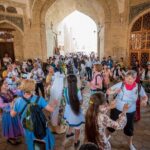
You’ll meet your local English-speaking guide at your hotel, then head out on a guided walking route. The full experience is set for about 5 hours, with individual stops timed around 30 minutes to about 1 hour each.
Because there’s no car/driver included during the tour, your pacing depends on your shoes and your comfort level. The good news is that the day is planned with frequent “reset points”—mosques and courtyard spaces where you can catch your breath, and a mid-tour chance to slow down at the bazaar area.
If you want the tour to feel less like a checklist, this is where you can lean on your guide. A strong guide can adjust the flow so you get enough time to look, ask questions, and still keep moving.
Poi-Kalyan Mosque complex: architecture with a purpose
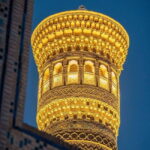
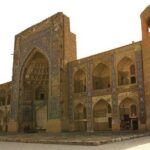
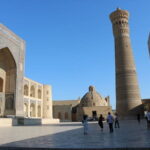
The first major stop is the Poi-Kalyan architectural complex, with about an hour devoted to guided sightseeing and walking. This is the kind of place where it helps to have someone who can explain what you’re seeing and why it matters in the city’s overall layout.
What I like about starting here is that it gives you a big anchor early. Once you understand the complex’s role in Bukhara’s religious and educational landscape, the later stops start to feel connected instead of random.
A practical tip: if you care about photos, ask your guide for the best angles early. Guides who manage timing well often include small opportunities to pause and frame shots without derailing the group pace.
Magok-i-Attari Mosque: where the route turns from big to personal
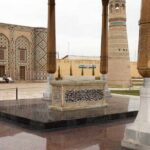
After Poi-Kalyan, you head to the Magok-i-Attari Mosque for another guided walk and sightseeing time of about an hour. This is the moment where the tour starts to shift into something more intimate.
Mosques in Central Asia aren’t just buildings. They’re spaces of ceremony, learning, and identity, and your guide’s stories make those functions click as you move through the area. It’s also a good time to slow down and look at how decoration and structure work together, especially if you’re interested in how design signals meaning.
If you find yourself getting “architecture fatigue” by midday, treat this stop like your reset. The guided format gives your eyes something specific to look for, so you’re not just sightseeing—you’re understanding.
Lyabi-Hauz ensemble: the courtyard mood in the middle of the day
Next comes the Lyabi-Hauz ensemble, with about an hour of guided sightseeing. This is the stop that often feels most like how people actually experience a historic center: you’re in an outdoor setting that functions like a gathering point.
Courtyards and water-adjacent spaces can be the best break during a walking tour. They give you a place to slow your legs, listen for the everyday rhythm around you, and still stay in “tour mode.”
I also like this stop because it balances the more monumental sites. After big complexes and major landmarks, Lyabi-Hauz helps the whole day feel human instead of just grand.
You can also read our reviews of more historical tours in Bukhara

Tim Abdullah Khan Trading Dome: shopping time with a script
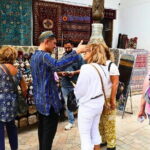
Then you reach the Tim Abdullah Khan Trading Dome, a covered bazaar dating back to 1577. You’ll have about 50 minutes here, and the tour naturally shifts into shopping and browsing.
This is where you’ll feel the practical value of a guided day. Your guide can point you toward good souvenir options and help you navigate how to shop without getting overwhelmed by choices. Based on what guides have been doing for past groups, some guides also manage the timing so you get real window-shopping time, and not just a quick stop.
What to do during that shopping window: pick a few targets before you go in—like one item for yourself and one small gift—then use the remaining time to explore. It keeps the dome from turning into decision overload.
The Ark of Bukhara: power, then reflection
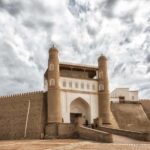
After lunch, you continue through time with visits to the Ark Citadel, Bolo-Hauz Mosque, and two revered mausoleums. The Ark stop is guided sightseeing with about an hour on-site, and it’s described as the former royal residence dating back to the 5th century.
The Ark feels different from the religious buildings earlier in the day. It’s about governance, authority, and how rulers shaped the city. In a guided setting, the Ark works well because your guide can connect its role to the institutions you saw before.
I like that the itinerary doesn’t treat the Ark as a standalone “big wall.” It’s placed after the bazaar and courtyard-style stop, so you can absorb the shift from commerce and daily life into power and administration.
Bolo-Hauz Mosque: a 17th-century pause between tombs
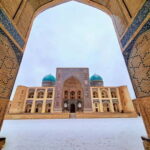
Next is the Bolo-Hauz Mosque for about 30 minutes of sightseeing. You’re given less time here than at other stops, but it’s still scheduled as a distinct experience, not a rushed photo break.
This works if you want variety. After the Ark, the mosque gives you a different angle on the same broader theme: how sacred space shapes a city’s identity.
If you like learning from details, use this short window to ask your guide what to notice—entry points, symmetry, and any recurring design elements that connect back to what you saw earlier.
Samanid Mausoleum and Chashma Ayub: revered places, strong atmosphere
The tour finishes with the Samanid Mausoleum (Ismail Samani) for about an hour of guided sightseeing, plus the Chashma Ayub Mausoleum. Both are described as some of Bukhara’s most revered mausoleums, and each one fits the tour’s focus on Islamic saints and their tombs.
These stops often change the tone of a walking day. You’re not chasing spectacle anymore; you’re paying attention to place, meaning, and respect. In a guided tour format, this is where the stories do a lot of work, helping you understand why these sites matter to people.
What I’d do here: go slower than you think you need to. When time feels tight, mausoleums can turn into a blur. If you’re curious, ask your guide what people typically connect with these places, and then let the answers guide where you look.
Price and logistics: where $47 feels fair and where it doesn’t
At $47 per person for a 5-hour private guided walking tour, the value is mostly in three areas: the guide time, the tight route through major historic sites, and the fact that you’re covering a lot of ground without extra planning.
But you should know what’s not covered. Entrance tickets are not included, and you pay on the spot. Lunch and dinner aren’t included either. And—very important—transportation during the tour with a driver isn’t included, so the day is built around walking.
Here’s the practical way I’d think about it: if you’re the type who likes doing a focused historic center route with minimal headaches, $47 can be a strong deal. If you’re expecting a car to move you between stops or you want meals handled for you, you’ll need to budget extra.
Also check footwear expectations. The tour highlights “comfortable shoes,” and given the walking structure, that’s your best friend.
What you’ll get from the guide (and why it matters)
This is one of those tours where your guide changes everything. The experience is explicitly centered on stories and explanations, and the guide is the difference between seeing buildings and understanding them.
The guidance quality has been singled out in past experiences, including guides named Nilufar (Lola), Shakhlo, Kamilla, Lilly, Charos, Rizo, Shakhnoza, and Erkin. Across those examples, common themes show up: clear explanations, patience for questions, and flexibility if your group wants to spend a bit more time at a stop.
Some guides have also worked in small “comfort breaks,” like chai khana or coffee-shop pauses to recharge. Others have timed in window-shopping moments so you can browse before buying. And a few have recommended restaurants at the end of the tour—useful if you don’t want to guess where to eat after walking all day.
If you want to maximize your day, come with 2–3 questions. For example: Which stop is most important to the city’s educational story? What design element should I look for in mosques? Where should I spend my extra minutes at the bazaar?
Who this tour is best for
This works especially well if you want a structured walking route through Bukhara’s historic center and you’d rather learn from a local than wander alone. It’s also a good fit for people who like a blend of sites—mosques, madrasas, royal/civic power via the Ark, and revered mausoleums—without hiring multiple guides.
It’s less ideal if you need a car during the day, since transportation during the tour isn’t included. And while the information includes wheelchair accessibility, it also states it’s not suitable for wheelchair users—so you should confirm directly before booking if mobility access is a concern.
If you’re traveling as a private group, you’ll get a more adjustable experience. That can matter when someone in your group wants more time for questions or shopping.
Should you book this Bukhara Historic Center guided sightseeing tour?
I’d book it if you want the fastest route to understanding Bukhara’s old center without the guesswork. For $47, you’re paying mainly for guide-led context while you hit major landmarks: Poi-Kalyan, Magok-i-Attari, Lyabi-Hauz, Tim Abdullah Khan’s bazaar time, the Ark Citadel, Bolo-Hauz Mosque, and the Samanid and Chashma Ayub mausoleums.
Skip it—or at least rethink it—if you hate walking, if you expect meals and entrance fees to be handled for you, or if you need a driver-based transfer between stops.
FAQ
What’s the duration of the Bukhara Historic Center guided sightseeing tour?
The tour is listed as lasting 5 hours.
Where do I meet my guide?
You meet your local guide in the hotel lobby about 5 minutes before the sightseeing starts, and pickup is included.
Is the tour price ($47 per person) all-inclusive?
Not fully. English-speaking local guide and 24h/7 assistance are included, but entrance tickets, lunch and dinner, and any transportation during the tour are not included.
Are entrance tickets included?
No. Entrance tickets are not included and can be paid on the spot.
Is there a driver or car during the tour?
No. The tour does not include a car with the driver, so you should plan for walking and wear comfortable shoes.
What languages are the guides available in?
The live tour guide is available in Russian and English.
Is the tour wheelchair accessible?
The information says wheelchair accessible, but it also notes it is not suitable for wheelchair users. It’s smart to confirm with the provider before booking if you use a wheelchair.