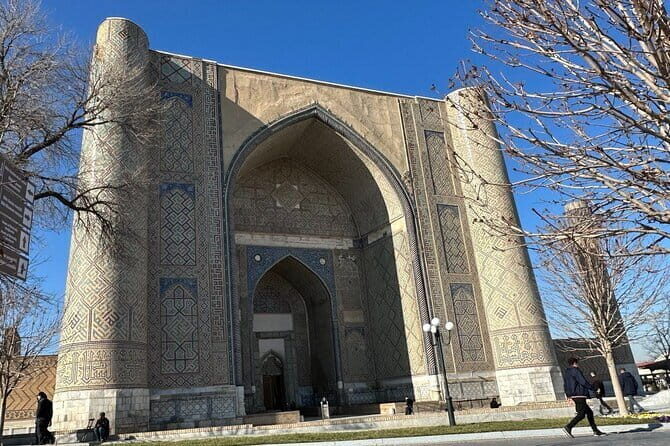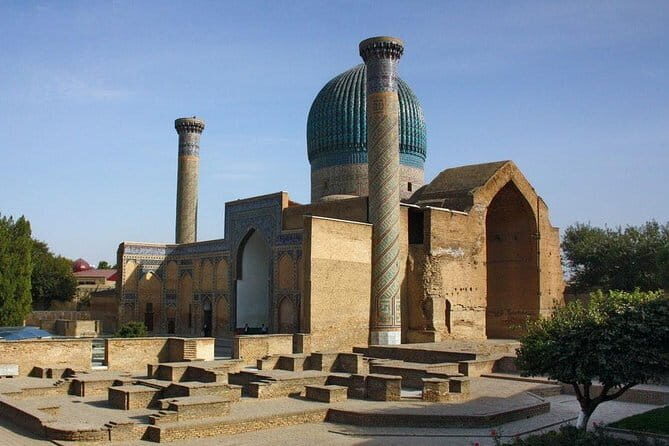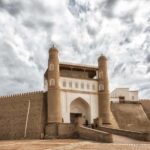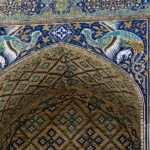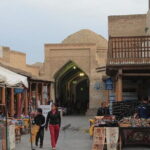
Bukhara hits you fast with blue domes and quiet power. This full-day private highlights tour makes the city feel doable: you get hotel pickup and drop-off and a private guide who connects the dots between the Silk Road trade route and the landmarks you’re seeing. I love how the pace stays relaxed even with a packed route, and I especially appreciate the guides who can explain what you’re looking at in fluent English, like Gullnaz and Shokhrukh. The main thing to watch: several key sites require separate admission tickets that are not included.
You start at 8:00 am from Lyabi House Hotel, and you’re taken around Bukhara in a chauffeured vehicle instead of trying to hop between tight lanes on your own. The tour also includes bottled water and professional guiding, which matters when you’re moving through lots of courtyards and minarets in a single day. One more consideration: if you book a specific language, guides can be reassigned based on availability, and you may end up with English instead of another language.
The best part is that you don’t just tick boxes. You get just enough time at each stop to understand why it matters—then you move on before the city overwhelms you. Think of it as a focused Bukhara sampler with a real human guide, not a rushed photo sprint.
In This Review
- Key things I’d circle before you book
- Why a Bukhara highlights day tour works when you only have one day
- Meeting at 8:00 am in the Lyabi House area
- Stop-by-stop: how the route unfolds in real life
- Ismail Samani Mausoleum: where Central Asia’s early Islamic architecture begins
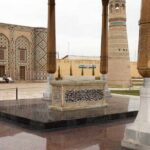
- Chasma Ayub Mausoleum: a legend you can almost feel in the stones
- Ark of Bukhara: power, walls, and the long view of city life
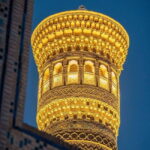
- Poi Kalyan Mosque and the Kalyan Minaret: Bukhara’s signature skyline
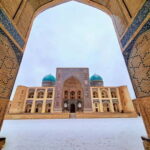
- Mir-i-Arab Madrasa: a teaching institution that shaped daily rhythm
- Trade domes: Toqi Zargaron and the market rhythm
- Lyabi Khause ensemble: madrasas and water in one courtyard world
- Ulugbek and Abdulazizkhan madrasas: learning power in stone
- Nodir Devon Begi: choosing the right details
- Magoki Attori Mosque (and carpet museum): a smaller stop with cultural punch
- Tickets and timing: what you’re really paying for at $60
- The guide can make or break the day
- Who this tour is best for
- Should you book the Bukhara day highlights tour?
- FAQ
- FAQ
- How long is the Bukhara day tour?
- What time does the tour start, and where do we meet?
- Is hotel pickup and drop-off included?
- Is the tour private or shared?
- What is included in the price?
- Are admission tickets included for all the stops?
- What food is included during the tour?
- Can I cancel for a refund?
Key things I’d circle before you book
- Hotel pickup inside Bukhara means you start your day without wrangling buses or taxis.
- A private vehicle keeps the day comfortable and efficient across the historic core.
- Short, timed stops let you see more highlights without spending your whole day in lines.
- Admission mix (some included, many not) helps you plan your budget in advance.
- Guide language matters. People have praised English-speaking guides like Gullnaz, Shokhrukh, and Khurshid Razakov.
- Trade domes and markets add texture beyond mosques and mausoleums.
Why a Bukhara highlights day tour works when you only have one day
Bukhara can feel like a visual overflow. You turn a corner and another dome shows up. Another minaret. Another madrasa portal. Without local context, it can become a blur of brick and tile.
That’s exactly where a structured private day tour earns its keep. You get a clear route through the sites that shape Bukhara’s story, and you don’t waste time figuring out what’s worth stopping for. I also like that the day is built around courtyards and exterior viewing spots, so even a shorter visit still feels meaningful.
You’ll see the major monuments tied to the Silk Road era and the city’s political and religious power centers. And because the tour is private, your guide can pace you based on questions, photos, or just the level of energy you have after a long morning.
You can also read our reviews of more tours and experiences in Bukhara.
Meeting at 8:00 am in the Lyabi House area
You’ll meet at Lyabi House Hotel on Khusainov Street, with pickup/drop-off arranged around Bukhara. Start time is 8:00 am, which is a smart move because it gets you into the historic areas before the later-day crowd pressure builds.
I like early starts for two reasons:
1) You’re less rushed when walking between stops.
2) Courtyard light is nicer in the morning, so photos don’t look like you trapped the sun in a camera bag.
The tour includes private transportation, so you’re not negotiating local routes all morning. You’ll also have bottled water along the way—small detail, big comfort, especially during warm weather.
Stop-by-stop: how the route unfolds in real life
This day tour moves through 15 heritage sites and ensembles. Most stops are around 10–20 minutes, with a couple longer ones. That format is great if your goal is to see Bukhara’s headline monuments and come away with a coherent story.
Ismail Samani Mausoleum: where Central Asia’s early Islamic architecture begins
Your first stop is the Ismail Samani Mausoleum, often considered the first Islamic mausoleum in Central Asia (dated 892–943). It’s a short visit, but it sets the tone. Before you hit the bigger complexes, you get an early reference point for how Central Asian Islamic architecture took shape.
Admission ticket is not included here, so factor that into your day. Still, even with the short time, this is one of those places where the details reward you if your guide points them out.
Chasma Ayub Mausoleum: a legend you can almost feel in the stones
Next comes the Chasma Ayub Mausoleum, dated 1208–1209. The name and legend linked to it help explain why certain sites gained a lasting reputation. Even when your visit is brief, you’ll likely get a story that makes the structure feel less random.
Again, admission ticket is not included. If you’re trying to keep your budget controlled, it helps to accept early that some stops will cost extra.
Ark of Bukhara: power, walls, and the long view of city life
Then you reach the Ark of Bukhara, also called the Ark Fortress, dated to around 500 AD. This is one of the biggest “wow” moments in the route because you’re looking at the kind of fortified seat that shaped how people lived, traded, and governed.
You’ll spend about 40 minutes here, which is noticeably longer than the other stops. That extra time matters: it gives you a chance to absorb the scale instead of rushing through it like a checklist.
Admission ticket is not included for this stop too.
Poi Kalyan Mosque and the Kalyan Minaret: Bukhara’s signature skyline
After Ark Fortress, you head to the Poi Kalyan Mosque (Kalyan Mosque, XVI century), a shorter stop (about 15 minutes). This complex helps you understand how central mosques were designed to carry authority and draw community life.
Right after that, you get the Great Minaret of the Kalon, also dated to 1127. This is a quick 10-minute stop, and it’s also free. It’s the kind of stop that works even if you’re not the biggest architecture person, because the minaret is so visually dominant you can’t ignore it.
Mir-i-Arab Madrasa: a teaching institution that shaped daily rhythm
Next is Mir-i-Arab Madrasa (1530–1535), about 10 minutes. This is one of the stops that is free. What I like about including madrasas in a highlights route is that they shift your attention from rulers and monuments to education and faith—how Bukhara maintained its culture across generations.
Trade domes: Toqi Zargaron and the market rhythm
Then you move into Bukhara’s trading story through the domes and covered market areas.
You’ll see:
- Toqi Zargaron (Trade domes), about 10 minutes, free
- Taqi-Telpakfurushon Market (Trade domes), about 10 minutes, free
- Toki Sarrofon (Trade domes), about 10 minutes, free
These stops may sound similar on paper, but they add variety in real life. The domes and market corridors give you a sense of movement and commerce. You start to connect the Silk Road not just to caravans in the distance, but to the built infrastructure that made trading possible day after day.
Lyabi Khause ensemble: madrasas and water in one courtyard world
After domes and markets, the tour lands at the Lyabi Khause ensemble: madrasas around a water reservoir area, with about 20 minutes on site. This stop is free, and it works like a breather.
It’s a good moment to slow down. You can stand back, look at the architecture edges, and feel how a public square with water anchors social life. If you’ve been doing lots of short stops, this is where the day starts to feel less like sprinting.
Ulugbek and Abdulazizkhan madrasas: learning power in stone
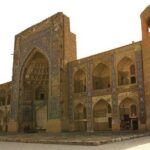
You’ll also pass by Ulugbek Madrasa (1417) and Abdulaziz-Khan Madrasa (1652). Both are short stops (around 10 minutes each), and admission tickets are not included for these.
These places are worth a quick look because they keep your mental map coherent. Madrasas aren’t just pretty gates; they represent a system for education and status. A good guide will tie the dates to the rise of scholars and the city’s role as a crossroads.
Nodir Devon Begi: choosing the right details
Two Nodir Devon Begi stops appear on the route:
- Nodir Devon Begi Madrasasi (1620), about 10 minutes, admission ticket not included
- Nodir Devon Begi Xonaqosi (1620), about 10 minutes, free
Even though both are part of the same theme, they can feel different because of where they sit in the ensemble and how they relate to surrounding streets. The Xonaqosi being free can help if you’re balancing paid admissions earlier.
Magoki Attori Mosque (and carpet museum): a smaller stop with cultural punch
The day ends with Magoki Attori Mosque (VIII century) and the carpet museum component. It’s about 15 minutes, and admission ticket is not included.
This is a nice way to finish because you’re not only ending with one big exterior monument—you’re wrapping up with a mix of faith and everyday craft culture. Even if you only skim the museum portion, it’s a reminder that Bukhara wasn’t built solely for rulers and scholars. It also lives through trade skills and domestic art.
Tickets and timing: what you’re really paying for at $60
At $60 per person, you’re paying for three big things:
- Private transportation
- Professional guide service
- Bottled water
Admission isn’t included at multiple stops (including Ismail Samani Mausoleum, Chasma Ayub Mausoleum, Ark of Bukhara, Poi Kalyan Mosque, Ulugbek Madrasa, Abdulaziz-Khan Madrasa, Nodir Devon Begi Madrasasi, and Magoki Attori Mosque). Some stops are free (like the Great Minaret of the Kalon, Mir-i-Arab Madrasa, several trade domes, and the Lyabi Khause ensemble).
So the value isn’t just the headline price. It’s that you’re buying time and context. Without a guide and vehicle, you’d spend more time coordinating transit and more energy figuring out what matters.
My practical tip: bring a little cash or plan for ticket purchases in advance. A day with many separate sites adds up fast, even if each ticket is for a short stop.
The guide can make or break the day
This is one of those tours where the guide matters a lot. You’re moving through dozens of visual elements that can look similar if nobody explains them.
I’ve seen strong feedback tied to specific guides. For example:
- Gullnaz has been praised for fluent English and clear, memorable explanations that make the monuments stick.
- Shokhrukh has been described as a top city guide, with strong command of Bukhara history and the stories tied to old routes.
- Khurshid Razakov is noted for making sure people feel cared for and for language skills such as Italian, depending on your group.
One operational note to keep in mind: if a requested language guide isn’t available, the tour provider may adjust and arrange another guide. In practice, that means you should stay flexible, especially if you’re booking a specific language.
Who this tour is best for
This Bukhara day tour is a great fit if:
- You have one day and want a real highlights overview without guesswork
- You prefer a private pace rather than following a generic group script
- You want Silk Road context tied directly to buildings and monuments
- You’d rather spend your energy asking questions than navigating
It may be less ideal if you want to linger for a long time at fewer sites. Because the stops are short by design, you’ll likely need a second visit later if you want deep study of carvings, tile patterns, or museum exhibits.
Should you book the Bukhara day highlights tour?
I’d book it if your goal is simple: in 6–7 hours, see the big Bukhara monuments, understand what they represent, and avoid turning the day into a logistics puzzle.
Don’t book it only if your heart is set on slow travel and long museum sessions. Otherwise, this format is exactly the kind of smart first pass that helps you decide what to explore in more detail on a follow-up visit.
If you do book, go in with one mindset: ask your guide for the single thread that connects the stops. When you find that thread, Bukhara stops feeling like random domes and starts feeling like a city with a story.
FAQ
FAQ
How long is the Bukhara day tour?
The tour runs about 6 to 7 hours.
What time does the tour start, and where do we meet?
It starts at 8:00 am. The meeting point is Lyabi House Hotel on N. Khusainov Street 7, 200118, Buxoro.
Is hotel pickup and drop-off included?
Yes. Pickup and drop-off are offered from any location within Bukhara.
Is the tour private or shared?
This is a private tour/activity. Only your group participates.
What is included in the price?
Included items are private transportation, bottled water, and service of a professional guide. The price is $60 per person.
Are admission tickets included for all the stops?
No. Admission tickets are not included for multiple sites. Some stops are free, but others require separate tickets.
What food is included during the tour?
Lunch and dinner are not included. Coffee and/or tea are also not included.
Can I cancel for a refund?
Yes, free cancellation is available. You can cancel up to 24 hours in advance for a full refund.