REVIEW · BUKHARA
Bukhara in a Day History, Culture, and Local Insight Private Tour
Book on Viator →Operated by yulduz_guide · Bookable on Viator
Stepping into Bukhara feels like time travel without the waiting. This private, 4 hours 20 minutes walk strings together the city’s big landmarks and the smaller details that make them click, with a guide such as Yulduz who explains what you’re seeing and why it mattered. I love the fast, efficient route that still leaves breathing room, and I especially like how the tour connects monuments to daily life, from markets and mosques to madrasas. One possible drawback: you’ll hit several stops where entrance fees may apply, so it’s smart to plan for the extra $7 per person.
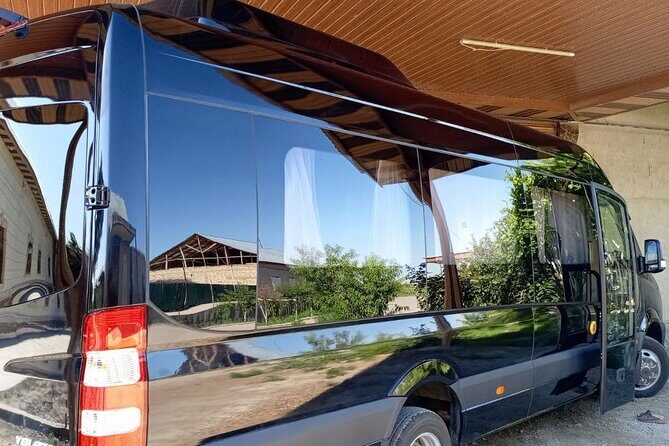
You also start with an easy logistics win: pickup is offered, and you get a mobile ticket. That means less time sorting papers and more time looking up at domes, minarets, and carved details. The group size is small (up to 6), so the guide can adjust pace and questions without herding you along like luggage. Still, if you expect a long sit-down meal break, this tour is built for sights, not for dining.
Practical value check: it’s priced at $80 per group, not per person, which can feel like a bargain if you’re traveling with friends. Just remember that some sights are listed as not included for entry, and you should be ready for a walking-heavy old-town day.
In This Review
- Key Highlights You’ll Feel Right Away
- Price and Logistics: How $80 per Group Really Works
- Meeting Point and Timing: Start Smooth, Not Stressed
- Lyab-i-Hauz Square: Where Life and Architecture Share Space
- Trading Domes: Silk Road Commerce Under One Roof
- Magoki Attori and the Carpet Museum: Old Mosque Roots
- Ulugbek Madrasah: Timurid-Era Learning in Brick and Space
- Abdulaziz-Khan Madrasah: Grand Plans That Didn’t Finish
- Poi Kalyan Complex: Minaret Drama at Kalon
- Ark of Bukhara: Fortress Core and 2,000+ Years of Power
- Bolo Hauz Mosque: Wooden Columns and a Softer Side
- Who This Private Bukhara Tour Fits Best
- Value Verdict: Worth It for the Right Kind of Day
- Should You Book This Bukhara Tour?
- FAQ
- What’s the duration of the Bukhara in a Day tour?
- How many people can be in the group?
- Is pickup included?
- Where does the tour start and end?
- What’s included in the price?
- What entrance fees should I expect?
- Are meals included?
Key Highlights You’ll Feel Right Away
- A small-group private format (up to 6) that makes Q&A actually practical, not rushed.
- A guide who ties buildings to stories, with Yulduz repeatedly praised for clear explanations and a flexible pace.
- Major Bukhara sites in one tight route, from the trading domes to the fortress walls of the Ark.
- Carpet weaving and crafts as part of the vibe of the day, plus a stop area linked to a carpet museum.
- Free stops for several monuments, which helps you keep costs controlled as you go.
Price and Logistics: How $80 per Group Really Works
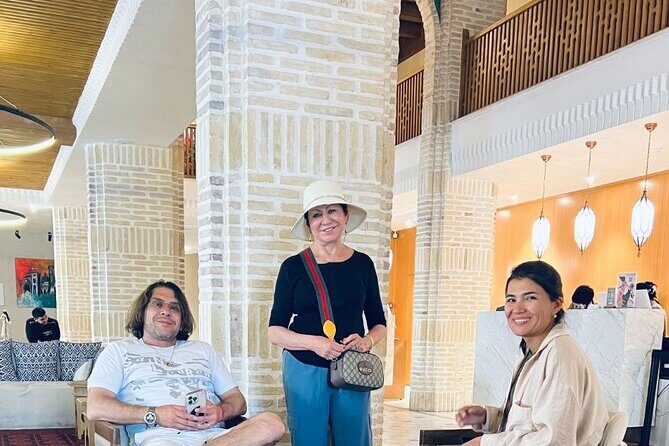
At $80 per group (up to 6 people), the tour’s value depends mostly on how many people you’re sharing it with. If you’re a couple, it still can be fair, but it’s best when you can split the cost among three to six people.
The tour includes bottled water and a professional guide, plus the convenience of pickup offered and a mobile ticket. Those little things add up in Bukhara’s old center, where you don’t want to waste time on loose ends. The route is designed for efficiency, but you still get a human guide, not just a slideshow app.
One cost consideration: several places list entry as not included. The total mentioned is $7.00 per person, applying to sites including Lyabi Hauz, Abdulazizkhan, Poi Kalon Mosque, and the Ark. So when you estimate the true price, plan for that add-on rather than assuming the $80 is the whole day.
You can also read our reviews of more private tours in Bukhara
Meeting Point and Timing: Start Smooth, Not Stressed
The tour starts at the Khodja Nasreddin monument area (Nasreddin Afandi Monument is listed as the meeting reference). You begin at 9:00 am, with the tour ending near Ark of Bukhara on Afrosiab Street.
That timing matters. Early morning light is great for photos of domes and brickwork, and you also avoid some of the midday crush that happens in popular old-town zones. It’s still a walk-heavy day, so if you’re heat-sensitive, you’ll appreciate starting early.
You’ll also want to bring the basics: comfortable shoes and a light layer. Bukhara can feel warm during daytime, and the stops are spread in a way that keeps you moving.
Lyab-i-Hauz Square: Where Life and Architecture Share Space
Your first stop is Lyab-i-Hauz, a central square that has long served as a social and cultural focal point. You’ll meet your guide near the Nasreddin Afandi Monument, a well-known Central Asian folklore character, then work your way through the square and its surroundings.
This is one of those places where you quickly understand what makes Bukhara feel different from many “top ten monuments” cities. It’s not just about buildings. It’s about how people historically gathered around water and shade, and how that rhythm is reflected in the architecture around you.
What I like here is the orientation effect. You get your bearings fast: the square gives you a reference point for the rest of the day. It also sets you up to notice details when you move on—things like dome shapes, carved surfaces, and the way religious and commercial structures relate to each other.
Trading Domes: Silk Road Commerce Under One Roof
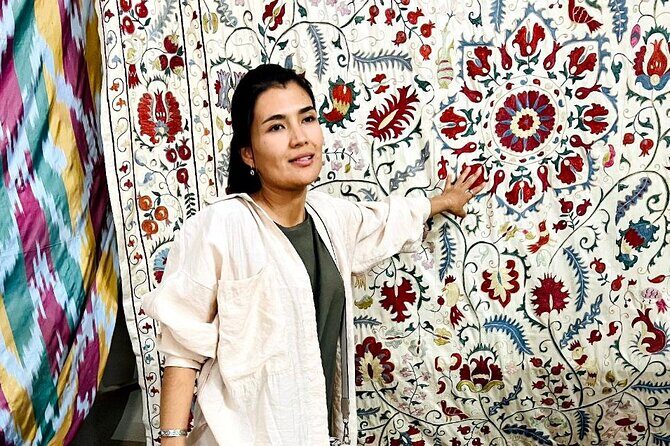
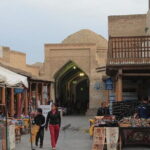
Next you head to the Trading Domes—covered markets built in the 16th and 17th centuries. This is one of the best shifts in the day because it pulls you into the economic heart of historic Bukhara.
You’ll learn that these domes weren’t just pretty walkways. They worked as major commercial hubs along the Silk Road. The names you’ll hear matter, too: the tour references major domes such as Toqi Sarrafon (associated with money changing).
If you care about how trade shaped cities, this part is a must. Domes weren’t random; they were practical. They helped control weather and kept street life moving under cover. And as you look around, you start seeing how Bukhara’s religious sites and its commerce are close neighbors—same city, different roles, shared importance.
Possible consideration: markets can feel busy depending on the time of day. The tour format helps you keep your pace, but if you hate crowds, you’ll want to keep your expectations realistic.
Magoki Attori and the Carpet Museum: Old Mosque Roots
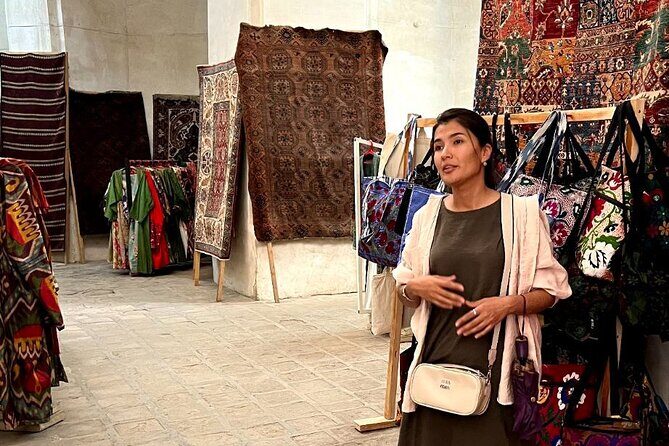
Then you move to Magoki Attori (often noted as Magoki Attoron), described as one of Bukhara’s ancient sites. The complex is tied to a 12th-century tradition, originally preserved as a sacred mosque and later expanded over time.
This stop matters because it shows how layering works in Central Asia. Sacred spaces aren’t always frozen in time. They change, expand, and remain important even as the city evolves.
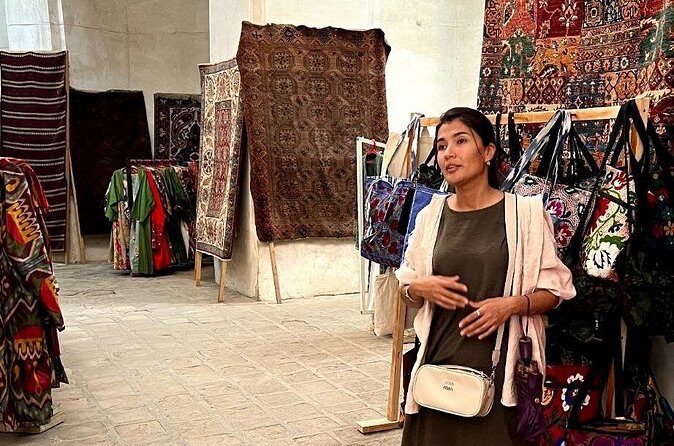
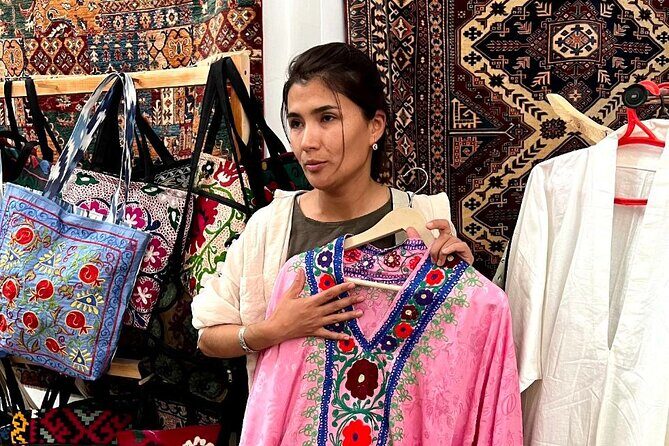
Near here, you also connect with the Carpet Museum area. If you’ve ever wondered why some carpets look more complex and “alive” than others, this is where context helps. The tour information emphasizes the difference between handmade silk carpets (intricate knots and natural dyes) and machine-made silk (more uniform, but less unique in finish). That’s the kind of distinction you can’t fully learn from pictures alone.
You can also read our reviews of more historical tours in Bukhara

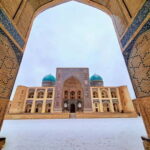
Ulugbek Madrasah: Timurid-Era Learning in Brick and Space
The next architectural stop is the Ulugbek Madrasah, tied to the 15th century and commissioned by Ulugbek, described as a famous astronomer and ruler.
Even if you don’t memorize dates, a madrasah visit tells you something important: education in Bukhara wasn’t an abstract idea. It was built into city form. The architecture also helps you understand how religious and scholarly life were intertwined.
This is one of the “pause and look” moments. You’ll have only about 15 minutes here, so you’ll want to ask your guide what to notice first—often that means proportions, decorative brickwork, and how the building sits within its surrounding street network.
Abdulaziz-Khan Madrasah: Grand Plans That Didn’t Finish
After that, you visit the Abdulaziz Khan Madrasah, begun in the 17th century under Khan Abdulaziz. The tour notes that it was not fully completed, but even in unfinished form it still shows impressive design elements.
This stop is valuable because it adds a realism check. Not every monument is a clean “from start to finish” story. Some were interrupted or changed. Seeing that in person helps you read architecture like history, not just like sightseeing.
Time note: it’s a shorter stop (around 10 minutes), so it’s more about absorbing the look and understanding the background than doing a deep interior inspection.
Poi Kalyan Complex: Minaret Drama at Kalon
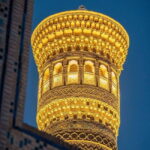
Then comes the Poi Kalyan area, one of Bukhara’s most visually recognizable zones. You’ll spend time around the Kalon Minaret, described as a 12th-century minaret known for height and intricate brick patterns. The tour also frames it as serving as a watchtower and call to prayer.
This is where I’d tell you to slow down. A minaret rewards close attention: patterns, brick layering, and the way the tower pulls your gaze upward. It’s not just height; it’s the precision in how the surface is handled.
You’ll have about 30 minutes here, which is a good amount for photos and for learning without feeling like you’re sprinting.
Ark of Bukhara: Fortress Core and 2,000+ Years of Power
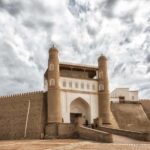
The tour’s biggest “history weight” moment is the Ark of Bukhara. It’s described as a massive fortress at the heart of the city and one of the most important historical landmarks, dating back over 2,000 years.
This is the place that turns everything you saw earlier into a bigger picture. You now understand the city wasn’t only a spiritual and commercial center. It had political power too—guarded by walls and focused on control from the fortress core.
The stop is listed as 1 hour, which is great because the Ark area gives you room to wander and actually take in the scale. If you’re the type who likes to connect stories to physical space, you’ll enjoy this part the most.
Bolo Hauz Mosque: Wooden Columns and a Softer Side
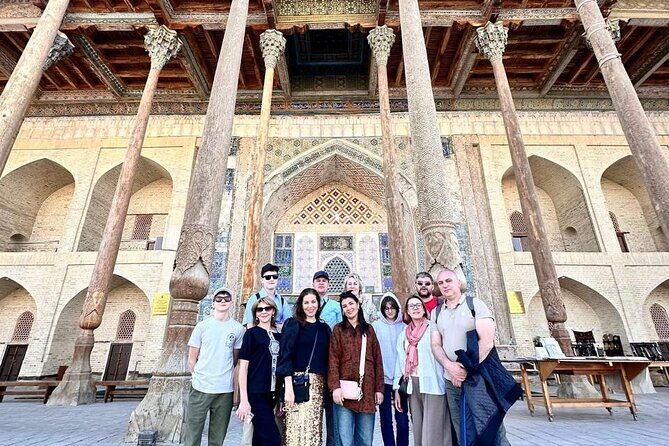
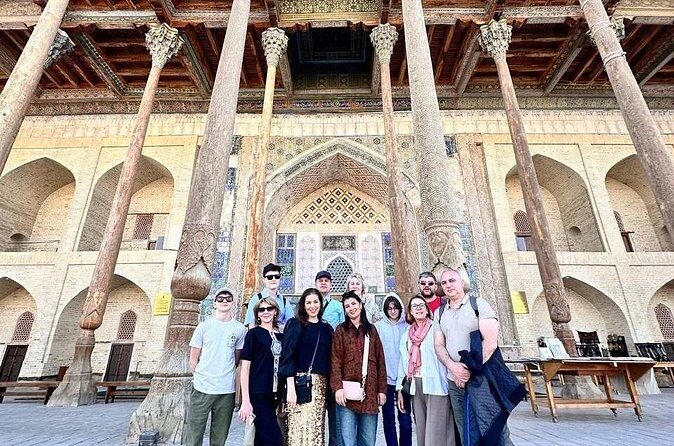
Near the Ark, you finish at Bolo Hauz Mosque, built in the early 18th century. It’s noted for beautifully carved wooden columns supporting the structure.
This stop adds contrast. After fortress walls, a mosque with carved wood details can feel like a breath out. It’s also the kind of place where your guide’s framing helps you appreciate craftsmanship that you might otherwise ignore if you were just scanning for the biggest monument.
You’ll spend around 15 minutes here, which fits the “see it, learn it, keep moving” flow.
Who This Private Bukhara Tour Fits Best
This tour is ideal if you:
- want to see major Bukhara highlights in one day without navigating alone
- like architecture but also want the story behind the buildings
- are traveling with friends or family so the $80 per group price works well
- prefer a guide who can adjust pace when you ask questions
It may be less ideal if you:
- want a heavy food-and-market crawl with lots of eating stops (this itinerary is structured for sights)
- hate walking and standing for extended periods (it’s still a compact old-town route, but movement is constant)
Value Verdict: Worth It for the Right Kind of Day
For $80 per group, a pro guide, and a route packed with landmark architecture, this is strong value—especially for small groups. The key is to budget the optional add-on entrance fees for the listed sites, since that’s the main variable that can change your total spend.
The experience also earns points for how it keeps the day coherent: you’re not bouncing randomly. You move from a central social square (Lyab-i-Hauz), to commerce (Trading Domes), to sacred learning and ancient sites (mosque and madrasas), and then to power and religious architecture (Ark and Bolo Hauz).
Should You Book This Bukhara Tour?
If your goal is a smart, well-paced introduction to Bukhara’s top monuments, this private day format is a good bet. I’d book it if you like clear explanations tied to what you’re actually looking at, and if you want to cover the main sights without worrying about timing or tickets.
If you’re a slow traveler who hates crowds and wants lots of time in museums or cafés, consider booking a longer, more flexible option. But for a focused day—this tour hits the right notes.
FAQ
What’s the duration of the Bukhara in a Day tour?
It lasts about 4 hours 20 minutes.
How many people can be in the group?
It’s a private tour, for up to 6 people per group.
Is pickup included?
Pickup is offered.
Where does the tour start and end?
It starts near the Khodja Nasreddin statue area in Bukhara and ends near the Ark of Bukhara on Afrosiab Street.
What’s included in the price?
Included are bottled water and a professional guide, plus a mobile ticket.
What entrance fees should I expect?
Entrance fees are not included for several sites, with an entry/admissions total listed as $7.00 per person for places including Lyabi Hauz, Abdulazizkhan, Poi Kalon Mosque, and the Ark.
Are meals included?
Meals are not included.