REVIEW · BUKHARA
Best of Bukhara: All Day Private Old Town Tour
Book on Viator →Operated by GM TOURS · Bookable on Viator
Old Bukhara reads like a living textbook. This private day tour strings together the city’s most important architectural landmarks and the street-level details that make the place feel real, not staged. You’ll start around Lyab-i Hauz, then move through icons like the Kalyan minaret and the Ark of Bukhara, ending in the market area where shopping actually makes sense.
I especially like two things: first, the private guide format, which keeps the pace friendly and the explanations clear for your questions. Second, the route mixes monuments with everyday Bukhara sights, including the trading domes and the lanes where you’ll spot Uzbekistan’s famous textiles and craft stalls.
One thing to consider: most major sites have extra entrance fees, and the tour notes about $6 per person for museum and historic sites. Add in that it’s a 5 to 7 hour walking day, so plan for cobblestones and some stair steps.
In This Review
- What makes this Old Town tour work so well
- Lyab-i Hauz: start where Bukhara people actually gather
- The Kalyan Minaret and the Po-i-Kalyan complex: the skyline lesson
- Mir-i-Arab Madrasa and Poi Kalyan Mosque: how to read Islamic architecture
- Bolo Hauz Mosque and Maghak-i Attari Mosque: small stops that add depth
- Ark of Bukhara: the fortress that explains the city’s power
- Trading Domes: where shopping becomes history
- Nodir Devon Begi Madrasasi: education that started as a caravanserai
- Hodja Nasreddin monument: a light moment in a heavy place
- Ulugbek and Abdulaziz-Khan madrasas: tiles, domes, and old tombs
- Bukhara Synagogue: faith alongside shared spaces
- How the walking day feels: pacing, time, and photo strategy
- Value and price: what $65 buys you in Bukhara
- Should you book Best of Bukhara Old Town?
- FAQ
- How long is the Best of Bukhara All Day Private Old Town Tour?
- Is pickup included?
- Is this a private tour?
- Are entrance fees included in the price?
- What major sights are covered?
- What is the cancellation policy?
What makes this Old Town tour work so well
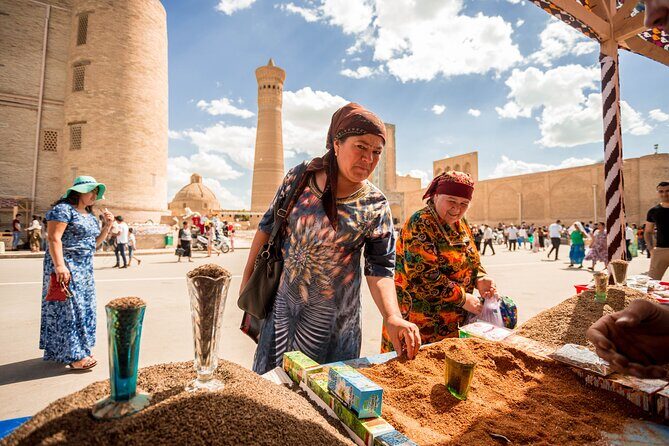
- A private, local guide who helps you connect buildings, stories, and everyday life without rushing you through the details.
- Major Bukhara landmarks in one day, from Lyab-i Hauz to the Ark fortress.
- The Kalyan complex and madrasas shown in a logical walking flow, so you understand what belongs together.
- Trading domes and craft shopping time, which turns sightseeing into something you can take home.
- Strong guide reputation for English and pacing, with names like Shakhnoza, Gulnaz, and Bekhruza highlighted in real experiences.
Lyab-i Hauz: start where Bukhara people actually gather
Lyab-i Hauz sits at the heart of the Old Town, and the setting does something smart right away: it gives you a sense of scale. The pond-centered ensemble was shaped across the 16th and 17th centuries, so you’re standing in an area that has long been designed for community life, not just monument viewing.
You’ll also appreciate the practical side. This is an easy “warm up” stop before you tackle minarets and madrasas, and it’s a good place to orient yourself with your guide’s street map in their head.
You can also read our reviews of more private tours in Bukhara
The Kalyan Minaret and the Po-i-Kalyan complex: the skyline lesson
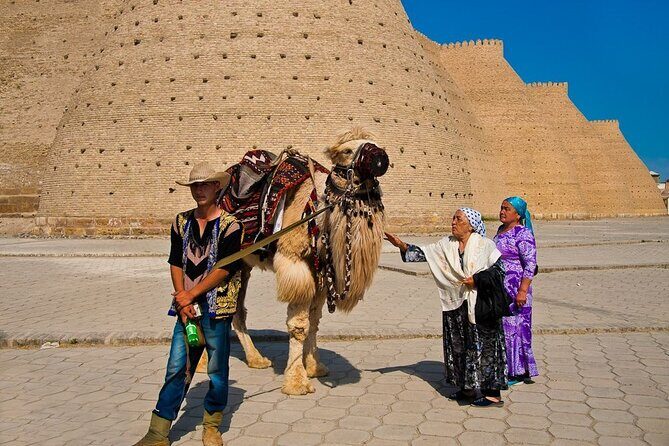
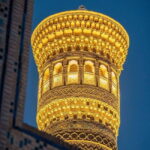
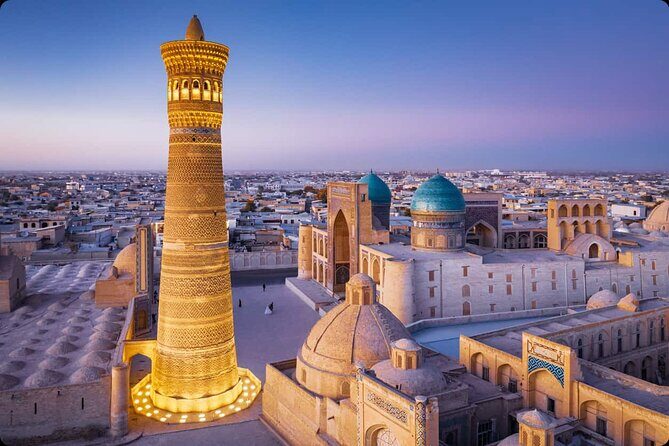
When you reach the Great Minaret of the Kalon, you’re seeing one of Bukhara’s defining vertical landmarks. It belongs to the Po-i-Kalyan mosque complex, which matters because this is where Bukhara’s architecture stops being separate buildings and starts reading like a coordinated plan.
The Kalyan minaret is paired with religious spaces around it, including the Po-i-Kalyan mosque complex parts: the Kalan Mosque, the Kalan Minaret, and the Mir-i-Arab Madrasah. Your guide’s job here is to help you notice the relationships—where education fits into religious life, and how the complex shapes movement through the Old Town.
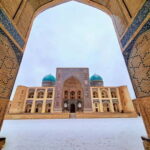
If you care about details, give yourself a little time at the Mir-i-Arab Madrasa next. It’s described as a major spiritual educational establishment that resumed after World War II, and the context your guide provides can make the place feel more connected to the modern story of the city.
Mir-i-Arab Madrasa and Poi Kalyan Mosque: how to read Islamic architecture
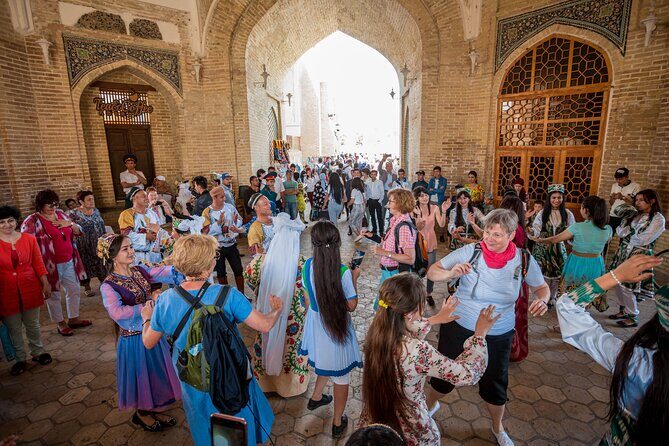
At the Mir-i-Arab Madrasa, you’ll likely focus on what madrasas were meant to do: teach, gather, and anchor a community. Even if you’re not a religious architecture specialist, your guide can help you see how the building’s design supports that purpose.
Then the Po-i-Kalyan area puts it into context again. You’re not just ticking off two stops, you’re seeing a system: minaret for visibility, mosque for worship, madrasa for learning. That makes your photos look better too, because you’ll know what you’re pointing at and why.
Bolo Hauz Mosque and Maghak-i Attari Mosque: small stops that add depth
Some of the most satisfying moments on this kind of walking tour come when the route slows down for context. Bolo Hauz Mosque is one of those quieter layers, built in 1712 on the opposite side of the Ark in the Registan district area, and it’s included as part of Bukhara’s UNESCO-listed historic ensemble.
Maghak-i ’Attari Mosque also connects to the Lyab-i Hauz religious area. This is where you start seeing the Old Town not as a checklist, but as a web of nearby spiritual sites that helped structure daily life.
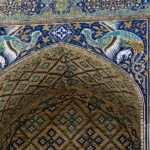
The tip here is simple: don’t rush these two. Take a few minutes to look for patterns in tilework and layout, then let your guide translate what you’re seeing into plain terms.
Ark of Bukhara: the fortress that explains the city’s power
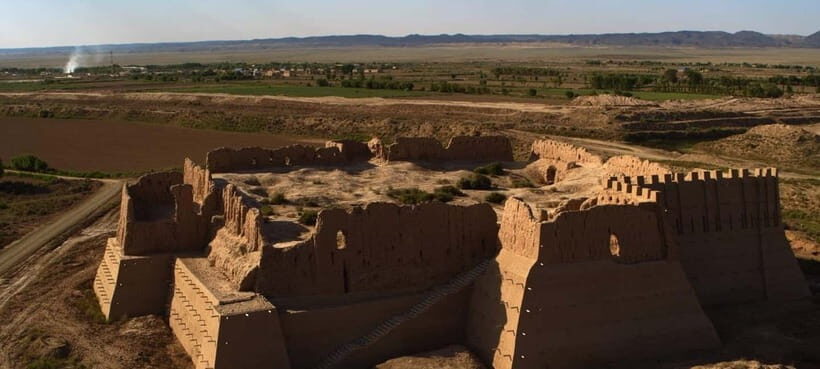
The Ark of Bukhara is a massive fortress dating back to very early periods of occupation in the city, and it anchors your understanding of why Bukhara became important. When you stand in the Ark area, you get a sense of who had authority and how that authority protected the city.
Plan for at least an hour here because it’s not just a photo stop. Your guide can connect what you’re seeing to broader Silk Road-era patterns—Bukhara wasn’t only a cultural center, it was also a stronghold and a place where political power mattered.
One practical note: the Ark area can include uneven ground and some steps. If you have mobility issues, tell your guide early so they can pace accordingly.
A few more Bukhara tours and experiences worth a look
Trading Domes: where shopping becomes history
This part is why I like booking a guided Old Town tour in Bukhara instead of self-wandering only. The trading domes are described as the remaining domes from the ancient city, arranged along a north-to-south route through the Old Town.
Your guide will also explain the famous nickname behind the Trading Domes, which is exactly the kind of detail that turns a building into a story. You’ll be looking at a structure built for trade, then your next steps lead naturally into bazaars and craft streets.
Also, keep your eyes open for textiles. The tour description specifically calls out that Uzbekistan’s hand-woven textiles show up everywhere in the Old Town pedestrian lanes. If you want to buy scarves, rugs, or embroidered items, this is the time to slow down and ask questions about materials and quality.
Nodir Devon Begi Madrasasi: education that started as a caravanserai
Nodir Devon Begi Madrasasi is one of the most interesting “function changes” on the route. Built in 1622 to 1623 by Nodir Devon, it’s described as having been run as a caravanserai and later converted into a madrasah.
That matters because it helps you see how Bukhara worked. People and goods moved through the city, and the buildings adapted to those needs. Your guide’s explanation can help you connect Silk Road logistics to the later religious and educational role the building played.
This stop is also a good reset before you move back into more major landmarks.
Hodja Nasreddin monument: a light moment in a heavy place
Right beside the Lyab-i Hauz complex, the bronze Monument to Hodja Nasreddin adds a different tone to the day. Installed in 1979, it’s associated with humor and an everyday spirit, and it’s an easy break for your legs.
I like this stop because it prevents the whole day from feeling like only stone and tiles. You’ll still get history, but you’ll also get a reminder that Bukhara’s story includes jokes, folklore, and human-scale character.
Ulugbek and Abdulaziz-Khan madrasas: tiles, domes, and old tombs
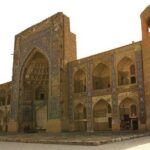
Ulugbek Madrasah is described as completed in 1420, with exterior tilework, a fluted dome, stained windows, and old tombs. Even if you’re short on time, this is one of those places where the guide’s commentary helps you “read” the facade instead of just staring at it.
Abdulaziz-Khan Madrasah rounds out that madrasa focus. In the description, it’s tied to scholarship and sciences through the broader storyline of Ulughbek and his patronage, and your guide can connect it back to what you’ve seen at earlier religious education stops.
Practical advice: if you care about architectural photos, these are the best times to pause and frame the buildings. Don’t rush to the next doorway.
Bukhara Synagogue: faith alongside shared spaces
Bukhara’s Bukhara Synagogue stop gives your day a wider lens. The description notes that before the synagogue was built, Jews of Bukhara prayed together with Muslims in the same mosque.
That kind of detail can change how you view the religious landmarks you’ve already visited. Instead of seeing separate faiths as sealed-off worlds, you begin to understand how communities interacted in daily life over long periods.
If you’re sensitive to quiet spaces, keep your voice down here. Your guide can also tell you what is allowed and what is best to respect.
How the walking day feels: pacing, time, and photo strategy
This is set up as a private tour, so you’re not stuck with a large group’s speed. The duration is listed as about 5 to 7 hours, which usually means you get a real pass through the Old Town without spending your entire day in transit.
From the way the tour is described, you should also expect pickup from central hotels where the guide meets you. In at least some situations, a local taxi is used to reach the Old Town start, then the rest is walking through the pedestrian-friendly areas.
Photo tip that matters: in Bukhara, light changes fast as you move between open courtyards and shaded lanes. Use your guide’s timing. If they pause at a viewpoint, it’s usually for a reason, like showing the relationship between the minaret and the mosque complex.
Value and price: what $65 buys you in Bukhara
At $65 per person, the biggest value isn’t just that you get a guide. It’s that you get someone who can connect architectural landmarks to how the city functioned—trade routes, education, worship, and craft culture.
You do have to account for entrance fees. The tour notes extra admission fees for museum and historical sites of about $6 per person, while some areas like Lyab-i Hauz and the Trading Domes are listed with free admission tickets. So you’re not paying twice for everything, but you should budget for at least a small additional spend.
Is it worth it? For me, the question is whether you want a guided “why” behind each stop. If you’re the kind of visitor who likes understanding what you’re looking at, this tour is priced like a smart upgrade over solo wandering.
Should you book Best of Bukhara Old Town?
Book this tour if you want an efficient Old Town day that still feels human. The combination of top monuments (Kalyan complex, Ark of Bukhara) and the trade and craft side (Trading Domes, textiles and bazaars) is exactly the blend that makes Bukhara memorable.
Skip it if you dislike walking for 5 to 7 hours or if you prefer a purely self-guided pace where you can linger only where you personally feel like it. Also, if entrance fees would feel annoying, double-check your expectations upfront since additional site admissions are part of the experience.
In short, if you want Bukhara to make sense as you walk, this private route is a strong bet.
FAQ
How long is the Best of Bukhara All Day Private Old Town Tour?
The tour lasts about 5 to 7 hours.
Is pickup included?
Yes. The guide meets you at central hotels, and pickup is offered.
Is this a private tour?
Yes. It is private, and only your group participates.
Are entrance fees included in the price?
Museum and historical site entrance fees are not included. The tour notes about $6 per person for museums and historical sites.
What major sights are covered?
You’ll visit highlights including Lyab-i Hauz, the Great Minaret of the Kalon, Mir-i-Arab Madrasa, the Poi Kalyan complex, Bolo Hauz Mosque, Ark of Bukhara, the Trading Domes, Ulugbek and Abdulaziz-Khan madrasas, Maghak-i ’Attari Mosque, and the Bukhara Synagogue.
What is the cancellation policy?
Free cancellation is available if you cancel up to 24 hours before the start time for a full refund.