Timur’s tomb is closer than you think. This one-day Samarkand run from Tashkent is built around a private car plan that hits the big names fast, including Registan, while still leaving room for a hands-on craft stop and market time. I like that it blends landmark architecture with real everyday culture, and I also like the way the guide connects the dots between empire-era power, Islamic art, and even science. One catch: it’s a long day with a moderate amount of walking, and rain can mess with outdoor photo plans (so pack smart).
What makes it work is the pacing. You get a guided flow with photo stops, short visits at each highlight, and breaks for snacks and food tasting, so you’re not stuck in a museum-only mood. The day also includes time to see places that many people usually skip on short itineraries, like the Ulugh Beg Observatory and the paper production tradition. The possible downside for budget planning is simple: admission tickets aren’t included, so you’ll want extra cash for entrances and any purchases at the bazaar.
Before you go, I’d plan for weather and comfort. Wear comfortable walking shoes, bring a water bottle, and consider an umbrella if the forecast looks iffy—one rainy day is enough to turn a great “photo day” into a damp shuffle.
In This Review
- Key points worth knowing before you go
- One day in Samarkand from Tashkent: why the 13 hours make sense
- Gur-e-Amir Mausoleum: starting with Timur’s legacy
- Registan Square and its three madrasas: how to read the icons
- Bumazhnaya Fabrika Meros: a paper-making pause that changes the mood
- Ulugh Beg Observatory: science in the middle of Timur’s city
- Shah-i-Zinda: tilework, steps, and spiritual atmosphere
- Bibi-Khanym Mosque: scale you can’t ignore
- Siab Bazaar break: shopping and food-market time
- Weather, walking, and pacing: making the day comfortable
- How the private-car guide experience works in practice
- Price and value: what $185 buys and what to budget for
- Should you book this Samarkand one-day guided tour?
- FAQ
- How long is the Samarkand one-day tour from Tashkent?
- Is transportation included?
- What major sights are included during the day?
- Does the tour include admission tickets?
- What languages are the live guides available in?
- Can I take photos during the tour?
- Do I need cash during the tour?
- What should I pack for the day?
- Is free cancellation available?
Key points worth knowing before you go
- Private-car comfort for a 13-hour route with hotel pickup and drop-off from Tashkent
- Registan Square plus Gur-e-Amir in one day, with guided context for both
- Ulugh Beg Observatory for the science angle most quick trips skip
- Paper production at Bumazhnaya Fabrika Meros, tied to old regional tradition
- Shah-i-Zinda and Bibi-Khanym Mosque as two different spiritual-and-scale experiences
- Siab Bazaar time for shopping and a real food-market break
One day in Samarkand from Tashkent: why the 13 hours make sense
A one-day trip to Samarkand sounds like a sprint, but this format is surprisingly practical. With a total duration of 13 hours, you’re basically buying a full “greatest hits” loop—without the stress of arranging transport, negotiating guides, or trying to stitch together stops on your own.
The value sits in the fact that transportation between sites is handled end-to-end, using a private car and a professional guide. That matters here because Samarkand’s top sights are spread out enough that doing it DIY can turn into more driving than sightseeing. Instead, the day is organized like a story: start with Timur’s legacy, move into the Registan heart of Islamic architecture, then shift to science, craftsmanship, and finally the market.
For the price ($185 per person), you’re paying for time saved and a guide who can explain what you’re seeing—especially at places where the details matter, like the tilework and the astronomical history. The one thing to watch is that admission tickets aren’t included, so your final “all-in” cost will depend on how many entrances you use during the day.
You can also read our reviews of more guided tours in Tashkent
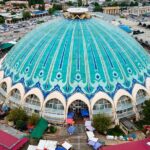
Gur-e-Amir Mausoleum: starting with Timur’s legacy
You start at Amir Temur Mausoleum, with a photo stop and a guided visit. This is a smart opening because it sets the tone. Timur founded the Timurid Empire in the 14th century, and his burial site turns history from a textbook topic into a physical place you can stand in front of.
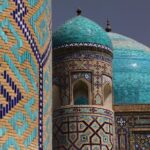
The architecture is the main event: an imposing dome, intricate tilework, and majestic minarets that give the whole complex a strong visual pull. Even if you’re not a big “dome and minaret” person, this stop helps you understand why Samarkand became a magnet for art and power.
Practical tip: keep an eye on the light. If it’s bright, the tiles can pop; if it’s cloudy, you’ll still get good detail, but you may want to move a bit for steadier photos. If it’s raining, don’t let it ruin the first stop—Gur-e-Amir’s scale still reads well, even with gray skies.
Registan Square and its three madrasas: how to read the icons
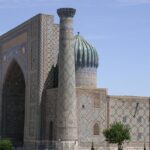
Next comes Registan Square, the UNESCO World Heritage site that functions like the heart of Samarkand. This stop is usually what people mean when they say Samarkand looks unreal—and with good reason. You’re seeing the famed three madrasas arranged around the square, each one showing off Islamic architectural design with stunning tilework, intricate details, and grand entrances.
Here’s the trick: don’t just look at the facades as decoration. Ask your guide what these madrasas represented and why their layout and ornamentation mattered. When someone explains the purpose behind the form, the complex stops feeling like “pretty buildings” and starts feeling like a city with a plan.
You’ll get a guided visit plus time that’s clearly built for photos. In good weather, you’ll want a couple angles of the square, including a shot that shows how the buildings frame the open space. In rain, focus on close detail—the tiles and patterns keep your eye busy even when the ground is slick.
Bumazhnaya Fabrika Meros: a paper-making pause that changes the mood
Then comes a stop that’s easy to overlook when you’re chasing only monuments: a paper factory in Samarkand, Bumazhnaya Fabrika Meros. The key detail here is the timeline. The region’s paper production tradition dates back to the 9th and 10th centuries, so this isn’t just a souvenir stop pretending to be history.
Why I like this kind of break: it slows the day down in a useful way. After domes, portals, and mausoleums, you shift into something more human and craft-based. You also get a feel for how technology and trade shaped everyday life along the Silk Road, not only the grand architecture.
This is also the kind of stop where your guide’s explanations really help. Even without getting deep into technical details, you’ll come away with a better sense that Samarkand’s legacy isn’t only about buildings—it’s also about making, exchanging, and producing.
Practical tip: bring small cash if you want to buy something. The day includes a bazaar and food-time, so having some Uzbek som on hand keeps you flexible.
Ulugh Beg Observatory: science in the middle of Timur’s city
After lunch time, you visit the Observatory of Ulugbek (Ulugh Beg Observatory). This is one of those places that makes your day trip feel more original, because it’s not just another “walk and look” stop. The observatory is described as one of Samarkand’s most significant scientific landmarks.
To make the visit click, listen for the historical context your guide provides. Ulugh Beg is tied to astronomical study, and the observatory’s reputation helps you understand how a major city could be both a power center and a research hub. You’re standing in the shadow of empire-level wealth and also seeing the ambition to measure the sky.
This stop includes a photo stop and a guided visit, so you won’t have to guess what to pay attention to. If the day is hot, the pace here also gives your feet a bit of a reset compared with longer walking loops.
A few more Tashkent tours and experiences worth a look
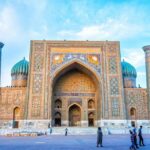
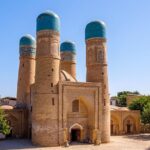
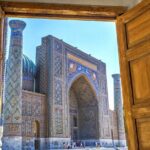

Shah-i-Zinda: tilework, steps, and spiritual atmosphere
Next is Shah-i-Zinda, a complex of stunning mausoleums. You get a photo stop and a guided visit, plus time to see the complex up close.
What makes Shah-i-Zinda special is how it combines craftsmanship and spirit. The tilework is intricate, and the place has spiritual significance beyond its visuals. If you’ve only seen religious sites as architecture, this one helps you feel the “lived meaning” behind the design.
Practical tip: plan for steps. Even though you’re not given a specific walking distance, the style of complex here usually means more footwork than a single building site. Wear shoes that can handle uneven surfaces, and keep water in reach during breaks.
Bibi-Khanym Mosque: scale you can’t ignore
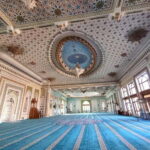
Then you move to Bibi-Khanym Mosque, one of the most famous landmarks in Samarkand. The big idea here is scale. The mosque is described as the largest and impressive mosque in Central Asia, and once you’re there, you can see why people remember it.
This is a “pause and take it in” kind of stop. The guided visit helps you appreciate the architectural brilliance instead of only treating it like a photo backdrop. If you’re into symmetry, patterns, and grand entrances, you’ll get a lot out of this one.
If it’s raining, you’ll still be able to enjoy the structure, but keep an eye on slip risk around entrances and courtyards. In gray conditions, the mosque can look even more dramatic because the stone and tiles keep their contrast.
Siab Bazaar break: shopping and food-market time
Finally, you end at Siab Bazaar (also called Siyob Bozor). This is one of the oldest and most active markets in Samarkand, and the tour builds in a break so you can slow down before heading back to Tashkent.
You’ll have guided time for shopping and a food market visit, plus the chance for snacks and tasting. Even if you’re not shopping, this stop gives you what big monuments can’t: day-to-day color. It’s where you see the city’s supply chain in motion—spices, produce, and the kind of practical commerce that keeps a historic place feeling alive.
Practical tip: photography is allowed at most sites, but at markets it can vary by stall and area. Don’t treat cameras like a right—ask with your eyes and keep it respectful.
If you plan to buy anything, use Uzbek som and be ready that not all places accept card payments. For small snacks, you’ll usually be fine with cash.
Weather, walking, and pacing: making the day comfortable
A recurring reality with this kind of day trip is the weather. One day can be sun, the next can be rain for the whole schedule. The good news: the route still covers major indoor-friendly architecture early and later, but rain does mean soggy ground and less ideal photo angles outdoors.
Here’s how to prepare based on what the day structure implies:
- Bring an umbrella or rain layer if skies look unstable
- Use shoes with grip for courtyards and steps
- Bring sunscreen and a hat for sunny hours
- Carry a water bottle; the schedule is long
Also note the guide languages: English, Russian, and Uzbek are available. If you’re choosing a language, pick what lets you ask questions comfortably—this tour is the kind where conversation makes the stops land harder.
How the private-car guide experience works in practice
This is a professional-guide day with hotel pickup and drop-off, plus transportation between sites. That combination changes the experience in two ways.
First, you get continuity. When you jump from place to place without support, you spend mental energy figuring out what you’re looking at. With a guide, you can spend that energy on enjoying the visuals.
Second, the guide can respond to real-world conditions. The day is structured, but it’s not robotic. If you want extra time at a photo spot or you have questions while standing in front of a tile panel, the format is set up to allow that.
And because it’s private or small-group, you’re less likely to feel like you’re trapped in a cattle-line. You can keep your pace steady, ask questions without shouting, and manage breaks without waiting for a crowd.
Price and value: what $185 buys and what to budget for
At $185 per person for a 13-hour day, you’re paying for:
- Private car transport from Tashkent and between sites
- A professional guide who walks you through each highlight
- Hotel pickup and drop-off
What’s not included:
- Admission tickets
- Personal expenses
So the value question comes down to your priorities. If you want Samarkand’s top sights with a guide and zero logistics stress, this is a reasonable way to buy time. If you’re the type who enjoys solo travel and you already know how to line up tickets and transit, you might spend less on logistics—but you’d be trading away guide context at the moments that benefit most from it.
Budget tip: plan on extra Uzbek som for entrances and bazaar purchases, and set aside money for anything you want beyond the scheduled breaks. The tour includes lunch time and local snack opportunities, but entrance fees and personal spending can still add up.
Should you book this Samarkand one-day guided tour?
I think you should book it if you have limited time in Uzbekistan and you want a high-impact day that covers the essential sights: Gur-e-Amir, Registan Square, Ulugh Beg Observatory, Shah-i-Zinda, Bibi-Khanym Mosque, and Siab Bazaar—plus the unusually smart craft pause at the paper factory.
Skip it (or be cautious) if you dislike long days or you’re not comfortable with moderate walking. Also factor in rain risk: you can still enjoy the architecture, but expect photo plans to shift.
If your goal is to see the must-sees without turning your vacation into a spreadsheet, this is a strong match. It’s not about going slow. It’s about getting it right in one carefully guided day.
FAQ
How long is the Samarkand one-day tour from Tashkent?
The tour lasts 13 hours, and starting times depend on availability.
Is transportation included?
Yes. It includes transportation by private car, with transportation between sites and hotel pick-up and drop-off.
What major sights are included during the day?
You’ll visit Amir Temur Mausoleum (Gur-e-Amir), Registan Square, the Bumazhnaya Fabrika Meros paper factory, the Ulugh Beg Observatory, Shah-i-Zinda, Bibi-Khanym Mosque, and Siab Bazaar.
Does the tour include admission tickets?
No. Admission tickets are not included, so you’ll need to budget separately for entrances.
What languages are the live guides available in?
The live tour guide is available in English, Russian, and Uzbek.
Can I take photos during the tour?
Photography is allowed at most sites, but flash photography may be restricted in certain areas.
Do I need cash during the tour?
It’s a good idea to bring Uzbek som for personal expenses, since not all places accept credit cards.
What should I pack for the day?
Wear comfortable walking shoes. Bring a water bottle, and pack for weather changes (hat and sunscreen for sun, plus a jacket or umbrella for cooler or rainy days).
Is free cancellation available?
Yes, you can cancel up to 24 hours in advance for a full refund.