REVIEW · BUKHARA
Best of Bukhara: All Day Private Old Town Tour
Book on GetYourGuide →Operated by GM TOURS BUKHARA · Bookable on GetYourGuide
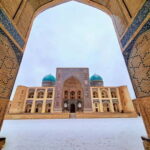
Bukhara’s Old City reads like a storybook. On this private six-hour walk, a licensed guide helps you connect the stones—minarets, madrasas, and domes—to what they meant for daily life and power.
I especially like the bazaars and textile stops. At places such as Lyabi Khauz and the Toqi Sarrafon bazaar, you get structured time to browse, plus context for what you’re seeing, including Uzbekistan’s famous hand-woven textiles. Guides like Shakhnoza (Shaki) have impressed people with history you can actually use, not just facts.
One thing to plan for: monument entrance tickets cost extra, about $8 per person. Also, it’s a walking day with several short stops plus small stretches of free time—fun, but you’ll want comfortable shoes and an unhurried pace.
In This Review
- Key highlights worth aiming for
- Bukhara’s Old City: what you’re really walking through
- Private guide value: why $64 can make sense
- Lyabi Khauz: the public square that sets the tone
- Kalyan Minaret and the Great Minaret of the Kalon: when the city lifts your eyes
- Bolo Haouz Mosque: a calm stop with useful context
- Citadel Ark: the power center you can feel in your legs
- Toqi Sarrafon Bazaar: the dome of trade and the habit of browsing
- Madrasas from Nodir Devonbegi to Ulugbek: learning as architecture
- Khodja Nasreddin statue: a quick pause with local storytelling
- Magok-i-Attari and the Bukhara Synagogue: faith sites that widen the story
- Timing, walking comfort, and the best way to shop without losing the day
- Guide quality matters more than you’d think
- Should you book this Best of Bukhara private Old Town tour?
- FAQ
- How long is the Best of Bukhara: All Day Private Old Town Tour?
- How much does the tour cost per person?
- Is the tour private?
- What languages is the live guide available in?
- Is hotel pickup included?
- Are entrance tickets included?
- Does the tour help you avoid waiting in lines?
- What’s the cancellation policy?
- Is reserve and pay later available?
Key highlights worth aiming for
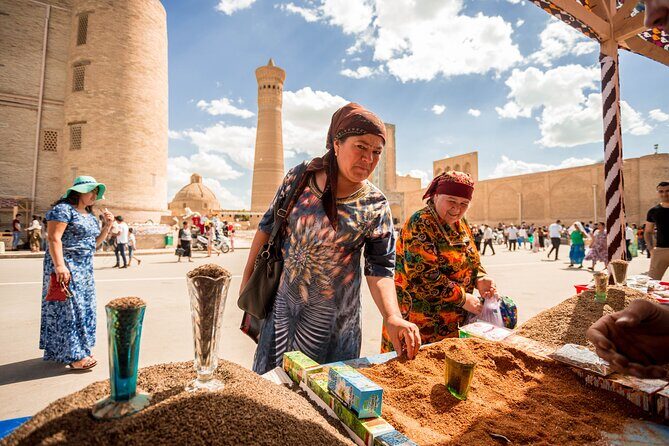
- UNESCO Old City walking route focused on the monuments you’ll keep seeing in photos, and the ones people miss
- Fully licensed private guide who can tailor explanations to your pace and interests (names like Shakhnoza, Malinka, Dora, Gulzade, and Vazira show up often)
- Express security check that helps you avoid unnecessary waiting at stops that require it
- Bazaars with real browsing time at Lyabi Khauz and Toqi Sarrafon, where crafts and spices are front and center
- Big icons plus supporting sights: Citadel Ark, Kalyan Minaret, and even the Bukhara Synagogue
- Photo stops + free time built into the schedule so you can absorb details instead of just marching through
Bukhara’s Old City: what you’re really walking through
Bukhara’s Old City can feel like it’s still doing its job. You’re not just staring at ruins. You’re moving through a district where architecture, trade, and religious life were tightly linked—so the tour works best when you look up and look around.
This is a walk-first experience. You’ll spend your day on pedestrian-friendly streets, with a guide pointing out what to notice and why. Even when you’re only passing storefronts, the city’s craft tradition shows up fast—especially hand-woven textiles.
The schedule is built to keep you from losing the thread. Instead of random hopping, the route clusters related landmarks, so you can connect the minaret, the madrasas, the mosques, and the trading areas as one system.
You can also read our reviews of more private tours in Bukhara
Private guide value: why $64 can make sense
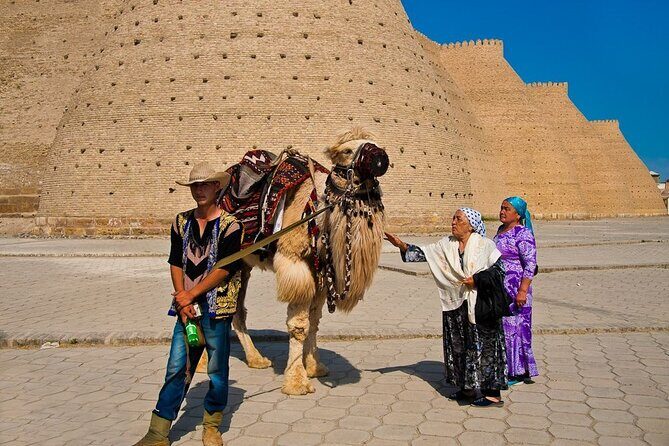
Let’s talk math and meaning. At $64 per person for about six hours, you’re paying for a private, live guide plus hotel pickup and the basics that make the day smoother (all fees and taxes are included in the tour price).
What’s not included is key: monument entrance tickets. The tour lists entrance tickets to all monuments as an extra cost (about $8 per person). Even so, the private format can still be good value because you’re paying to cut through the confusion. In a place like Bukhara, it’s easy to see impressive buildings and miss the point.
Where the guide really adds value is in the quick storytelling that turns architecture into understanding. People in the guide comments repeatedly mention that the pacing is “just right,” the explanations are clear, and the route feels more like time with a friend than a lecture. One guide even stood out for adjusting to personal needs, which matters because you’ll naturally want extra minutes for photos or questions.
Lyabi Khauz: the public square that sets the tone
You start at Lyabi Khauz, with about an hour here. This stop works as an easy on-ramp to the city: you get a photo stop, guided tour, walking time, and a chance to shop.
Lyabi Khauz is the kind of place where you can feel how Bukhara’s culture moved through the day. You’ll see the layout of the area and learn what to watch for—design choices that repeat across the Old City. If you’ve ever wished monuments had context, this is where you begin getting it.
Because the schedule includes shopping time, you can also treat this as your first “souvenir checkpoint.” You’re not locked into buying early, but you’ll start recognizing what’s locally made versus what looks mass-produced.
Kalyan Minaret and the Great Minaret of the Kalon: when the city lifts your eyes
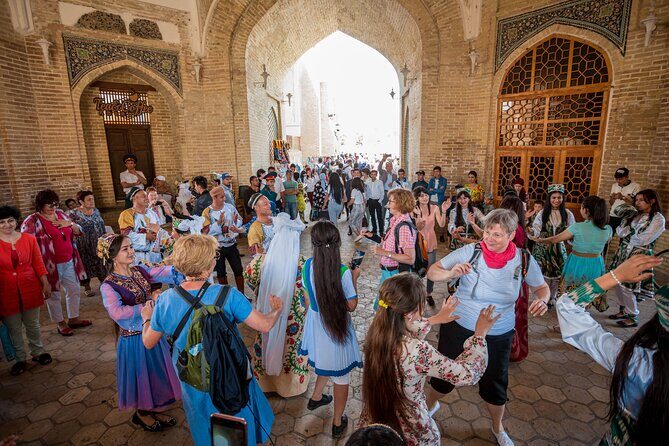
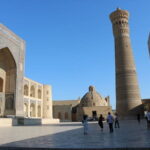
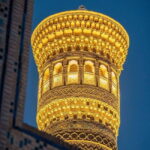
Next comes the Kalyan Minaret, about a 30-minute stop. This is your classic Bukhara marker: the kind of landmark that anchors the whole skyline and makes it easier to orient yourself.
A guided stop like this helps because minarets can look similar at a distance. The guide’s job here is to point out the details—proportions, decorative patterns, and how the monument fits the surrounding structures. You’ll also get time to shop and walk, which is useful because the area around major landmarks is where you’ll find the most practical browsing.
Drawback to keep in mind: if you’re the type who wants to spend a long time staring upward, the 30 minutes may feel short. The schedule moves, though, and that’s what keeps you from spending the whole day stuck at one view.
Bolo Haouz Mosque: a calm stop with useful context
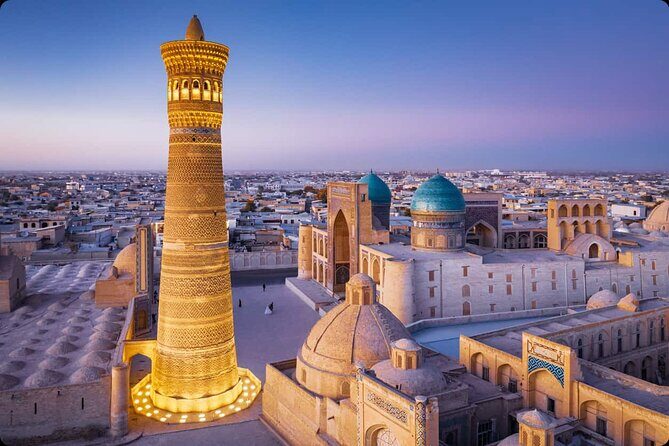
Bolo Haouz Mosque follows, another roughly 30 minutes. Expect photo time, a guided explanation, free time, and shopping. This stop tends to be a breather—still important, just less of a “wow from far away” moment than the minaret.
This is where the guide’s stories can make religious architecture feel less mysterious and more specific. You’ll likely notice how the mosque’s setting connects to the surrounding madrasas and trading spaces. If you’re paying attention, you start seeing Bukhara as a network instead of a list of sites.
The free time matters here. It’s enough to take a closer look at surfaces and patterns without turning it into a rushed photo factory.
A few more Bukhara tours and experiences worth a look
Citadel Ark: the power center you can feel in your legs
Then it’s Ark, about a 1-hour stop. The Ark is the Citadel—literally a place of governance and authority—so the atmosphere is different. Even when you’re just walking through courtyards and passageways, you can sense the logic of a fortified complex.
The guide’s role is especially important at the Ark. This is one of those sites where it’s easy to miss meaning if you only see walls and arches. You want the “why it mattered” layer: how the fortress worked, what life looked like inside, and how it connects to the rest of the Old City.
Possible drawback: because it’s a longer stop, it can tempt you to move fast. Don’t. Take a moment, slow down, and let the guide point out the structural clues. If you rush here, you’ll lose the best part.
Toqi Sarrafon Bazaar: the dome of trade and the habit of browsing
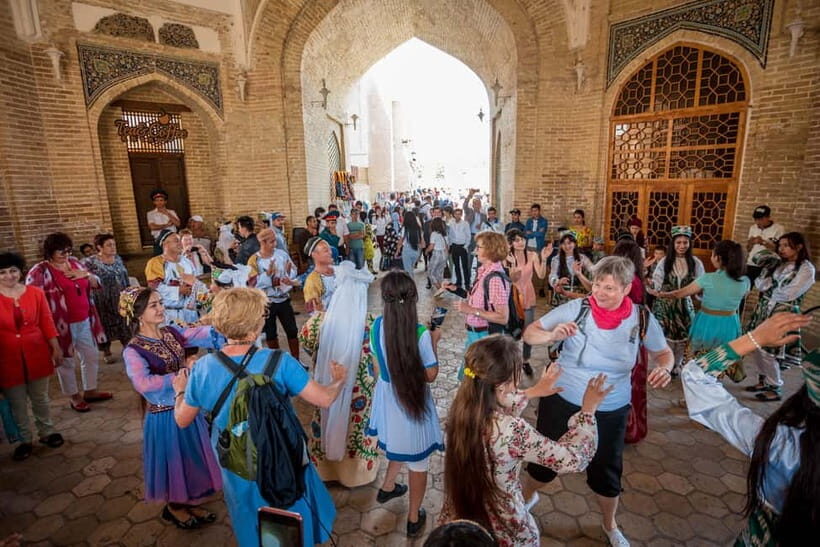
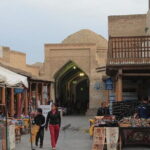
Toqi Sarrafon Bazaar is next, about 30 minutes, with visit time, guided tour, free time, and shopping. This is where Bukhara shifts from monuments to commerce—exactly how the city used to function.
The tour description specifically points out that this trading area earned its famous nickname as part of its trading identity, and that’s the kind of detail that makes the bazaar feel more real. You’re not just shopping inside pretty architecture. You’re walking through a market space that was built for movement of goods and money.
If you’re after Uzbek souvenirs, this is the “most likely to find things you’ll actually use” stop. Spices and textiles are a big focus. If you’ve got a gift list at home, I’d treat this as your main shopping block.
Small consideration: bazaars can be busy and sensory-heavy. The private format helps, though, because you can ask your guide to slow down while you look, instead of trying to keep pace with a group.
Madrasas from Nodir Devonbegi to Ulugbek: learning as architecture
After the trading domes, the route turns back toward education and religious scholarship through madrasas and mosques.
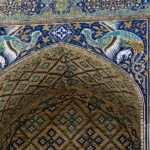
First is Nodir Devonbegi Madrasah (about 30 minutes). Expect a photo stop, visit, guided tour, free time, and shopping. Madrasas can blur together if you only glance at their facades. With a guide, you’ll start picking out differences—layout choices and decorative themes that signal the building’s specific character.
Then you’ll continue to Ulugʻbek madrasasi (about 30 minutes) and Abdul Aziz Khan Madrasah (about 30 minutes). Both are listed with visits, guided tours, free time, and the usual walking and sightseeing time, so you get a chance to look closely without feeling stuck in one place too long.
Why this part of the tour is valuable: madrasas aren’t just “pretty buildings.” They’re a sign of how Bukhara valued learning and how that learning was housed in permanent, statement-making structures. If you pay attention to the details your guide points out, you’ll leave with a better sense of how the city’s institutions worked.
Khodja Nasreddin statue: a quick pause with local storytelling
Khodja Nasreddin statue is about 30 minutes, with photo stop, visit, guided tour, free time, and scenic views on the way. This is a good break in the middle of the denser architectural section.
What I like about including a figure like this is that it shifts the mood from stone and scholars to everyday character and folk memory. The guide’s explanations can give the statue more meaning than a quick photo.
This stop also gives you space to re-set mentally. You’re walking again, but you’re not just marching through more monuments.
Magok-i-Attari and the Bukhara Synagogue: faith sites that widen the story
Next is Magok-i-Attari Mosque (about 20 minutes). Shorter than the madrasas, it’s still a guided stop with visit and free time. Because it’s brief, it helps maintain momentum, but you’ll want to be alert so you don’t treat it like a “blink and you’re done” stop.
Then comes Bukhara Synagogue (about 30 minutes). This is an important inclusion because it broadens what you think Bukhara’s religious and cultural landscape can be. You’ll get a visit, guided tour, free time, and walking time between sights.
The main thing I’d watch for here is perspective. Some visitors expect a one-note Old City. This stop gently challenges that idea by showing another layer of community history.
Timing, walking comfort, and the best way to shop without losing the day
This tour runs about six hours, and it mixes guided time with short free-time breaks. That pacing is one reason people rate it so highly: you get enough structure to understand the highlights, but you’re not welded to your guide’s schedule.
Because the route is heavily walking-based through the Old Town district, I’d come ready for shoes that won’t punish you. You’ll be on foot for stretches of the day, with multiple photo stops and museum-like visits.
Budget-wise, plan for entrance tickets. The tour lists monument entrance tickets to all monuments as an extra $8 per person, plus suggested gratitude for your guide. If you’re trying to keep costs predictable, add that in now so you don’t get surprised later.
For shopping, don’t try to do everything at every stop. Use Lyabi Khauz as your warm-up, Toqi Sarrafon as your main browsing, and treat the later craft stops as follow-ups if something truly catches your eye. Private tours work best when you keep decisions simple.
Guide quality matters more than you’d think
One reason this tour performs well is the guide experience. Across the guide names that show up in the provided comments—Shakhnoza (Shaki), Gulzade, Malinka, Dora, and Vazira—you see the same pattern: people praise clear explanations, good energy, and pacing that feels comfortable.
I’d also call out languages. The tour offers English, Russian, French, and German, and having an explanation in your own language is a big deal when you’re listening to architectural details and local context. If you care about understanding the why behind the buildings, choose the language you’ll actually enjoy hearing for hours.
Should you book this Best of Bukhara private Old Town tour?
Book it if you want the fastest path to meaningful Bukhara without turning the day into a self-guided puzzle. It’s especially strong for first-time visitors who want the “big icons” (Ark, Kalyan Minaret, the major madrasas) and the shopping and market texture that makes the Old City feel lived-in.
Skip it or think twice if entrance fees are a deal-breaker for your budget, since tickets are extra (about $8 per person). Also, if you hate walking or you prefer ultra-slow museum-style visits with no movement, the schedule’s steady pace might feel like too much.
If you’re happy to spend six hours on your feet, with a guide who helps you notice the right details, this is a solid, high-value way to experience Bukhara’s Old City.
FAQ
How long is the Best of Bukhara: All Day Private Old Town Tour?
The tour duration is 6 hours.
How much does the tour cost per person?
The price is $64 per person.
Is the tour private?
Yes, it’s a private group tour.
What languages is the live guide available in?
The guide is available in English, Russian, French, and German.
Is hotel pickup included?
Yes, hotel pick-up is included. You should wait in the hotel lobby 10 minutes before the scheduled pickup time.
Are entrance tickets included?
No. Entrance tickets to all monuments are not included and cost about $8 per person.
Does the tour help you avoid waiting in lines?
Yes. It includes skip-the-line express security checking.
What’s the cancellation policy?
You can cancel up to 24 hours in advance for a full refund.
Is reserve and pay later available?
Yes. You can reserve now and pay later, keeping your travel plans flexible.