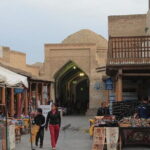
Bukhara hits like a time machine. This private day tour strings together the city’s most important stops—starting at Ismail Samani Mausoleum and working your way through Old Bukhara—so the stories of this 2,500-plus-year place actually make sense. I especially love the mix of architecture plus legends, and the built-in chance to explore local meals, not just snap photos. One thing to consider: it’s a full, sight-heavy day, so plan on walking and wear comfortable shoes.
I also like the flexibility of where you start and where you finish, with pickup options around Lyab-i Hauz or near Ismail Samani. You’ll get a private, professional guide and A/C transport, and the route is designed for an efficient circuit through madrasas, mosques, bazaars, and the Ark. If entrance fees are on your mind, they’re not included, so budget a little extra for ticketed sites.
In This Review
- Key highlights at a glance
- Old Bukhara in 1 day: a private route with real momentum
- Getting started at the Samanid Mausoleum (and why it sets the tone)
- Chashma-Ayub Mausoleum: legend + sacred focus
- Bolo Haouz Mosque: a “breather” stop before the big fortress
- The Ark of Bukhara: where the city’s authority feels physical
- Poi Kalan and the main minaret complex: the signature Bukhara look
- Madrasas and domes: education and commerce in the same frame
- Lyabi-Khauz ensemble: the social heart you’ll remember
- Bukharian old bath and herbal tea: a more local-style break
- Food time: exploring local meals without turning it into a gamble
- Price and value: what $72 covers in a packed city day
- Who this tour suits best (and who should pace differently)
- Should you book this Bukhara Private City Tour?
- FAQ
- What is the duration of the Bukhara Private City Tour?
- Where does pickup happen?
- Is the tour private?
- What’s included in the price?
- Are entrance fees and meals included?
- What languages is the live guide available in?
Key highlights at a glance
- Ismail Samani Mausoleum as the anchor point for the whole day
- Chashma-Ayub Mausoleum and other sacred stops with legend-friendly context
- Ark of Bukhara for the feel of power, fortifications, and authority
- Poi Kalan area for the main mosque/minaret complex you came to see
- Bazaars and trade domes around Toqi Zargaron and Toqi Sarrafon
- Old bath and herbal tea to taste a more everyday Bukhara side
Old Bukhara in 1 day: a private route with real momentum
A 1-day private city tour works best when the plan has a clear flow, and this one does. You’re picked up from your hotel area—either around Lyab-i Hauz or near Ismail Samani Mausoleum—then transferred to the first major anchor stop. From there, the day becomes a walk-through of Old Bukhara’s most recognizable landmarks: mausoleums, mosques, madrasas, fortresses, and shopping-adjacent lanes.
The private part matters more than you might think. In a city like Bukhara, you’re never just “passing by.” You’re moving between sites where details (inscriptions, tilework, how buildings relate to each other) reward a guide who can point out what to notice.
Because the route packs a lot in, keep your pace realistic. You’ll be walking between sites, and many stops include a guided visit plus time on foot. This tour is ideal if you want structure and maximum coverage, not if you want a slow, café-hopping day.
You can also read our reviews of more city tours in Bukhara
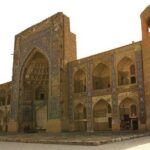
Getting started at the Samanid Mausoleum (and why it sets the tone)
The day begins at the Samanid Mausoleum (Ismail Samani Mausoleum). Even before you move deeper into Old Bukhara, this stop gives you a foundation: it’s a strong reference point for the city’s identity, and it helps you “read” what comes next.
What I like about the way the morning is built: you’re not dropped into a random sequence of monuments. You start with a landmark that feels like a starting line for history, then you work outward through the religious and civic centers of the city.
There’s also a practical element: the schedule builds in a short block of time at this first stop for sightseeing and even shopping. That’s handy because you can begin your souvenir hunt early while you still have energy.
Best use of your time here: look closely at the overall architecture and think about how this mausoleum relates to the mosques and madrasas you’ll see later.
Chashma-Ayub Mausoleum: legend + sacred focus
Next comes Chashma-Ayub Mausoleum. This is one of those stops where the setting does part of the storytelling for you. The name alone signals a connection to spiritual legend, and the mausoleum context helps you understand why people treat certain places as more than just sightseeing stops.
You’ll have time for a guided visit and a walk (about 30 minutes is set aside in the plan). That’s enough time to slow down, listen, and then connect what you’re seeing with what your guide explains.
A small consideration: the route keeps moving, so if you’re the type who wants to linger for photos, you may need to make quick choices—wide shot first, then details, then back to the group.
Bolo Haouz Mosque: a “breather” stop before the big fortress
The tour then heads to Bolo Haouz Mosque. This stop is shorter on the schedule (around 20 minutes including walking), which makes it a nice rhythm change after a couple of heavier, legend-focused sites. It’s also a good place to reset your eyes—mosque architecture and courtyard geometry can look very different from what you saw at mausoleums.
I find that shorter mosque stops work well on a packed day. You get the visual payoff without draining your energy before the Ark, which is one of the most time-demanding stops on the route.
The Ark of Bukhara: where the city’s authority feels physical
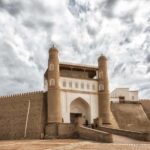
Then you hit Ark of Bukhara. The plan gives it about 40 minutes, and that time matters. A fortress site isn’t just something you look at from outside; it’s about scale and the sense of who held power here. The Ark is the kind of place where you start noticing how the city’s major religious landmarks and civic authority structures sit side by side.
This is also where a guide’s direction helps most. Without context, you might see walls and courtyards. With context, you start understanding the layout and what the space likely meant in everyday life.
Tip for your photos: spend a moment getting one clean overview shot first, then come back for smaller angles. It’s easy to waste time chasing details before you’ve established the “big picture.”
You can also read our reviews of more private tours in Bukhara


Poi Kalan and the main minaret complex: the signature Bukhara look
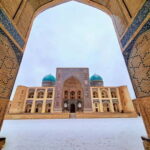
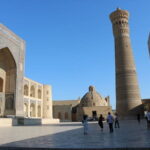
From the Ark, you move toward Poi Kalan, including the Kalyan Minaret area and Kalyan Mosque, plus nearby madrasa views like Miri-Arab Madrasah in the same broad complex region. The schedule allocates about 20 minutes here, so your goal should be quality over quantity.
This is the stop most people picture when they think of Bukhara: tall minaret silhouette, dramatic mosque forms, and the feeling of standing in the center of old civic life. Even if you’ve seen photos before, seeing it in person is usually a “yes, that’s the one” moment.
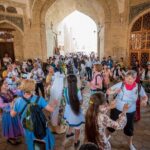
A practical note: because this area is a visual hotspot, expect crowds in general. The private format doesn’t magically erase people, but it helps you keep moving without getting stuck.
Madrasas and domes: education and commerce in the same frame
After Poi Kalan, the tour shifts into madrasas and covered-market architecture, which is where Bukhara starts to feel like a living system rather than a set of monuments.
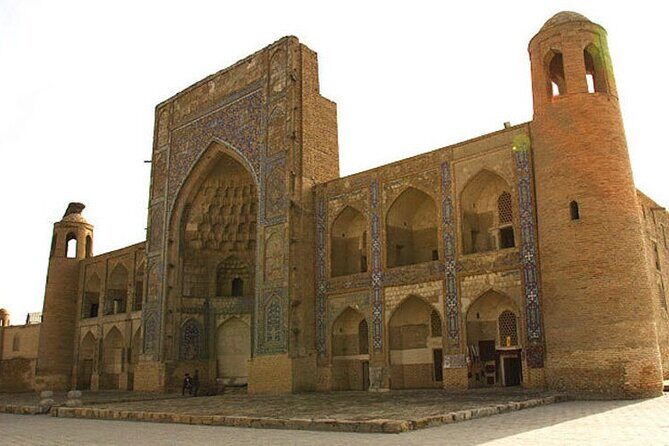
You’ll visit Toqi Zargaron (around 10 minutes on the schedule). It’s a quick but useful stop because domed passages and market structures tell you how trade flowed through the city. Nearby, you also have time at Abdul Aziz Khan Madrasah (about 20 minutes). Madrasas aren’t just pretty buildings here—they’re educational institutions, and your guide can help you connect the facade style to what such schools were meant to do.
Later you’ll reach Magok-i-Attari Mosque (about 20 minutes). This one adds variety, since it’s tied to a different kind of spatial experience than the open courtyards you’ve already seen.
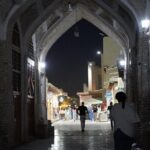
Then there’s Toqi Sarrafon Bazaar (around 10 minutes). Even with limited time, it’s worth showing up with a plan: look for craftsmanship, not just items. Think tiles, structure, and how the covered lanes keep commerce and movement comfortable.
One thing to watch: the itinerary includes multiple similar-looking stops (courtyards, domes, decorated facades). To keep it interesting, ask your guide one question at each stop—what this place’s main purpose was, and how you can tell.
Lyabi-Khauz ensemble: the social heart you’ll remember
The tour includes the Lyabi-Khauz ensemble as a key area, and it also serves as one of the pickup and drop-off zones. That’s smart. It means your day is anchored to a living public space, not only monuments and closed interiors.
Lyabi-Khauz is the kind of place that feels made for conversation. It’s a good spot to look for a comfortable rhythm: take a short pause, watch how the space is used, and let the day’s architecture land in your mind.
Because the tour is scheduled as a circuit, you won’t have unlimited free time here. Still, it’s a memorable final zone, especially if you want a place to regroup and decide what to eat next.
Bukharian old bath and herbal tea: a more local-style break
One of the highlights is the Bukharian old bath and herbal tea experience. This is the part of the tour that keeps it from becoming purely architectural sightseeing. It gives you a small taste of daily culture and tradition, and it adds a calm moment after walking between major sites.
Since the itinerary doesn’t spell out every minute of this stop, treat it as a pause with purpose: sit down, enjoy the herbal tea, and use the time to reset your energy. You’ll also be better positioned to handle the last stretches of the route without feeling rushed.
If you’re sensitive to heat or long indoor waits, plan to take water with you where possible and listen to your guide if timing changes on the day.
Food time: exploring local meals without turning it into a gamble
The tour highlights local meals in Bukhara, but meals are not included in the price. That’s not a dealbreaker—it actually gives you control. You can choose what you feel like eating, and you can follow your guide’s suggestions without paying for a pre-set meal that might not fit your taste.
To make this work well, I recommend you decide your food priority early. Are you craving something warm and filling, or are you more interested in quick local bites? With a packed schedule, having a plan keeps food from turning into decision fatigue.
A practical tip: ask where the guide recommends going for a meal that matches the pace of your schedule—some spots are better for quick service, others are better for a slower stop. On a 1-day itinerary, speed matters.
Price and value: what $72 covers in a packed city day
At $72 per person for a 1-day private Old Bukhara tour, the value comes from the structure. You’re getting a private, professional tour guide and A/C transportation, plus visits across a full list of major sights: mausoleums, mosques, fortifications, madrasas, and bazaar areas.
What you should budget extra for is straightforward:
- Entrance fees (not included)
- Meals (not included)
So the true “all-in” cost depends on how many ticketed sites you choose and what you eat. Even so, private guided coverage through many key areas usually saves you time and confusion. In Bukhara, that’s not a small luxury; it helps you understand what you’re seeing instead of wandering with a map and guesses.
This is also one of the more efficient ways to do Old Bukhara in a single day, especially if you don’t want to coordinate multiple guide hires or self-drive across a crowded historic zone.
Who this tour suits best (and who should pace differently)
This Bukhara Private City Tour is a strong fit if you:
- Want to see the main Old Bukhara sights in one organized day
- Like having a guide explain legends and what to notice
- Prefer private transport and a private group plan
- Would enjoy a culture break like the old bath and herbal tea
It’s also wheelchair accessible, which is a meaningful plus if mobility is part of your planning.
If you’re the type who hates schedules and loves lingering in one place for hours, this might feel like “too much movement.” The route is designed to cover many stops, so you’ll be on your feet and moving between areas more often than on a slower half-day plan.
Should you book this Bukhara Private City Tour?
Yes—if you want a clear, guided route through Old Bukhara and you like the idea of mixing monuments with everyday touches like bazaar time, local food exploration, and herbal tea. The $72 price feels reasonable because it buys you a private guide and A/C transport across a long sightseeing list.
I’d say think twice if you dislike walking or if you want lots of free, unscheduled time. This tour is a “see the essentials with context” style day, not a slow wander.
If that matches your travel style, book it, wear good shoes, and use the guide time to ask questions. That’s when Bukhara’s buildings stop being just pretty shapes and start feeling like a story you can follow.
FAQ
What is the duration of the Bukhara Private City Tour?
The tour lasts 1 day.
Where does pickup happen?
Pickup is included from your hotel area, with two options around Lyab-i Hauz and the Mavzoley Samanidov area (near Ismail Samani Mausoleum).
Is the tour private?
Yes. It is a private group tour.
What’s included in the price?
It includes a private professional/certified tour guide and transportation with A/C.
Are entrance fees and meals included?
No. Entrance fees and meals are not included.
What languages is the live guide available in?
The guide is available in Arabic, English, French, Korean, Persian, Russian, Spanish, Italian, Tajik, Turkish, Hindi, Chinese, German.