Tashkent surprised me with how much the modern city tells you—fast. This 6-hour private tour threads together panoramic views, major memorials, and two big Christian sites, all with an English-speaking guide. I especially like the combo of the 375 m TV Tower orientation and the Railway Museum’s time-warp feeling. One thing to plan for: a stop like a church or museum can be affected by hours or access on the day.
In the middle of all those monuments, you also get a clear sense of how Tashkent was rebuilt and reshaped across empires, Soviet rule, and independence. I like that the route isn’t just pretty buildings; it comes with context you can actually use when you wander later on your own. The other consideration is simple: entrance tickets are not included, so you’ll want to budget for whatever sites require payment.
Overall, this is a strong “first-time in Tashkent” day. You’ll end up seeing a lot without feeling rushed, and the guide can adjust the timing if you’ve already been somewhere nearby. If you want a modern-facing day with built-in orientation, it’s a smart use of time.
In This Review
- Key Things to Know Before You Go
- Why Tashkent’s Mix of Eras Feels Like a Shortcut
- Price and Logistics: What the $180 Covers (and What It Doesn’t)
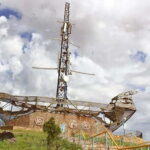
- Getting Oriented in Style: Tashkent TV Tower at 375 m
- Victims of Repressions Museum: History That’s Personal and Visual
- Minor Mosque Reflections and the Glare Factor
- Monument of Courage: Soviet Rebuilding After the 1966 Earthquake
- Cathedral of the Assumption: The Orthodox Church That Residents Still Call the Hospital Church
- Sacred Heart of Jesus Cathedral: Catholic Ties and the Polish Diaspora
- Railway Museum: A Central Asia Time Machine
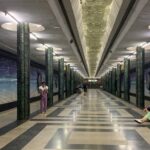
- Metro Taschkent and Broadway Alley: Tashkent’s Everyday Side
- Independence Square: Mustaqilliq Maidoni and the Meaning of a Main Square
- The Best Guide Factor: English Options and Real-World Flexibility
- Who This Tour Suits Best
- Should You Book the Tashkent Modern Tour?
- FAQ
- How long is the Tashkent Modern Tour?
- What is the price for this tour?
- Where does the tour start?
- Are entrance tickets included?
- What’s included in the price?
- What languages are available for the guide?
- Is transportation provided?
- What are the pickup time rules for airport or railway station?
- Is the tour wheelchair accessible?
- What should I bring?
Key Things to Know Before You Go
- Panoramic orientation from the 375 m TV Tower, the first and tallest in Central Asia
- Victims of Repressions Museum for a focused look at Stalin-era political repression
- Railway Museum that feels like stepping into the 19th–20th century
- Major Orthodox and Catholic landmarks linked to the Russian Empire and Polish diaspora
- Metro and Broadway Alley to see how the city lives today, not just what it used to be
Why Tashkent’s Mix of Eras Feels Like a Shortcut
Tashkent can feel confusing at first. The city looks like it has layers—old traditions, Soviet-era planning, and a Europeanized/colonial look from the tsarist period—all mixed in one place. This tour gives you a guided way to read those layers without needing a crash course.
I like that the day is built around landmarks with real meaning. You’re not just collecting photos; you’re learning what each site says about the people who built, rebuilt, and governed this city.
There’s also a practical bonus: you get a route designed for flow. A/C transport does the heavy lifting, and you spend your feet time where it counts—on viewpoints, entrances, and the walkable parts of the center.
You can also read our reviews of more tours and experiences in Tashkent.
Price and Logistics: What the $180 Covers (and What It Doesn’t)
The price is $180 per group up to 2 for about 6 hours. In practical terms, you’re paying for a private guide and a private A/C vehicle, plus hotel/airport/railway pickup and drop-off. If you’re traveling as a couple, the value can be excellent because you’re not splitting the cost across a big group.
Two things are not included. Entrance tickets for the stops are on you, and personal expenses are separate from the program. That said, the tour does include skip-the-ticket-line, which can save time when there’s a queue.
Also note the timing flexibility. Pickup can be customized, and the tour starts from your hotel or from the airport/railway station depending on the time window.
Getting Oriented in Style: Tashkent TV Tower at 375 m
Your day starts with a classic “get your bearings fast” move: the TV Tower. It rises 375 meters and sits on the highest point of the city. It’s the first and the tallest tower across Central Asia, so you’re not looking at some minor landmark—you’re looking at the skyline anchor.
From the top, you’ll get panoramic views that help you understand where everything sits. That matters later, even if you don’t go back to the exact places you visited today—you’ll have a mental map of neighborhoods and directions.
Bring your camera and plan for strong light. The tower area is a great place to practice composition because you can frame the city in layers, not flat postcards.
Victims of Repressions Museum: History That’s Personal and Visual
Next comes a museum stop that’s unusually direct for a city tour: the Museum of Victims of Repressions. It’s the only place in Uzbekistan dedicated to the victims of Stalin’s political repression. The site also works as a photo stop because it’s one of the most beautiful spots in the city and lines up nicely with the TV Tower views.
What I like here is the focus. Instead of trying to cover every historical era, you get one clear theme with context that helps the rest of the Soviet-era sights make more sense.
This is also a good place to slow down. You’ll likely stand and read, and you’ll want a few minutes to take in the message without rushing to the next stop.
Minor Mosque Reflections and the Glare Factor
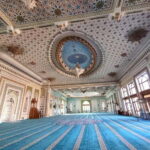
The Minor Mosque is a newer build that has quickly become one of Tashkent’s business cards. It’s the kind of stop that works well mid-tour: short, visually strong, and easy to photograph from the right angles.
One practical tip: don’t forget glasses. The bright glare from the mosque surfaces can be intense, especially on sunny days. Comfortable shoes also help here because you might end up doing a bit more walking than you expected.
Even if you’re not chasing religious architecture specifically, this mosque is a useful marker of how modern Tashkent presents itself—clean lines, fresh shine, and a city that keeps evolving.
Monument of Courage: Soviet Rebuilding After the 1966 Earthquake
Then you’ll see the Monument of Courage Earthquake Memorial. The context is crucial: the city you’re viewing today was rebuilt after the devastating 1966 earthquake. This monument points to the end of the restoration, and the Soviet-era style is part of the story.
I like this stop because it bridges buildings and identity. Once you understand the shock that hit the city, you start noticing how much the skyline and planning feel like they were rebuilt on purpose—not just renovated over time.
Expect the memorial to hit harder if you take a few minutes and read the details, rather than treating it like a quick photo stop.
Cathedral of the Assumption: The Orthodox Church That Residents Still Call the Hospital Church
The Cathedral of the Assumption of the Virgin is a major Orthodox landmark in Central Asia and one of the oldest Orthodox churches in the region. It’s also connected to the Moscow Patriarchate, and it was built for Russian Empire soldiers.
Here’s the local nickname that makes it feel real: residents still refer to it as the military hospital church. That kind of name tells you what the building meant in daily life, not just what it looks like from the outside.
If you care about how cultures overlap, this is a strong stop. It shows Russian imperial presence, then how those institutions continued to exist—and adapt—after political shifts.
Sacred Heart of Jesus Cathedral: Catholic Ties and the Polish Diaspora
Your next big religious stop is the Sacred Heart of Jesus Cathedral, one of the largest and oldest Catholic cathedral buildings in Central Asia. It also ties into a key story of this city: the history of the Polish diaspora in Tashkent, where Polish communities make up the majority of Catholics in Uzbekistan.
This stop adds a different lens to the day. You’re not just seeing one church tradition—you’re seeing how different European communities left lasting marks here.
Depending on the day’s access, you might spend more time outside than you planned. I’d treat this as a stop worth respecting even if the interior visit doesn’t match your hopes.
Railway Museum: A Central Asia Time Machine
Now for a stop that many people don’t expect on a modern-city day: the Railway Museum. It’s described as the first and unique museum dedicated to Central Asian railway transport.
The best part is the feeling. You visit and it can feel like you’ve stepped into the 19th–20th centuries, with trains that are much older than what you’d expect in countries that still feel young on the map. It’s not a dry display; it’s the kind of museum where you start imagining travel routes, jobs, and how people moved across regions.
If you like machines, design, or history through objects, this is a highlight. Even if you don’t, it gives your day variety so you’re not only bouncing between memorials and churches.
Metro Taschkent and Broadway Alley: Tashkent’s Everyday Side
Then you shift from landmark history to everyday modern city life.
The Tashkent Metro is the first metro in Central Asia. It’s also known as something like an underground museum of Uzbekistan, which means you’ll likely get wow moments even if you don’t consider yourself a metro person. This is where you see how the city celebrates public space and design.
After the metro, you’ll head to Broadway Alley. The story here is fun and slightly surprising: where there once was a swamp, it was drained and turned into a leisure area for tsar’s soldiers, and now it’s entertainment for locals and visitors.
I like this pairing because it helps you see both the civic side (metro) and the social side (a center of strolling and recreation). It’s a reminder that modern Tashkent isn’t only memorial stones and domes.
Independence Square: Mustaqilliq Maidoni and the Meaning of a Main Square
Your final anchor is Independence Square (Mustaqilliq Maidoni). It’s the main square of the country, with administrative offices like the Cabinet and the Senate. Today it symbolizes Uzbekistan’s independence.
But the square also used to serve as the administrative center for tsarist and communist regimes. That “same place, different power” story is a theme that ties back to earlier stops—rebuilding, political change, and how buildings carry those shifts forward.
If you like standing in one spot and letting the meaning build, this is your moment.
The Best Guide Factor: English Options and Real-World Flexibility
This is a private group with a live guide in English, Spanish, German, French, or Russian. That matters because the tour’s value is in the connections between sights, not just the sights themselves.
One more thing I really appreciate about this style of tour: the guide can adapt. Based on what I’ve seen guides do on this route, it’s possible to adjust your plan if you’ve already visited a site or if conditions change during the day. Guides also tend to make the walking feel lighter by explaining what you’re about to see before you get there.
If you’re lucky enough to have a guide like Din or Ali, you’re likely to get a friendly, well-organized day with quick thinking. If you get Shokat, expect an interactive, friend-like vibe that keeps the day moving without feeling like a lecture.
Who This Tour Suits Best
This tour is a great fit if you:
- Want a first-or-second day in Tashkent to understand the city quickly
- Like mixing modern city sights with memorials and political history
- Prefer a private pace with an A/C vehicle instead of long transfers
- Want museum variety without going full museum day
It’s also a good choice if you’re combining self-guided exploring. After a tour like this, you’ll know what’s worth a second look on your own.
If you’re only interested in one type of site—say, purely ancient architecture or purely shopping—this may feel like too much variety. But if you like the city as a puzzle, it’s a strong way to solve it.
Should You Book the Tashkent Modern Tour?
I’d book it if you want a well-structured day that makes Tashkent easier to understand and more interesting to revisit later. The TV Tower viewpoint plus the Railway Museum variety is a smart pair, and the memorial stops help the Soviet and post-Soviet story land with clarity.
I’d hesitate only if you have strict expectations about visiting specific interiors every time. Entrance access can vary, and entrance tickets aren’t included—so your best plan is to treat the day as a guided route with multiple “anchor points,” not a promise of every indoor room.
If you come with comfortable shoes and a camera-ready mindset, you’ll leave with a clearer map of Tashkent—and a better sense of why the city looks the way it does.
FAQ
How long is the Tashkent Modern Tour?
The tour lasts 6 hours.
What is the price for this tour?
The price is $180 per group up to 2.
Where does the tour start?
Pickup is available from your hotel, airport, or railway station, and the start time can be customized.
Are entrance tickets included?
No. Entrance tickets are not included, but the tour offers skip-the-ticket-line.
What’s included in the price?
You get a professional guide, an A/C vehicle, hotel pickup and drop-off, and all fees and taxes.
What languages are available for the guide?
The live guide is available in English, Spanish, German, French, and Russian.
Is transportation provided?
Yes. You’ll travel in an A/C vehicle, with pickup and drop-off included.
What are the pickup time rules for airport or railway station?
Airport/railway station pickup is after 09:00 (and after 08:00 during summer time).
Is the tour wheelchair accessible?
Yes. The tour is wheelchair accessible.
What should I bring?
Bring comfortable shoes (and if you’re sensitive to bright light, consider sunglasses for sunny stops).