REVIEW · BUKHARA
Bukhara Walking Tour
Book on GetYourGuide →Operated by Asli Travel · Bookable on GetYourGuide
Bukhara’s domes teach you how to look closely. This private walk strings together pre-Mongol architecture with key Islamic-era landmarks like the Samanid Mausoleum, so you understand the city’s “pillar of Islam” reputation in one go. I particularly like how the route mixes major sights (mazes, medreses, mosques) with small, easy-to-miss stops that make Bukhara feel layered, not just famous.
The one drawback to plan around: it’s still a 5–6 hour walk, so the heat and crowds can wear you down if you start late in the day. Your guide can help with timing, but you’ll want comfortable clothes and solid shoes.
This is also the kind of tour where good guiding matters. People mention guides such as Lola and Zara for clear explanations, and Guljan for steering around crowds and keeping the pace sane. If you want a guided path through Old Bukhara’s best stone-and-tile highlights without getting lost, this works.
In This Review
- Key points to know before you go
- Why Bukhara’s “Pillar of Islam” route feels different
- Meeting point and timing: the heat is real
- Lyabi Hauz complex: where your Bukhara orientation clicks
- Magoki Attor Mosque: the first-mosque feeling in pre-Mongol stone
- The trading domes and the XVIth-century men’s bath: everyday Bukhara
- Ulughbek and Abdulazizkhan madrasas: study halls with different personalities
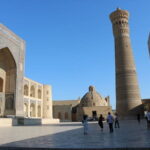
- Poi Kalan complex: the skyline moment you’ll remember
- Ark Citadel to Chashmai-Ayub: power, prayer, and water symbolism
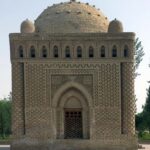
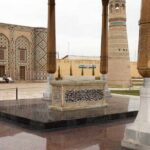
- Samanid Mausoleum: the stop that ties the whole walk together
- The puppet theater detour: a small stop with big charm
- How the guide experience shapes the day
- Price and value: $90 for up to 2 people
- What to bring so the 5–6 hours feels easy
- Who should book this Bukhara walking tour (and who should skip it)
- FAQ
- How long is the Bukhara walking tour?
- Where does the tour start?
- What’s included in the price?
- Are entry tickets included?
- Is this a private tour?
- What languages are available for the guide?
- Is the tour wheelchair accessible?
- Can I change the start time?
- When is the best time to start, especially in summer?
- What should I bring?
- What’s the cancellation policy?
Key points to know before you go
- Private group up to 2: easier pacing and better photo stops when you’re not stuck behind a big group.
- Multiple languages: English, Russian, French, German, and Japanese, so your explanations can actually land.
- Pre-Mongol moments: Magoki Attor and the Samanid Mausoleum connect you to the earliest surviving landmarks on this route.
- Medrese variety: from the most ancient Ulughbek madrasasi to the most luxurious Abdulazizkhan madrasah.
- Poi Kalan skyline: Minaret Kalan, the huge Kalan Mosque, and the Miri Arab medrese in one arc.
- A puppet stop: you may get a quick show from the master and possibly spot a puppet that resembles you.
Why Bukhara’s “Pillar of Islam” route feels different
Bukhara doesn’t try to impress you with one big “wow.” It impresses you with repetition—domes, courtyards, carved patterns, and buildings built to teach, pray, and house scholarship. This tour is designed around that logic. You move from one important complex to the next, so the city’s message builds as you walk.
I like that the highlights aren’t just decoration. You hit teaching spaces like the medreses, worship spaces like the first mosque in Uzbekistan, and power spaces like the Ark Citadel. When you see them in sequence, the skyline stops being random and starts making sense.
You can also read our reviews of more walking tours in Bukhara
Meeting point and timing: the heat is real
You meet your guide near the entrance of the As-Salam Hotel. From there, you connect to the start area in Old Bukhara around the Lyabi Hauz complex—near the monument of a man sitting on a donkey. Once you’re oriented, the walking starts right away.
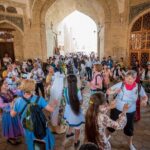
The total time is 5–6 hours (around 5.5 hours is typical). In summer, the tour strongly recommends an earlier start. One of the best practical lessons from real experience here is simple: later in the day, it gets hotter and crowdier, and that’s when walking can feel like work instead of sightseeing.
Lyabi Hauz complex: where your Bukhara orientation clicks
Lyabi Hauz is a classic anchor point in Old Bukhara, and it’s a smart place to begin. It helps you get your bearings fast because everything around it feels connected—medreses, religious sites, and the city’s older quarters.
From here, you’ll see major components of the Lyabi Hauz complex, including:
- Nadir Devanbegi medrese and the xanaka (you’ll have a photo stop and guided look)
- Kukaldosh medrese (part of the same area’s teaching-and-community feel)
- The Jewish quarter (a reminder that this city’s story isn’t only about one community)
- Magoki Attor mosque (a major time-bridge stop)
This stretch is where the tour earns its “walking” format. If you only glance from afar, you miss how medreses and mosques relate to street life and courtyards.
Magoki Attor Mosque: the first-mosque feeling in pre-Mongol stone
Magoki Attor is one of the most important stops on the early part of the walk. It’s described as the first mosque in Uzbekistan and a pre-Mongol period monument. Even if you’re not hunting every historical detail, it lands because the building’s age changes how you read it.
Expect a quick photo moment plus guided sightseeing. In a short visit, your guide’s job is to help you notice what survived, what it likely means, and how it fits into the early Islamic thread you’ll keep seeing later with the mausoleums.
The trading domes and the XVIth-century men’s bath: everyday Bukhara
Between the religious stops, you also pass the more practical side of city life: trade and daily routines.
You’ll see the Trading Domes, described as 3 domes, which gives you a snapshot of how commerce worked in Old Bukhara. This isn’t “museum time.” It’s a streets-and-arches view of a place that historically needed covered space for selling and gathering.
Then there’s the traditional men’s bath from the XVIth century. The important practical note: you’ll only have reception access, not a full bath experience. Still, it’s a useful contrast to the mosques and medreses—Bukhara wasn’t only about study and prayer. It also had routines, health, and social habits built into architecture.
Ulughbek and Abdulazizkhan madrasas: study halls with different personalities
The tour then shifts into what Bukhara does best: schooling in stone.
You’ll visit:
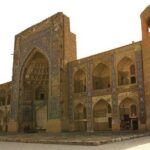
- Ulughbek madrasasi, described as the most ancient medrese in Uzbekistan
- Abdulazizkhan madrasah, described as the most luxurious medrese
Even with short stop durations, these two buildings work well as a pair. One helps you feel the deep timeline of Islamic education in this region. The other helps you see how wealth, politics, and prestige can be expressed through places of learning.
If you like “pattern recognition,” this is where your brain starts connecting shapes across sites. Your guide’s explanations are the difference between taking photos and actually understanding why these medreses matter.
Poi Kalan complex: the skyline moment you’ll remember
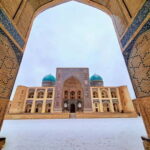
Poi Kalan is the big visual anchor for the tour’s midsection. It gathers the elements that define Old Bukhara’s skyline and identity.
You’ll focus on:
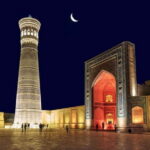
- Minaret Kalan, described as a pre-Mongol monument
- Kalan Mosque, noted as the biggest mosque in this city
- Mir-i-Arab Madrasa, current medrese for males
This isn’t just “look up at tall things.” It’s about scale and function. A minaret isn’t only a landmark; it signals a time when cities communicated through visible religious and civic symbols. A major mosque changes how you imagine the neighborhood around it. And the medrese being current for males reminds you this isn’t purely an old set piece—it still points to living tradition.
Ark Citadel to Chashmai-Ayub: power, prayer, and water symbolism
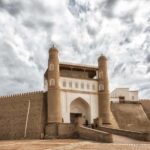
After the Poi Kalan cluster, you move to the Ark Citadel area. Expect a guided stop with time for photos, then continued walking to:
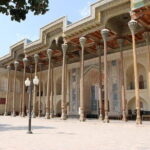
- Boloi Hauz Mosque
- Chashmai-Ayub Mausoleum
Ark Citadel gives you the political backbone—how rulers organized space and control. Then you shift back toward the spiritual and symbolic side with the mosques and mausoleums.
Chashmai-Ayub is one more chance to see how religious meaning can be tied to location and local tradition. It’s a short stop, but it breaks the route rhythm so you don’t feel like you’re only staring at one building type.
Samanid Mausoleum: the stop that ties the whole walk together
If you want a single “main character” monument, it’s the Samanid Mausoleum. It’s described as:
- the first mausoleum in Central Asia
- the second mausoleum in the Islamic world
- a pre-Mongol period monument
Why this matters for your experience is simple. By the time you reach it, you’ve already seen medreses, mosques, and the major civic-religious complexes. So the mausoleum doesn’t feel like a random highlight. It feels like a logical culmination of the tour’s theme: early Islamic architecture shaped the city’s identity and still shapes how you read it today.
Plan for a focused guided look here. Your guide’s job is to help you notice details without turning the stop into a long lecture.
The puppet theater detour: a small stop with big charm
Along the route you’ll also have a chance to see a small place connected to Central Asian puppets and puppet theater. You can learn the history of the tradition, and you may get a 2-minute show from the master himself.
The best part is the playful twist: if luck smiles, you might find a puppet that looks like you. It’s not guaranteed, but even knowing that the show exists changes how you look at the city. It’s not only monuments. It’s culture—handed down in entertaining form.
How the guide experience shapes the day
This is a “guide-led walking” tour, and the guide quality shows up fast in how the city feels.
The tour provides a professional guide in multiple languages: English, Russian, French, German, and Japanese. That’s a real advantage, because Islamic architecture isn’t always easy to decode on your own. You’ll get guided sightseeing at each stop, not just a handoff and a map.
People also specifically praise certain guides. Lola is mentioned for being very knowledgeable and making the walk enjoyable. Zara is noted for excellent French explanations and not rushing. Guljan is praised for steering around crowds so the pace stays comfortable, which matters a lot in busy periods and hotter months.
If you want the tour to feel smooth, choose a time where you’re not exhausted before you start. Then let the guide do what you hired them to do: connect the dots between buildings.
Price and value: $90 for up to 2 people
At $90 per group (up to 2 people), this tour can be good value if you like private guiding and you’d otherwise pay for separate admission-style experiences.
What you get for that price is a professional guide plus guided sightseeing with planned photo stops. You also get skip-the-ticket-line support. Entry tickets themselves are not included, so you should expect that you may still need to pay for certain sites depending on what’s required during your visit.
Here’s how I think about the math:
- If you’re traveling as a couple (or as two people who want the same pace), $90 is a straightforward private-city-walk deal.
- If you’re a solo traveler, the “per group up to 2” structure still lets you keep things efficient, but confirm availability for your exact date and starting time.
- If you hate walking in heat, the tour’s 5–6 hour structure can feel heavy; start early if you book in summer.
What to bring so the 5–6 hours feels easy
The basics matter here. Bring:
- Comfortable shoes
- Sunglasses
- Sun hat
- Comfortable clothes
That’s it for the recommended packing list, and it matches the reality of an Old Bukhara walking day: lots of outdoor time, lots of stops, and the kind of bright sun that turns “quick photo” into “squint forever” if you’re not ready.
Who should book this Bukhara walking tour (and who should skip it)
Book it if you want:
- a private guided walk through the highest-impact highlights of Old Bukhara
- an architecture-focused route with medreses, mosques, and mausoleums in a logical order
- multilingual guiding so the explanations are actually clear
- a route that includes one fun cultural detour with the puppet theater
Skip it if you:
- want mostly indoor museum time with minimal walking (this is still a walk)
- are planning to spend time reading on your own without guidance (you’ll get more from the guided stops)
Also, if you’re visiting in summer, plan for an early start. It’s the difference between enjoying the city and just trying to survive the day.
FAQ
How long is the Bukhara walking tour?
It lasts about 5–6 hours, with the listed duration around 5.5 hours.
Where does the tour start?
You meet your guide near the entrance of the As-Salam Hotel, and the walk starts from the main square of Old Bukhara around the Lyabi Hauz complex near the donkey monument.
What’s included in the price?
A professional guide is included. The tour also includes skip-the-ticket-line support.
Are entry tickets included?
No. Entry tickets are not included, along with personal expenses not mentioned on the program.
Is this a private tour?
Yes. It’s a private group, priced per group up to 2 people.
What languages are available for the guide?
The guide can work in English, Russian, French, German, or Japanese.
Is the tour wheelchair accessible?
Yes, the tour is listed as wheelchair accessible.
Can I change the start time?
Time can be changed by request of the traveler (you coordinate this when booking).
When is the best time to start, especially in summer?
The tour recommends starting earlier in summer due to heat and crowding later in the day.
What should I bring?
Bring comfortable shoes, sunglasses, a sun hat, and comfortable clothes.
What’s the cancellation policy?
Free cancellation is available up to 24 hours in advance for a full refund.
Should you book this tour?
If you’re set on seeing Bukhara’s signature Islamic monuments without turning the day into a scavenger hunt, this is a strong pick. The private format for up to 2 people, the multilingual guidance, and the mix of medreses, mosques, mausoleums, and a puppet-theater detour make it feel like a curated walk without turning into a museum day. If you book for a cooler morning and wear comfortable shoes, you’ll get more meaning out of the stone—and you’ll leave with a clearer sense of why Bukhara is called the pillar of Islam.