REVIEW · TASHKENT
Tashkent Vegan Street Food Tour
Book on Viator →Operated by Uzveg Tours · Bookable on Viator
Vegan street food in Tashkent feels secret. This tour takes you through Chorsu Bazaar and the old-city maze to hunt down plant-based versions of Uzbek comfort food, led by Akmal and his local storytelling. I love how it starts with a classic market ritual, then keeps the pace human with alley walks and neighborhood life around vegan beshbarmak. The only catch is that it’s a true food tour: you’ll eat a lot in about four hours, so come hungry and plan a lighter second half of the day.
With pickup offered and a max group size of 7, it stays friendly and easy to ask questions, even if you’re not a vegan. I’d just wear comfortable shoes, because bazaars are still bazaars—lots of walking, lots of turns.
In This Review
- Key highlights you’ll actually feel
- Why this vegan street food tour works in Tashkent
- Price and logistics: what $72 really buys you
- Getting the flow: timing, walking, and what to expect
- Stop 1: Chorsu Bazaar and the Khanum on Gluttony Lane
- Stop 2: Khadra alley walk—slow pace, local life, easy questions
- Stop 3: Alay Bazaar (Oloy Market) for Uzbek bread and Korean salads
- Stop 4: Ending near Alisher Navoi’s National Library with vegan beshbarmak
- Akmal’s local storytelling: more than food explanations
- Who this tour suits best (and who might not)
- Don’t miss these practical tips before you go
- Should you book this vegan street food tour?
- FAQ
- How long is the Tashkent Vegan Street Food Tour?
- What does the tour cost per person?
- Is hotel pickup available?
- How big is the group?
- What kinds of food stops are included?
- Does the tour depend on weather?
Key highlights you’ll actually feel
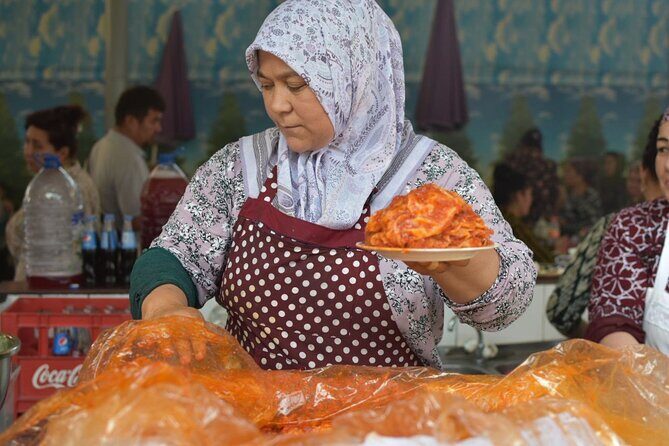
- Old-town bazaars first: start at Chorsu and work through smaller streets before you head into the city-center market energy
- The Gluttony Lane Khanum moment: potato pastries in rich tomato sauce, served like a must-try local landmark
- A real Old City stroll (Khadra): slow down, watch kids at play, and understand how people live around the food
- Uzbek round bread plus Korean-style salads: lunch-time flavors that show how Tashkent mixes influences
- Veganized Central Asian comfort at the end: including vegan beshbarmak, served near the National Library named after Alisher Navoi
Why this vegan street food tour works in Tashkent
Tashkent can feel meat-first at a glance. So this tour’s whole point matters: it doesn’t treat vegan food as a side quest. It treats it as part of the same street-food world you’ll see everywhere else—just with different ingredients and different traditions.
What makes it compelling is the way it’s structured. You’re not just hopping from one snack to another like a checklist. The tour uses two market zones plus a neighborhood walk so you get the city’s rhythm, not just the food. And the guide, Akmal, is a big reason it feels personal: he’s local, he’s funny, and he talks through what you’re eating in plain language.
One more detail I appreciate: part of the tour money goes to support imprisoned vegan activists. That turns your meal into something with a purpose, not just a fun afternoon.
You can also read our reviews of more food & drink experiences in Tashkent


Price and logistics: what $72 really buys you
At $72 per person for about 4 hours, you’re paying for three things: translation (language and food culture), access (market know-how), and pacing (small group walking that actually makes sense).
Here’s the value logic. In markets, it’s easy to miss the good stuff if you walk in cold. You need the person who knows where people queue, what’s worth ordering, and how to ask for vegan options without turning it into a stressful guessing game. That’s what you’re buying.
Also, the max group size of 7 helps keep quality high. You can stop, look, and ask questions without everyone rushing ahead. Pickup is offered, which cuts down on the hassle when you’re figuring out Tashkent for the first time.
Do note one practical consideration: it requires good weather. If the day is rainy, the experience may be moved to a different date or refunded. Markets don’t love wet feet.
Getting the flow: timing, walking, and what to expect
The tour runs in a morning window, with hours set from 9:00 AM to 1:00 PM. That timing is great for markets because vendors are already in motion and the streets feel alive without being late-day busy.
You’ll be walking through:
- market aisles
- old-city narrow lanes
- a central farmer’s market area
- and a short transfer to a local restaurant near the National Library named after Alisher Navoi
So I’d plan your day like this: schedule something chill after. This is not a “tiny bite” tour. You should expect several tastings across different stops, including recognizable Uzbek street-food classics adapted for vegan eating.
Comfort tip: bring water and wear shoes with grip. You don’t need hiking boots, but you do need something that won’t complain after a few hours of market floors and alley corners.
Stop 1: Chorsu Bazaar and the Khanum on Gluttony Lane
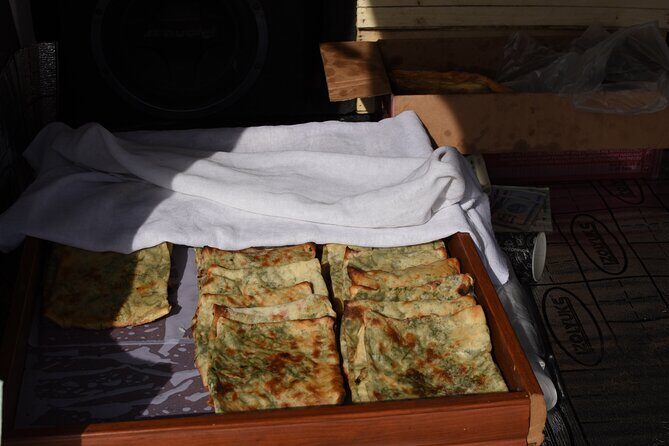
You start at Chorsu Bazaar in the old town. This is the kind of market that makes you forget you had a plan. The sights and sounds arrive first, and then food choices start to make sense once you see how locals shop and snack.
From there, the tour heads straight for a major street-food landmark on what’s known around the city as Gluttony Lane. The star is Khanum: potato pastries in rich tomato sauce.
This stop is valuable even if you’ve never heard of Khanum before. It’s not just a tasty dish—it’s a benchmark for how Uzbek food can be hearty, saucy, and satisfying without relying on meat. And starting with something iconic gives you a base so the rest of the tastings feel connected.
What I like about this first move: the guide doesn’t treat your stomach like a vending machine. You get context first, then you eat, so the flavors land with meaning. If you’re new to Tashkent, it also helps you get your bearings fast in the old-city layout.
Stop 2: Khadra alley walk—slow pace, local life, easy questions
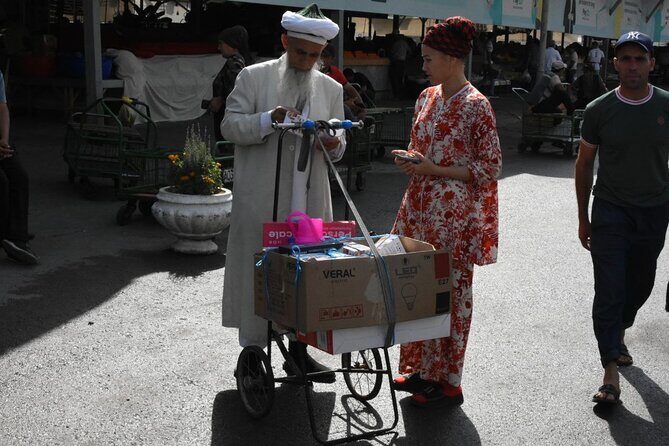
After the market, you move into Khadra, with narrow, winding alleys in the Old City. This is where the tour shifts from eating to noticing.
You’ll slow down and take in the neighborhood pace—people chatting, and local kids at play. That sounds simple, but it changes how you understand street food. You stop thinking of meals as isolated dishes and start seeing them as part of daily life.
This stop also tends to be a breather. You’re still moving and looking, but it’s not constant purchasing and eating. It’s a good moment to ask questions about what you’re seeing and what you’re about to try next. If you’re worried about vegan street food being “limited,” this walk helps reset expectations: there’s room for variety in a city that often seems meat-centered.
Practical note: alleys can be less straightforward for photos and navigation. That’s another reason a local guide matters.
A few more Tashkent tours and experiences worth a look



Stop 3: Alay Bazaar (Oloy Market) for Uzbek bread and Korean salads
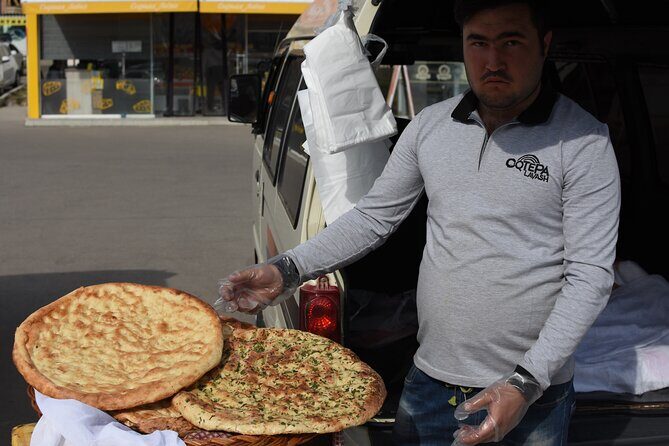
Next up is Oloy Market, also known as Alay Bazaar, a centrally located farmer-style market. This is a lunchtime vibe stop, and it plays with a key theme: Tashkent isn’t one-flavor city.
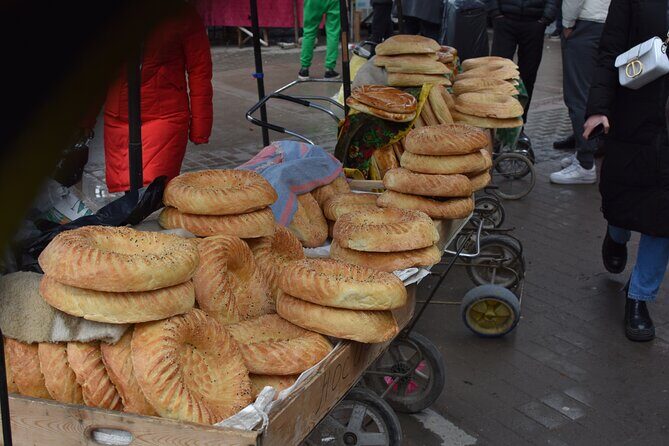
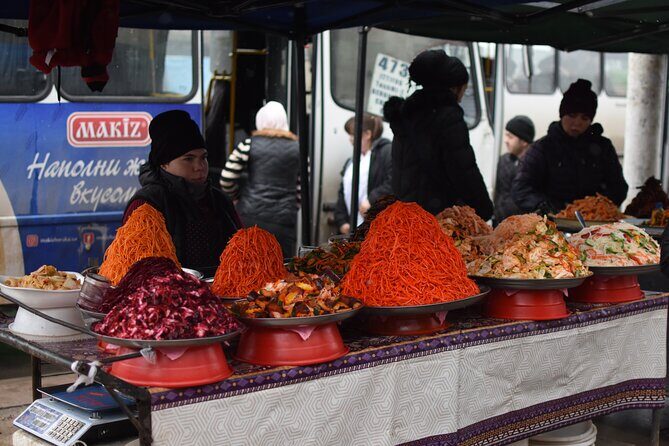
You’ll try Uzbek round bread paired with traditional Korean salads, which are popular with school students during lunchtime.
Why this stop is smart: it shows how street food travels. You’re not only tasting “Uzbek vegan.” You’re tasting how cultures blend at the local level. The bread gives you the comfort foundation, while the Korean-style salads add crunch and freshness. Together, it’s the kind of combo that feels like a real midday habit, not a one-time tourist plate.
If you’re the kind of eater who likes variety—textures, acidity, and contrast—this is the stop that tends to stick in your mind after the tour ends.
Stop 4: Ending near Alisher Navoi’s National Library with vegan beshbarmak
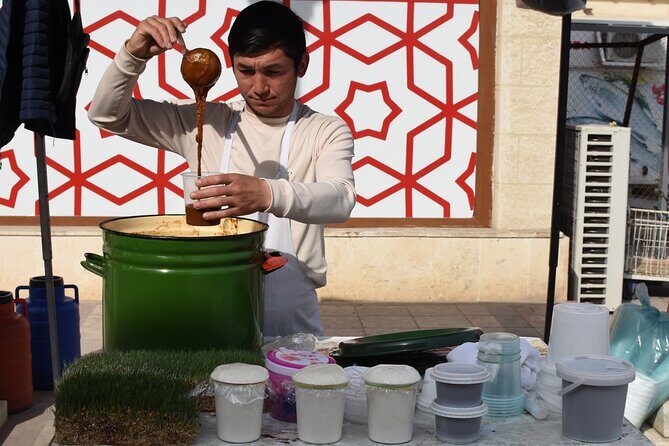
You end at a local restaurant not far from the National Library of Uzbekistan named after Alisher Navoi. This is where you shift from street snacks to a more sit-down feel.
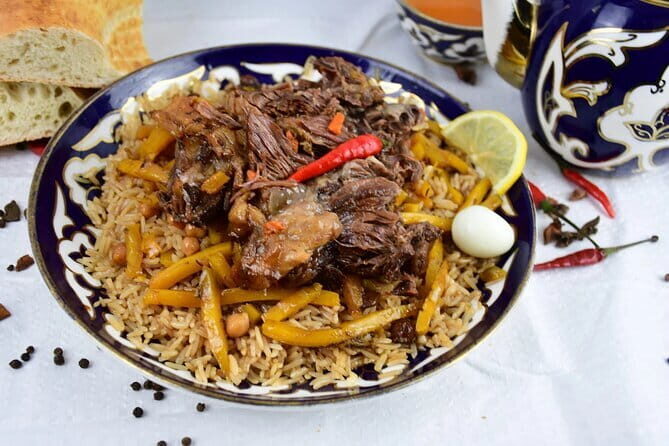
The highlight is vegan beshbarmak, described as an oxymoron of Central Asian cuisine. In plain terms: the dish you think you know gets turned vegan in a way that still feels culturally anchored.
This finale matters because it closes the loop. Before the restaurant, you’re learning and tasting different elements of vegan adaptations. At the end, you get a bigger, fuller dish that makes you think, Okay, this isn’t just a workaround. There’s a whole vegan-friendly side of the cuisine.
If you’re traveling with someone who’s skeptical about vegan food, this is also the stop that helps win them over. It’s familiar enough in form to feel Central Asian, but plant-based enough to expand what they expect from Uzbek tables.
Akmal’s local storytelling: more than food explanations
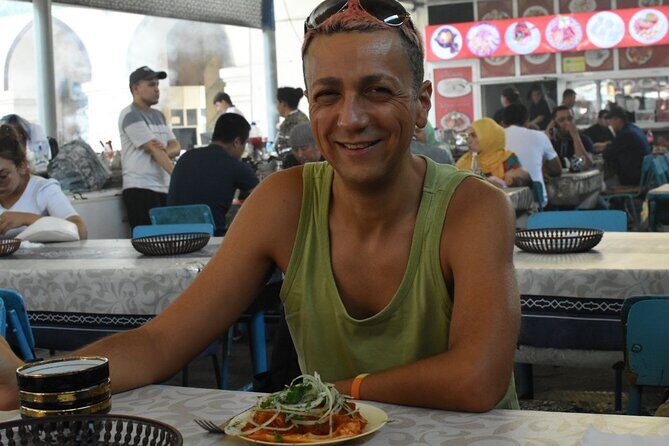
A big theme in the experience is how Akmal connects food to the city. He doesn’t just list ingredients. He talks about Tashkent—food culture, customs, and what everyday eating looks like when you’re not just passing through.
In the best moments, he uses humor without steamrolling the conversation. That matters because market tours can get rigid if the guide only keeps moving. Here, the walking and tasting are tied to stories and photos, and the pace gives you time to see what’s around you.
I also love that the tour can adapt on the go. That usually means the guide isn’t stuck reading a script. If a better option appears in the market, or if the timing for a neighborhood stroll works better, you get the day you actually need, not the day that’s only perfect on paper.
Who this tour suits best (and who might not)
This is a great fit if you:
- want a first-day introduction to Tashkent beyond the obvious sights
- enjoy markets and walking, even if you’re not a super-frequent street-food eater
- want vegan food in a place where you might otherwise assume the options are limited
- like food tours that include culture and context, not only tastings
It may be less ideal if you:
- hate eating in multiple small stops (you should expect several tastings)
- don’t want to walk in market conditions
- are uncomfortable with a food-focused morning schedule
And here’s a reassuring point: the tour isn’t only for vegans. If you eat meat but you’re curious about what vegan street food looks like in a meat-heavy city, this format is a fun way to see the range without turning it into a lecture.
Don’t miss these practical tips before you go
A few things make the tour more enjoyable from minute one.
- Come hungry. The food adds up, and you’ll want the flavors to hit, not just fill you halfway.
- Bring water. Markets can be warm, and walking is part of the deal.
- Ask questions. If you’re curious about what’s vegan and how it’s prepared, Akmal’s English and explanations make it easy to get clear answers.
- Wear shoes you trust. You’ll be on your feet across bazaars and alleys.
- Plan a lighter afternoon. You’re likely to be satisfied for hours afterward.
Should you book this vegan street food tour?
I’d book it if you’re trying to understand Tashkent through the lens locals actually use: markets, lunchtime habits, old-city streets, and comfort dishes adapted for vegans. The combination of two market areas, a neighborhood walk, and a strong finish at a restaurant near Alisher Navoi’s National Library gives you a full picture in just a morning.
Skip it if you want a slow, low-food experience or if you’re very picky about walking. Also, if weather is miserable, wait for a day when the route makes sense—good conditions matter here.
If you want one strong first move in Tashkent—something that’s vegan-friendly, cultural, and honestly fun—this is the kind of tour that leaves you with both a full stomach and a better map of the city.
FAQ
How long is the Tashkent Vegan Street Food Tour?
The tour lasts about 4 hours.
What does the tour cost per person?
The price is $72.00 per person.
Is hotel pickup available?
Yes, pickup is offered.
How big is the group?
The tour has a maximum of 7 travelers.
What kinds of food stops are included?
You visit markets and then end at a local restaurant. Stops include Chorsu Bazaar for Khanum (potato pastries in rich tomato sauce), an Old City alley walk in Khadra, Oloy/Alay Bazaar for Uzbek round bread with traditional Korean salads, and a restaurant near the National Library named after Alisher Navoi where you try vegan beshbarmak.
Does the tour depend on weather?
Yes. The experience requires good weather, and if it’s canceled due to poor weather, you’ll be offered a different date or a full refund.