REVIEW · SAMARKAND
1 Day Tour to Shakhrisabz: Motherland of Amir Temur
Book on Viator →Operated by Fayoziddin · Bookable on Viator
This is a small day with big names. Shakhrisabz ties directly to Amir Temur, plus you get mountain scenery and movie-like stop points like the filming locations of Apache. I especially like the mix of standout monuments and short nature stops, and I like that you’ll also taste local lamb food on the way back. The main thing to consider is comfort and depth: one real-world complaint was about vehicle size/AC expectations and not enough site-by-site storytelling.
The tour runs about 6 to 8 hours and is built for a “see a lot without rushing yourself to death” pace. You’ll travel in an air-conditioned vehicle with bottled water, and you get photo stops at the best viewpoints—helpful when you want great angles without hunting. I’d just plan your budget for a couple of paid entries and lunch, since not everything is covered.
If you’re the type who likes clear landmarks, readable facts from a guide, and a day trip that actually feels like a day (not a blur), this fits well. It’s also a good choice if you’re staying in Samarkand and want a Temur-focused escape without booking a full tour package.
In This Review
- Key highlights to look for
- Why Shakhrisabz is worth your one-day detour
- Price and logistics: what $45 really buys
- Getting there and staying comfortable in an air-conditioned vehicle
- Beshkal: the Valley of Demons and why the rocks feel like a story
- Teshiktash: the heart-stone created by wind and time
- Ak-Saray palace complex: portals from 1379 and the politics of building
- Sultan Saodat complex: Jahangir’s name written into gates and tombs
- Kok-Gumbaz Mosque: why the 1435 date feels real on the ground
- The ride back to Samarkand: mountain views and lamb food
- The best fit: who will love this tour
- Should you book? My honest call
- FAQ
- What’s the duration of the Shakhrisabz day tour?
- How much does the tour cost?
- What’s included in the price?
- Are entrance tickets included?
- How much should I budget for food?
- Can I get a refund if I cancel?
Key highlights to look for
- Beshkal (Valley of Demons): huge boulders and strangely shaped stones that look different as the light changes.
- Teshiktash heart-stone: a natural rock with a through-hole in the shape of a heart.
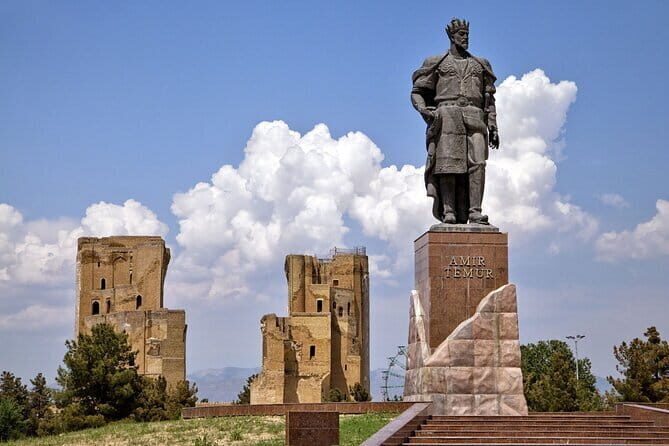
- Ak-Saray portals: remnants from Amir Temur’s building program, with construction dated to 1379.
- Sultan Saodat complex: multiple buildings tied to Jahangir, Temur’s eldest son, after his death.
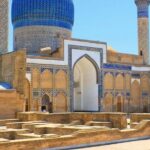
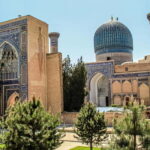
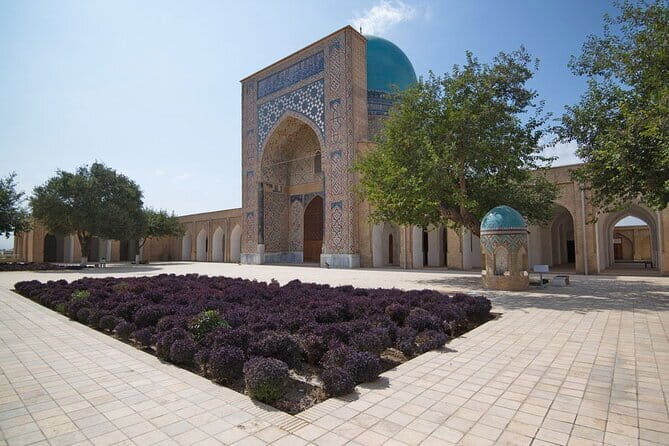
- Kok-Gumbaz Mosque (1435): the largest mosque in Shakhrisabz, Persian style, and built on a pre-Mongol base.
- Return ride with food: scenic mountain drive plus a chance to taste tandoor-gush (lamb meat).
Why Shakhrisabz is worth your one-day detour
Shakhrisabz is where Amir Temur comes from, not just a character in a textbook. Even if you’re not a hardcore Temur nerd, the day makes the connection feel practical: you see the places tied to his family, his campaigns, and the religious buildings that outlasted dynasties.
What makes the tour appealing is the blend. You get hard history at the palace and religious complexes, then you get nature stops that are quick but memorable—big rocks, odd shapes, wind-carved symbolism. It keeps the day from feeling like only corridors of tiles and doors.
There’s also a movie angle. The route is described with filming locations from Apache in mind, which adds an extra layer when you’re looking at the mountains and the road cuts through them.
A few more Samarkand tours and experiences worth a look
Price and logistics: what $45 really buys
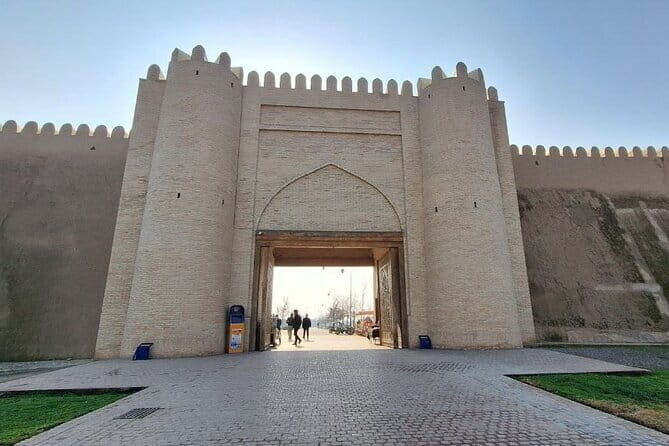
The price is $45 per person, and for a one-day out of Samarkand that’s a decent number—especially because transport and a guide are included. You’re not just getting dropped at a gate. You get a professional guide service, private transportation (only your group), bottled water, and an air-conditioned vehicle.
You should also know what’s not included, so you don’t get surprised in Shakhrisabz:
- Lunch: about $10 per person (not included)
- Entrance tickets: about $10 per person total (not included)
A small but important detail: two stops are listed as free admission (Beshkal and Teshiktash), while the big complexes are ticketed. So most of your day’s paid time is concentrated into a few key sites, not spread across everything.
Finally, this tour is offered with pickup, group discounts, and a mobile ticket. Booking is often done about 41 days ahead on average, so if you’re traveling in a busy window, earlier is smarter.
Getting there and staying comfortable in an air-conditioned vehicle
The tour includes an air-conditioned vehicle and bottled water. That’s the baseline you want in Uzbekistan heat, especially when your day includes multiple walking stretches across sites.
Still, here’s the one practical caution I’d take from the most critical feedback: don’t assume a specific vehicle type. One review mentioned a smaller car than expected and complained about AC and rough roads. The important part for you: if you’re sensitive to comfort, ask ahead what the vehicle will be like for your dates and group size.
Also, plan your wardrobe like you’re going to a mix of outdoors and sacred spaces:
- light layers for sun
- something to cover shoulders/hands if you want to move respectfully through mosques
- comfortable shoes, because even short visits involve uneven ground
This is not a “sit the whole day” tour. It’s a “hop out, see, learn, take photos, move on” rhythm.
Beshkal: the Valley of Demons and why the rocks feel like a story
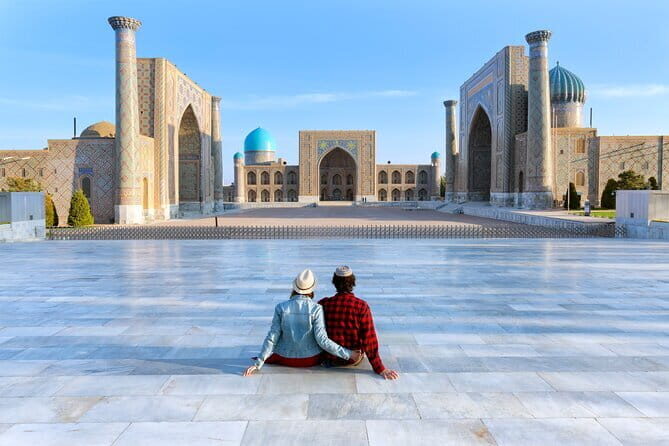
Beshkal is your first stop, and it’s the kind of place you understand fast even if you don’t have a guide telling you facts every minute. You’ll see huge boulders and strange stones scattered across the valley. The guide points out how they resemble faces of demons or pagan deities, depending on how you look at the shapes.
This stop is listed as 30 minutes and free admission, which is perfect for breaking up the drive. It’s not trying to be a long hike. It’s more like a visual warm-up: you get your camera out, you look at the rock forms, then you move on with your brain still engaged.
What I like about this kind of nature stop on a day tour is the pacing. After monuments in cities, your eyes need a reset. The boulders do that instantly.
One thing to keep in mind: it’s easy to wish for deeper explanation here. If you’re the type who loves symbolism, ask your guide to give you a few focused theories about the names and shapes they’re referencing. At this stop, you’ll get the most out of it when you treat it like a short guided interpretation session.
Teshiktash: the heart-stone created by wind and time
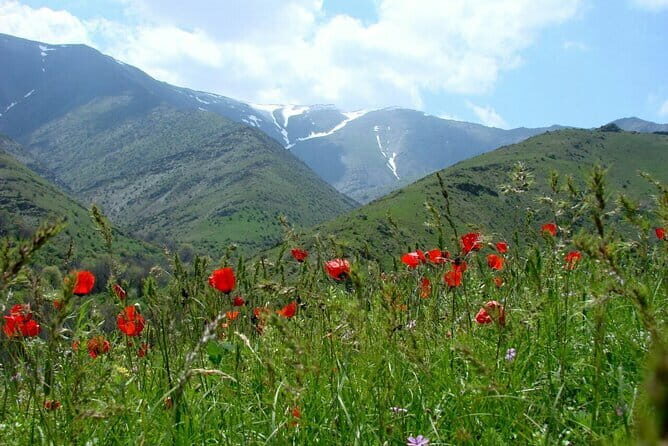
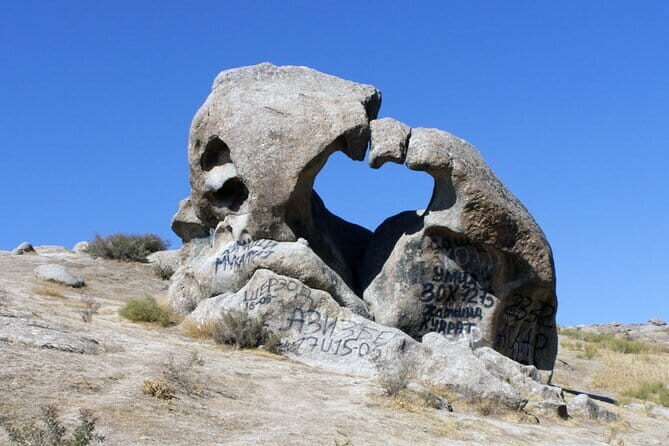
Next up is Teshiktash, about 30 km south of Samarkand, on the road toward Amankutana. The highlight is a natural rock often called the heart-stone: there’s a through-hole shaped like a heart.
Like Beshkal, it’s a quick visit—also listed as 30 minutes and free admission. The value here is simple: this is Uzbekistan’s habit of turning landscape into meaning. You look at a single feature for a while, then you realize it’s a natural result shaped by long-term forces—wind over many years.
Even if you’re not the type to get emotional about stones, you can still enjoy the photo opportunity and the thought behind it. This stop is short, but it makes your day feel less like a straight line of tickets.
Ak-Saray palace complex: portals from 1379 and the politics of building
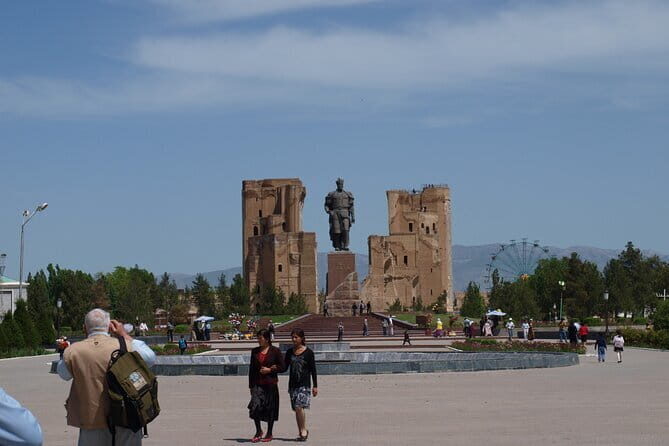
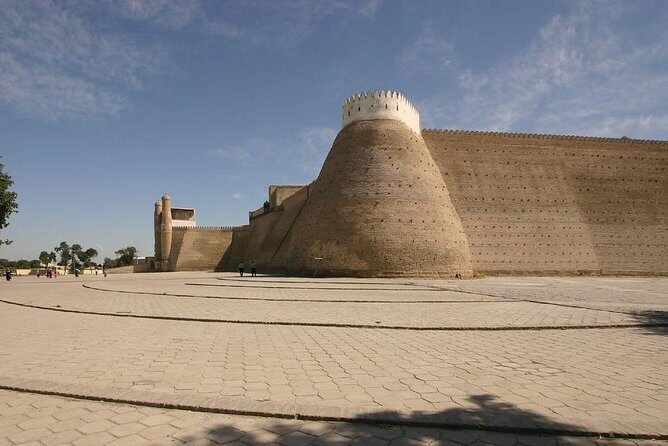
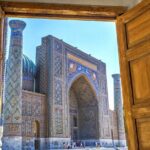
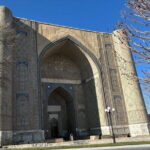
Ak-Saray is one of the big historical hits, and it’s built around the idea of power shown in architecture. Ak-Saray was ordered by Amir Temur after his campaign against Khorezm. The estimated start of construction is 1379, and today you’ll mainly see two entrance portals.
That might sound small on paper, but it works in person. Portals are where empires flex. Even without the full palace standing, the surviving parts give you a sense of scale and ambition, especially when you compare it to the surrounding buildings and everyday life around the site.
This stop is listed as 1 hour, and entrance tickets are not included. So budget time and money for it.
One practical tip: spend a little extra time at the portals if you can. Look for the details your guide mentions—those are the clues that turn a “ruin” into an explanation of how the building was meant to communicate status.
Sultan Saodat complex: Jahangir’s name written into gates and tombs
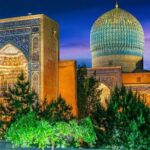
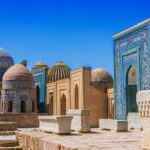
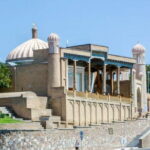
Sultan Saodat is tied to a very specific family moment: the complex arose after the death of Amir Temur’s eldest son, Jahangir. The ensemble includes a mosque, a mausoleum, a pilgrims’ room, three gates, and tombs.
This is another 1 hour stop with entrance tickets not included.
The value here is how the day becomes more human. You’re not only seeing the peak of power; you’re seeing how a dynasty handles loss, memory, and public religious life. In architecture like this, a “complex” is not just buildings piled together—it’s a structured statement.
If your goal is to understand the Temur story beyond dates, make sure you ask your guide to connect Jahangir to what you’re seeing: why these parts matter, and how the complex functions as a place for pilgrimage and remembrance.
Kok-Gumbaz Mosque: why the 1435 date feels real on the ground
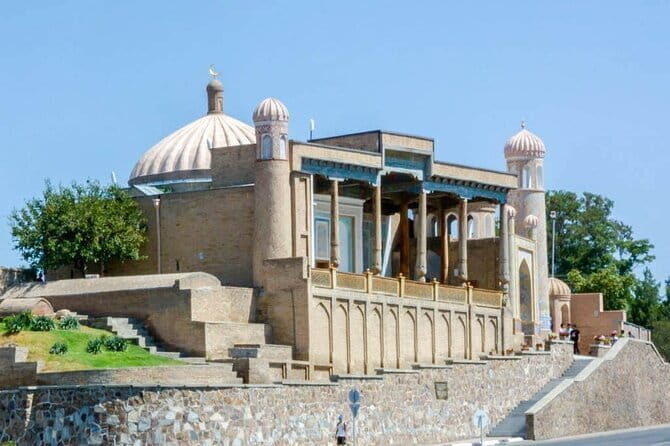
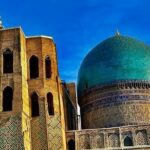
Kok-Gumbaz Mosque is the last major religious stop, and it’s the one with a headline fact: in 1435, the largest mosque in Shakhrisabz was opened. The mosque is built on the foundation of a pre-Mongol mosque, and it’s described as an example of Persian style.
This stop is listed as 1 hour, and entrance tickets are not included (with a ticket cost listed as about $3).
What I like about ending with Kok-Gumbaz is that you finish on something active-looking even though it’s old. A mosque is a living type of space. Even when you’re just sightseeing, the scale and design communicate function, community, and design choices that carried forward.
Practical advice: bring your attention here. Don’t treat it like a quick photo stop. Look at symmetry and proportion, then look at your guide’s cues about the Persian style and the pre-Mongol foundation. That’s how you start reading the building instead of just seeing it.
The ride back to Samarkand: mountain views and lamb food
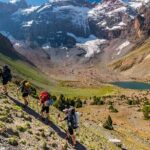
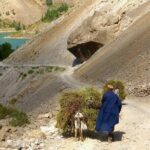
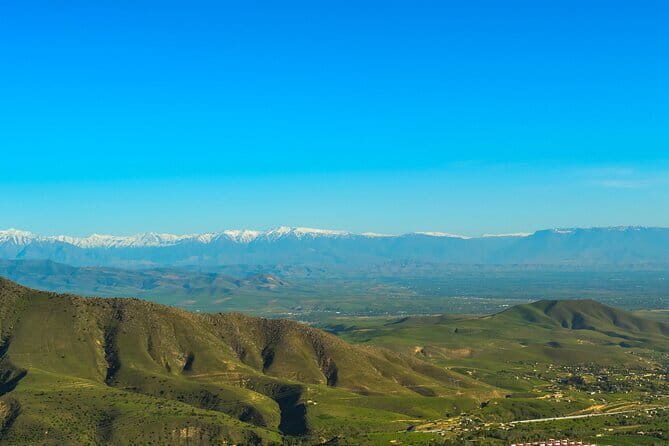
After your Shakhrisabz sights, you head back to Samarkand. The drive is part of the experience, with mountain scenery on the way.
There’s also a mention of tasting tandoor-gush (lamb meat). The tour data doesn’t label it as a full included meal the way a restaurant stop would, so treat it as a food moment rather than a guaranteed lunch replacement. Lunch itself is listed as not included, around $10 per person, so you’ll still want to keep some spending room for food.
This return segment is where the day usually settles. You’ve seen monuments and symbolism. Now it’s about enjoying the road and letting your brain process what you just learned.
The best fit: who will love this tour
This tour is a strong match if you:
- want a Temur-centered day without arranging multiple independent tickets
- like short stops that balance city monuments with nature views
- prefer a guide to connect names, dates, and meaning
- enjoy photography and want photo stops planned for you
It may be less ideal if you:
- expect a very specific vehicle type (for example, a 4×4) and comfort is your top priority
- want very deep, site-by-site storytelling at every stop without any gaps in detail
- hate paying extra for entries and lunch, since only some sites are free
A good middle-ground strategy: go with clear expectations. You’re buying access to a guided route and efficient timing. Bring curiosity, and ask focused questions at each complex.
Should you book? My honest call
I’d book this tour if your priority is seeing Shakhrisabz’s main Amir Temur-linked sites in one day, with a guide and transport done for you. The value is solid because the tour includes a professional guide, air-conditioned transport, bottled water, and photo stops, while only a few places require paid entry and lunch.
But book smart. If you care deeply about ride comfort, confirm the vehicle setup for your dates, especially since at least one past experience raised issues about AC and road bumpiness. Also, if you want richer explanations, ask your guide how they handle each stop before you’re halfway through the day.
For a one-day window in Samarkand, this is a practical way to get off the main track and into the story of Temur’s hometown—rock forms, heart-shaped symbolism, palace portals, family mausoleums, and a mosque that still carries its Persian design logic.
FAQ
What’s the duration of the Shakhrisabz day tour?
It runs about 6 to 8 hours.
How much does the tour cost?
The price is $45.00 per person.
What’s included in the price?
Included are professional guide service, private transportation, bottled water, an air-conditioned vehicle, and photo stops at the best spots.
Are entrance tickets included?
No. Entrance tickets are not included for the Ak-Saray complex, Sultan Saodat complex, and Kok-Gumbaz Mosque. Beshkal and Teshiktash are listed as free admission. Total entrance tickets are listed as about $10 per person.
How much should I budget for food?
Lunch is not included, and the total cost of lunch per person is listed as around $10. There’s also a chance to taste tandoor-gush (lamb meat) on the way back.
Can I get a refund if I cancel?
Yes. There is free cancellation, and you can cancel up to 24 hours in advance for a full refund. If you cancel less than 24 hours before the start time, the amount paid is not refunded.