REVIEW · SAMARKAND
Samarkand: Photo Walking Tour
Book on GetYourGuide →Operated by Azim Khayrullaev · Bookable on GetYourGuide
Samarkand feels made for photos. This tour turns the usual sightseeing loop into an interactive challenge, so you’re actively composing shots as you walk instead of just listening. You’ll tackle a photo Challenge at Registan and practice an eye for details at major sites like Bibi-Khanym and Shah-i-Zinda.
I really like two things about this experience: first, the tasks are specific enough to improve your photos fast, like framing all three Registan madrasahs in one composition. Second, it stays small (up to 6 people) and guided by Samarkand’s own Azim Khayrullaev, which keeps the pace relaxed and the help personal.
The main drawback to consider is that this is active. If you want a traditional sit-and-learn history tour with minimal movement, you may find the “stop, shoot, adjust” rhythm a bit more hands-on than you planned.
In This Review
- Key points worth your time
- Why a Photo Challenge Beats a Usual Samarkand Walk
- Meeting Point: Registan Square and the 777 Sign
- Registan Square: Framing All Three Madrasahs in One Shot
- Bibi-Khanym Mosque: How to Photograph Tiles Like You Mean It
- Siyob Bozor: Candid Shots and Smart Street Photography
- Shah-i-Zinda (and Hazrat Khizr): Turning a Stunning Site into Strong Images
- What You Learn: Practical Smartphone Tips That Actually Transfer
- The 2-Hour Pace: Enough Time for Photos, Not So Much You Get Tired
- Price and Value: Is $63 Worth It?
- Who This Tour Fits Best (and Who Should Rethink It)
- Language Comfort: English and Japanese Guidance
- Should You Book This Samarkand Photo Walking Tour?
- FAQ
- FAQ
- How long is the Samarkand photo walking tour?
- What does the tour cost?
- How large is the group?
- Where do we meet?
- How will I identify the guide?
- Which places are included on the photo walk?
- Do I need a professional camera?
- What should I bring?
- What languages are available?
- Is there a cancellation option if my plans change?
Key points worth your time
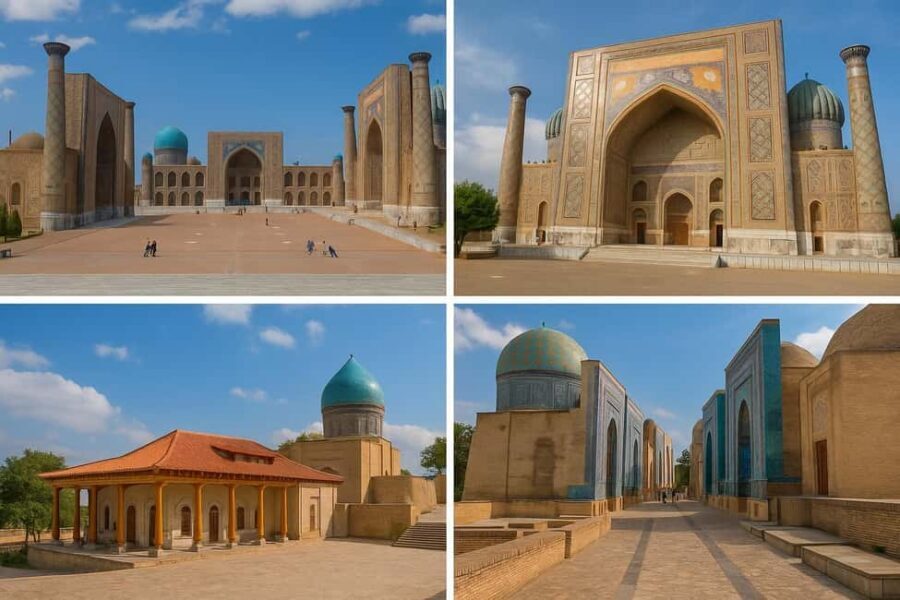
- Registan Square composition challenge: learn how to fit all three madrasahs into one strong frame
- Bibi-Khanym detail focus: train your eye for tile work, textures, and architectural patterns
- Siyob Bozor photo stop + shopping time: candid scenes, fruit displays, and everyday street moments
- Shah-i-Zinda guided photo walking: practical angles for a site that’s easy to photograph poorly
- Smartphone-first approach: no pro gear needed, just a charged phone and the guide’s directions
- Treasure Passport stamps plus a symbolic local keepsake at the end
Why a Photo Challenge Beats a Usual Samarkand Walk
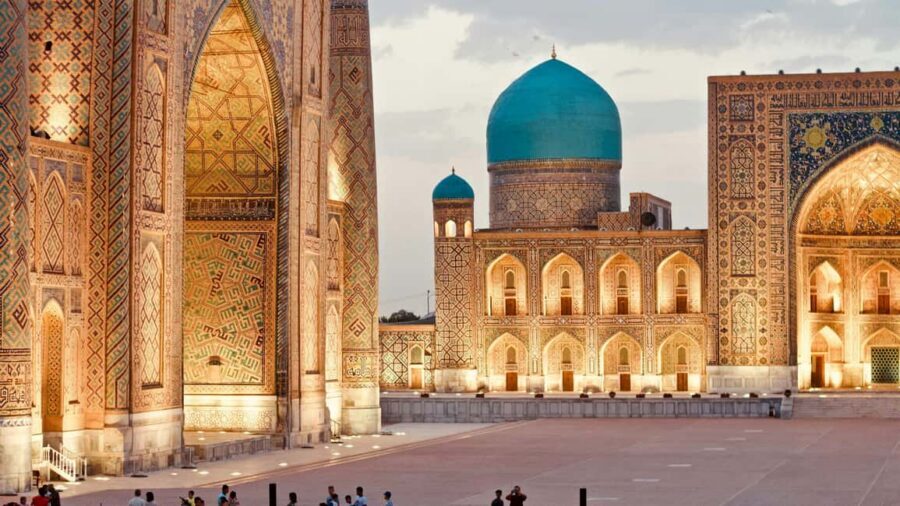
Samarkand can be overwhelming in the best way. So many places look spectacular from the front, but that’s exactly why your photos can end up feeling similar to everyone else’s. This tour fixes that by giving you missions at each stop, so you build pictures with intent instead of hoping for a lucky angle.
The other reason I like this format is that it doesn’t require fancy gear. You use your own smartphone or camera, and the guide helps you work with what you already have—lighting, distance, composition, and timing. In two hours, you’ll leave with more than photos. You’ll have a method for seeing the city.
There’s also a “small group” advantage that matters here. When the group is limited to 6, you can actually pause, reframe, and ask questions without feeling rushed. And because the walk is mostly flat, you’re spending your energy on looking and shooting, not fighting stairs or steep routes.
You can also read our reviews of more walking tours in Samarkand
Meeting Point: Registan Square and the 777 Sign
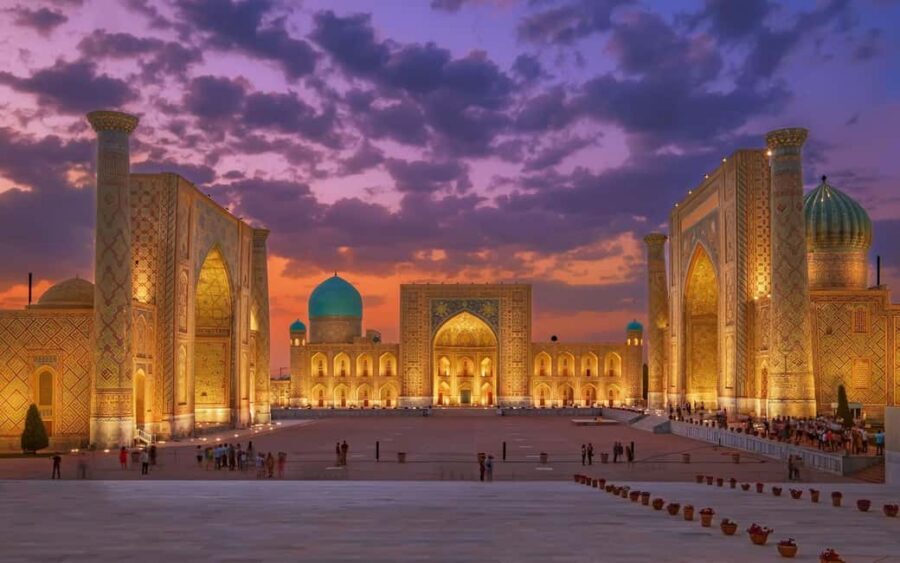
You start at Registan Square, at a designated photo area protected with a glass fence. That detail matters because Registan is busy, and having a clear meeting spot keeps the tour calm from minute one.
Your licensed guide will be holding a sign that reads 777. It’s a simple thing, but it’s the kind of practical clarity you want on a first stop in a famous place.
From the jump, you can expect the mindset shift: this tour treats Samarkand like your personal photo playground. You’ll be guided into viewpoints and framing ideas right away, not hours later.
Registan Square: Framing All Three Madrasahs in One Shot
Registan Square is the big headline. It’s also the place where a lot of photos fail—usually because people aim for a postcard-wide view and end up with a flat, cluttered frame.
Here, the challenge is the learning tool. You spend about 30 minutes at Registan with a task focused on scale and symmetry: capture the three madrasahs together in one composition. That forces you to step back, find the right alignment, and think in layers—foreground, middle architecture, and the “frame” the square gives you.
What you’re really practicing is camera discipline:
- choosing a viewpoint that keeps the main shapes balanced
- managing the height lines so the buildings don’t look like they’re tipping
- using the square’s geometry instead of fighting it
If you’ve ever taken a great photo at the wrong angle, you’ll understand why this challenge works. It teaches you how to aim, not just where to stand.
Bibi-Khanym Mosque: How to Photograph Tiles Like You Mean It
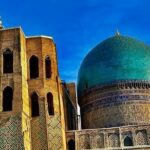
After Registan, the tour slows in a good way. You shift from big symmetrical architecture to surface-level beauty at Bibi-Khanym Mosque with about 30 minutes guided on site.
The mission here is different: focus on details. You’re encouraged to slow your eye down and spot tile patterns, textures, and architectural elements. That’s the kind of instruction that changes your photos instantly because most people glance and move on.
Bibi-Khanym rewards close attention. The same wall can look plain until you catch a repeating pattern or find a slightly different light on the mosaic work. With the guide’s directions, you learn to hunt for:
- line and pattern repetition
- contrasts between smooth surfaces and ornamented sections
- small areas where the texture catches shadows
This stop is especially valuable if you’re the type who thinks, I want a photo that feels like the place I’m standing. Detail-focused photography is how you get that.
Siyob Bozor: Candid Shots and Smart Street Photography
Then you head to Siyob Bozor for another 30-minute stop. This is where the tour becomes more “life in Samarkand” and less “architecture sightseeing.”
Your task shifts again. You’re asked to capture candid moments and authentic local scenes, not posed shots. Think bright fruit displays, everyday interactions, and small gestures that happen naturally in a market environment.
One smart part of this design: you’re not trying to force people into your frame. Instead, you’re learning how to work with movement and your surroundings. That’s what makes your photos feel real, not staged.
There’s also shopping time built into this stop. That matters because it gives you a reason to linger in the market beyond just photographing. If you want to pick up something small, this is a practical moment to do it—while you’re already there and already noticing colors and details.
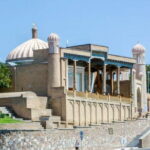
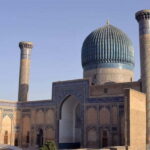
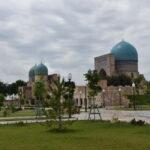
Shah-i-Zinda (and Hazrat Khizr): Turning a Stunning Site into Strong Images
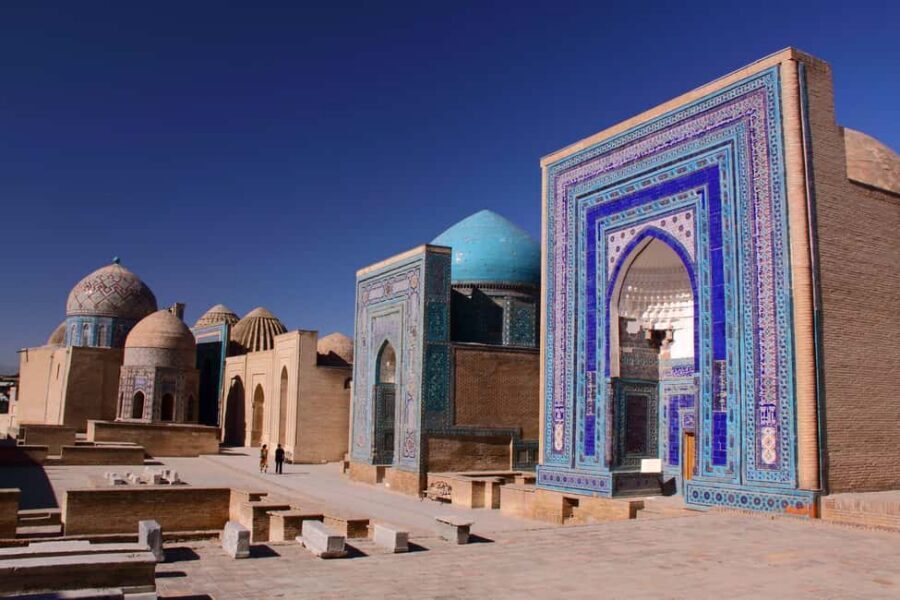
Next comes Shah-i-Zinda, Samarkand, where the architecture gets more intimate and the photo challenge becomes about angles and clarity. You’ll spend about 30 minutes here with guided help.
Shah-i-Zinda is the sort of place where it’s easy to take a beautiful shot that doesn’t show the depth you felt walking through it. The guide helps you avoid the common problem: framing a scene without understanding how the space wants to be photographed.
From the tour structure, you’ll also reach Hazrat Khizr as part of the guided photo walk. The overall experience is designed to move you from wide iconic views into more layered, detail-oriented compositions.
What makes these guided sections valuable is that they’re not only about getting a good photo today. They teach you how to approach a complex site so your future shots don’t depend on luck.
You’re also told you’ll access hidden viewpoints and best photo locations. Even without fancy camera tricks, that kind of local positioning changes everything—especially in crowded areas where the obvious spots aren’t always the best frames.
What You Learn: Practical Smartphone Tips That Actually Transfer
The tour is built around simple, usable photography guidance. And that’s exactly what you want—stuff you can apply immediately.
You’ll learn how to:
- frame iconic landmarks so they look intentional, not accidental
- spot angles you’d normally walk past
- use composition to control scale and symmetry
- slow down for texture and pattern details
A big plus: you don’t need a professional camera. The experience is designed for all skill levels, and your phone is the tool. You just need a charged smartphone and comfortable shoes.
Also, this is not a “rapid checklist” style walk. The challenges naturally create short pauses where you can adjust. You’ll feel like you’re working with the guide, not being rushed through stops.
The 2-Hour Pace: Enough Time for Photos, Not So Much You Get Tired
At 2 hours, this tour hits a sweet spot. You cover major sites without turning it into an all-day grind. Each stop is roughly 30 minutes, which is long enough to think, shoot a few angles, and refocus.
The route is described as mostly flat and easy to walk, so the energy goes into photography. If you’ve traveled far and don’t want your day derailed by long distances between attractions, this duration makes sense.
Small-group size also matters for pacing. Up to 6 participants means the guide can keep attention on composition decisions and answer questions without waiting for a crowd.
Price and Value: Is $63 Worth It?
At $63 per person, this isn’t the cheapest activity in Samarkand—but it also isn’t trying to compete with entry-ticket costs. You’re paying for three things that are hard to replicate on your own: guided positioning, mission-based composition practice, and the chance to access strong photo locations.
Here’s why it feels like good value:
- You get a licensed local guide, Azim Khayrullaev, who’s there to direct angles and framing.
- You get a structured shooting plan, not random wandering.
- You receive a Treasure Passport to collect stamps at iconic landmarks, plus a symbolic local keepsake at the end.
- Bottled water is included, which is a small comfort that still matters during active walking.
If your goal is more than snapshots—if you want better-looking photos with less effort and more confidence—this price starts to look reasonable. You’re buying guidance and a format that forces results.
Who This Tour Fits Best (and Who Should Rethink It)
This tour is a great fit if you fall into any of these categories:
- You want to improve your phone photos quickly without reading a photography course first
- You like guided creative tasks more than straight lectures
- You’re short on time but want images of Registan, Bibi-Khanym, and Shah-i-Zinda that feel personal
- You enjoy markets and everyday scenes as much as monuments
It may be less ideal if:
- You want a classic “here’s the story, then move on” style tour
- You dislike active participation or expect every minute to be purely sightseeing
Accessibility-wise, it’s not suitable for wheelchair users, and it’s also not suitable for people over 95 years. The walk is described as mostly flat, but that doesn’t automatically make it an accessibility-friendly route.
Language Comfort: English and Japanese Guidance
The tour guide experience is offered in English and Japanese. That’s helpful if you want clear instructions on angles and composition.
One of the best practical benefits is that photography guidance works best when you can actually understand the guide’s directions. If you’re comfortable in English or Japanese, you’ll likely feel supported throughout the mission-based stops.
Should You Book This Samarkand Photo Walking Tour?
Book it if you want Samarkand photos that feel deliberate. The combination of short stops, structured challenges, and expert local guidance makes it easier to get better results than a DIY walk—especially around Registan and the mosque sites where the wrong angle can flatten the whole scene.
Skip it if you’re looking for a traditional tour with minimal effort, or if you dislike the active format. This experience asks you to look, frame, and participate.
If you’re on the fence, here’s the simplest way to decide: if you want your smartphone photos to look more “you stood there and saw that” and less “you pointed and hoped,” this tour is the kind of plan that pays off quickly.
FAQ
FAQ
How long is the Samarkand photo walking tour?
It lasts 2 hours.
What does the tour cost?
The price is $63 per person.
How large is the group?
The group is limited to 6 participants.
Where do we meet?
You meet at the photoshooting area of Registan Square protected with a glass fence.
How will I identify the guide?
The guide will be holding a sign that reads 777.
Which places are included on the photo walk?
The tour covers Registan Square, Bibi-Khanym Mosque, Siyob Bozor, Shah-i-Zinda, and Hazrat Khizr.
Do I need a professional camera?
No. Photos are taken using your own smartphone, and a charged phone is what you need.
What should I bring?
Bring comfortable shoes and a charged smartphone.
What languages are available?
The live tour guide is available in English and Japanese.
Is there a cancellation option if my plans change?
Yes. Free cancellation is available up to 24 hours in advance for a full refund.