Muynak’s Ship Cemetery hits hard. I love the way this day mixes real ruins and real ecology with everyday Karakalpak life in between. I also like how the stops move from ancient funeral history to the Aral Sea’s collapse without feeling like a lecture. One big consideration: it’s a long drive, and the road time can run late if conditions aren’t great, so plan your day with patience.
The heart of the experience is that slow shift from desert beauty to something darker. You’ll see a landscape that looks vast and empty, but is really the aftermath of human choices—and you’ll get context in the Aral Sea Museum rather than just snapping photos and moving on. Still, if you’re prone to car sickness, this route can feel like a test, especially on the later stretches.
This private-group format (price is for up to 3 people) helps a lot. Your driver speaks English and Russian, and pickups run from Khiva or Urgench—so you’re not forced into a big-group schedule. The day works best if you want a serious, hands-on cultural and ecological experience, and you’re okay spending most of your time traveling.
In This Review
- Key things to know before you go
- Muynak Ship Cemetery: what photos can’t show
- Chilpik Fortress: pre-Arab history you can actually stand near
- Mizdakhan Complex: mausoleums and funerary tradition in the “City of deaths”
- The long road from Khiva to Muynak (and why timing can shift)
- Muynak lunch: Karakalpak family food and everyday life
- Ship Cemetery: the emotional centerpiece of the Aral Sea story
- Aral Sea Museum: why context matters after you’ve seen the ships
- Price and value: $230 per group up to 3 for a remote, full-day hit
- Who this tour suits (and who should think twice)
- Quick practical checklist before you book
- Should you book the Muynak Ship Cemetery Tour from Khiva?
- FAQ
- Where does the tour pick you up?
- Where can you be dropped off after the tour?
- How long is the tour?
- What’s included in the price?
- Is lunch included?
- Do I need to pay for the Aral Sea Museum entrance?
- Is there a guide?
- What should I bring?
- FAQ
- Is the tour wheelchair accessible?
- What’s the cancellation policy?
- Can I reserve without paying right away?
- What languages are supported?
Key things to know before you go
- You’re going far for a reason: Muynak is about 370 km from Khiva one way, so travel time is the main part of the schedule.
- Chilpik Fortress is ancient and unusual: It’s one of the rare pre-Arab-period monuments in Central Asia, tied to Zoroastrian funeral rites.
- Mizdakhan feels like a city of deaths: Mausoleums and pre-Islamic traditions still show through in the complex.
- Muynak lunch is a local family meal: It’s designed to show social life in a place where many people connect to fishing history.
- Ship Cemetery is the emotional centerpiece: It’s known as the Cemetery of Ships, a clear result of the Aral Sea shrinking.
- Aral Sea Museum adds the ecological picture: You’ll learn about former sea fauna and flora and how the collapse affected people.
Muynak Ship Cemetery: what photos can’t show
This tour is built around a single, striking idea: how quickly a coastline can become history. The Ship Cemetery in Muynak is the kind of place where your brain keeps trying to make sense of what it’s seeing. You’re looking at ships that ended up stranded as the water vanished—proof that big environmental changes don’t stay abstract.
What I like about the way this program is paced is that you don’t arrive and leave emotionally raw, with no context. You build up to it. First you spend time on older layers of Karakalpakstan’s story—fortresses, mausoleums, and funerary traditions. Then you move into the Aral Sea’s story, where the disaster becomes visible and specific.
The museum helps here. The Aral Sea Museum isn’t just about sad visuals. It gives you a grounded view of what life was like in the former sea area, including fauna and flora. That matters because you start to see the ecosystem loss as more than a political headline.
You can also read our reviews of more tours and experiences in Uzbekistan.
Chilpik Fortress: pre-Arab history you can actually stand near
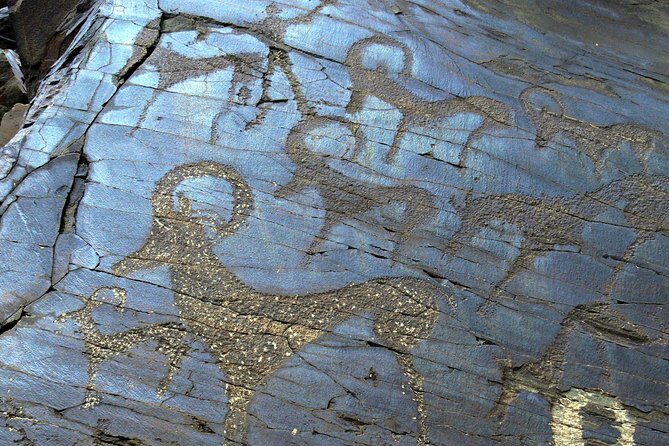
On the way, you’ll stop at Chilpik Fortress. This isn’t a quick roadside glance; it’s described as one of the rare monuments of Central Asia preserved from the pre-Arab period. What makes it memorable is the cultural detail: it’s among the few monuments where Zoroastrians performed funeral rites, leaving the bodies of the dead there.
That kind of specificity changes the tone of your day. Instead of the trip being only about the modern Aral Sea disaster, you get a sense of how people have used this region for centuries. The contrast is powerful: ancient ritual spaces on one hand, and a modern ecological catastrophe on the other.
If you like history that feels concrete—something you can walk around rather than just read about—this stop earns its place in the itinerary.
Mizdakhan Complex: mausoleums and funerary tradition in the “City of deaths”
Next comes Mizdakhan Complex, often described as the City of deaths. You’ll see a huge number of mausoleums, and you’ll also notice that pre-Islamic traditions can still be seen here.
This is one of those places where silence makes sense. It’s not the kind of stop where you rush for the best angle. The value is in the feeling that you’re entering a space designed for remembrance. And because it’s a complex (not just one building), you get a more complete picture of how these traditions were organized.
Practical note: these kinds of complexes usually reward comfortable shoes. Even when you’re not climbing mountains, you may walk uneven ground and spend time outdoors.
The long road from Khiva to Muynak (and why timing can shift)
Let’s talk about reality, because the route is the biggest factor in how enjoyable the day feels. From Khiva, the driving distance to Muynak is listed at about 370 km one way, with a similar return distance. The program says around 8.5 hours for the overall experience, but the day can stretch when you hit road conditions.
A big theme from real-world experience here is uncertainty: sometimes the driver and schedule stay smooth, and sometimes you lose time on the road or during transitions between stops. That’s especially true in remote stretches where road quality can affect speed.
My advice: treat the day as a full-day commitment, not a quick excursion. If you’re the type who plans every minute, this may feel stressful. If you’re okay with a road-heavy day and want to make the most of every stop, it becomes part of the experience.
Also, consider transport comfort. The program uses an A/C vehicle, which helps, but a standard car may feel bumpy on rougher segments. If you get car sick, I’d plan for it in advance (medication or ginger options, whatever works for you).
Muynak lunch: Karakalpak family food and everyday life
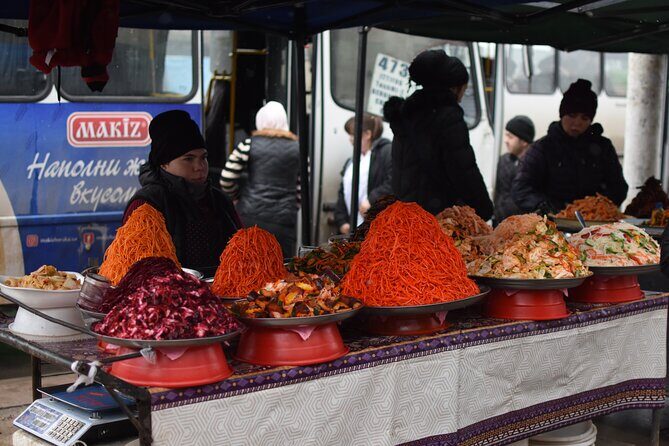
In Muynak, lunch is included as a local house meal in a Karakalpak family setting. The program is clear that Muynak has not many restaurant options, so this is the “sit with locals” style of meal—rather than a polished café stop.
What I like about this approach is that it fits the tour’s theme. You’re not only seeing the disaster; you’re also meeting the social fabric of the region. The program description also hints at ex fishermen you’ll meet around town. Even a short lunch stop can turn Muynak from a name on a map into a lived place.
Two practical points:
- Lunch is included, but you won’t get restaurant variety. If you’re picky, think ahead about what you can comfortably eat.
- The meal is local-house style, so the pace and service may feel different than what you’re used to.
Ship Cemetery: the emotional centerpiece of the Aral Sea story
Now the main event: the Ship Cemetery. Once Muynak was one of the most popular and important cities in Uzbekistan. Today, it’s known by a sadder name—the Cemetery of Ships.
This is where the tour’s title earns its weight. You’re seeing a physical archive of environmental collapse. Ships are meant to move with water and wind; here, they sit as evidence of how quickly a system can stop working.
What makes the experience valuable is the emotional effect paired with a learning foundation. If you only come for visuals, you may leave thinking about sadness. If you take in the museum context and the history stops earlier in the day, the place becomes a lesson about cause and consequence—human influence on nature, and what that does to communities.
Aral Sea Museum: why context matters after you’ve seen the ships
After the cemetery, you’ll visit the Aral Sea Museum. This is where you get perspective on the disaster beyond the dramatic centerpiece outside.
The museum is described as a place where you can get a full imagine about fauna and flora of the former sea. That’s important because it refocuses the story from objects and ruins back to living systems. The disaster isn’t only about ships; it’s about ecosystems and the food webs that supported people and animals.
If you’re the kind of traveler who likes to understand what you’re looking at, the museum helps you connect dots. You won’t just know what happened—you’ll understand what was lost and why it mattered.
Price and value: $230 per group up to 3 for a remote, full-day hit
At $230 per group (up to 3 people), this can be good value if you compare it to the cost of getting yourself out to Muynak and back with a driver who knows the routing and stops. Most travelers don’t want to manage a long, remote day with changing conditions on their own.
Here’s the real value equation:
- You’re paying for round-trip private transport in an A/C vehicle.
- You’re covering multiple culturally meaningful stops, not just one.
- You get the benefit of language support from a driver who speaks English and Russian.
Where the value can dip is when the day runs long and you feel like you’re “only” driving for hours. But if you go in expecting a heavy travel day, the cost per person usually starts to feel fair—especially for couples or small groups.
One more cost reality: the Aral Sea Museum entrance is not included. That means you may want to carry cash or plan on paying the admission directly, even though the program states you can skip the ticket line.
Who this tour suits (and who should think twice)
This tour is ideal for travelers who want something more than sightseeing. I think it’s a strong match if you care about:
- environmental history (not just scenery),
- Central Asian heritage (Chilpik and Mizdakhan),
- and local life in places that don’t cater to tourism.
It’s also suitable for a wide age range and is described as wheelchair accessible. That said, your comfort will depend on the day’s walking around sites and how the terrain looks where you stop.
Who might think twice: anyone who needs predictable timing or struggles with long car hours. If you’re sensitive to motion sickness, you’ll want to prepare. If you dislike uncertainty, you might find the road-heavy nature and potential schedule drift exhausting.
Quick practical checklist before you book
Bring:
- Comfortable shoes
- Comfortable clothes
Consider also:
- A motion-sickness plan if you’re prone to it.
- Light layers, because desert weather can shift during a long day.
- A simple way to communicate basic needs if language is limited in the moment.
Driver languages are listed as English and Russian, and pickups are included from Khiva and Urgench options, including station and airport locations. You’ll also have drop-off by request at Khiva or Urgench.
Should you book the Muynak Ship Cemetery Tour from Khiva?
Yes—if you want an honest, hands-on day about the Aral Sea catastrophe and you can handle a long drive. I’d book it if you’re drawn to places that feel like evidence, not postcards, and if you appreciate cultural stops that broaden the story beyond one site.
I’d hesitate if you:
- need strict timing,
- get car sick easily,
- or want a low-effort day with lots of rest stops and short travel segments.
If your goal is to understand why Muynak became a Cemetery of Ships—and to see the supporting context from forts to mausoleums to museum exhibits—this is a meaningful way to spend your time in Karakalpakstan.
FAQ
Where does the tour pick you up?
Pickup is available from Khiva or Urgench, including options such as Khiva’s main gates area (Ata Darwaza) and Urgench train station or airport.
Where can you be dropped off after the tour?
Drop-off is available by request at Khiva or Urgench, including Urgench hotel/airport/railway station options.
How long is the tour?
The program duration is listed at about 8.5 hours, with the drive to Muynak being roughly 370 km each way, plus time for stops.
What’s included in the price?
Included are a round-trip A/C vehicle and all fees and taxes. A private group setup is used for up to 3 people.
Is lunch included?
Lunch is not listed as included directly, but it is described as being available as a local house lunch in Muynak without restaurant-style options. Lunch can be booked by request of the traveler.
Do I need to pay for the Aral Sea Museum entrance?
Yes. Entrance to the Aral Sea Museum is not included in the price.
Is there a guide?
A guide is available by request. The driver is English and Russian, but a formal guide is not automatically included unless requested.
What should I bring?
Wear comfortable shoes and comfortable clothes, since you’ll be walking around outdoor sites and complexes.
FAQ
Is the tour wheelchair accessible?
Yes, the tour is described as wheelchair accessible.
What’s the cancellation policy?
Free cancellation is available up to 24 hours in advance for a full refund.
Can I reserve without paying right away?
Yes. The option is reserve now & pay later, meaning you can book your spot and pay nothing today.
What languages are supported?
English and Russian are listed as supported languages for the tour.