REVIEW · TASHKENT
Tashkent-Samarkand-Bukhara tour-3nights/4 days
Book on Viator →Operated by Silk Road Travellers · Bookable on Viator
Silk Road cities, packed with calm purpose. This private Tashkent–Samarkand–Bukhara route keeps you moving without the usual stress, with a real guide to explain the layers of history at mosques, madrasahs, and bazaars. I especially loved the private party pace and how the included Afrasiyab high-speed train transfers make the 600 km jumps feel manageable. The main thing to consider is that the schedule starts early on train days, so pack an extra layer and don’t plan any late mornings.
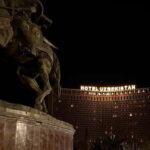
You’ll meet at Hotel Uzbekistan (Mirzamakhmud Musakhanov Street 45) at 7:00 am, with pickup offered if you’d rather not navigate the start. The tour also uses mobile tickets and comfortable car transfers, but lunches and dinners are on you—so it helps to ask your guide where locals actually eat.
In This Review
- Key things to know before you go
- Why this Tashkent–Samarkand–Bukhara route makes sense
- Day 1 in Tashkent: Hazrati Imam, Chorsu Bazaar, and old-city landmarks
- Day 2: Morning Afrasiyab train to Bukhara and Sitorai Mokhi-Khosa
- Day 3 Bukhara: Mosques, the Kalon minaret, the Ark, and Lyab-i Hauz calm
- Samarkand on Day 4: Gur Emir, Registan, Ulugh Beg, and Shahi Zinda
- Price and logistics: what $1,200 buys you (and what you should budget)
- How to get the most out of the pace (and avoid sore feet)
- Should you book this Tashkent–Samarkand–Bukhara private tour?
- FAQ
- What’s the tour duration for the Tashkent–Samarkand–Bukhara trip?
- What time does the tour start, and where do you meet?
- Is pickup offered?
- Are train tickets included between the cities?
- What’s included in the tour price?
- What’s not included?
- Do you visit both Bukhara and Samarkand on the train days?
- What time do you return to Tashkent on the final day?
- Is this a private tour?
- What’s the cancellation policy?
Key things to know before you go
- Old Tashkent first: Hazrati Imam ensemble, Chorsu Bazaar, Kukeldash Madrasah, and a stop at the Applied Art museum
- Fast, included trains: Afrasiyab economy tickets cut the long distances between cities
- Bukhara’s classics: Magoki Attari Mosque, Poi Kalyan complex, Ark of Bukhara, plus Lyab-i Hauz
- Samarkand at the peak sites: Gur Emir, Registan, Ulugh Beg Observatory, Shahi Zinda
- A guide who’ll steer your food plans: you can ask for Uzbek meal recommendations that fit the day
Why this Tashkent–Samarkand–Bukhara route makes sense
This tour is built around one big idea: you see the main Silk Road power centers with less “transport time drama.” Instead of spending whole days in transit, you jump between cities on the Afrasiyab high-speed trains and then focus on walking the historic cores.
The pacing is also practical for real sightseeing. Day 1 stays in Tashkent’s old quarters and key landmarks, then Day 2 starts early and pushes you into Bukhara, and Day 3 funnels you into Samarkand. By Day 4, you’re hitting the famous monuments without wasting the afternoon on logistics.
It’s a good fit if you want structure. You get transport, entrance tickets for the listed sights, and guidance, so you’re not constantly making decisions mid-trip. That said, if you prefer slow travel with lots of free time, you’ll feel the schedule.
You can also read our reviews of more tours and experiences in Tashkent.
Day 1 in Tashkent: Hazrati Imam, Chorsu Bazaar, and old-city landmarks
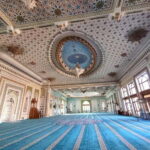
You start in central Tashkent with a proper “get oriented fast” plan. The day begins at the Ensemble Hazrati Imam, which is considered the religious heart of the old city. Here you’ll visit Barak Khan madrasa (built in the 16th century) and the Kaffal Shashi mausoleum, tying together architecture and the people who shaped the region.
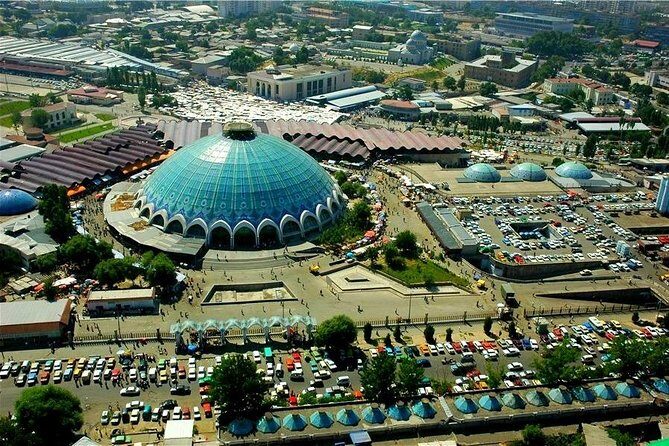
Then comes Chorsu Bazaar, one of the largest bazaars in Uzbekistan and Central Asia. This is the kind of place where you learn culture through everyday details: where traders meet, how goods move, and why markets mattered on the Silk Road. Even with only about 40 minutes, it’s enough time to see the scale and get a feel for old Tashkent life in Eski Shahar.
Kukeldash Madrasah follows, and it’s worth paying attention because it’s connected to the major historical figures and the Sheibanid era. Built in 1569 and described as the largest of the madrasahs of old Tashkent, it gives you a sense of how religious education and state power overlapped.
Next is the Uzbekistan State Museum of Applied Art. It’s a nice counterbalance to monuments. The museum was founded in 1937 and its collection includes over 4,000 exhibits showing the history of Uzbek decorative art. If you like crafts, ceramics, and woodwork, this stop adds depth beyond tiles and towers.
The day also includes Amir Temur Square, used for major state events and parades on national holidays. It’s a quick reminder that Uzbekistan isn’t just preserved history—it has a modern public life built over it. You end back in Tashkent for the overnight.
What can feel like a drawback: the day is packed with indoor and outdoor sites back-to-back. Wear comfortable shoes, especially after you leave the bazaars and start crossing between landmarks.
Day 2: Morning Afrasiyab train to Bukhara and Sitorai Mokhi-Khosa
Day 2 starts early on purpose. There’s a breakfast window at your hotel from about 5:30 to 6:00, then you check out around 6:30 and transfer to the train. The Afrasiyab high-speed ride runs about 3 hours 50 minutes, covering roughly 600 km, with arrival in Bukhara around 11:15.
That timing matters because it preserves your sightseeing energy. If you travel by slower routes, you’d lose half the day just getting settled. Here, you arrive with enough daylight to see something meaningful immediately.
Your first major Bukhara stop is the Palace of Moon-like Stars, also called Sitorai Mokhi-Khosa. This palace stop is one of those experiences where you get a different angle on Silk Road wealth. Instead of only focusing on religious architecture, you see how elites displayed status and taste through design, layout, and decoration.
A practical tip: on train days, keep your camera and water within reach. The schedule moves fast, and you won’t want to waste time digging for basics once you’re on the platform and later walking between the palace and nearby areas.
You’ll spend the night in Bukhara, setting you up well for the Old City sights on Day 3.
Day 3 Bukhara: Mosques, the Kalon minaret, the Ark, and Lyab-i Hauz calm
Day 3 is where Bukhara really shows its personality. You begin with Magoki Attari Mosque and its carpet museum component. The mosque itself is a medieval architectural monument, and one detail that makes it stand out is that it sits more than 4.5 meters below ground level. That underground positioning changes how you experience the space, and it’s a strong reminder that Bukhara layers keep building under your feet over time.
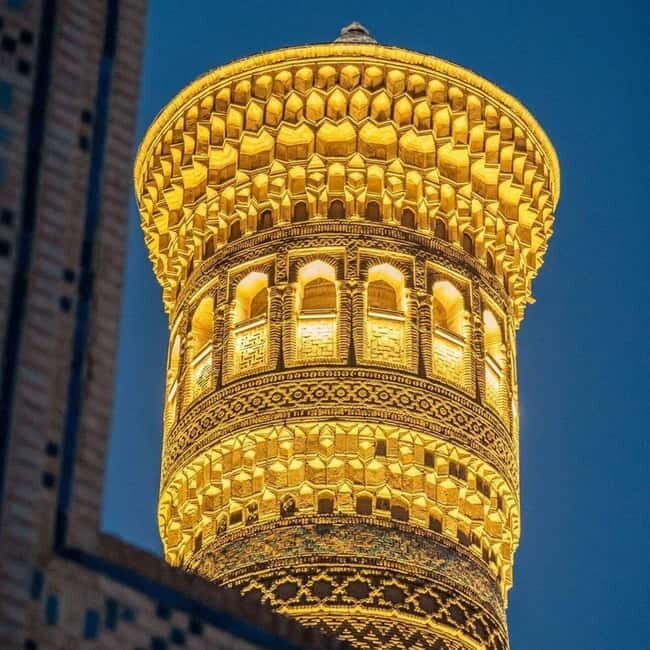
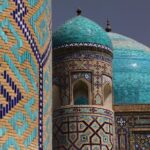
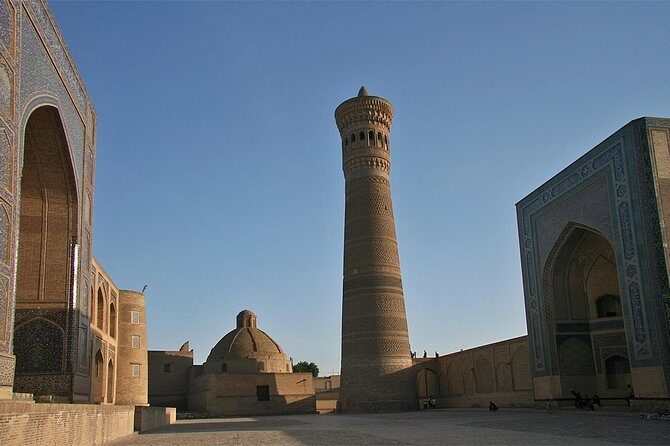
Then you head to the Great Minaret of the Kalon area, also known as Poi Kalyan. This is an architectural ensemble from the 12th to the 16th centuries, made up of the Kalyan minaret, the Kalyan mosque, and the Miri Arab madrasa complex. Even when you’re moving between buildings quickly, the scale helps you understand why these places were magnets for learning, prayer, and power.
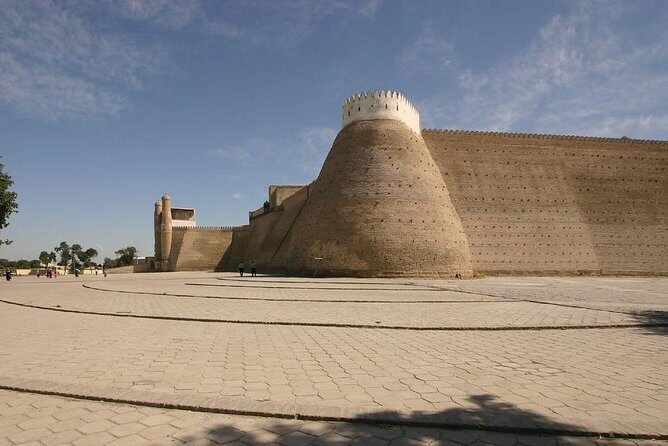
Next up is the Ark of Bukhara, an ancient citadel and fortress that rises nearly 20 meters above the surrounding area. It covers about 4 hectares, so it has the feel of a whole city-within-a-city. The key takeaway here is perspective: you’re looking at how rulers defended authority from a fortified position, not just religious devotion in stone.
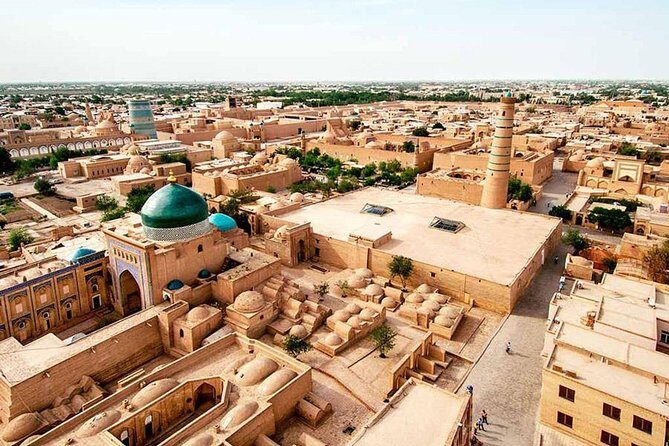
You also get Lyab-i Hauz Ensemble on the day’s lineup. It’s often treated as a favorite rest stop because of its grandness, tranquility, and age. Even if you only have a limited window, the layout helps you slow down a bit. In a packed itinerary, that kind of breathing space matters.
By late afternoon, you switch cities. At around 15:50 you take the Afrasiyab high-speed train to Samarkand and arrive about 17:15, then overnight in Samarkand.
Samarkand on Day 4: Gur Emir, Registan, Ulugh Beg, and Shahi Zinda
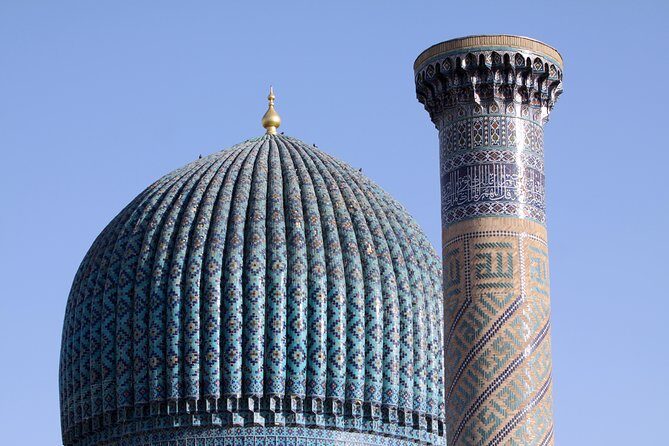
Day 4 is a signature Samarkand day. You start at Gur Emir Mausoleum, known as the mausoleum of Tamerlane and also Mir Sayyid Barak, plus members of the Timur family. This stop is powerful because it centers on the people behind the empire, not just the architecture.
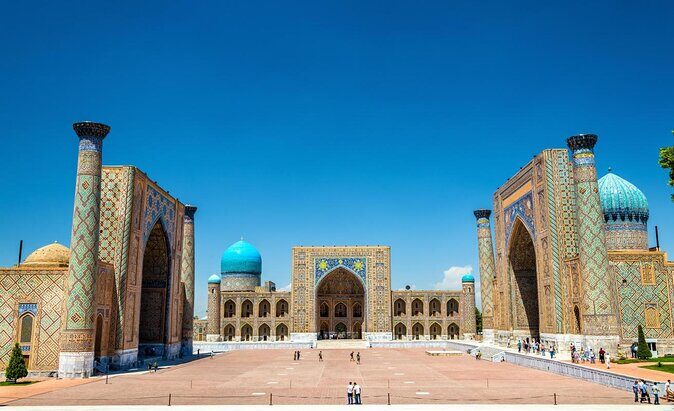
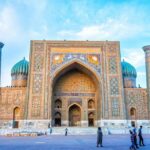
Then you move to Registan, probably the most famous public square in Samarkand. Here you’ll see three huge madrasahs—Ulughbek (15th century), Shirdar (17th century), and Tillakori (17th century). The square layout is the point. It’s built to impress you from multiple angles, and your guide’s explanations help you connect each building to its role in education and state life.
After that comes Ulugh Beg Observatory. Built by Ulugbek on Kuhak Hill nearby in 1424–1428, it’s one of the most significant observatories of the Middle Ages. This is a great pivot from art and architecture to science and measurement. If you’ve ever wondered how astronomy and math traveled across the Silk Road, this stop gives you a physical place where the work happened.
Next is Shah-i-Zinda, the ensemble of mausoleums of Karakhanid and Timurid nobility. The complex includes eleven mausoleums, and it’s built as a dramatic procession you walk through. It’s not just a single building; it’s a sequence, which is why it feels memorable even without long time in each section.
The itinerary also includes Bibi Khanum Mosque, the grand cathedral mosque from 1399 to 1404. It’s noted for richly decorated tiles, carved marble, and murals, so if you like surface detail, this is where you’ll notice it most.
In the early evening, you take the train back to Tashkent. At about 17:30 you depart on Afrasiyab, arriving around 19:40. The tour ends back at the meeting point, Hotel Uzbekistan.
Price and logistics: what $1,200 buys you (and what you should budget)
At $1,200 per person for 4 days, the value is mostly about what’s included and what would cost you time or planning on your own. You’re getting private-group touring, all listed transport in a comfortable car, entrance tickets for the scheduled sights, and Afrasiyab high-speed train economy tickets between the cities. You also get hotel accommodations on a twin-share basis, with breakfast in Tashkent, Samarkand, and Bukhara.
You’re not just paying for “views.” You’re paying for coordination. That coordination is the difference between showing up for monuments in a timed, efficient way versus losing hours on separate ticket lines, unclear directions, and train timing decisions.
Your biggest additional costs are predictable. Lunches and dinners aren’t included, and tips and personal expenses aren’t included either. Photography and video making fees at sites also aren’t included, so if you’re planning to shoot heavily, budget for that.
One more practical note: the schedule is tight because the train times drive it. If you hate early mornings or feel rushed by constant movement, this tour may test your patience.
Still, if you want a guided route that hits the core monuments in a few days, this price starts to look reasonable.
How to get the most out of the pace (and avoid sore feet)
With this itinerary style, you’ll do best if you treat it like a sprint with smart recovery. Wear shoes that handle uneven stone and long walks between monuments. Keep a light layer for mornings, since train days start early and you’ll be out and about.
Food-wise, lean on your guide. The tour specifically invites you to ask for authentic Uzbek meal recommendations, and that can help you dodge tourist traps and find dishes that fit the day’s timing. Since lunches and dinners are not included, your guide’s advice can turn an empty gap into a genuinely local meal.
If you’re a photographer, plan for site rules. The tour notes that photography and video fees may apply at some sites, so don’t assume everything is included. Bring a small bag or tech pouch so you don’t waste time changing gear mid-day.
Finally, think about pacing mentally. Each city has a distinct feel: Tashkent is markets and modern civic spaces next to older religious complexes, Bukhara slows you down with courtyards and layered architecture, and Samarkand hits you with grand squares and monument sequences. If you go with that flow, the route feels satisfying instead of frantic.
Should you book this Tashkent–Samarkand–Bukhara private tour?
I’d book this if you want a guided, well-paced Silk Road sampler with minimal guesswork. It fits best for people who like structure, appreciate big monument stops like Registan and Shah-i-Zinda, and also want a practical way to handle the long distances using the Afrasiyab high-speed trains.
Skip it if you want lots of free time in each city, or if early mornings will ruin your trip mood. The route is designed around set train times, so spontaneous detours will be limited.
If your goal is to see the major highlights—Tashkent’s old-city ensembles and bazaars, Bukhara’s mosques and fortified past, and Samarkand’s iconic squares and mausoleums—this private 4-day plan is one of the more efficient ways to do it.
FAQ
What’s the tour duration for the Tashkent–Samarkand–Bukhara trip?
It runs for about 4 days.
What time does the tour start, and where do you meet?
The start time is 7:00 am, and the meeting point is Hotel Uzbekistan, Mirzamakhmud Musakhanov Street 45, Toshkent, Uzbekistan.
Is pickup offered?
Yes, pickup is offered if it is easier for you.
Are train tickets included between the cities?
Yes. High-speed train economy tickets are included for Tashkent to Bukhara, Bukhara to Samarkand, and Samarkand to Tashkent.
What’s included in the tour price?
Included items list hotel accommodation on a twin basis, breakfast in Tashkent, Samarkand, and Bukhara, all transfers in a comfortable car as per the itinerary, and entrance tickets for the scheduled sights (plus taxes).
What’s not included?
Lunches and dinners, tips, personal expenses, international air tickets, late check-out and early check-in charges at hotels, photography and video making fees at sites, and other personal site-related charges if applicable.
Do you visit both Bukhara and Samarkand on the train days?
Yes. Day 2 includes travel from Tashkent to Bukhara by train, and Day 3 includes travel from Bukhara to Samarkand by train.
What time do you return to Tashkent on the final day?
On Day 4, the high-speed train leaves Samarkand at about 17:30 and arrives in Tashkent around 19:40.
Is this a private tour?
Yes. It’s described as a private tour/activity, and only your group participates.
What’s the cancellation policy?
You can cancel for a full refund up to 24 hours before the experience’s start time.