REVIEW · TASHKENT
Discover Uzbekistan – explore top destinations: Samarkand, Bukhara & Tashkent
Book on Viator →Operated by GOTOUZBEKISTAN · Bookable on Viator
Three cities in three days sounds intense. That’s exactly why this tour works: you get high-speed train connections and a tight route through Samarkand, Bukhara, and Tashkent. I like that the days are structured around major landmarks (so you’re not guessing), and I also like the practical inclusions—tickets, meals, and transport. One real drawback: it’s a packed pace, with a lot of stops and shorter on-site times.
I also appreciate the small group size (up to 8), which keeps the experience feeling organized instead of chaotic. The route includes both museum moments in Tashkent and the showpieces of Central Asia’s old-city architecture in Bukhara and Samarkand, so you’re not just “walking and hoping.” If you want tons of free time to wander at your own rhythm, this may feel a bit scheduled.
This is a good fit if you like big visuals—squares, minarets, mausoleums, and bazaars—plus the relief of someone else handling the logistics. The tour note about moderate physical fitness makes sense: expect some walking and time outdoors, so comfortable shoes matter.
In This Review
- Key highlights you’ll feel on the ground
- A fast route through Uzbekistan’s power centers
- Tashkent in a day: Timur, memorials, and the Minor Mosque
- Bukhara’s skyline: minarets, madrasas, and the Ark
- Samarkand’s Registan square: Gur-i Amir, three madrasas, and Shah-i-Zinda
- Price and logistics: what $999 covers and why it can be worth it
- How to match your pace to this itinerary
- Practical tips for mosques and bazaars on this route
- Should you book this Tashkent–Bukhara–Samarkand tour?
- FAQ
- FAQ
- How long is the tour?
- What cities are included?
- What is the price per person?
- Is pickup included?
- What transportation is included between cities?
- Are meals included?
- How big is the group?
- What if the weather is poor?
- Is moderate physical fitness required?
Key highlights you’ll feel on the ground
- High-speed train (economy class) between Tashkent, Bukhara, and Samarkand, round-trip
- Entrance tickets + guided stops built around the biggest sites in each city
- Meals included: breakfast (3) and lunch (3), so you’re not scrambling
- Small group cap of 8 people, which usually means smoother timing
- Not just mosques: you also see memorials and museum stops in Tashkent
- Guides linked with the program include names like Sevinc (Samarkand) and Outilla, with planning credited to staff such as Ibrohim and Izzatullo
A fast route through Uzbekistan’s power centers
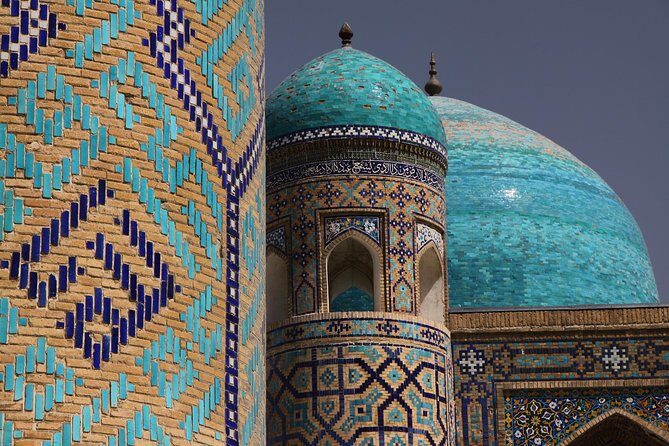
If you’ve only got a short window, this is a smart way to make Uzbekistan feel complete. Tashkent gives you the modern country picture and state-level landmarks. Bukhara and Samarkand deliver the classic Central Asian view: tilework, courtyards, domes, and that “how old is this?” feeling every few minutes.
The tour’s big advantage is the sequence. You move from Tashkent into Bukhara, then up to Samarkand—so the architectural story makes sense in your head instead of feeling random.
The pace is the tradeoff. Many stops are timed around “see the best, learn the basics, move to the next major site,” which keeps momentum high.
You can also read our reviews of more tours and experiences in Tashkent.
Tashkent in a day: Timur, memorials, and the Minor Mosque
Tashkent starts with a strong anchor: Amir Timur Museum. The museum is a modern domed space focused on the 14th-century ruler Tamerlane, with portraits and artifacts. Even if you’re not a deep history person, it helps you frame why so much of what you’ll see later connects back to Timur’s era.
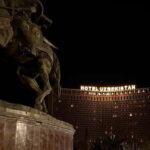
From there you step into the open air at Amir Temur Square. This is the kind of place where the scale of the monument changes how you understand the city’s identity—horse statue in a grand setting, wide views, and space to orient yourself.
Next up is Independence Square (Mustakillik Square), a central landmark designed around national symbolism. It’s brief, but useful, especially if you want a quick overview of the city’s “today” perspective.
The tour also includes two memorial-style stops that add emotional context. Memorial Square honors soldiers lost during the Great World War, and Courage Earthquake Memorial points to how Tashkent remembers major natural events. These aren’t just photo stops; they tend to make the city feel lived-in rather than purely sightseeing.
Then you shift back to Islamic architecture at Minor Mosque. This is a white mosque known for Islamic design details, and it’s one of the more rewarding short pauses because you can slow down just enough to study shapes, lighting, and structure without needing a long visit.
Finally, you end with the Uzbekistan State Museum of Applied Art, one of the standout museum choices in the city. Applied art is where you learn to “see materials”: ceramics, crafts, patterns, and decorative traditions that show up everywhere in Bukhara and Samarkand too. It’s a nice bridge between the museum world and the monument world.
Practical consideration for Day 1: it’s a lot of different themes in one day—museum, squares, memorials, mosque, then another museum—so wear layers you can adjust as you move between indoor and outdoor stops.
Bukhara’s skyline: minarets, madrasas, and the Ark
Day 2 is where the architecture fans get their money’s worth. Bukhara’s old-city feel starts right away with the Lyabi House Hotel area (the Lyabi-Khauz ensemble). You’re looking at a courtyard-style architectural grouping: major buildings connected by space and perspective, including the Kukeldash Madrasah and other monumental structures around the ensemble.
From that base you move into the madrasah-focused experience with Nodir Devonbegi Madrasah. It’s located around the Lyabi-Hauz area and named for a vizier tied to its construction. Short timing here can still work because the value is in how the complex is laid out—how buildings frame the water/courtyard space and how the city breathes around it.
Then comes Bukhara’s famous vertical punch: the Kalan Minaret. This minaret belongs to the Po-i-Kalyan mosque complex and is a top landmark in the city. Even when you only get a short look, it’s the kind of structure that makes you understand Bukhara’s scale.
You follow with Poi Kalyan Mosque, dating to the 15th century. This is one of those stops where the main “wow” is the sheer visual authority of the complex—massive domes and the way the mosque anchors the surrounding space.
Next are two madrasas that keep the architectural storyline moving:
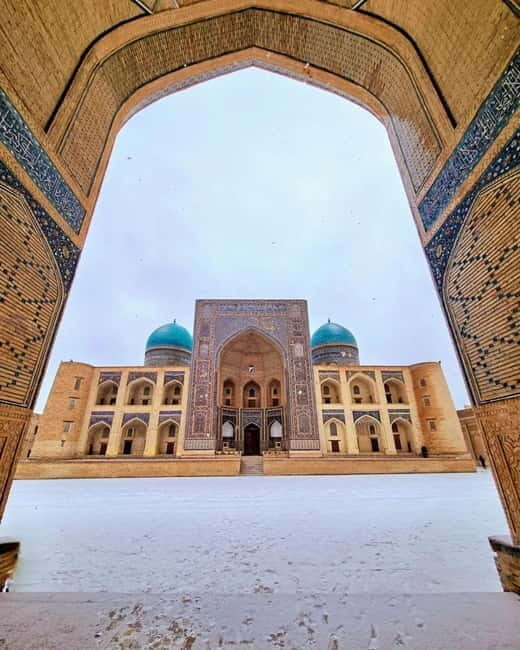
- Ulugbek Madrasah (1417, supported by an inscription on the door)
- Mir-i-Arab Madrasa, noted as one of Bukhara’s most interesting monuments
After the madrasas, you get a defensive-civilization shift with the Ark of Bukhara. This is a massive fortress in the city, and the longer time here (about an hour) matters. You need that chunk to actually absorb the idea of power and protection—where walls and courtyards create a whole world.
You then finish the day with more classic Bukhara landmarks:
- Bolo Hauz Mosque (built in 1712)
- Ismail Samani Mausoleum, described as a world-famous architectural masterpiece
How to get more out of Day 2: keep your “pattern brain” on. In Bukhara, the same kinds of shapes repeat in different ways—domes, arches, carved surfaces, and courtyard framing. Once you spot those repeats, the architecture feels less like random monuments and more like a coherent language.
Potential drawback: the day is very stop-heavy. If you’re the type who wants to linger for 45 minutes per site, you may feel slightly rushed on walking and photo time.
Samarkand’s Registan square: Gur-i Amir, three madrasas, and Shah-i-Zinda
Samarkand begins with the Amir Temur Mausoleum Gur-i Amir Complex. This medieval-era complex is an Islamic architecture masterpiece and sets the tone right away: grand forms, sacred space, and a sense of reverence that’s hard to replicate if you’re just passing through quickly.
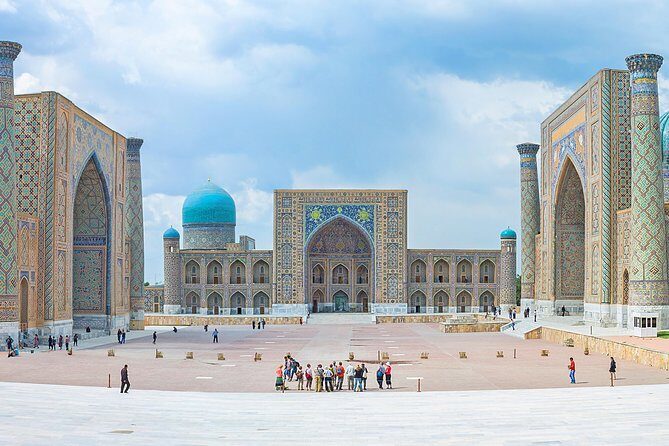
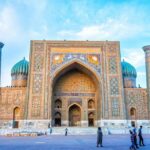
Then you hit the heart: Registan. This square has long been described as the center of the ancient Timurid city, and in person it’s hard to argue. The scale is the big surprise—once you stand there, the surrounding madrasas feel like they were designed to pull you into the same view.
The Registan ensemble is built through three madrasas, and each one has its own character:
- Sher-Dor Madrasah (built 1619–1636)
- Ulugbek Madrasah (built by Ulugbek’s order, 1417–1420)
- Tillya Kori Madrasah (built in 1660)
You don’t just see three buildings. You see how a single square evolved over time, with each component adding a layer to the visual “argument” of the place.
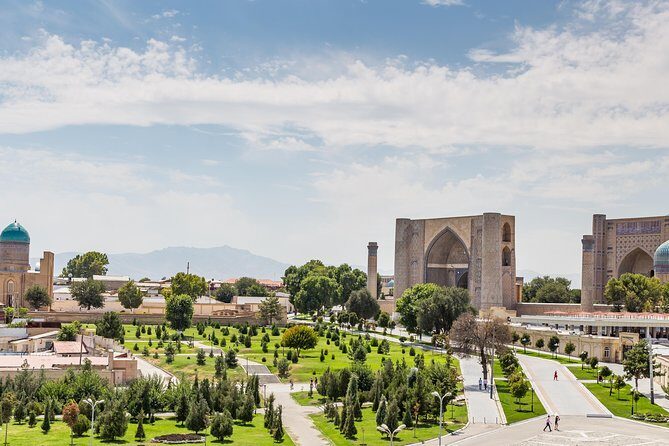
Next is Bibi Khanym Mosque, once among the largest and most magnificent mosques in the Islamic world. It’s a powerful stop because it encourages you to look past “is it pretty?” and instead ask: how did builders make something this large feel monumental rather than overwhelming?
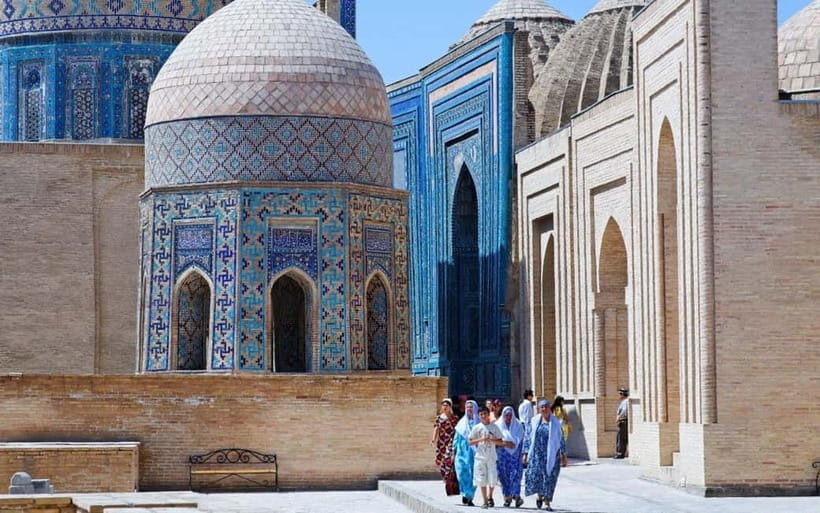
After that, the tour goes into the mausoleum experience again with Shah-i-Zinda—a complex of mausoleums from the 14th–15th centuries. This area is often more satisfying if you take your time looking at small details while you walk, because the experience is cumulative. You’re moving through time, not just staring at one building.
Finally, you get the human side with Siyob Bozori, described as Samarkand’s largest traditional bazaar. A market stop on a high-art itinerary is smart; it helps you recalibrate. It’s also a practical place to pick up snacks or small items, depending on what you enjoy.
Tip for Day 3: pace your photos. Registan and Shah-i-Zinda are the two spots where people often burn time quickly. If you want a calmer experience, decide in advance which angles you care about most and leave room for walking.
Price and logistics: what $999 covers and why it can be worth it
At $999 per person for about three days, the value depends on one thing: whether you’d otherwise be pricing these pieces separately. This package includes:
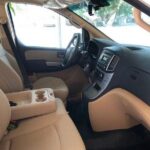
- Air-conditioned vehicle
- Entrance tickets
- Train tickets for high-speed economy class (Tashkent–Bukhara–Samarkand–Tashkent)
- Breakfast (3) and lunch (3)
That’s not a small bundle. High-speed train tickets alone can shift the math, and having meals included removes a daily decision stress you’d otherwise spend time and money solving.
The tour also includes pickup offered and uses a mobile ticket. For a short itinerary, that reduces friction—less time figuring out where to meet, more time actually seeing.
The operator behind this experience is GOTOUZBEKISTAN, and the planning style you see reflected in the experience descriptions is the “book it all ahead” approach. In practical terms, it tends to mean you spend less time waiting around for the next step.
One note on expectations: you’ll likely feel “guided” more than “free-roaming.” If your ideal trip is solo wandering and long cafe breaks, this might feel structured.
How to match your pace to this itinerary
The tour is built for people who like a steady flow of sights. With a maximum group size of 8, you should get easier transitions and a quicker sense of where you are.
The physical fitness note matters. Some monuments and complexes involve walking on uneven surfaces or stepping in and out of different areas. If you’re someone who struggles with several hours of walking per day, consider whether you can keep a comfortable pace.
Also factor in the weather requirement. Some stops are outdoors or involve open-air squares and bazaars, so plan for heat/cold changes. If weather is poor, the experience may switch dates or refund, so you’ll want flexibility.
If you’re traveling with a tight schedule, the “short time in each major site” format is exactly what you need. If you’re a slow traveler who wants to linger, you may wish the itinerary had more breathing room.
Practical tips for mosques and bazaars on this route
You’ll visit multiple religious sites, including Minor Mosque in Tashkent and Poi Kalyan Mosque and Bolo Hauz Mosque in Bukhara, plus major stops like Bibi Khanym Mosque. In practice, dress codes matter in any mosque setting across the region, so bring something that covers comfortably and doesn’t force constant adjusting.
In bazaars and markets like Siyob Bozori, it helps to keep your shopping mindset simple. Stick to what fits your trip needs—snacks, small crafts, or souvenirs you can carry easily.
Also, note that some activities like renting traditional clothing for photos aren’t included. If that’s important to you, budget time and money accordingly.
Finally, bring a small day bag. With many timed stops, you’ll want easy access to water, sunscreen, and your phone/camera essentials without slowing the group down.
Should you book this Tashkent–Bukhara–Samarkand tour?
I’d book it if you want three of Uzbekistan’s headline cities and you care more about seeing the best-known monuments than you care about long, slow downtime. The combination of high-speed trains, entrance tickets, and meals makes the cost feel more grounded than a lot of short “vision board” tours.
I wouldn’t prioritize it if you hate tight schedules. This itinerary is efficient by design, and the day-to-day stop density can feel rushed if you like to linger.
If your goal is to get your bearings fast, learn how the Timurid-era architecture connects across cities, and still end each day with a mix of art, sacred space, and market life, this tour matches that perfectly.
FAQ
FAQ
How long is the tour?
The tour lasts about 3 days.
What cities are included?
The tour covers Tashkent, Bukhara, and Samarkand.
What is the price per person?
The price is $999.00 per person.
Is pickup included?
Pickup is offered.
What transportation is included between cities?
High-speed train tickets are included in economy class for Tashkent–Bukhara–Samarkand–Tashkent, plus an air-conditioned vehicle.
Are meals included?
Yes. Breakfast is included 3 times and lunch is included 3 times.
How big is the group?
The tour has a maximum of 8 travelers.
What if the weather is poor?
The experience requires good weather. If it’s canceled due to poor weather, you’ll be offered a different date or a full refund.
Is moderate physical fitness required?
Yes, travelers should have a moderate physical fitness level.