REVIEW · SAMARKAND
Hazrat Daud Cave Day Tour from Samarkand
Book on GetYourGuide →Operated by GLOBAL CONNECT UZBEKISTAN · Bookable on GetYourGuide
A cave journey with holy footprints. Hazrat Daud Cave is one of Uzbekistan’s most respected sites for both Muslims and Christians, and it comes with a strong mix of legend and real, physical effort. I love the moment you reach the cave corridor and see the story come alive through the fingerprints of palms and feet attributed to Hazrat Daud. I also really like the big, clear panoramic valley view from the top of the Mirankul Mountains. The main drawback? This tour includes a serious stair climb, about 2,000 steps up before you even reach the cave.
I also like that this is a private group day trip (up to 3 people) with hotel pickup and transport handled for you. It’s built for an efficient 6-hour window, and you can choose to go without a guide if you want to keep the cost down. Just know you’re moving at a mountain pace, and the cave is tight in places—so it’s not the kind of outing where you can casually wander.
In This Review
- Key highlights at a glance
- Hazrat Daud Cave: a shared holy site above Samarkand
- Getting from Samarkand to Aksay village and the Mirankul climb
- The cave corridor: what to expect and how to handle the tight passage
- Panoramic views from the top: the moment that makes the climb worth it
- Price and logistics: what $112 for up to 3 people really buys
- Eco-tourism and the countryside feel you can actually use
- Who this tour suits best (and who should rethink it)
- My booking verdict: should you go?
- FAQ
- How long is the Hazrat Daud Cave day tour from Samarkand?
- What is included in the tour price?
- Is a guide included?
- What time does pickup happen?
- How many steps do I need to climb?
- Is it possible to ride up instead of walking the steps?
Key highlights at a glance
- A shared holy site that draws both Muslim and Christian visitors
- 2,000+ steps to earn the views, with options like horse or donkey
- A narrow, special cave corridor (about 30 meters long) with sacred markings
- Panoramic valley outlook from near a small Muslim house at the top
- Eco-tourism style travel and a countryside feel outside central Samarkand
- Transport included, and a day that stays focused on the mountain and cave
Hazrat Daud Cave: a shared holy site above Samarkand
Hazrat Daud Cave, often linked in travel materials to the Cave of St. David, sits in the mountains near Samarkand. What makes it compelling is that it’s not just a scenic stop. This place is treated as holy ground by different faith traditions, so the visit carries a quieter, more reverent tone than many tourist sites.
The legend adds fuel to the experience. The story says the biblical King David was escaping enemies, then pushed huge rocks to create the cave using bare hands. Whether you treat that as faith, folklore, or both, you still get the same effect: you’re walking through a very human-scale passageway, and the space feels designed for symbolic meaning. The cave has a narrow corridor—about 0.5 to 4 meters wide, around 30 meters long, and roughly 15 meters high—so you’re not strolling through a big chamber. You move through it like you’re passing through a remembered moment.
One detail I appreciate is that the tour doesn’t send you on a long list of stops. It keeps its focus. You go up, you reach the cave, and you take in the views from the mountain top area. That makes it easier to plan your day, especially if you want something different from Samarkand’s architecture and bazaars.
And yes, you’ll see the famous sacred feature: the fingerprints of palms and feet attributed to Hazrat Daud. It’s exactly the kind of thing that makes the legend feel less like a sentence on a sign and more like an encounter with a place that matters to people.
You can also read our reviews of more tours and experiences in Samarkand.
Getting from Samarkand to Aksay village and the Mirankul climb
This day starts with a practical schedule. You get picked up around 08:00 from your hotel (or from the station/airport if that’s your meeting point) and then ride about 40 km to Aksay village.
By around 09:00, you’re at the foot of the Mirankul Mountains, where the real physical part begins. The route up is described as nearly 2,000 steps to reach the top. That number matters. You’ll feel it. This is not a “walk a little and admire the view” outing. It’s a climb where your pace has to be sensible and your breathing needs to be calm.
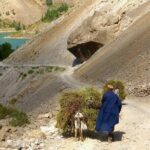
The good news: you’re not forced into one option. It’s possible to reach the top on horses or donkeys, so you can match the day to your body and energy level. If you’re choosing to walk, plan on taking short breaks. If you’re riding, still expect some uneven terrain and take care with balance and footing.
At the top, there’s a small Muslim house, and that’s where the panoramic payoff starts. You get a wonderful wide view over the valley. This is a great spot to slow down and reset your legs after the climb. It also helps you understand why people come here. The mountain setting doesn’t feel decorative; it feels like it’s part of why the cave became meaningful in the first place.
The cave corridor: what to expect and how to handle the tight passage
Reaching the cave means another short burst of steps after the panoramic point—about 200 more steps from the Muslim house area to Hazrat Daud Cave. So mentally, treat the day like two climbs. First, you climb for the view and setting. Then you climb again for the cave experience.
Inside, the cave is narrow. The corridor width ranges from about 0.5 meters up to 4 meters, and the route continues roughly 30 meters. The height is around 15 meters, but because you’re moving through a corridor, you’ll still feel the enclosure. This is the part of the tour that you should plan for physically and emotionally.
A few practical things to think about:
- Wear shoes you trust on stone steps.
- If you’re claustrophobic, consider whether you can comfortably move through a narrow corridor.
- Take your time once inside. The point isn’t speed; it’s respect and attention.
The sacred feature is along the corridor route: the fingerprints of palms and feet linked to Hazrat Daud. Your viewing experience will be influenced by how crowded the moment is and how the passageway lighting falls, but the key is that you’re not looking at a distant display. You’re walking along the corridor until you’re close enough to make the story tangible.
It’s also worth noting the “movement” of the experience. You go along the corridor, then you come back down stairs to Aksay village. This makes the day feel complete: you climb up for the holy setting, move through the cave, then return to earth—literally—to the village and ride back.
Panoramic views from the top: the moment that makes the climb worth it
If you only remember one part of the tour, make it the view from the top of Mirankul Mountains. The route is labor. That’s true. But that’s also why this section matters.
The top area near the small Muslim house gives you wide sightlines over the valley. You’ll likely feel a mix of relief and satisfaction there. Relief because your legs have a break. Satisfaction because you can finally see the place you’ve been moving toward.
This also helps you interpret what you’re visiting. Hazrat Daud Cave isn’t sitting in isolation like a single attraction on a map. It feels connected to mountain life and to the idea of retreat and refuge—exactly what the legend describes. Even if you don’t focus on the story, the setting supports it.
Practical note: since you’re outdoors before the cave, dress smart for the mountain weather. Temperatures can change from Samarkand to the higher areas, and you may feel wind. Bring a layer you can manage, and if you plan to take photos, pause before you start the final set of steps to the cave so you aren’t juggling bags while climbing.
Price and logistics: what $112 for up to 3 people really buys

At $112 per group up to 3, this tour can be good value if you’re traveling with friends or family and you want a simple, efficient structure. Because it’s a private group, the transport plan works like a tailored day even though the activity is shared in the sense that you’re all doing the same itinerary.
The biggest reason the price feels reasonable is that transportation is included during the tour. For countryside day trips, transport is often the costly headache. Here, pickup is included from:
- Hotel reception or in front of your building
- Train station, meeting with your name on board
- Airport, meeting with your name on board
That removes the need to figure out how to get to the mountains on your own. It also means you can spend your energy on the experience rather than the logistics.
One tradeoff is that a guide is not included, and many people intentionally book without one to keep the price lower. That’s not a deal-breaker. But it does change how you experience the cave. If you want detailed storytelling or translation beyond the essentials, you’ll either need to rely on what you can understand on-site or consider arranging interpretation separately. If you’re happy with the physical experience—the climb, the cave, the view—then going guide-free can work well.
Also, languages are listed as Russian and Uzbek, with the driver providing the language support in those languages. If you’re counting on English-language commentary during the climb and cave approach, this setup may feel a bit hands-off.
Eco-tourism and the countryside feel you can actually use
This tour is described as eco-tourism, and the vibe matches the practical reality: you leave the city and go up into mountain surroundings where the trip is about walking paths, village proximity, and a pilgrimage-style destination rather than a theme-park route.
The countryside element shows up in the flow:
1) You drive to Aksay village,
2) you climb through the Mirankul Mountains,
3) you visit the cave,
4) you return to the village and back to Samarkand.
That rhythm is a big part of why the day feels different from a typical sightseeing loop. You’re not just adding one more “thing” to do. You’re using your time to experience the setting that the legend is tied to.
It also keeps your day focused. With 5–6 hours of sightseeing within a 6-hour total duration, you don’t end up spending the majority of the time in transit or in long waiting periods. You do the important parts—climb, views, cave—then you go home without stretching the day too far.
Who this tour suits best (and who should rethink it)
This tour is ideal if you:
- want a countryside, mountain day trip right outside Samarkand
- like sacred sites that feel lived-in, not just staged
- are comfortable with a stair-heavy outing (or you’re willing to ride a horse or donkey)
- prefer private pacing over joining a larger group
It’s less ideal if you:
- have mobility issues that make steep steps difficult
- strongly dislike narrow spaces, since the cave corridor can be tight
- want a lot of guided interpretation in a language not listed in the activity info
One more honest point: since the tour often runs without a guide, you’ll want your own curiosity turned up. Read the legend beforehand, or at least go in knowing you’re walking a route tied to faith and folklore. The experience is the story plus the space.
My booking verdict: should you go?

I’d book this tour if you want one of the more memorable day trips near Samarkand that mixes effort, views, and a real sacred destination. The value makes sense at the group price, and the private transport setup keeps it easy. I also like that you can shape the climb by choosing walking versus horse or donkey.
Skip it—or at least plan carefully—if narrow passageways and steep steps aren’t your thing. Also think ahead about language expectations, because a guide is not included and Russian/Uzbek are the stated languages.
If you’re the kind of traveler who enjoys pilgrimage-style stops, respects sacred spaces, and doesn’t mind earning the view, this Hazrat Daud Cave day tour is a strong choice.
FAQ
How long is the Hazrat Daud Cave day tour from Samarkand?
The tour duration is about 6 hours, with sightseeing time listed as around 5 to 6 hours.
What is included in the tour price?
Transportation service during the tour according to the itinerary is included.
Is a guide included?
No. The guide is not included, and many people book without one to keep the price lower.
What time does pickup happen?
Pickup is listed for 08:00 from your hotel (or meeting points at the train station/airport with your name).
How many steps do I need to climb?
The route up to the top is described as almost 2,000 steps, plus about 200 more steps from the top area to the cave.
Is it possible to ride up instead of walking the steps?
Yes. It’s possible to reach the top by horse or donkey, not only on foot.
![A Night In The Kyzylkum Desert [2] From Khiva - Day 2: Ayaz-Kala and the fortress circuit in Karakalpakstan](https://i.uzbekistantravelguide.com/wp-content/uploads/a-night-in-the-kyzylkum-desert-2-from-khiva.jpg)