Tashkent can fool you on first glance. This one-day route blends old-city soul with a distinctly modern, European-leaning feel, and it does it fast without feeling rushed. I like that you’re not stuck with random stops—you get a guided sequence that explains why each place matters.
My favorite part was the Hazrati Imam complex, where religious architecture meets a rare piece of Islamic manuscript history. I also love Chorsu Bazaar: it’s the kind of market where you understand Tashkent’s nickname, city of bread, just by walking through.
One thing to plan for: entry tickets aren’t included, and a couple of stops are religious sites where you’ll want your scarf and headscarf ready.
In This Review
- Key highlights to look for
- How this Tashkent one-day tour actually feels
- Hazrati Imam: courtyards, madrassas, and a VII-century Koran manuscript
- Monument of Courage and Independence Square: Tashkent’s 1966 rebirth
- Taking in power and design at Tashkent’s Metro
- Chorsu Bazaar: the old city market you’ll want to linger in
- Romanov Palace: colonial monumentality in Central Asia
- Navoi Opera Theater and Amir Timur Square: where styles and regimes overlap
- Sayilgoh Broadway Alley: from swamp to tsarist families
- Applied Art Museum: learn the craft before you shop
- Price and value for a private group up to 2
- Should you book this Tashkent one-day tour?
- FAQ
- How long is the Tashkent One Day Tour?
- What is the price for this tour?
- Where does the tour start?
- What’s included in the price?
- Are entry tickets included?
- Can I request a different start time?
- Which languages are available for the live guide?
- Will we skip lines somewhere?
- What should I bring for the tour?
- Is the tour wheelchair accessible?
Key highlights to look for
- Hazrati Imam complex and the Holy Koran manuscript highlight (VII century)
- Tashkent Metro as an underground museum, station by station
- Chorsu Bazaar as the old city’s real market heart
- Navoi Opera Theater and its folk-art meets Neoclassicism vibe
- Applied Art Museum for a practical intro to Uzbek crafts
How this Tashkent one-day tour actually feels
You’re working with a tight six-hour window, but the itinerary is built like a good walking plan: each stop answers the question of what Tashkent is. Is it an old Silk Road city? Sure. Is it also a capital with grand squares and Soviet-and-European layers? Also yes. The result is a day that helps you connect the dots instead of just ticking boxes.
The big practical win is the private-group setup with hotel pickup and drop-off, plus an A/C vehicle. That matters in Tashkent because you’re going between areas that don’t cluster perfectly. You’ll spend more time seeing things and less time coordinating transport.
If you get a guide like Nuriddin, you’ll also notice a difference. He’s the kind of guide who watches how your group is doing and keeps things moving without turning the day into a lecture. One-person adjustments can be a real quality-of-life upgrade on a short trip.
The other detail I like: you get a skip-the-line approach through a separate entrance. Even when tickets are paid separately, that saved time can keep the day from turning into a queue marathon.
A few more Tashkent tours and experiences worth a look
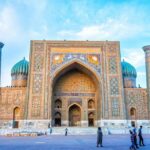
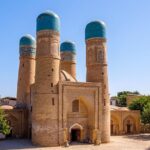
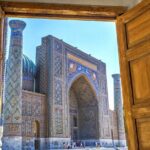
Hazrati Imam: courtyards, madrassas, and a VII-century Koran manuscript
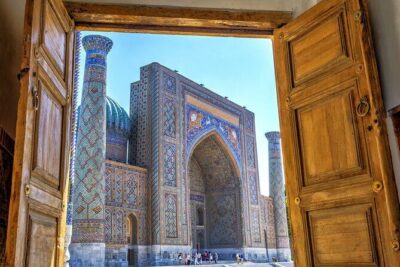
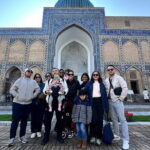
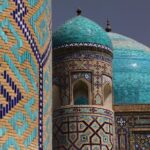
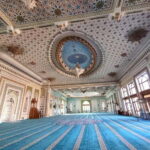
Start with Hazrati Imam (also called Ensemble Hazrati Imam). This is the city’s most important pilgrimage site, and you feel that instantly. It’s not just one building—it’s a whole architectural complex, with madrassas, mosques, and a mausoleum connected to early religious history in Tashkent.
Here’s what makes this stop worth your time beyond the scenery:
- You can visit madrassas Barakhan and Tillesheyh, not just one “pretty room.”
- You’ll see mosques and the mausoleum connected to one of the first imams of Tashkent, which gives context to why the site is still treated as a major spiritual center.
- The highlight is a manuscript story: you can see the only in Central Asia and one of the four manuscripts of the Holy Koran of the VII century.
That manuscript point changes the whole tone of the visit. Most city tours show you monuments. This one shows you the kind of artifact that explains why certain places stay central for centuries.
Practical tip: bring your scarf and headscarf and have them accessible. Religious sites are often strict about dress, and you don’t want to be digging through your bag right when you’re about to enter. Comfortable shoes help too—courtyard visits can mean more walking than you’d expect.
Also note: since entry tickets aren’t included, you’ll likely add small costs at sites like this. I’d still budget for it because the value here isn’t just visual; it’s the meaning.
Monument of Courage and Independence Square: Tashkent’s 1966 rebirth
After Hazrati Imam, the tour pivots from spiritual center to city-scale memory. The Monument of Courage is tied to the earthquake of 1966. You learn that the city was rebuilt anew after the disaster, and the monument was erected at the epicenter to honor restoration.
This is one of those stops that feels short in minutes but heavy in context. The monument is basically a lesson in resilience written in stone. Even if you’re not a big history person, it gives you a framework for seeing the rest of Tashkent: the city didn’t “just grow.” It rebuilt.
Then comes Independence Square (Mustaqilliq Maidoni), the main square of Uzbekistan today. It’s framed as a symbol of independence, but the tour also reminds you that the same space has served administrative purposes under Russian tsarist and communist regimes.
That layered history is the real point of the square. You’re not only looking at a central plaza. You’re seeing how power moves around—how the same location can be re-labeled, re-used, and re-politicized across generations.
Practical note: this area is mostly outdoor viewing. It’s a good section for photos and quick orientation. If the weather turns hot or sunny (Tashkent often delivers that), shade and hydration matter. Wear breathable layers because a six-hour tour can still feel like a sprint.
Taking in power and design at Tashkent’s Metro
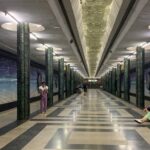
Next you’ll hit Taschkent Metro, the first metro in Central Asia and one of the most beautiful sights in Asia—at least according to how the city is known. Locals call it the underground museum of Tashkent, and the logic checks out fast.
The key detail: none of the stations repeat the decor. Each station has a different shape and individual approach. So instead of seeing one standard subway look, you’re getting a series of design statements underground.
This is exactly the kind of stop that makes a short tour work. Metro stations can feel like a detour, but here it’s the attraction. You go down the stairs expecting transit and come up appreciating architecture.
Also, the guide’s interpretation matters. Without a little context, it’s easy to just admire the visuals and move on. With a pro guide, you get a better sense of how different stations contribute to a collective idea of city identity—modern but also proud of its own aesthetic language.
If you’re sensitive to crowds, keep in mind that metro systems can get busy. This tour is private, but you’re still using a public system. The skip-the-line detail in your overall experience helps at sites that use ticketed entry, though it doesn’t change how a transit system feels in real time.
Chorsu Bazaar: the old city market you’ll want to linger in
Now we’re back to something tactile: Chorsu Bazaar. It’s described as the oldest bazaar in Uzbekistan, and it’s positioned as the heart of the old city—the real Eastern market of the modern city.
This is where Tashkent earns its bread nickname in a way you can’t misunderstand. Even if you don’t eat a full meal, the smell and energy teach you what the city is like when locals shop, snack, and talk.
What makes this stop especially good on a one-day tour is that it’s not just sightseeing. It’s sensory education. The bazaar is the kind of place where you see everyday life, not just heritage buildings.
A practical way to do it: keep your camera ready, but also leave room for food. Freshly prepared items can be a highlight here. You can also ask your guide what to try, because you’ll get suggestions that match what’s available that day—not generic advice.
Also think about your timing. Markets work better when you’re not rushed. A private guide can slow down when you hit an interesting lane or speed up when the group needs a break.
Romanov Palace: colonial monumentality in Central Asia
Your itinerary includes Romanov Palace, known for its unique colonial monumental architecture in Central Asia. Even with limited time, it’s a useful contrast point.
Tashkent isn’t only mosques, bazaars, and courtyards. It also has the kind of grand, formal buildings that reflect older imperial influence and later city planning. Romanov Palace helps you see that architectural “other side” of the city—what Tashkent looked like when it was reshaped by external power and local ambition.
When you pause here, look at proportion and scale. Monumental architecture often uses size to make an argument. This is the kind of building where you can feel the message just by looking at the façade.
Because entry tickets aren’t included, you might not go deep inside depending on the day’s rules. Still, the exterior stop can be valuable, especially because the tour already gives you a lot of interior-style experiences at religious and museum stops.
Navoi Opera Theater and Amir Timur Square: where styles and regimes overlap
Next up: Navoi Opera Theater—often compared to the Bolshoi theater of Opera and Ballet. It’s described as the first opera and ballet theater in Central Asia and one of the visit cards of modern Tashkent. The architectural flavor is also part of the story: it combines folk art with Neoclassicism.
This stop works as a bridge. You’ve been moving through religious sites and markets, then you step into a building that signals a different kind of cultural ambition—performing arts, formal design, and a modern identity that still ties itself to local artistic roots.
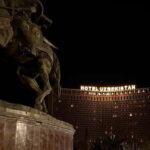
A few steps later you’ll reach Amir Timur Square, positioned as the heart of modern Tashkent. The tour notes that first university and bank of Central Asia formed here. It also points out how the square has changed ideologically: monuments to Stalin and Marx once stood here, and now there’s a monument to Tamerlane.
That’s a powerful way to read the city. Squares are memory devices. This one shows how narratives get swapped while the physical space stays. So when you’re standing there, you’re not just viewing a statue—you’re seeing how Tashkent writes and rewrites its identity in public.
Practical tip: this is a good moment for a quick mental reset. After buildings and monuments, pause and look around. Square geometry can help you understand how the city’s different eras relate.
Sayilgoh Broadway Alley: from swamp to tsarist families
Then you get a twist of urban history at Broadway Alley Sayilgoh—the Broadway of Tashkent. The origin story is the fun part: it’s hard to imagine there was once a huge swampy place here.
The tour explains that Governor General Von Kaufman’s initiative transformed it into a square for tsarist soldiers and their families, and local residents were allowed as well. That single paragraph turns a random city promenade into an actual timeline.
This stop is great if you like understanding how cities change function. Urban planning is often invisible when you’re just walking past. Here, you get the story, so your eyes catch details you’d otherwise ignore.
It also helps the day feel less like a museum loop. You’re outside, moving, and seeing a modern public space that still carries older purpose beneath the surface.
If you’re taking photos, plan for sunlight and keep your shots simple. Broad walkways can look good, but they can also become a tangle of people. A guide’s timing can help you choose calmer moments.
Applied Art Museum: learn the craft before you shop
Finish with the Uzbekistan State Museum of Applied Arts. This is one of the best introductions to mastercrafts of Uzbekistan, and the setting supports the message: it used to be the home of a Russian merchant.
That context matters. When you see applied art in a building that once belonged to a merchant, you get a hint of how craft and trade were linked. People didn’t just make objects for decoration—they made items for daily life, status, and cultural exchange.
What I like about this museum as a tour ending is pacing. After mosques, squares, and big architectural statements, you shift to details: patterns, design choices, and craft techniques. It makes the day feel more human.
And applied arts are useful to remember outside the museum. Even if you don’t buy anything, you’ll start recognizing motifs and design logic you might otherwise miss in bazaars and shops.
Plan for a slower stop here than at a square. Museums reward attention. Bring your best “looking time” energy.
Price and value for a private group up to 2
The price is $180 per group up to 2 for a 6-hour experience. That’s not a budget deal if you’re traveling solo, but it’s fair value if you can split it with a companion—or if you want a guided day that covers multiple major sights without the hassle of self-planning.
What makes it worth considering:
- Professional guide plus an A/C vehicle
- Hotel/airport/railway pickup and drop-off
- A route built for efficiency, not just sightseeing
- Skip-the-line via separate entrance for stops that require it
- Private group, so your guide can adjust the pace and focus
The main “cost” beyond the listing price is that entry tickets are not included. That’s common for city tours, but it’s a real factor for your total day budget. If you like religious and cultural sites, expect to pay a bit more. If you’re primarily here for outdoor architecture and walking, your extra costs may be lower.
Overall, I think this is a smart way to see Tashkent in one day without turning it into a stressful logistics puzzle.
Should you book this Tashkent one-day tour?
Book it if you want a high-signal day: key religious sites, major squares, the famously beautiful Metro, a classic bazaar, plus museum learning. It’s also a strong pick if you like having context—someone explaining what you’re seeing and why it matters.
Skip it only if you’re the type who wants long, unstructured wandering. This tour is timed, and it favors a guided route over free exploration. Also, if your budget can’t stretch to added entry tickets, you’ll want to plan around that first.
If you can handle a few hours of walking on uneven ground (mostly at market and religious sites), and you bring your scarf/headscarf, this is a very workable way to get real insight into Tashkent’s mix of old and new.
FAQ
How long is the Tashkent One Day Tour?
It lasts about 6 hours.
What is the price for this tour?
The price is $180 per group, for up to 2 people.
Where does the tour start?
The tour starts from your hotel/airport/railway station.
What’s included in the price?
A professional guide, an A/C vehicle, and hotel pickup and drop-off are included.
Are entry tickets included?
No. Entry tickets for the mentioned monuments are not included.
Can I request a different start time?
Yes. The starting time can be changed by request of the traveler.
Which languages are available for the live guide?
The tour offers English, Spanish, German, French, and Russian.
Will we skip lines somewhere?
Yes, the tour includes skip-the-line access through a separate entrance.
What should I bring for the tour?
Bring comfortable shoes, a scarf, and a headscarf.
Is the tour wheelchair accessible?
Yes, it is wheelchair accessible.