REVIEW · TASHKENT
Uzbekistan in 7 days Tashkent, Samarkand, Bukhara and Khiva
Book on Viator →Operated by Assalam Travel · Bookable on Viator
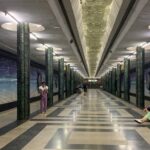
One corridor of tiles can change your mood fast. This trip strings together Tashkent to Khiva with guided visits to the big names, plus market time and craft stops, so you get history you can actually picture. I especially like the way Sayeed and his team keep the experience feeling organized and safe, and I also like that the package includes the heavy logistics—hotels, trains, transfers, and entrance tickets. The main drawback is simple: it’s a packed schedule, and you’ll do a lot of walking and stair-climbing in mausoleums and minarets.
You’ll move between cities by train, including high-speed legs that make the route feel efficient instead of stressful. Think Afrosiyob between Tashkent–Samarkand–Bukhara, then a longer ride toward Khiva. You’ll end in Itchan Kala, where the old-city walls and photo angles are great, but the streets can be tight and busy—so comfy shoes matter.
Overall, this is a strong fit if you want the classics without figuring out every train and ticket on your own. If you’re the type who wants long free afternoons and zero structure, you might find the pace a bit intense.
In This Review
- Key highlights you’ll care about
- First Night in Tashkent: Easy Start, Real Sightseeing Next
- Hazrati Imam to Amir Timur: Tashkent’s Best Mix of Sacred, Local, and Monumental
- Hazrati Imam Complex, Juma Mosque, and the madrasahs
- Chorsu Bazaar: the blue-dome energy
- Amir Temur Square and Independence Square
- Tashkent City Park and applied arts
- Samarkand: Registan, Shah-i-Zinda, and the Ulugh Beg Observatory Angle
- Gur Emir Mausoleum: the moment you slow down
- Registan Square: three madrasahs, one huge wow-factor
- Shah-i-Zinda: a processional line of mausoleums
- Ulugh Beg Observatory: the science stop that people skip
- Bibi Khanym Mosque and Siab Bazaar
- Bukhara: Trading Domes, the Ark Fortress, and Brickwork You Can’t Fake
- Lyab-i-Hauz: a calm pause in the middle of monuments
- Chor Minor and the rooftop view
- Trading Domes: buy souvenirs and watch merchants’ routines
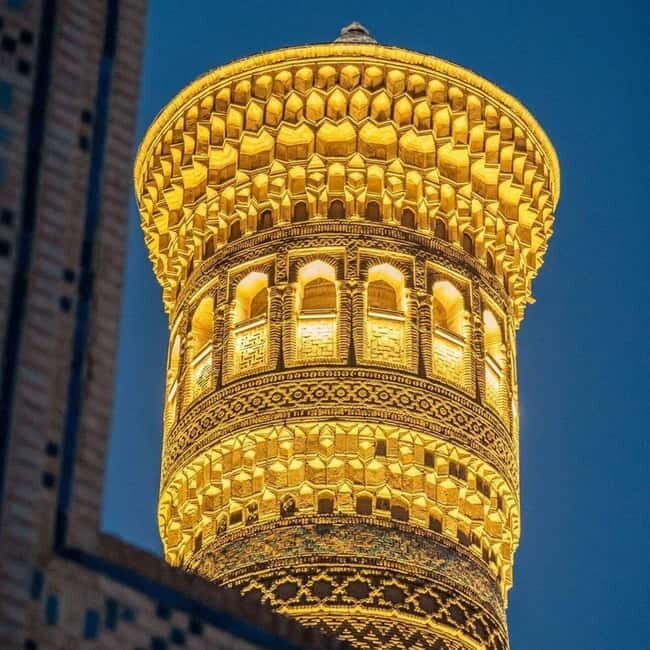
- Great Minaret of the Kalon and madrasahs
- Ark of Bukhara and Ismail Samani Mausoleum
- The Ride Toward Khiva: Amu Darya as Your Breather Stop
- Khiva: Itchan Kala’s Minarets, Wooden Columns, and Khan’s Palace Rooms
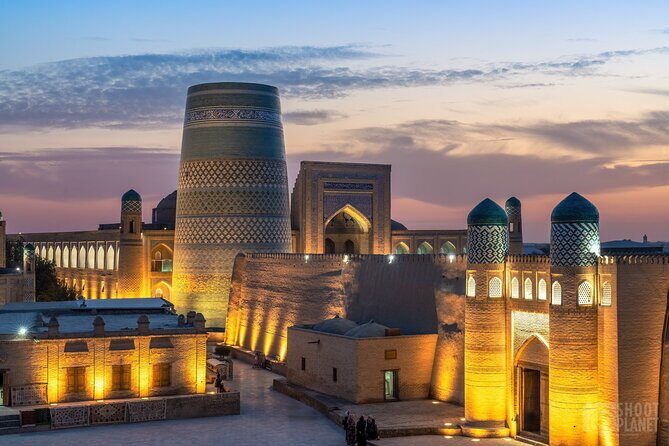
- Itchan Kala and the watchtower view
- Mohammed Amin Madrassah and Kalta-Minor Minaret photos
- Pahlavan Mahmud and Islam Khodja Complex
- Juma Mosque: 213 carved wooden columns
- Stone Palace (Tash Khauli): a different kind of palace story
- Allakuli Khan Caravanserai: the Silk Road trading footprint
- Price and Logistics: Is $1,250 Good Value for This Route?
- Who This Uzbekistan Loop Fits Best (and Who Might Not Love It)
- Should You Book This Tour or Not?
- FAQ
- How long is the Uzbekistan tour covering Tashkent, Samarkand, Bukhara, and Khiva?
- What’s included in the tour price of $1,250 per person?
- Are train tickets included between the cities?
- Do you get pickup from the hotel?
- How large are the groups?
- Is cancellation free if plans change?
- FAQ
- How do you receive tickets for this tour?
- What are the tour’s operating hours?
- Where do excursions start from?
- When do you start sightseeing in Tashkent?
- Which cities are part of the itinerary?
- Is this tour suitable for most travelers?
Key highlights you’ll care about
- High-speed trains cut travel time between major stops
- 4-city route keeps your first-time Uzbekistan focused
- Old-city walking routes in Samarkand, Bukhara, and Khiva are built for great photos and context
- Craft and design stops in Tashkent add variety beyond monuments
- Optional climbs (watchtower, Chor Minor rooftop, Islam Khodja spiral) give rewarding views
- Small group size (max 25) helps keep the day manageable
First Night in Tashkent: Easy Start, Real Sightseeing Next
The trip opens with a welcome transfer and hotel check-in in Tashkent. That matters more than it sounds—Central Asia travel often throws curveballs, and arriving to a ready plan makes the first day feel calmer.
Then the real sightseeing begins the next day, with a guide picking you up from your hotel and working you through the city in a sensible order. You’re not just collecting stamps; you’re building a mental map of Tashkent, from spiritual sites to bazaars to modern landmarks.
A few more Tashkent tours and experiences worth a look
Hazrati Imam to Amir Timur: Tashkent’s Best Mix of Sacred, Local, and Monumental
Tashkent is often treated like a layover city. This route treats it like a destination, and I like that balance.
Hazrati Imam Complex, Juma Mosque, and the madrasahs
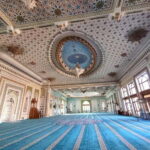
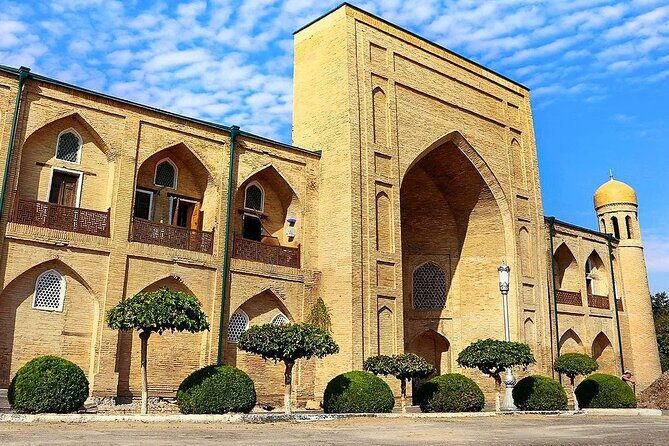
You start with the Ensemble Hazrati Imam area, including the Barak-Khan Madrasa, a classic example of how Central Asian architecture mixes spirituality and education. From there you move to the Juma Mosque, known for its striking interior—especially the intricate wooden columns that create a warm, almost meditative space.
Then you visit the Abdulkasym Sheikh Madrasah, located near Hazrat Imam Square. It’s one of those stops that helps you see Tashkent as a living city, not a museum display case.
Chorsu Bazaar: the blue-dome energy
Next up is Chorsu Bazaar in the Old City, famous for its large blue dome. This is the part of the day where you can slow down: look at the stalls, see local food and spices, and absorb the pace of real life in Tashkent.
I like markets like this because they balance the formal buildings. You get color, chatter, and smells—then you can return to the architecture with fresh eyes.
Amir Temur Square and Independence Square
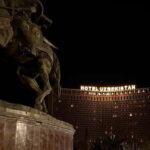
You also get two big civic landmarks: Amir Temur Square and Mustakillik Square (Independence Square). Expect to see the statue of Amir Timur on horseback, plus fountains and key monuments like the Eternal Flame.
These stops help connect the dots between Uzbekistan’s modern identity and the role historic figures play in public spaces.
Tashkent City Park and applied arts
The day doesn’t end with stone and tiles. You finish with Tashkent City Park and the Uzbekistan State Museum of Applied Art, housed in a decorative old mansion setting. This museum is a smart change of pace because it shows craftsmanship through ceramics, wood carvings, textiles, and traditional Uzbek design.
You then visit the Amir Timur Museum. Even if you already know the basics, the value here is seeing how the story is told through collections and exhibitions rather than just street names.
Watch for: if you visit in warmer months, this is a lot of outdoor walking between sites. Light layers and water help a lot, and a hat is never wasted.
Samarkand: Registan, Shah-i-Zinda, and the Ulugh Beg Observatory Angle
On day 3 you take the high-speed Afrosiyob train from Tashkent to Samarkand (about 2h 15m). After hotel check-in, you jump straight into the city’s most iconic cluster, which is the smart move.
Gur Emir Mausoleum: the moment you slow down
You begin at Gur Emir Mausoleum. It’s a fitting start because this site sets the tone for everything ahead—grand, ceremonial, and very Central Asian in its sense of detail.
Registan Square: three madrasahs, one huge wow-factor
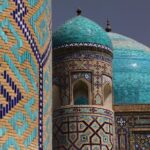
Then comes Registan—the heart of Samarkand and one of the most dramatic spaces in the region. You’ll explore the three madrasahs with mosaics, tall minarets, and the kind of geometry that makes your brain go quiet.
This is one of those places where you’ll want a bit of time just to look up. Don’t rush it.
Shah-i-Zinda: a processional line of mausoleums
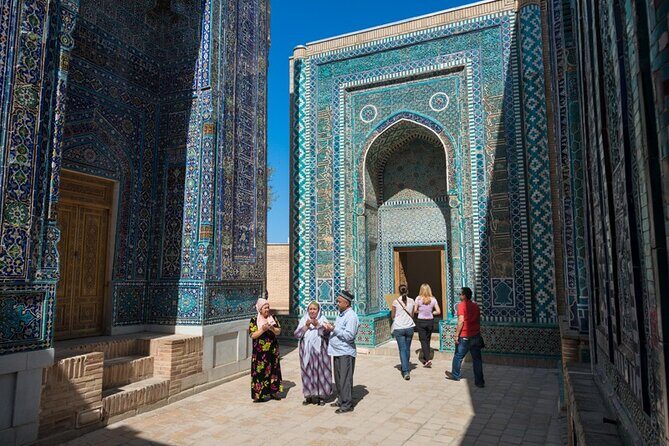
Next is Shah-i-Zinda, a walk along an avenue of mausoleums covered in blue tilework. It’s spiritual, but it’s also visually addictive. The route feels like you’re moving through chapters of the same story, each doorway adding another layer.
Ulugh Beg Observatory: the science stop that people skip
A lot of tours skip the science part. This one includes the Ulugh Beg Observatory, where you can learn about Ulugh Beg and see remains connected to his giant sextant. It’s a refreshing reminder that these cities weren’t only about power—they were also about astronomy and learning.
Bibi Khanym Mosque and Siab Bazaar
You finish with Bibi Khanym Mosque, once among the largest mosques in the world, and then Siab Bazaar for local food and shopping. I like ending with a market because it’s grounding. You leave the grand religious spaces and then get back to everyday life.
Watch for: Samarkand days can feel dense. If your legs are not used to walking, plan on breaks inside courtyards and keep water handy.
Bukhara: Trading Domes, the Ark Fortress, and Brickwork You Can’t Fake
Day 4 brings another train ride: Samarkand to Bukhara on the Afrosiyob (about 1h 30m). This shorter jump makes the day feel more relaxed, and you’ll have time to check in and rest before your loop through old Bukhara.
Lyab-i-Hauz: a calm pause in the middle of monuments
You start at Lyab-i-Hauz, a peaceful square area that gives you a breather. It’s a good contrast after the intensity of Samarkand’s biggest sites.
Chor Minor and the rooftop view
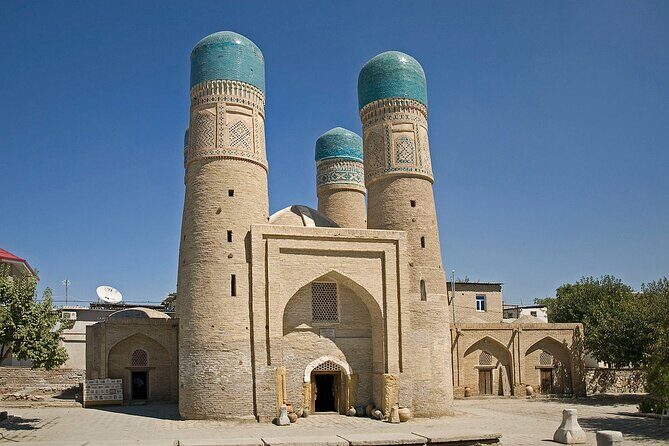
Then you visit Chor Minor Madrasah, with its four blue-domed towers. There’s also a rooftop angle for a panoramic view, which is one of the best ways to understand how Bukhara’s buildings relate to each other.
Trading Domes: buy souvenirs and watch merchants’ routines
You’ll walk through Bukhara’s trading domes, where merchants sold silk, spices, and jewelry for centuries. Even if you mostly browse, you’ll feel the rhythm of trade—shopkeepers, crafted goods, and the practical side of history.
Great Minaret of the Kalon and madrasahs
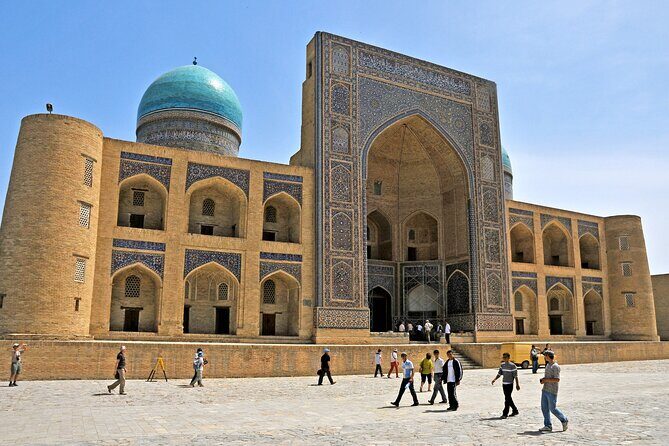
You also see the Great Minaret of the Kalon area and visit the Ulugbek Madrasah. The style differences across madrasahs help you understand that Bukhara developed over time, not in a single building spree.
Ark of Bukhara and Ismail Samani Mausoleum
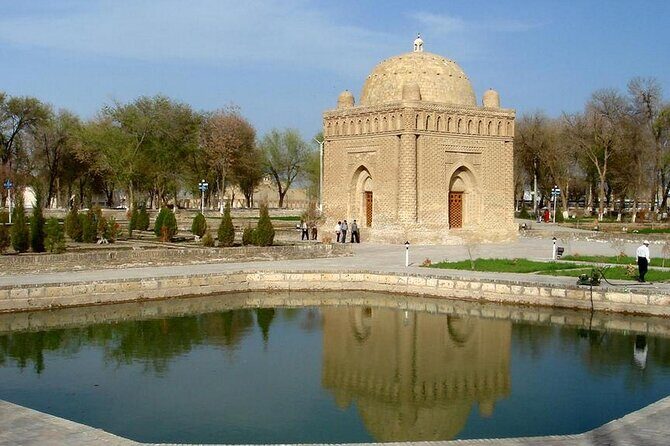
You step into Ark of Bukhara, the ancient fortress and former residence of rulers. It’s a strong “power and administration” stop. After that, you end with Ismail Samani Mausoleum, a 10th-century structure built entirely from baked bricks in geometric patterns—simple in concept, impressive in execution.
Watch for: Bukhara’s sites are compact but not flat. Expect uneven paving in some areas and a few stair sections, especially when you’re chasing panoramic views.
The Ride Toward Khiva: Amu Darya as Your Breather Stop
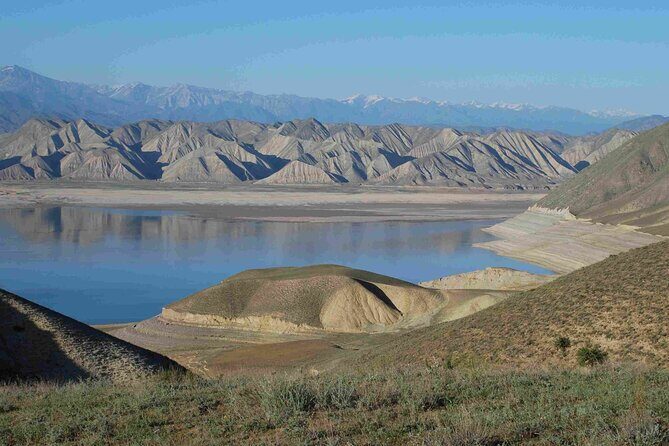
Day 5 is the long movement day. You leave Bukhara for Khiva by train (about 6–7 hours). That’s a chunk, but the plan includes a stop along the route at the Amu Darya river.
I like this kind of pause because it breaks up the “train blur” and gives you a sense of landscape beyond the cities. Central Asia feels huge in motion, and this is the moment you notice the scale.
Khiva: Itchan Kala’s Minarets, Wooden Columns, and Khan’s Palace Rooms
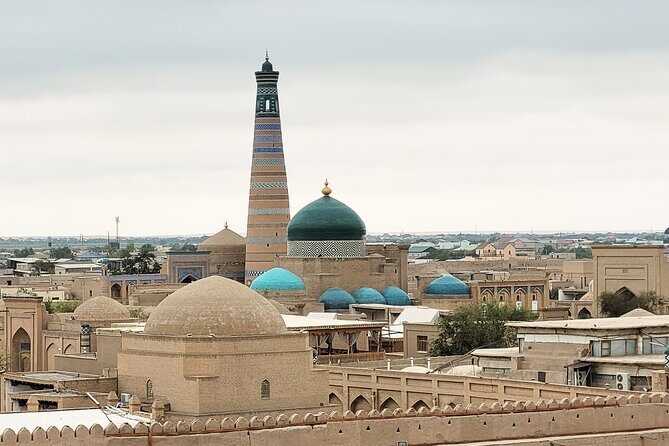
On day 6 you shift fully into Khiva’s old-city world. You head to Itchan Kala, where a guide brings you through the main sights and also gives you chances to look outward.
Itchan Kala and the watchtower view
You can climb a watchtower for a panoramic view of the old city. This is one of those “get your bearings fast” moments—Khiva’s streets feel like a maze at first, then suddenly they click.
Mohammed Amin Madrassah and Kalta-Minor Minaret photos
You visit Mohammed Amin Madrassah, listed as the largest madrasah in Khiva. Then you see Kalta Minor Minaret, the famous unfinished minaret. Even if you’re not a minaret expert, it photographs beautifully, and it’s easy to recognize.
Pahlavan Mahmud and Islam Khodja Complex
Next is the Pahlavan Mahmoud Mausoleum, a sacred site. After that comes Islam Khodja Complex, where you can optionally climb the narrow spiral staircase for a panoramic view.
That optional climb is a good test of whether you want a more active experience. If you skip it, you’ll still get the main architecture and the city vibe.
Juma Mosque: 213 carved wooden columns
A standout stop is the Juma Mosque in Khiva, known for 213 carved wooden columns, some dating back to earlier centuries. This is the kind of detail that makes you slow down. It’s not only about the exterior; it’s about what happens when you’re inside and the light hits the woodwork.
Stone Palace (Tash Khauli): a different kind of palace story
Then you visit Tash Hauli Palace, the private residence of Khiva khans. You’ll explore rooms tied to the harem, where the khan’s wives and concubines lived. I appreciate this inclusion because it broadens the palace story beyond rulers and conquest.
Allakuli Khan Caravanserai: the Silk Road trading footprint
You end at Allakuli Khan Tim Market, a historic 19th-century caravanserai. It once welcomed merchants from across the Silk Road, and today it hosts souvenir shops. It’s a reminder that Khiva sat on trade routes and lived through commerce, not just politics.
Watch for: Khiva is compact but not easy on the feet. Plan for stairs, uneven surfaces, and warm sun if you’re traveling in hotter months.
Price and Logistics: Is $1,250 Good Value for This Route?
At $1,250 per person for roughly 6 days, the headline question is value: what are you getting besides sightseeing?
You’re getting a package that includes 3–4 hotels, breakfast, train tickets, transfers, transportation services, excursions, and entrance tickets to historical monuments. For a route that covers four major cities, that bundling is the big practical win. It reduces your time spent figuring out schedules, paying entry fees one by one, and coordinating city-to-city transport.
There’s also a group setup that helps. The tour has a maximum of 25 travelers, and pickup is offered. You’ll get a mobile ticket, which is the kind of small modern detail that makes the day-of easier.
If your travel style is self-guided wandering, you may resent paying for structure. If your travel style is “I want it planned so I can focus on seeing things,” then this price starts making a lot more sense.
One consideration: the more inclusions you have, the less room you have to change your pace mid-trip. You can customize to preferences, but the overall order and number of stops is still substantial.
Who This Uzbekistan Loop Fits Best (and Who Might Not Love It)
This tour fits best if:
- You want to hit Tashkent, Samarkand, Bukhara, and Khiva without planning every train and ticket.
- You like guided context, especially at big sites like Registan and Itchan Kala.
- You care about comfort during transit, with organized hotels and transfer support.
It may feel less perfect if:
- You want lots of free time with no group rhythm.
- You have mobility limitations that make stairs and climbs hard, since optional rooftop and minaret spirals appear multiple times.
- You prefer markets and museums, but on a slower schedule.
The strongest positive signal in the trip experience is the care factor. Feedback highlights that Sayeed and his team handle the trip end-to-end, and that daily contact from the operator can reduce the mental load. For people who travel with extra caution, that kind of planning support matters.
Should You Book This Tour or Not?
If you’re a first-time visitor and you want the main Uzbekistan hits in a tight, well-run loop, this is an easy recommendation. The combination of high-speed trains, included entrance tickets, and guided stops in each city is built for convenience without turning the trip into a checklist.
I’d pass or adjust expectations if you hate packed days or dislike group structure. But if you’re happy doing a lot of walking for big monuments, minarets, and markets—and you want a smooth, supported route—this tour looks like a strong match.
FAQ
How long is the Uzbekistan tour covering Tashkent, Samarkand, Bukhara, and Khiva?
The duration is listed as 6 days approximately, covering the four cities across the itinerary.
What’s included in the tour price of $1,250 per person?
The package includes accommodations in 3–4 hotels, breakfast, train tickets, transfers, transportation services, excursions, and entrance tickets to historical monuments.
Are train tickets included between the cities?
Yes. The itinerary uses train travel, including high-speed Afrosiyob trains between Tashkent–Samarkand and Samarkand–Bukhara, and a train route from Bukhara to Khiva.
Do you get pickup from the hotel?
Pickup is offered, and guides pick you up from your hotel on excursion days as described in the plan.
How large are the groups?
This tour has a maximum of 25 travelers.
Is cancellation free if plans change?
Yes. You can cancel up to 24 hours in advance of the experience start time for a full refund.
FAQ
How do you receive tickets for this tour?
The tour includes a mobile ticket.
What are the tour’s operating hours?
The listed opening hours are 8:00 AM to 6:00 PM, Monday through Sunday.
Where do excursions start from?
The information provided says the tour is near public transportation, and guides pick you up from your hotel on excursion days.
When do you start sightseeing in Tashkent?
Day 1 includes transfer and hotel check-in, and excursions begin on the following day.
Which cities are part of the itinerary?
The tour covers Tashkent, Samarkand, Bukhara, and Khiva.
Is this tour suitable for most travelers?
The listing states most travelers can participate.