REVIEW · SAMARKAND
Sunset walking tour of Samarkand
Book on GetYourGuide →Operated by look Local Travel · Bookable on GetYourGuide
Samarkand feels like a secret at sunset. This sunset walking tour links the big Timur-era monuments with stories, legends, and evening light, ending at the Ulugbek Observatory. You also get time for a slower pace through the city, including a picnic break and an arts-and-crafts market stop.
I especially like two things: first, seeing places like Shakhi-Zinda after the day rush, when the colors and details feel more personal. Second, having a guide such as Sunnat who explains how everything connects, then adjusts based on your questions instead of rushing through names and dates.
One thing to watch is timing. If you book a late slot and your day runs behind, you could arrive at the Ulugbek Observatory after it closes, which would mean missing one of the planned finale moments—so confirm the real schedule for your start time.
In This Review
- Key things to know before you go
- Why Samarkand’s sunset walk feels different
- Starting at Gur-i Amir: Tamerlane’s family tomb complex
- Registan Square and the sandy-place meaning
- Bibi-Khanym Mosque: a legend tied to construction
- An arts-and-crafts stop plus a picnic break
- Shakhi-Zinda at night: the city of the dead that means living king
- Ulugbek Observatory: medieval astronomy as your finale
- Price and logistics: is $60 good value?
- The walking part: what to wear and how to stay comfortable
- Who this tour suits best
- Should you book this Samarkand sunset walking tour?
- FAQ
- Where does the sunset walking tour start?
- Where does the tour finish?
- How long is the tour?
- What is included in the $60 price?
- Is transport or a meal included?
- Is the guide available in English?
- Is the tour wheelchair accessible?
- What should I bring, and can I cancel?
Key things to know before you go
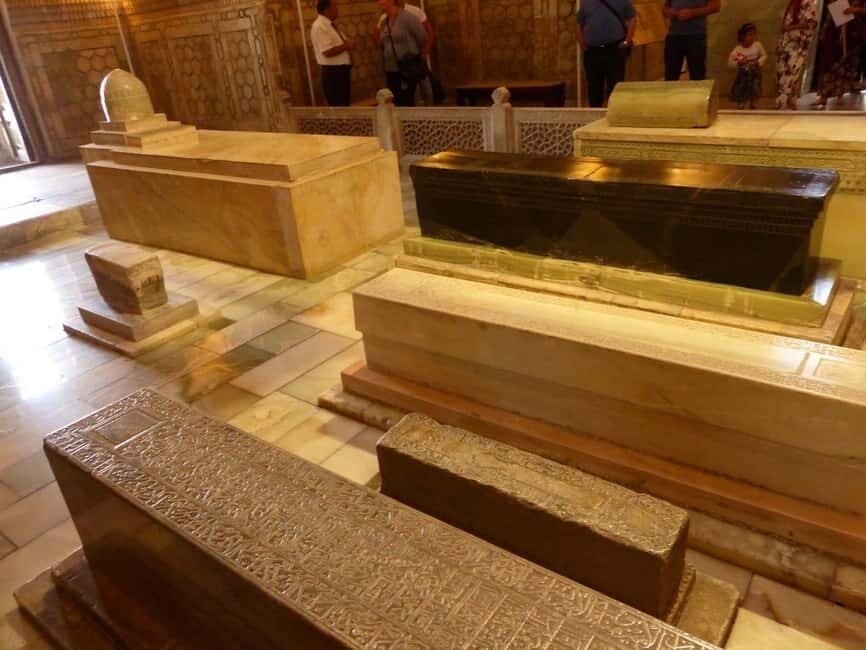
- Start at Gur-i Amir: Tamerlane’s tomb complex sets the tone for the whole walk.
- Registan at golden hour: it’s the easiest way to see why the name matters and why the square feels like Samarkand’s heart.
- Bibi-Khanym legend included: you’ll hear the romance story tied to the mosque’s construction.
- Shakhi-Zinda can feel almost quiet: evening timing often means fewer people and a more reflective mood.
- Ulugbek Observatory is a real finish: medieval astronomy, not just another photo stop.
- Skip-the-line helps: you spend more time walking and less time waiting.
Why Samarkand’s sunset walk feels different

Daytime in Samarkand can be intense: sun overhead, crowds moving fast, and everyone trying to squeeze in the same checklist. A sunset walking tour flips that. The light softens, shadows stretch across tilework, and your guide can slow the story down—because people are usually less rushed when the sky changes color.
This tour is also built around the personalities of Samarkand’s rulers, especially Amir Temur and the dynasty that followed. You’re not just looking at monuments; you’re learning how the city was shaped by power, belief, and ambition—and how that still shows up in everyday culture.
The walking part is important too. Even when you’re moving between big sites, you’re getting scenic views along the way and a chance to step away from the heaviest foot-traffic. Add in time for a picnic break and a market visit, and the evening becomes more than a photo sprint.
You can also read our reviews of more walking tours in Samarkand
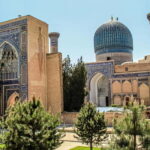
Starting at Gur-i Amir: Tamerlane’s family tomb complex
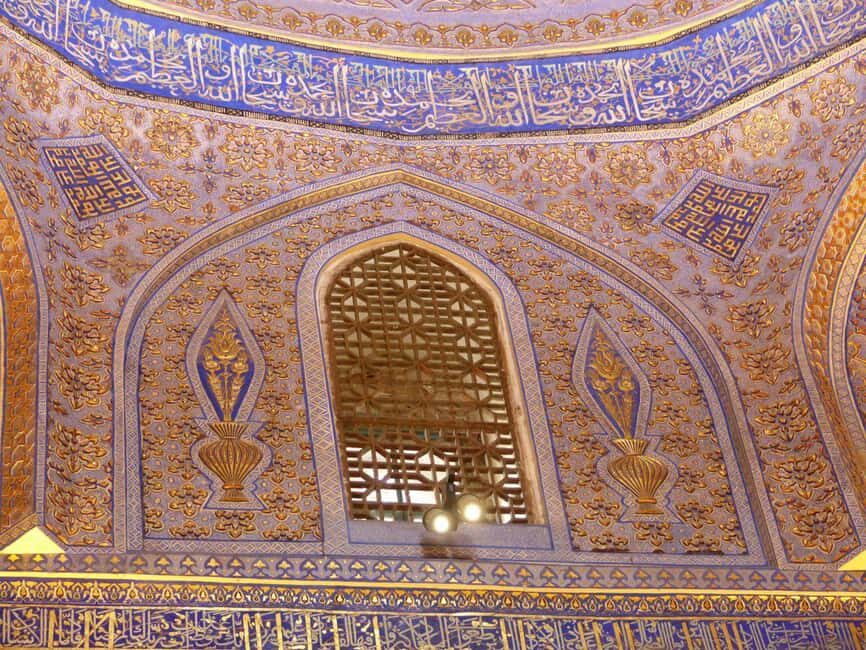
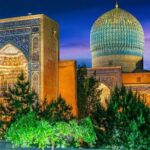
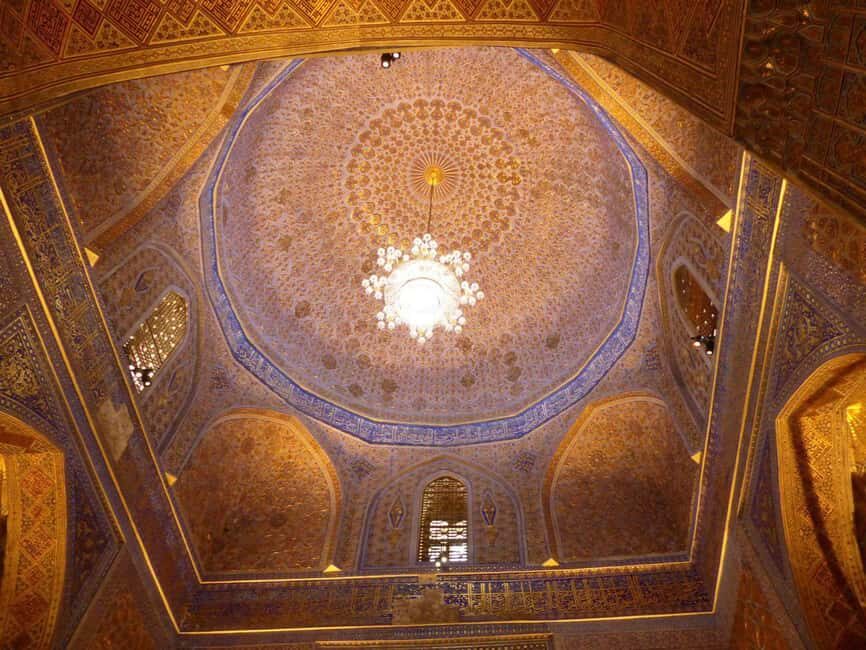
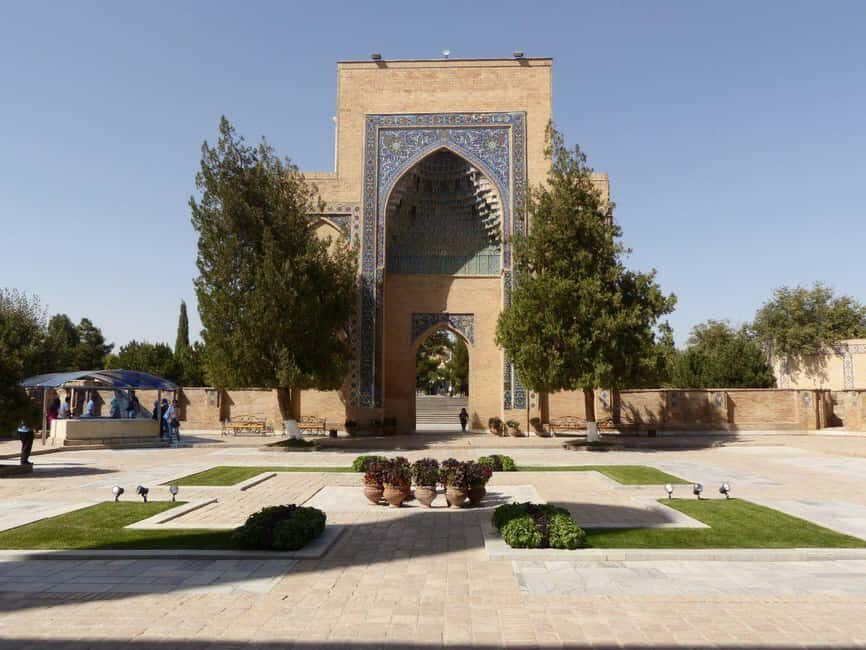
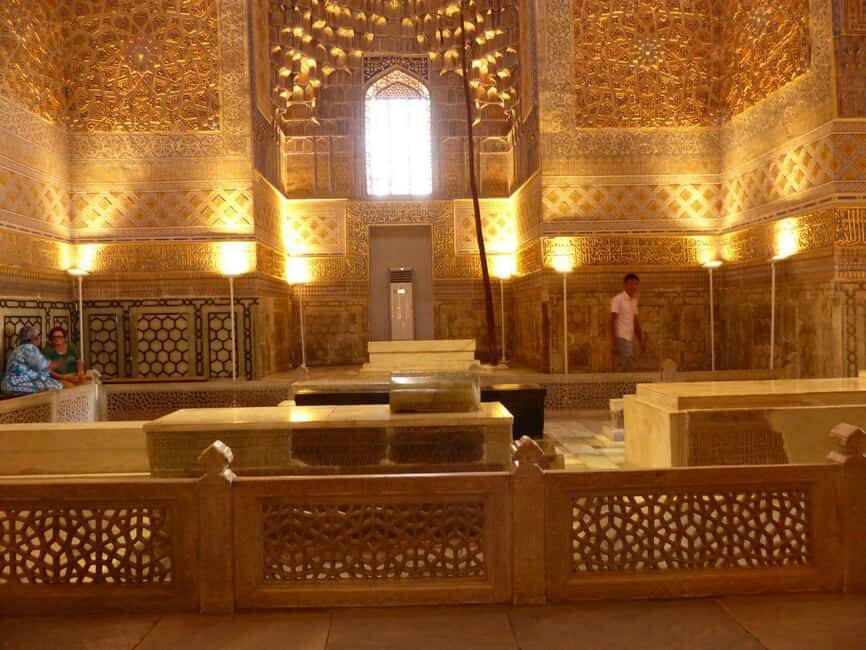
You begin at the Amir Temur Mausoleum Gur-i Amir Complex, the tomb of Tamerlane. This isn’t a simple single-grave stop. It’s a family resting place: his sons Miranshah and Shahrukh, and his grandson Ulugbek, are also buried here.
That matters because it frames what you see later. When Ulugbek shows up again at the observatory, it lands with more meaning. You’re not treating Ulugbek like a random historical name; you’re seeing him as part of the same story that produced the city’s most famous architecture.
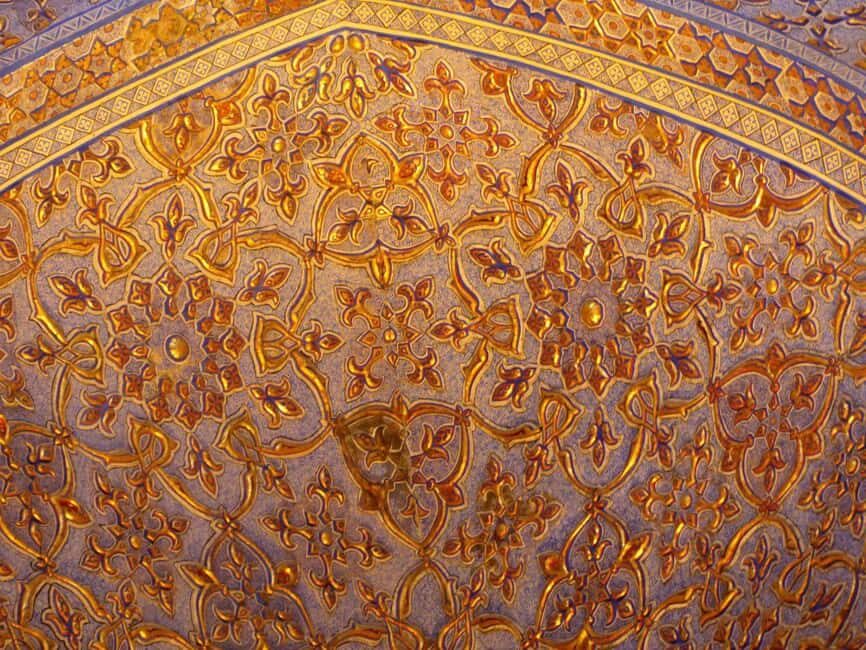
At sunset, the atmosphere shifts. Interiors and courtyards tend to feel calmer, and the details on the surfaces—patterns, colors, and inscriptions—read better when the light isn’t blasting straight down. You’ll have your guide with you, so the place doesn’t turn into a blur of domes and arches.
Registan Square and the sandy-place meaning
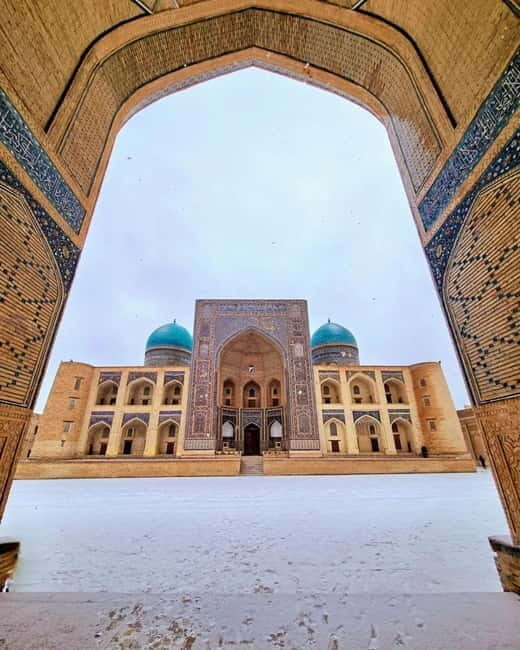
The Registan Square is often called the heart of ancient Samarkand, and the best part of seeing it on foot at sunset is how quickly it starts to feel like a central stage. You’ll also learn why it’s nicknamed the sandy place—because the name itself hints at that idea, and your guide connects the label to the square’s identity.
What makes Registan special is the way the architecture creates a strong “front” and “back.” Even from a short distance, you can sense the directionality—where people gathered, how processions likely moved, and why the square became the kind of public space where rulers wanted to be seen.
A good tip: take your time standing back for one wide view before you start close-up photos. In the evening, the sky gives you a natural frame, and you’ll understand the scale faster than if you stay locked into details too early.
Bibi-Khanym Mosque: a legend tied to construction
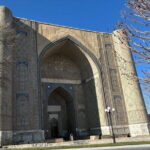
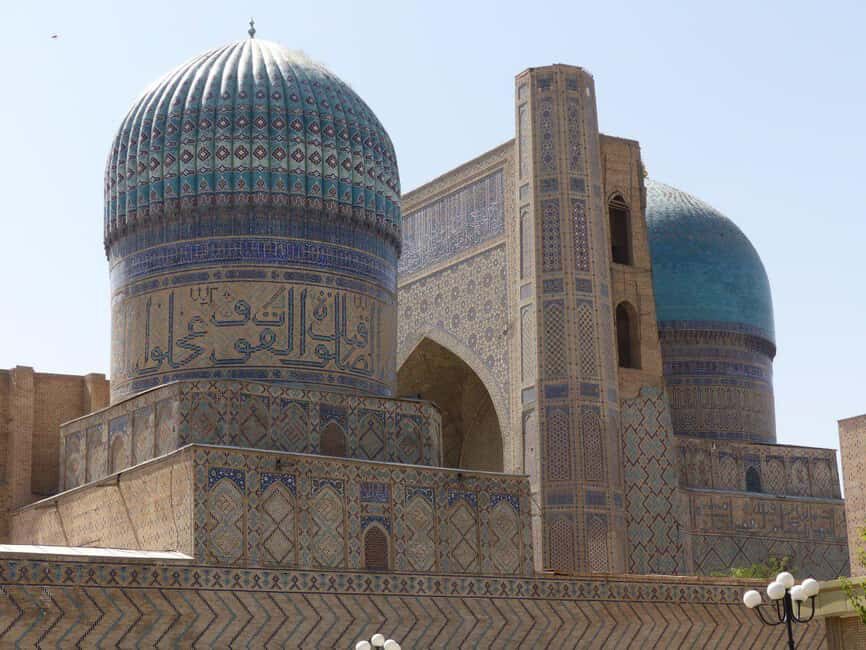
Next comes Bibi-Khanym Mosque, a cathedral mosque from the 15th century. It’s known for more than its size. You’ll hear a legend about the architect—he supposedly fell in love with Tamerlane’s wife, who supervised the construction.
Whether you treat the story as historical fact or pure legend, it changes how you look at the building. You stop seeing it as only stone and start seeing it as a human project—ambition, supervision, devotion, and power all wrapped into one dramatic outcome.
At dusk, the mosque can feel almost cinematic. The main takeaway for me is that you learn how myths and memory work in Central Asia: legends don’t just entertain; they help people carry meaning from one generation to the next. Your guide’s job is to connect that legend to the broader Timur-era mindset.
An arts-and-crafts stop plus a picnic break
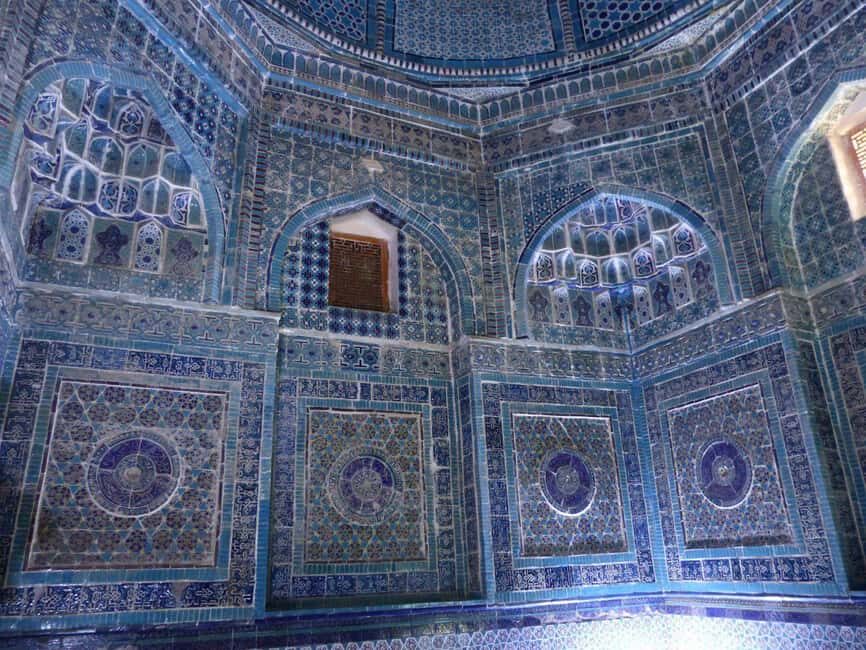
This tour includes time for an arts & crafts market visit and a picnic break in the evening schedule. The big practical value here is rhythm. After you’ve walked through monumental sites, you need a pause that isn’t just sitting in a café.
A quick planning thought: meals aren’t listed as included, so treat the picnic time as a scheduled opportunity to eat your own snacks or pick up food nearby. Comfortable clothes and shoes matter more than you’d think, because the walking between sites still happens even when you’re trying to keep dinner simple.
The market stop is also a chance to connect the past to the present. You’re not just hearing about Uzbek culture and customs—you’re seeing how people craft and trade in the same region that built these iconic monuments centuries ago.
You can also read our reviews of more evening experiences in Samarkand
Shakhi-Zinda at night: the city of the dead that means living king
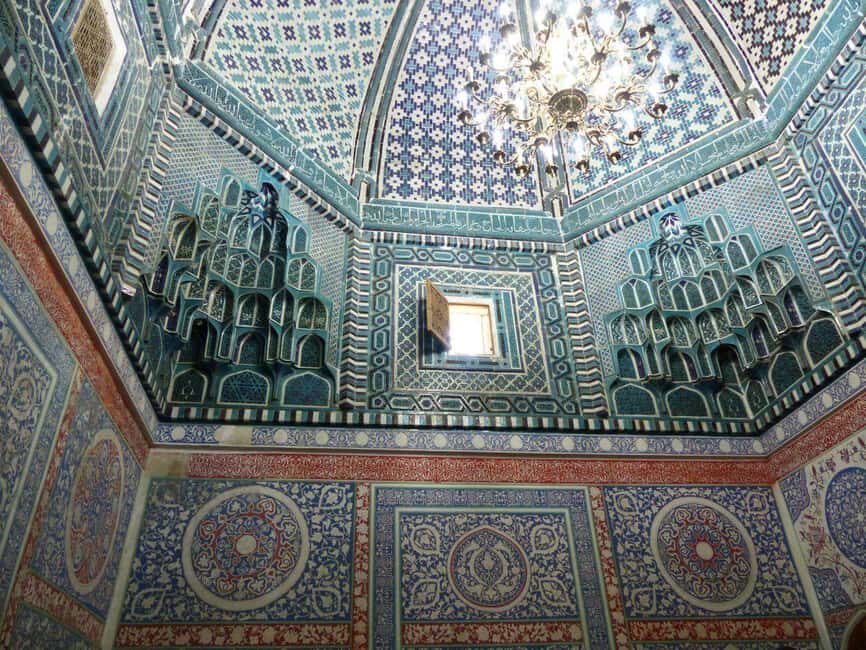
Then you reach Shakhi-Zinda, an architectural ensemble of mausoleums tied to Karakhanid and Timurid nobility. This place comes with a name that confuses people in the best way.
You’ll hear that Shakhi-Zinda is called the city of the dead, even though the name translates as “living king.” That contrast is part of the point. These are burial sites, but the complex is also about legacy—about keeping power and memory “alive” through architecture and ritual.
If the timing is right, this can be one of the most emotional stops of the whole evening. In feedback from past guests, people highlighted the feeling of being there without the usual crush—almost alone at moments—especially when visiting after hours. The mood matters here. Shah-i-Zinda isn’t just pretty tiles; it’s a place where the silence feels designed.
One practical move: when your guide gives context, listen, then look again. The second pass usually pays off more than the first. The symbolism becomes easier to spot once you know what you’re hunting for.
Ulugbek Observatory: medieval astronomy as your finale
The tour finishes at the Observatory of Ulugbek, one of the most significant observatories from the Middle Ages. Ulugbek wasn’t only a ruler—he was also an educator and astronomer, and the observatory reflects that ambition.
This ending is a smart choice because it balances the evening. You’ve spent hours in architecture made to project power and belief. Then you land in a space tied to observation, calculation, and learning. It gives Samarkand a second identity beyond monuments: a city that studied the sky.
The main consideration is simple: don’t cut it too close. One of the potential downsides described for sunset formats is that if the day runs late, you can miss the observatory if it closes before you arrive. If this finale matters to you, confirm the timing of your start and expected finish so you can stay relaxed instead of sprinting.
Price and logistics: is $60 good value?
At $60 per person for a 1-day experience, the value depends on what you usually spend time and money on in Samarkand.
Here’s what you’re getting for that price:
- a live English guide (not just a script),
- guide service as the main included cost,
- and skip-the-ticket-line support so you lose less time to waiting.
What’s not included is also clearly stated:
- transport,
- meal.
So the economics make sense if you already plan your own getting-around and you’re fine with a light food plan during the evening. Where this becomes extra cost-effective is time saved. In places like these, waiting can eat your schedule faster than you expect, and a sunset route is already competing with opening hours.
Also note: sometimes the tour can feel more like a small-group or even private-style experience when demand is low. That’s not guaranteed, but it’s part of why the guide matters so much—more questions, more pacing, less crowd management.
The walking part: what to wear and how to stay comfortable
This is a walking tour, with major sites and multiple transfers on foot. Bring comfortable shoes and comfortable clothes. That sounds basic, but it’s the difference between enjoying the evening and feeling sore halfway through.
For sunset, dress for cool-down too. Even if the day is warm, evenings can feel cooler when you’re moving and standing around. If you’re someone who hates being cold during museum stops, plan a light layer.
One more comfort tip: hydrate earlier in the day. You may not want heavy food right before long monument stops, but getting ahead of thirst helps your evening flow.
Who this tour suits best
This is a strong fit if you want:
- major Samarkand sites in one evening route (not a multi-day slog),
- stories tied to the monuments, including legends and the names behind the buildings,
- a calmer feel compared with mid-day crowd pressure,
- and a guide-led experience in English.
It’s also a good choice if you like meeting people from the community you’re visiting. Past guests liked the way the guide connected the city’s history to present-day culture and customs, not only to textbooks.
If your top priority is strict efficiency and you hate walking, you might find the pace too active. But if you enjoy moving slowly between iconic places and learning as you go, this works well.
Should you book this Samarkand sunset walking tour?
I’d book it if you’re chasing the emotional side of Samarkand: the Timur-era monuments, the stories behind them, and the chance to see places like Shakhi-Zinda when the crowds are thinner. The English guide quality is a huge part of the experience, and the skip-the-ticket-line detail keeps the evening from feeling dragged out.
I’d think twice if you need a very rigid schedule for the observatory finale. If the closing time matters to you, confirm your exact slot and build in a little buffer so you don’t arrive after the doors have already closed.
If you want Samarkand to feel like a living narrative instead of a checklist, this sunset walk is one of the more practical ways to do it.
FAQ
Where does the sunset walking tour start?
It starts at the Amir Temur Mausoleum Gur-i Amir Complex.
Where does the tour finish?
The tour finishes at the Observatory of Ulugbek.
How long is the tour?
The duration is listed as 1 day, and the main on-foot sightseeing segment is listed as 5 hours.
What is included in the $60 price?
The tour includes guide service, a live English tour guide, and skip-the-ticket line support.
Is transport or a meal included?
No. Transport and meal are not included.
Is the guide available in English?
Yes, the live tour guide is available in English.
Is the tour wheelchair accessible?
Yes, it is listed as wheelchair accessible.
What should I bring, and can I cancel?
Bring comfortable shoes and comfortable clothes. You can cancel up to 24 hours in advance for a full refund, and there’s also a reserve now & pay later option.