REVIEW · TASHKENT
Tashkent Walking Tour
Book on Viator →Operated by Sayyah Uzbekistan · Bookable on Viator
Tashkent has a talent for switching moods fast, and this walking tour uses that trick well. You start in the modern center, then glide through famous landmarks, ride the Tashkent Metro, and end in the religious heart of the city at Hazrati Imam. What I like most is the tight route that gives you a first-time city feel, plus the guide support in multiple languages.
The main drawback to plan for is simple: the metro ride (and any paid entrances) are not included. A few sights have free entry, but you’ll still want cash/card for the subway and be ready for some walking.
In This Review
- Key things I’d actually watch for
- A 4–5 Hour Route That Makes Tashkent Click
- Amir Temur Square: The Modern Center With a Political Past
- Broadway Alley Sayilgoh: Tashkent’s Public-Play Mode
- Alisher Navoiy Opera Theater: Neoclassicism in Central Asia
- Independence Square: How Admin Power Became a National Symbol
- Tashkent Metro: An Underground Ride You Can’t Skip
- Chorsu Bazaar: The Old Market Heart of the City
- Ensemble Hazrati Imam: Madrassas, Mosques, and a Holy Manuscript
- Price and Value for a $35 Guided Walk
- The Guide Factor: Why This Tour Feels Personal
- Who This Tour Fits Best
- Should You Book This Tashkent Walking Tour?
- FAQ
- What does the Tashkent Walking Tour cost?
- How long is the tour?
- Where does the tour start and end?
- Is this tour private?
- What’s included in the price?
- What is not included?
- Do you need to pay for entry to each site?
- How do I get my ticket?
- What if I cancel?
- Do I get confirmation after booking?
Key things I’d actually watch for
- Multiple stop types in one loop: big squares, a theater exterior, an underground metro ride, and a real market
- Pro guide with strong language coverage: English plus Spanish, French, German, and Russian options
- Time-efficient pacing: enough time at each stop to ask questions without dragging
- Photography-friendly stops: you’ll be close to major facades and public spaces the whole way
- Real market + pilgrimage complex combo: commerce at Chorsu Bazaar, then a calmer, sacred zone at Hazrati Imam
- Start/end points are fixed: Hotel Uzbekistan to Hazrati Imam Complex, so you can plan your day cleanly
A 4–5 Hour Route That Makes Tashkent Click
This tour is built for getting your bearings fast. In just a few hours, you’ll cover the city’s main “storylines”: the national center with grand squares, the cultural stage around the opera house, the everyday pulse of bazaars, and the spiritual gravity at Hazrati Imam.
Because it’s a private group, you don’t have to deal with speed-walking strangers or missing the explanation. Your guide can slow down if you stop for photos, or move quicker if you’re eager to see everything.
One more practical note: you’re out on foot for a long chunk of time. Bring comfortable shoes and expect some uneven sidewalks near older-city areas, especially when you’re moving through the market streets.
You can also read our reviews of more walking tours in Tashkent

Amir Temur Square: The Modern Center With a Political Past
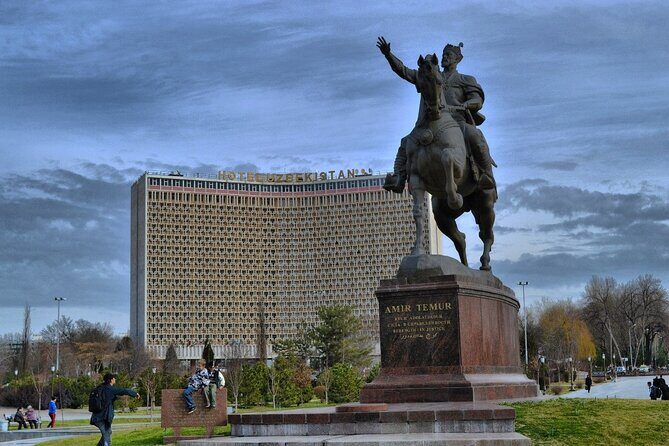
You’ll kick things off at Amir Timur Square, which sits right in the working center of modern Tashkent. It’s a place of big civic energy, and it’s also one of those squares where the past keeps peeking through. The area has been tied to major institutions over time, and the monument landscape has changed as power and symbolism shifted.
This stop works best when you pay attention to the scale. Look at how the open space is designed for ceremony and public gatherings, not just everyday strolling. Even if you only spend about half an hour here, you’ll feel why this part of town matters.
If you’re the type who likes context, this is also where your guide can set the tone. It’s a quick “now you’re here” anchor before the walk turns more playful and more historic.
Broadway Alley Sayilgoh: Tashkent’s Public-Play Mode
Next comes Broadway Alley Sayilgoh, an area that’s easy to underestimate until you read the room. You’ll see it as a leisure strip now, but the setting itself has a much stranger backstory: it used to be swampy land that was drained and turned into a rest-and-recreation zone for soldiers, later evolving into the kind of public space locals use for downtime.
Why it’s worth your time: it’s a change of pace. You go from monumental squares to a more human scale where people actually hang out. Sit for a minute, watch how the foot traffic flows, and you’ll start to understand the city’s daily rhythm.
Tip: if you like street photos, this is a good place to try. The angle lines tend to be cleaner here than in deeper old-city lanes, so you can get sharp images without too much chaos.
Alisher Navoiy Opera Theater: Neoclassicism in Central Asia
At Alisher Navoiy Opera Theater (often compared with the famous Bolshoi by visitors), you’re looking at one of Tashkent’s signature cultural facades. The big idea is the blend: folk art elements paired with neoclassical design language.
Even if your interest is more visual than musical, this stop gives you a strong “identity marker” for the city. Opera houses are usually about more than performances. They’re also about where a society puts its money and attention. This one is a showpiece for modern Tashkent’s cultural ambitions.
You’ll have around thirty minutes, which is enough to circle for angles and let your guide explain the design choices. If you enjoy architecture, ask how the building reflects regional influences while still using formal European-style planning.
Independence Square: How Admin Power Became a National Symbol
Independence Square (Mustaqilliq Maidoni) is the kind of location where history shows up through function. It’s the main square of the country, tied today to administrative offices connected with the Cabinet and the Senate.
The useful context is that it wasn’t always symbolic in the way it is now. The square has shifted from being a political administrative center to becoming a national independence statement. That change is the story your guide can bring to life in a short stop.
Make this one a “slow look” stop. Take in the symmetry and the way buildings frame the open space. Even a quick walk around the perimeter helps you notice how the square is built for official presence more than casual wandering.
Tashkent Metro: An Underground Ride You Can’t Skip
One of the best ways to understand Tashkent quickly is by riding its metro, even if you only do one segment. Tashkent Metro is famous as the first metro in Central Asia and is often described as an underground museum because the stations are designed differently from each other.
You’ll likely spend about an hour here, which gives you time to manage the ride without rushing through the visual highlights. Since metro/subway is not included in the tour price, plan for that cost separately. You’ll want a little patience too, since transit routines can vary and you’ll be moving with your group.
Practical tip: wear shoes you can stand in. Metro station stairs and walking corridors can add up fast, especially if you’re also trying to take photos. This isn’t a sit-and-sip moment, but it’s one of the most memorable experiences on the whole day.
Chorsu Bazaar: The Old Market Heart of the City
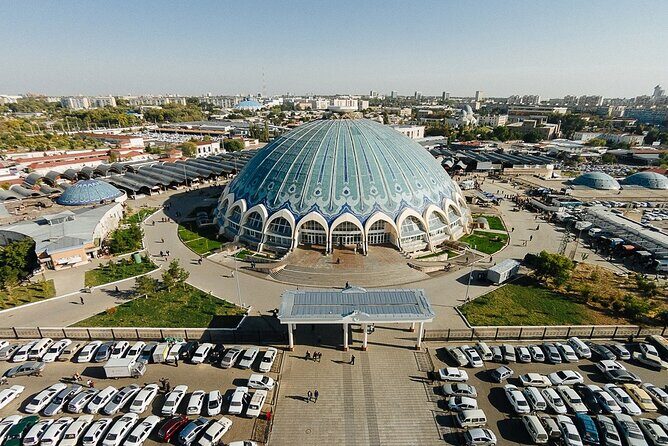
Then you hit the old city’s pulse at Chorsu Bazaar. This market is described as the oldest bazaar in Uzbekistan, and the way your guide frames it matters: it’s not just a place to buy stuff. It’s the heart of the old city and the real Eastern market feel inside a modern city.
You’ll get roughly forty minutes, which is long enough for two things: a quick scan of the lanes and a deeper look at the goods. Markets are sensory. Smells, colors, and the mix of customers all teach you more about daily life than a single museum room ever will.
A simple way to enjoy Chorsu: don’t rush to one stall. Walk a loop first. Then decide what you actually want to photograph or ask about. If you have questions, this is where your guide’s language skills become extra valuable, since you’ll likely want to understand what you’re seeing.
Ensemble Hazrati Imam: Madrassas, Mosques, and a Holy Manuscript
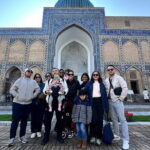
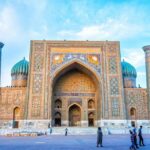
The final stretch is Ensemble Hazrati Imam, also called the Khasit Imam complex. This is the pilgrimage anchor in Tashkent, and it comes with real depth: you can visit madrassas including Barakhan and Tillesheyh, plus mosques and a mausoleum tied to early religious leadership in the city.
What makes this stop especially meaningful is the mention of a rare sacred object: one of the four manuscripts of the Holy Koran of the VII century. Even if you only get a practical visit window, the presence of something that specific changes the atmosphere instantly. You’re not just sightseeing. You’re entering a place of devotion.
Timing note: this segment is about an hour, but you might feel like time moves differently here. Go slower than you think you need. If your guide offers explanations, take them. This is the kind of site where details about who’s connected to what (madrassas, mosques, the ensemble layout) help you see the whole rather than scattered parts.
Price and Value for a $35 Guided Walk
At $35, this tour is priced like a smart “city orientation” option rather than a luxury long-haul excursion. You’re paying for a professional guide, and you’re also getting that guide in multiple language choices (English, Russian, Spanish, French, German).
Fees and taxes are included, and many stops are set up with free admission where noted. The big exception you should plan for is the metro ride, plus any entrances marked as not included. So the final cost is usually a bit higher than the sticker price once you add the subway.
Where the value really lands: the tour is long enough to make sense, but short enough that it won’t drain an entire day. About 4 to 5 hours is exactly the range where a good guide earns their keep, especially on a first visit.
Also, there are group discounts, and you get a mobile ticket. That combination is useful if you’re traveling with friends and want one clean plan rather than separate tickets and schedules.
The Guide Factor: Why This Tour Feels Personal
This is where the experience tends to shine. The guides linked to this walk are described as polite, communicative, and patient. Names you might see in the staffing include Nuriddin, Ali, and Abdunazar.
The best part of that for you is not personality fluff. It’s practical: a guide who clearly communicates timing means less stress. A guide who’s ready for questions means you won’t just stand and stare. And language skills matter because Tashkent’s details are easier to appreciate when you can understand the explanations directly.
One small caution: there’s at least one report of a guide not showing up. That doesn’t mean it’s common, but it’s still worth doing the basics—confirm your contact details and keep your booking info handy the day of.
Who This Tour Fits Best
This tour is ideal if you want a first impression that doesn’t feel superficial. You’ll suit it if you like mixes—architecture and national symbols, then markets and sacred sites, then a ride that feels like sightseeing.
It’s also a strong choice if you prefer a guided structure. The route hits major points in a sensible order, and your guide can connect the dots so you’re not memorizing names without meaning.
If you’re someone who hates walking, this may feel long. It’s a full afternoon on your feet. Still, it’s manageable for most people as long as you dress for comfort and don’t plan a late-night marathon right after.
Should You Book This Tashkent Walking Tour?
I’d book it if you’re doing Tashkent for the first time and want a route that actually covers the city’s main moods in one go. At $35 with a professional guide, you’re getting a lot of sight value per hour, especially if you care about understanding what you’re seeing rather than just ticking boxes.
I’d think twice if your budget is tight for transit, since the metro isn’t included. Also, make sure you’re comfortable walking for around half a day.
If you want an efficient, meaningful orientation walk—modern squares, cultural architecture, an underground metro stop, Chorsu Bazaar, and Hazrati Imam—this is a solid way to do it.
FAQ
What does the Tashkent Walking Tour cost?
The tour costs $35.
How long is the tour?
The duration is about 4 to 5 hours.
Where does the tour start and end?
It starts at Hotel Uzbekistan on Mirzamakhmud Musakhanov Street 45 and ends at the Hazrati Imam Complex (Hazrati Imam Mosque area).
Is this tour private?
Yes. It’s private, meaning only your group participates.
What’s included in the price?
A professional guide (available in en, ru, es, fr, de) and all fees and taxes are included.
What is not included?
Metro/subway, entrance tickets, and other personal expenses not specified in the program are not included.
Do you need to pay for entry to each site?
Not all stops require payment. Some are marked as free, while the metro and the not-included items (and any paid entries) will be extra.
How do I get my ticket?
You’ll receive a mobile ticket.
What if I cancel?
You can cancel for a full refund up to 24 hours before the experience’s start time.
Do I get confirmation after booking?
You’ll receive confirmation at the time of booking.