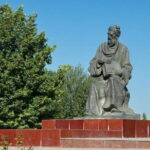
Samarkand feels like it rewinds time fast. This private guided tour is built around real stories and real street life, moving from the big-name sites like Registan Square to calmer, more personal places like Shah-i-Zinda. You’ll also get the kind of context that makes the monuments easier to read.
Two things I really like: the guide, Anvarxon Mahdiyev (often just called Anvar), is strong on English and story clarity, so the sites don’t blur together. And the included traditional Uzbek bread tasting (non fresh from a bakery) is the sort of food moment that actually anchors the day.
One thing to consider: this is a moderate walking itinerary and some areas restrict flash photography, so bring comfortable shoes and keep your camera settings ready.
In This Review
- Key things that make this tour work
- Starting in the right place: meeting at Registan and getting oriented
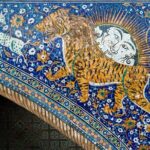
- Registan Square and Shah-i-Zinda: architecture you can actually follow
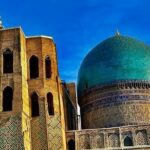
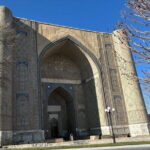
- Bibi-Khanym Mosque: love, power, and ambition in one stop
- Siyob Bazaar and the Silk Road feel you can smell
- Shah-i-Zinda, Gur-e-Amir, and Xo’ja Doniyor: sacred places with named significance
- Mirzo Ulugbek Observatory: a 15th-century science moment
- Samarkand Paper Factory: handmade silk paper you can see made
- Eternal City and the non bread bakery: ancient meets now, with a real taste
- Value for $50: what you’re really paying for
- The small stuff that makes or breaks your day
- Who this tour suits best
- Should you book this Samarkand private guided tour?
- FAQ
- How long is the private guided tour in Samarkand?
- Where do I meet the guide?
- What language will the guide speak?
- What’s included in the price?
- Are entrance tickets included?
- Are hotel pickup and drop-off included?
- Is there a meal included in the tour?
- Can I take photos with flash?
- What should I bring and what should I avoid?
- Is the tour suitable for young children or wheelchair users?
Key things that make this tour work
- A local guide who paces to you: the day moves at a human speed, with breaks that feel natural
- Registan Square plus the “mystical avenue”: big architecture, then a quieter sacred stretch at Shah-i-Zinda
- Food + Silk Road atmosphere: Siyob Bazaar scents and flavors paired with an actual bread stop
- Stop-by-stop storytelling: Bibi-Khanym Mosque, Gur-e-Amir, and other named sites are explained clearly
- Craft time that’s not just photos: handmade silk paper at the Samarkand Paper Factory
- Ancient and modern in the same day: Eternal City fits the whole city mood without feeling like a detour
Starting in the right place: meeting at Registan and getting oriented
You’ll meet at Registan, right in the heart of Samarkand. That matters, because the day quickly becomes more than a checklist. With a private guide, you can get your bearings early, then spend your energy looking instead of figuring out logistics.
A private format also helps when your route includes both monumental sights and smaller experiences. You get to ask questions that only come up once you’re standing in front of something. And since it’s a group of you and whoever you book with (not a crowd), the guide can adjust pace when the sun hits or when a stop runs a few minutes long.
The tour is about 7 hours, so it fits well into a first full day in Samarkand or a “see the core plus a few extras” day. Just know that the walking is not just a stroll. Even with breaks, you’ll be on your feet more than you might expect.
You can also read our reviews of more guided tours in Samarkand
Registan Square and Shah-i-Zinda: architecture you can actually follow
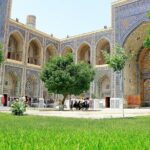
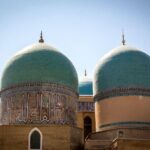
The day’s first big anchor is Registan Square. This is where the city’s famous madrasah setting gives you immediate scale—standing there, you can feel why Samarkand became such a magnet for builders, scholars, and power.
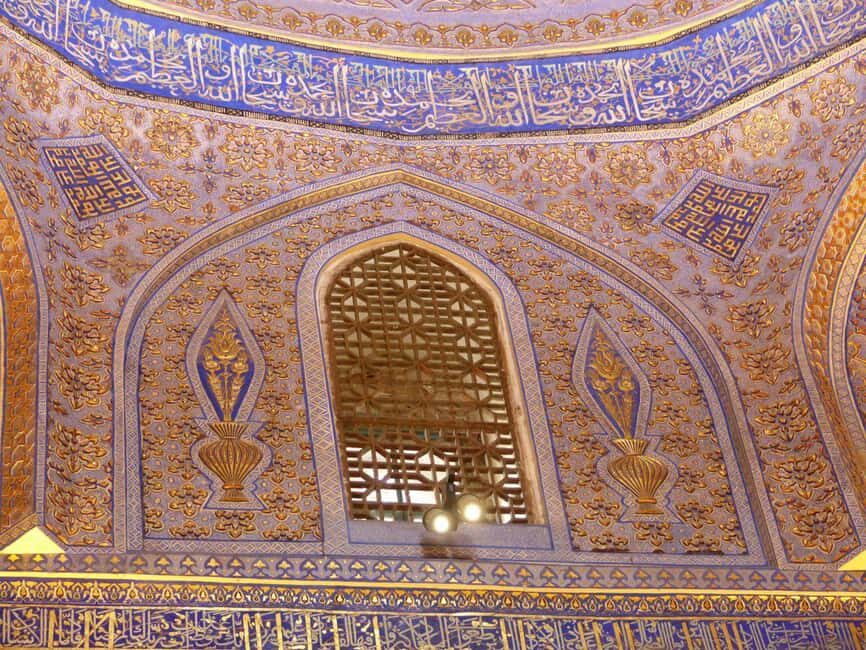
Then you head to Shah-i-Zinda, described as a sacred, mystical avenue of stunning mausoleums. This part of the tour is a good shift in tone. Registan is about dramatic public architecture; Shah-i-Zinda is about atmosphere. You’ll get time for photos and some room to wander on your own for a bit, which helps if you want to slow down and absorb details without being rushed.
A couple practical notes. First, there’s usually a break built into this portion, so you can reset before more walking. Second, there’s also shopping time in the mix, so if you want to pick up small souvenirs, this is often where that happens.
If you’re sensitive to crowds or tight pacing, the private setup is the advantage here. You spend less time threading through other groups and more time letting the spaces make sense.
Bibi-Khanym Mosque: love, power, and ambition in one stop
Next up is Bibi-Khanym Mosque. The tour frames it around its tale of love, power, and grand ambitions, which is a smart approach. With big monuments, it’s easy to get stuck in “pretty building” mode. Stories give you something to hold onto while you look.
The guide’s job here is to connect what you’re seeing with why people talked about it in the past. That’s where a local guide shines: you get narrative context instead of just names and dates. And because the format is private, you can ask for clarification if a story detail feels confusing rather than saving your questions for a late moment.
This is also a good stop to take your time with photos—no rush, and you’ll be moving on from the mosque with your understanding stronger than “I saw it.”
Siyob Bazaar and the Silk Road feel you can smell
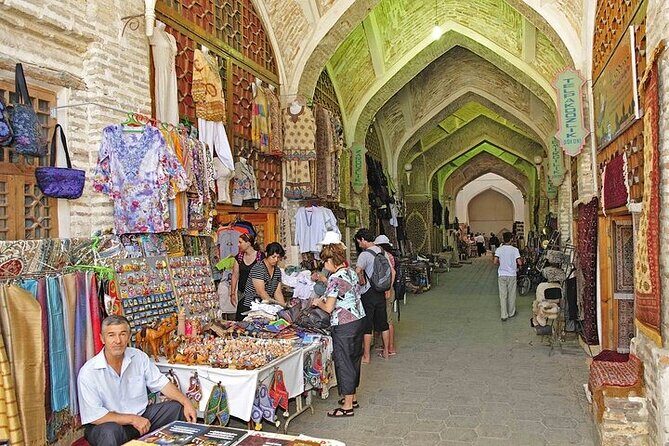
A tour that includes Siyob Bazaar does something important: it adds sensory life. Here, the focus is on the scents and flavors of the Silk Road. Even if you don’t buy much, this is where you feel Samarkand as a working city, not a museum set.
The guide can help you interpret what you’re seeing, and you’re more likely to enjoy it if you know what to look for. Expect a “walk and watch” rhythm rather than a formal stop with fixed viewing times.
This is also one of the places where your camera matters. You’ll likely spot sellers, food, and colorful everyday scenes. Just remember: flash photography is prohibited in certain areas, so switch to natural light shots when needed.
If you’re the type who enjoys markets, this stop is a payoff. If markets aren’t your thing, it can still be worth it for the cultural texture and the chance to stand in the middle of local daily movement.
Shah-i-Zinda, Gur-e-Amir, and Xo’ja Doniyor: sacred places with named significance
After the bazaar energy, the tour turns back toward monumental and spiritual landmarks.
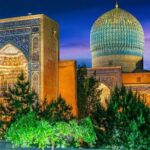
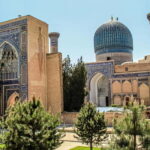
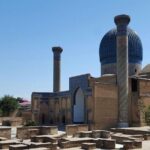
You’ll visit Gur-e-Amir Mausoleum, including the final resting place of Tamerlane. This stop typically lands well because your earlier context makes it easier to understand why the site matters to people. You’re not starting from zero; you’ve already walked through the city’s storytelling layers.
Then there’s Xo’ja Doniyor Mausoleum, linked in the tour framing to the legendary resting place of Prophet Daniel. Even if you don’t know the story beforehand, the named significance gives the stop direction. It’s not just “another shrine”—it’s a place with a specific spiritual association in this city.
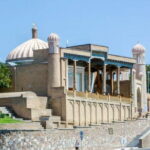
And Khazrati Khizr Mosque rounds things out with spiritual feeling and breathtaking views. This stop is often a nice reset after dense monument viewing. You get a moment where the setting opens up.
One practical consideration: these sites can be emotionally heavy and visually detailed. Plan on a slower pace here. If you rush, you miss the tone shift between each place.
You can also read our reviews of more private tours in Samarkand
Mirzo Ulugbek Observatory: a 15th-century science moment
Not every Samarkand day includes science. This one does, with Mirzo Ulugbek Observatory, described as a 15th-century marvel of astronomy.
That matters for balance. You’ve spent a lot of time with religion and architecture. This stop gives you a different lens on what Samarkand meant to different kinds of thinkers—less about walls and more about questions, measurement, and observation.
The guide helps keep the explanation clear so you’re not staring at a site and guessing what made it important. With a private format, you can take an extra minute to ask how the observatory fits into the larger story of the city.
If you like history that includes science and learning, this is one of the most satisfying stops.
Samarkand Paper Factory: handmade silk paper you can see made
Next comes a craft stop at the Samarkand Paper Factory, focused on the ancient art of handmade silk paper.
This is one of my favorite types of experiences because it’s not just visual. Even when you don’t buy anything, watching a process gives your brain something concrete to remember later. Architecture is impressive, but craft is tactile. It stays with you differently.
You’ll get a chance to see the material and understand that this city still produces things by hand, not only by presentation. If you enjoy souvenirs that have a story attached, this stop is practical.
One caution: you’ll be adding shopping opportunities throughout the day. Budget time and money accordingly. If you’re strict about limiting purchases, you can still enjoy the factory visit without feeling pressured.
Eternal City and the non bread bakery: ancient meets now, with a real taste
The tour then steps into Eternal City, described as a unique blend of ancient and modern Samarkand. This is where the day stops feeling like only monuments and starts feeling like actual urban life again.
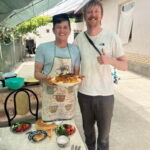
You’ll also visit a traditional bread bakery to see how Uzbekistan’s famous non bread is made and taste it fresh from the oven. Since traditional Uzbek bread tasting is included, this is one of the best value moments on the schedule.
Food breaks are not a gimmick. They help you keep energy up during a long, walking-heavy day. And when the bread is served warm, it’s the kind of taste that makes your guide’s cultural explanations feel grounded.
After that, the itinerary includes time that typically ends with a local meal. Just note: meals are listed as not included, so you’ll want to plan on paying for your final food if you go for an actual restaurant meal.
Value for $50: what you’re really paying for
At $50 per person for a 7-hour private guided tour, the headline value is not just access to sights. It’s the combination of time, route efficiency, and explanation quality.
When you’re paying for a private guide, what you want is:
- fewer wasted minutes figuring out what to do next
- clearer context so you understand what you’re seeing
- a pace that doesn’t punish you for stopping to look
That’s exactly where this tour shows strength. The guide has a reputation for being attentive and friendly, checking in so you feel comfortable, and adjusting pacing to your style instead of dragging you along.
The included bread tasting also adds a tangible value piece. Entrance tickets and meals are not included, so you should expect some extra costs on top—especially if you want to go inside specific monuments rather than viewing from outside.
In plain terms: if you’d rather spend your time understanding Samarkand than managing a route, this is a sensible use of time.
The small stuff that makes or breaks your day
A great tour can still feel annoying if you show up unprepared. For this one, I’d focus on these:
- Comfortable shoes: the walking is described as moderate, and you’ll cover multiple sites.
- Water: easy to forget until you’re halfway through the day.
- Sun hat and sunscreen: weather can vary, but sunny conditions are common enough that you’ll want a plan.
- Camera ready, flash off: photos are allowed, but flash photography is prohibited in certain areas.
- No smoking during the tour: keep that rule in mind if you take breaks.
Also, since there’s shopping time built in, decide in advance what you want. If you want a silk paper souvenir, great. If you just want photos, you can politely skip purchases and keep moving.
One more practical note: the tour does not include hotel pickup and drop-off. Pickup is at Registan, so plan your start location accordingly. Taxis to other destinations are not included either, so you may want cash or a card ready for transport between sites, depending on your exact route.
Who this tour suits best
This private tour is a strong fit if you:
- want a guided day through major Samarkand highlights with clear storytelling
- like a mix of monuments, spirituality, crafts, and market life
- prefer a pace that feels personal rather than crowded
It may be less ideal if you:
- need very low walking due to mobility constraints
- want a mostly “drive from place to place” format (this one includes walking)
- travel with young kids, since it’s not suitable for children under 6
There’s also a small caution flag in the provided details: it’s marked wheelchair accessible, yet it’s also labeled not suitable for wheelchair users and people with mobility impairments. If that applies to you, it’s worth checking carefully before booking so you don’t end up stuck with a mismatch.
Should you book this Samarkand private guided tour?
Book it if you want one solid day where someone helps you understand Samarkand, not just see it. The best reason is the way Anvarxon Mahdiyev (Anvar) is described: clear English, thoughtful explanations, warmth, and pacing that feels considerate. Add the included non bread tasting and you get both culture and something to taste, which is the kind of memory that lasts.
Skip or reconsider if you’re trying to keep costs ultra-low, because entrance tickets and meals are not included, and you’ll likely spend on transport between stops. Also, if walking distance is a major concern for you, make sure the route works for your body before you commit.
If your goal is a meaningful Samarkand day with a guide who acts like a helpful friend, this one fits.
FAQ
How long is the private guided tour in Samarkand?
The tour lasts 7 hours.
Where do I meet the guide?
Pickup is at Registan.
What language will the guide speak?
The live guide offers English and Tajik.
What’s included in the price?
Included items are a guided tour by a passionate local guide and traditional Uzbek bread tasting.
Are entrance tickets included?
No. Entrance tickets are not included.
Are hotel pickup and drop-off included?
No. Hotel pickup and drop-off are not included.
Is there a meal included in the tour?
A local meal is part of the end of the experience, but meals are not listed as included, so you may need to pay for what you order.
Can I take photos with flash?
Flash photography is not allowed in certain areas.
What should I bring and what should I avoid?
Bring comfortable shoes, a sun hat, a camera, and water. Smoking is not allowed during the tour.
Is the tour suitable for young children or wheelchair users?
It’s not suitable for children under 6 years. For wheelchairs and mobility impairments, the details provided include conflicting guidance, so it’s best to confirm fit for your needs before booking.
If you want, tell me your travel dates and your group size, and I’ll suggest a smart order for the day (and how to plan around tickets and transport costs) so you keep the whole route comfortable.