REVIEW · SAMARKAND
Samarkand: Walking Tour around Old City
Book on GetYourGuide →Operated by Faridun · Bookable on GetYourGuide
Samarkand’s legends fit neatly into a walking loop. This Old City route strings together the main Timurid power centers—Amir Temur’s monument, Gur-e-Amir Mausoleum, Registan Square, Bibi-Khanum Mosque, Hazrat Khizr, and Shah-i-Zinda—so it feels like you’re walking through a story, not just collecting sights. I like the way the guide turns architecture into characters and choices, and I really like the built-in pauses for photos and close-up details. One consideration: it’s a steady walking tour with lots of time standing, so comfortable shoes matter.
The guide (Faridun) is a big part of why this works. You’re in a small group (up to 10), and the tour runs in English or Russian, with clear explanations and lots of room for questions and practical tips for what to do next. It starts at the Amir Temur monument on University Boulevard Street—once you get there, cross the pedestrian with caution.
In This Review
- Key highlights you’ll actually feel on the ground
- A 3.5-hour Old City walk that keeps momentum
- Starting at the Amir Temur monument and getting your bearings
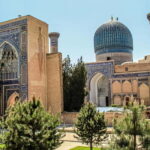
- Gur-e-Amir Mausoleum: blue dome, mosaics, and the weight of legend
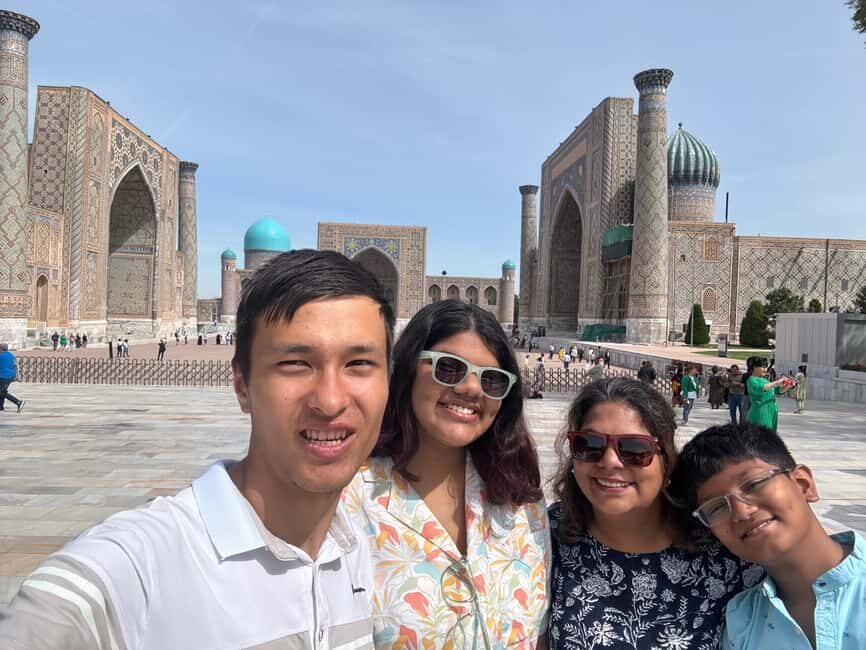
- Registan Square: three madrasahs, one public stage
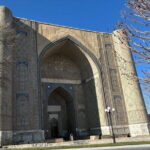
- Bibi-Khanum Mosque: romance, scale, and what restoration can’t hide
- Hazrat Khizr Mosque: one of Samarkand’s oldest functioning stops
- Shah-i-Zinda: the Living King and a calmer ending
- Price and value: what $26 buys you in real sight time
- Your guide and group size: small enough to matter
- What to bring and what to wear for mosques
- Who this tour suits (and who might rethink it)
- Should you book this Samarkand walking tour?
- FAQ
- How long is the Samarkand walking tour?
- Where is the meeting point?
- What sites are included in the tour?
- Is transportation included?
- Does the price include meals?
- What language is the tour guide?
- Is this a small group tour?
- Can I take photos during the tour?
- What should I bring?
- Who shouldn’t join?
Key highlights you’ll actually feel on the ground
- Amir Temur’s equestrian statue sets the tone instantly, with context for why he’s treated like a national hero
- Gur-e-Amir’s blue dome and mosaics come with legend and history, not just photos from afar
- Registan Square’s three madrasahs (Ulugh Beg, Sher-Dor, Tilla-Kari) let you see symmetry and symbolism up close
- Bibi-Khanum Mosque’s scale and love story give the building a human angle, plus a look at restoration
- Hazrat Khizr’s viewpoint pairs a quiet sacred stop with panoramas over Shah-i-Zinda
- Shah-i-Zinda’s mausoleums and star-shaped domes end the tour in a calmer, more atmospheric rhythm
A 3.5-hour Old City walk that keeps momentum
This tour is designed for people who want the big Samarkand moments without spending the whole day in transit or stuck waiting around. In about 3.5 hours, you cover the core of the Timurid-era “great show” and the older layers around it, all with a guide who gives you the why behind what you’re seeing.
I like that the pacing is practical. You’re not rushed through the important parts, but you also won’t feel like the afternoon disappears. The route moves from major public landmarks (Registan) to spiritual sites (mosques and mausoleums), so your eyes and your brain stay engaged.
You can also read our reviews of more walking tours in Samarkand
Starting at the Amir Temur monument and getting your bearings
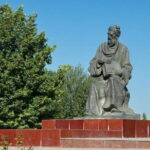
You begin at the Amir Temur Monument on University Boulevard Street. It’s a smart starting point because it immediately anchors the tour in the person Samarkand keeps returning to: the legendary conqueror and founder of the Timurid Empire.
From there, the guide helps you read the surrounding park layout and explains the symbolism behind the equestrian statue. You’ll get a short walk and a chance for a photo stop with panoramic views and greenery—use that moment. You’re not just taking a picture; you’re getting a sense of how the Old City landmarks relate to each other spatially, so the next stops make more sense.
Small tip: when you arrive, cross the pedestrian carefully and keep an eye out for traffic. It’s one of those simple moments that can throw off your timing if you’re not paying attention.
Gur-e-Amir Mausoleum: blue dome, mosaics, and the weight of legend
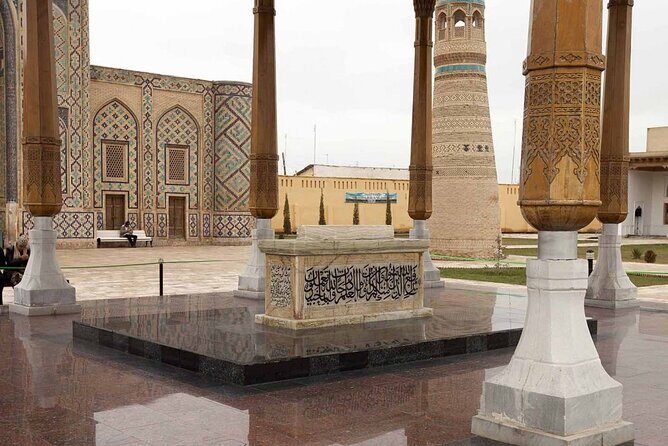
Next up is Gur-e-Amir Mausoleum, Amir Temur’s mausoleum and one of the strongest “wow” stops in the city. Expect a guided visit of about 1 hour, which is enough time to see the signature visuals without feeling like you’re speed-walking for a checkmark.
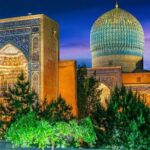
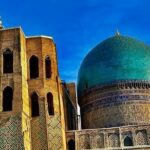
What you’ll notice first is the blue ribbed dome and the intricate mosaics. Those details matter, but the tour’s real strength is how the guide connects the building to Timurid architecture as a statement of power and spirituality.
You also get stories that make the site feel alive:
- Temur’s death and burial in 1405
- the famous legendary curse tied to his tomb
- what happened during the Soviet opening in 1941
And because this isn’t a single-person story, you’ll also hear about other important burials connected to the Timurid court, including Ulugh Beg plus Temur’s sons and grandsons (as described on the tour).
Potential drawback: mausoleums are often “stand-and-look” experiences. If you’re sensitive to long periods of standing, plan breaks and keep your water needs in mind (meals aren’t included, so bring your own strategy).
Registan Square: three madrasahs, one public stage
Then comes Registan Square, the world-famous open space framed by three grand madrasahs: Ulugh Beg, Sher-Dor, and Tilla-Kari. You’ll spend about 1 hour here, and it’s the kind of stop that rewards you for slowing down.
The guide explains why Registan wasn’t just a pretty postcard. It was once a center of Islamic education and public life—an organized place where learning, authority, and daily visibility met.
What makes it memorable is the mix of design and story:
- The tilework and symmetry are striking, especially when you look at the whole composition instead of only one facade.
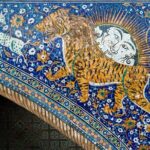
- Sher-Dor’s imagery—including the lions—is explained in context rather than left as decoration.
- Tilla-Kari’s golden dome gets its meaning tied to the site’s identity.
You’ll also hear about astronomy through Ulugh Beg’s role as an astronomer and ruler. That angle is especially useful because it reframes the madrasahs as more than religious buildings; they’re connected to science and knowledge, not just faith.
You’ll have time for photos, souvenir shopping, and exploring inside parts of the complex. That gives you control over how “hands-on” you want to be, instead of feeling locked into the guide’s schedule.
Bibi-Khanum Mosque: romance, scale, and what restoration can’t hide
After Registan, the tour shifts to a more personal story with Bibi-Khanum Mosque, sometimes described as grand and romantic. Expect about 30 minutes for this stop, including a photo opportunity and guided visit.
This mosque was built by Temur for his wife, and that backstory matters. When a guide connects a monument to a relationship, the architecture stops feeling abstract. It starts feeling like an argument: about devotion, about legitimacy, about lasting presence.
You’ll see notable features, including massive marble Qur’an stands mentioned as part of the experience. The tour also covers what happened when the mosque fell, and how it was restored in modern times.
Why this stop is worth your time: many visitors take photos and leave. Here, you’re encouraged to notice how repairs and changing eras sit alongside the original design. The building becomes a timeline, not just a monument.
You can also read our reviews of more city tours in Samarkand
Hazrat Khizr Mosque: one of Samarkand’s oldest functioning stops
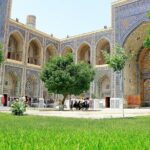
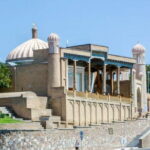
Next is Hazrat Khizr Mosque, described as one of the oldest functioning mosques in Samarkand. You’ll spend about 20 minutes here, and it feels like a breather after Registan and Bibi-Khanum.
The guide explains that the mosque is dedicated to Khizr, an immortal saint and protector of travelers. That framing helps you understand why the site still feels active in a spiritual sense, not just museum-like.
One of the best practical moments is the panoramic view over Shah-i-Zinda and ancient Samarkand. You’re not only looking at buildings; you’re seeing the spatial layout that you’ve been building up in your head since the Amir Temur statue.
You’ll also see the nearby tomb of Islam Karimov, the first president of Uzbekistan, located close to Hazrat Khizr. It’s a reminder that this area holds layers beyond the Timurid era.
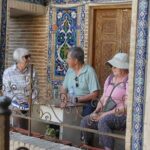
Clothing note: mosques call for respectful dress. You’ll want comfortable clothes that also meet that expectation—so plan to cover appropriately rather than scrambling at the last minute.
Shah-i-Zinda: the Living King and a calmer ending
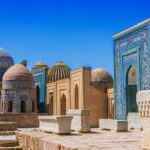
The tour finishes at Shah-i-Zinda (The Living King), a necropolis built between the 11th and 15th centuries. Expect about 40 minutes, including guided context and time to look on your own.
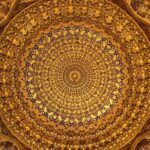
This is where the atmosphere changes. Instead of broad public squares, you get a corridor-like feeling—mausoleums tucked in close, with blue tiles and star-shaped domes that catch the light in a way you can’t really fake in a photo.
You’ll see over 20 richly decorated mausoleums, including the tomb of Qusam ibn Abbas, described as cousin of Prophet Muhammad. The guide also brings in stories about Timurid princesses and artisans buried here, which helps turn the site from “decorated graves” into a picture of a community and a legacy.
Then there’s the quiet part—your eyes slow down, and the silence becomes part of the experience. That’s why this stop works as an ending: it gives you a meaningful visual fade-out instead of a rushed exit.
Pro tip: when you reach Shah-i-Zinda, don’t treat it like another quick photo spot. Spend a few minutes just looking at tilework patterns and domes. The longer you pause, the more you’ll see.
Price and value: what $26 buys you in real sight time
At about $26 per person for roughly 3.5 hours, this tour is priced for value if your goal is “maximum major landmarks with real context.” You’re not just getting entry-point photos; you’re getting guided explanation across multiple key sites—Amir Temur’s monument, Gur-e-Amir, Registan, Bibi-Khanum, Hazrat Khizr, and Shah-i-Zinda.
The value comes from the way the guide connects:
- political power (Temur and Timurid rule)
- scientific identity (Ulugh Beg’s astronomy role)
- religious and social meaning (madrasahs, functioning mosque, necropolis)
If you’re traveling independently and trying to stitch this together yourself, you’d need to do the same work—research, navigation, and interpretation. Here, that effort is delivered in a small-group format, which is also why the experience tends to feel smoother.
Your guide and group size: small enough to matter
This is a small group tour limited to 10 participants, with a live guide in English and Russian. That matters because these sites can generate lots of questions. A bigger group can mean you either miss details or end up hearing only the loudest parts.
In the experiences I’m hearing reflected in how the guide is described, Faridun is praised for staying attentive to people’s needs, answering questions with patience, and sharing practical tips for what comes next. That’s the kind of add-on that changes a tour from informative to useful.
What to bring and what to wear for mosques
Bring comfortable shoes first. The tour includes multiple walking segments and standing time at historic monuments.
For clothing, the only guideline you really need to remember is this: mosques call for respectful attire, so plan ahead. You’re also advised to carry a credit card and cash. Photography is allowed at most sites, but treat each stop with common-sense respect and follow any on-site directions.
Also: no pets and no drones. That’s standard for many heritage areas, and it keeps the tour moving without extra hassle.
Who this tour suits (and who might rethink it)
This is a great fit if you want a guided walk through Samarkand’s top Timurid-era landmarks with a clear story thread. It’s especially good for first-time visitors who don’t want to spend their vacation decoding every facade alone.
It may be less suitable if:
- you’re over 70
- you have diabetes
- you’re dealing with altitude sickness
- you’re traveling with very young children (the tour lists many age limits, starting with under 2 and continuing upward)
That’s not meant to be scary; it’s just a real checklist so you don’t end up with an unpleasant mismatch between your day and the walking pace.
Should you book this Samarkand walking tour?
If you want one guided experience that hits the biggest sites—Gur-e-Amir, Registan, Bibi-Khanum, Hazrat Khizr, and Shah-i-Zinda—this is an efficient way to do it. The guide focus (including patient answers and practical tips) and the small group size make it feel more personal than the typical whirlwind option.
I’d book it if your priorities are:
- a structured route through Samarkand’s Old City
- meaningful context for Temur and the Timurid era
- time for photos and a calmer ending at Shah-i-Zinda
I’d consider a different plan if you’re expecting a fully relaxed, minimal-walking day. This one has momentum, and the mosques and mausoleums reward you for lingering—not just passing through.
FAQ
How long is the Samarkand walking tour?
The tour lasts 3.5 hours.
Where is the meeting point?
Meet at the Amir Temur Monument on University Boulevard Street, then cross the pedestrian carefully.
What sites are included in the tour?
You’ll visit Gur-e-Amir Mausoleum, Registan Square, Bibi-Khanum Mosque, Hazrat Khizr Mosque, and the Shah-i-Zinda Ensemble, plus a stop at the Amir Temur monument.
Is transportation included?
No. Transportation to and from the meeting point is not included.
Does the price include meals?
No. Meals are not included.
What language is the tour guide?
The live guide offers the tour in English and Russian.
Is this a small group tour?
Yes. The group is limited to 10 participants.
Can I take photos during the tour?
Photography is allowed at most sites.
What should I bring?
Bring comfortable shoes, comfortable clothes, and have cash and a credit card.
Who shouldn’t join?
The tour is listed as not suitable for people over 70, those with diabetes or altitude sickness, and children below the stated minimum ages (including under 2, under 3, and so on up through under 11).